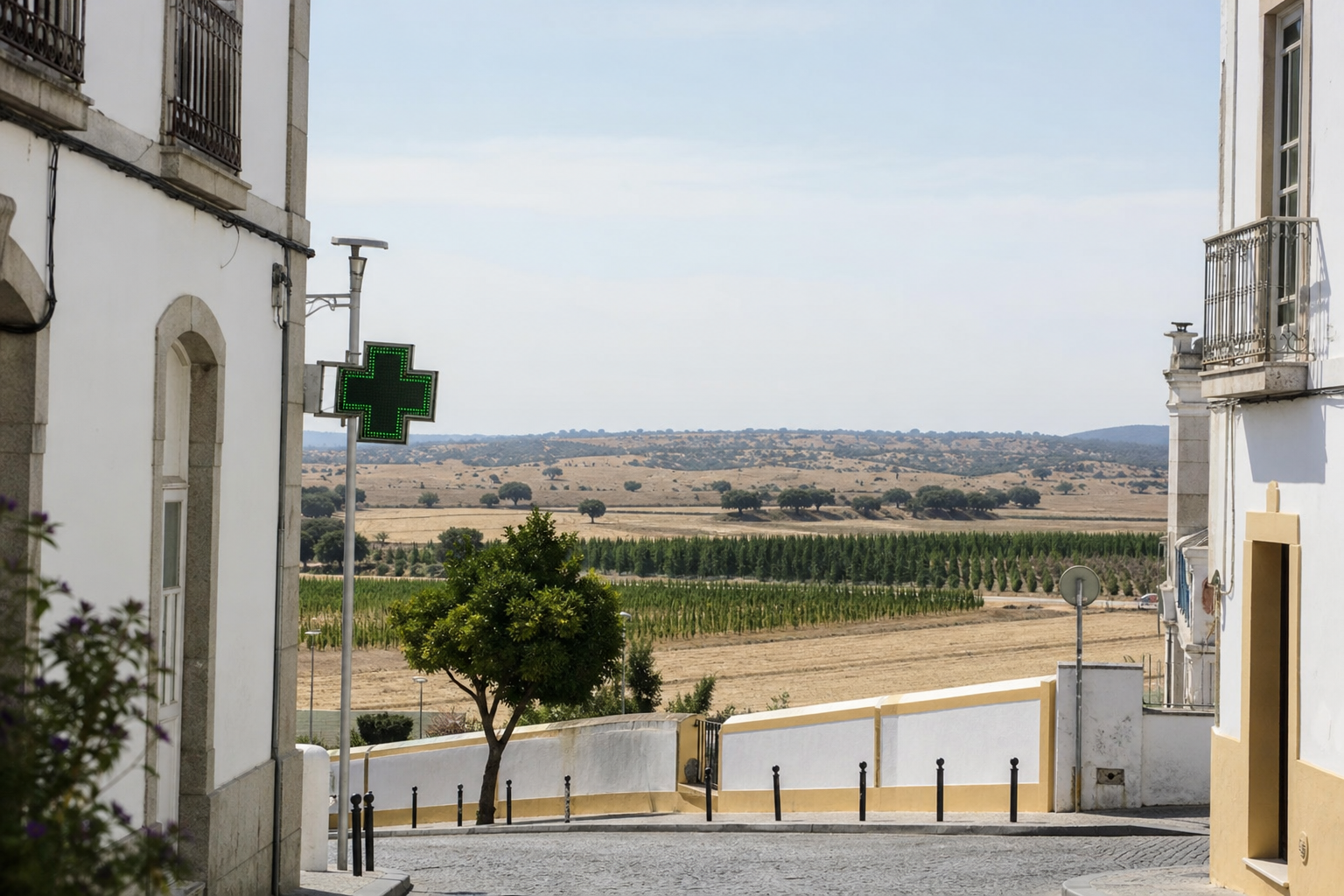
The marijuana market in Beja, Portugal is best understood as a mix of strict regulation, decriminalised personal use, medical access and informal supply. Beja does not have a legal recreational dispensary system comparable to regulated adult-use markets in parts of North America. Instead, local activity is shaped by Portuguese national law, health policy, agricultural conditions and the practical realities of a relatively small inland city.
For residents, visitors and businesses, the most important distinction is between cannabis that is legally prescribed or commercially regulated and cannabis supplied through an illicit channel. Decriminalisation does not mean that recreational cannabis sales are legal. It changes how certain personal-use cases are handled, while production, trafficking and unauthorised commercial distribution remain serious legal matters.
This guide examines cannabis in Beja without treating online listings, informal sellers or unverified product claims as evidence of a legitimate market. It focuses on what people can realistically expect, how the local economy may influence future opportunities and how to approach cannabis-related decisions more safely.
What the marijuana market in Beja, Portugal actually looks like
Beja’s market is not a conventional retail market with licensed shops selling recreational marijuana. Portugal’s national framework has not created a broad adult-use sales model. As a result, anyone searching for weed in Beja may encounter a confusing mix of legal medical products, CBD merchandise, industrial hemp references and illegal offers presented as if they were legitimate businesses.
The visible market can therefore be divided into several different segments:
- Medical cannabis: Prescription-based products supplied through authorised channels and intended for eligible medical situations.
- CBD and hemp products: Consumer goods that may be lawful when they comply with applicable product, cultivation and marketing rules, but which are not the same as intoxicating marijuana.
- Industrial and agricultural activity: Hemp-related cultivation, processing or research may be possible under regulation, but it should not be confused with recreational cannabis retail.
- Informal or illicit supply: Unauthorised production and sales operate outside consumer protections, quality controls and legal retail oversight.
These categories often overlap in public discussion, creating inaccurate assumptions about what is available in Beja. A shop selling hemp-derived products is not automatically a dispensary, and a website using the language of a cannabis club is not proof that its products or services are lawful.
Cannabis laws in Beja and the national Portuguese framework
The same national framework applies in Beja as elsewhere in Portugal. Portuguese policy is commonly described as decriminalising personal possession and use of drugs in defined circumstances, but decriminalisation is not legalisation. Personal-use cases may be referred to an administrative process rather than treated in the same way as conventional criminal prosecution, while the specific facts, quantity, conduct and police assessment remain important.
Unauthorised cultivation, supply, importing, exporting and trafficking can still lead to criminal consequences. Sharing or selling cannabis should not be treated as a harmless extension of personal possession. Public use can also create practical problems, including complaints, intervention by authorities and exposure to other public-order rules.
Because local police, courts and administrative bodies apply national law to individual circumstances, a general online article cannot determine the outcome of a particular case. Anyone facing a legal issue should obtain advice from a qualified Portuguese lawyer rather than relying on informal social-media explanations.
For official regulatory information, readers can consult INFARMED, Portugal’s medicines and health products authority. General national information on drug policy and health responses is also available from SICAD, Portugal’s national addiction-related service.
Possession is different from commercial activity
This distinction is central to understanding the market. A person found with a limited amount for personal use may enter a different administrative pathway from someone suspected of supplying other people. That does not make possession risk-free, and it certainly does not establish a legal retail market in Beja.
Commercial activity brings additional risks. Advertising, arranging deliveries, maintaining stock, collecting payments or operating a cultivation site can create evidence of supply or other offences. People should be particularly cautious of claims that Portuguese decriminalisation permits delivery services, storefront dispensaries or social clubs without authorisation.
Medical cannabis in Beja: the regulated channel
Medical cannabis in Beja is part of Portugal’s national healthcare and medicines system, not a separate local recreational industry. Access depends on a recognised medical need, professional assessment, an appropriate prescription and supply through authorised pharmaceutical channels. A doctor decides whether a cannabis-based medicine is suitable; a patient cannot convert personal preference into a prescription.
Medical cannabis may be considered only in specific clinical contexts and after ordinary treatment options have been evaluated according to professional judgement. The product, formulation, dosage and directions should come from a healthcare professional. Patients should not assume that dried flower, oils or imported products found online have the same status or quality as prescribed medicines.
People in Beja can begin by discussing symptoms and treatment history with a qualified doctor. A local pharmacy may also provide practical information about prescription fulfilment, availability and whether an authorised product needs to be ordered. Stock can vary, so patients should avoid purchasing a substitute from an unregulated seller simply because a pharmacy does not immediately have a prescribed product.
Readers looking for broader context can compare this topic with our guide to medical marijuana access and Portuguese law in Bragança. The legal principles are national, although local healthcare access and pharmacy logistics may differ.
CBD, hemp and the agricultural economy around Beja
Beja sits in the Alentejo, a region associated with agriculture, open land and changing rural investment. Those characteristics may create interest in industrial hemp, agricultural research, processing and related supply chains. However, favourable agricultural conditions alone do not establish a marijuana market or guarantee that a proposed crop can be grown legally.
Hemp and high-THC cannabis are not interchangeable. Industrial hemp is generally associated with approved varieties and controlled production, while intoxicating cannabis is subject to different legal and regulatory concerns. Cultivators, processors and investors must confirm the applicable rules before acquiring seed, planting, transporting or marketing any crop.
A potential hemp business in Beja may involve more than cultivation. It could include fibre, seed, food ingredients, research, agricultural services, testing, packaging or other lawful applications. Each activity may trigger separate requirements involving land use, product composition, labelling, food or consumer-product rules, environmental controls and licensing.
Businesses should avoid relying on suppliers who describe hemp as a way to bypass cannabis regulation. A responsible feasibility study should identify the exact plant variety, intended product, cannabinoid profile, testing process, customer base and relevant authority before money is committed.
Why Beja’s local conditions matter
Beja’s population, rural surroundings and position within the wider Alentejo region influence how cannabis-related demand may develop. A smaller local market may support specialist medical, agricultural or educational services rather than a dense network of retail outlets. At the same time, connections with Évora, Lisbon and other parts of southern Portugal can affect where consumers seek information, healthcare or lawful hemp products.
Local demand should not be measured only by internet searches or social-media advertisements. A more reliable assessment would examine healthcare referrals, pharmacy discussions, agricultural capability, business registrations, consumer research and verified regulatory information. It should also separate interest in medical products from interest in recreational cannabis, CBD and industrial hemp.
Tourism can influence perceptions, but visitors should not assume that a rural destination has looser cannabis rules. Portuguese law applies in Beja whether a person is a resident, domestic traveller or international tourist. Transporting cannabis across borders is especially risky because decriminalisation inside Portugal does not authorise international import or export.
For comparison, our article on cannabis dispensaries and Portuguese law in Évora explains why the word “dispensary” can be misleading when applied to Portugal’s regulated landscape.
Consumer risks in the informal Beja market
When no legal recreational retail system exists, buyers may turn to informal sellers. That can expose them to uncertain potency, contamination, misleading labels, undisclosed additives and products that are not what they claim to be. Edibles and concentrated oils create additional risks because effects may be delayed or stronger than expected.
There is also no reliable consumer-protection framework around an illegal purchase. A buyer may have no verified batch information, laboratory report, dosage guidance or meaningful route for reporting harm. Payment scams, personal-data theft and unsafe meeting arrangements are further concerns when purchases are arranged through anonymous accounts or messaging platforms.
Practical harm-reduction principles
- Do not treat a social-media profile, logo or physical address as proof of authorisation.
- Do not drive, cycle or operate machinery after using an intoxicating cannabis product.
- Avoid combining cannabis with alcohol, sedatives or other substances that may increase impairment.
- Keep cannabis products away from children and pets, especially edibles.
- Seek medical help for severe anxiety, chest pain, confusion, loss of consciousness or other alarming symptoms.
- Do not use cannabis as a replacement for prescribed treatment without speaking to a healthcare professional.
People with a history of psychosis, serious cardiovascular problems, pregnancy or medication interactions should seek personalised medical advice before considering cannabis. Adolescents and young adults may also face particular mental-health and developmental concerns, making professional guidance important.
Business opportunities and limits
The most credible cannabis-related opportunities in Beja are likely to be those that fit clearly within Portuguese and European regulation. Examples may include compliant hemp agriculture, laboratory testing, agricultural technology, medical education, pharmacy services, packaging, logistics and research partnerships. These opportunities require documentation and oversight rather than informal sales.
Investors should complete legal and technical due diligence before entering the sector. Questions should include:
- What exact product is being produced or sold?
- Which authority regulates the activity?
- Does the business need a licence, authorisation, prescription pathway or product registration?
- How will cannabinoid content and contaminants be tested?
- Can the proposed advertising be substantiated and used lawfully?
- How will products be tracked, stored, transported and recalled if necessary?
Businesses should also be realistic about banking, insurance, premises, waste management and cross-border trade. A business plan built around recreational dispensary sales may fail if the underlying activity is not authorised in Portugal.
How to evaluate cannabis information in Beja
Reliable research starts with the legal category rather than the marketing language. Ask whether the subject is a prescription medicine, a hemp product, an agricultural input, a research activity or an illicit intoxicating product. Then verify the information with an official authority, a regulated healthcare professional or a qualified legal adviser.
Be cautious with claims that use phrases such as “fully legal,” “government approved” or “no prescription required” without naming the relevant authority and rule. Product photographs, customer reviews and online menus do not establish legality. Nor does the existence of a business registration prove that every product or service offered by that business is authorised.
For broader regional context, our coverage of the hemp industry and regulation in Vila do Conde shows how hemp-related economic discussions differ from recreational cannabis retail.
Conclusion
The marijuana market in Beja, Portugal is not an open recreational retail market. It is a regulated and legally complex environment in which medical cannabis, hemp, CBD products, agricultural prospects and illicit supply must be kept separate. Decriminalisation of certain personal-use situations does not authorise sales, trafficking or unlicensed dispensaries.
For consumers, the safest approach is to use authorised healthcare and pharmacy channels, verify product claims and avoid informal sellers. For businesses, the strongest opportunities are likely to come from carefully defined activities such as compliant hemp, research, testing and healthcare support. Anyone considering a purchase, cultivation project or commercial venture should check current Portuguese rules and obtain professional advice before acting.