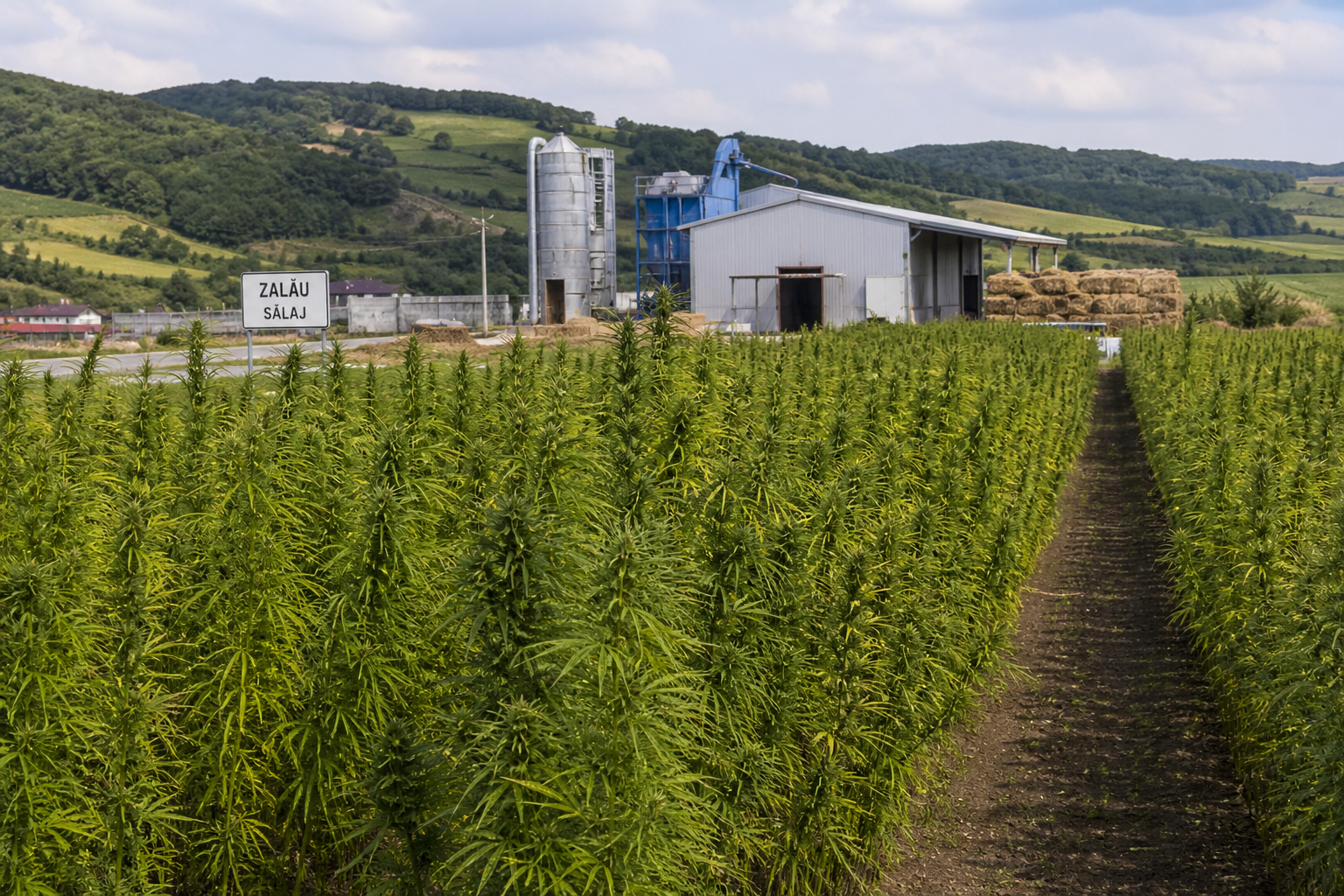
The hemp industry in Zalău is best understood as an emerging agricultural and manufacturing opportunity rather than a fully established local sector. In Zalău and the wider Sălaj area, businesses could participate in hemp cultivation, seed supply, food processing, textiles, construction materials, cosmetics and other legal applications. However, success depends on careful crop selection, documented supply chains and strict separation between industrial hemp and controlled cannabis products.
This distinction matters for farmers, processors, retailers and consumers. Industrial hemp is cultivated for low-THC fibre, seed, grain or other approved uses, while products containing cannabinoids may involve additional rules and testing. Anyone considering hemp production in Zalău should therefore treat regulatory compliance, traceability and product quality as part of the business model from the beginning.
What the hemp industry in Zalău could include
Hemp is a multipurpose crop. Different varieties and cultivation systems are intended for different outputs, so a local industry would not be limited to selling raw plants. It could develop through several connected stages:
- Crop production: Farmers cultivate approved varieties for fibre, seed, grain or other permitted purposes.
- Primary processing: Stalks may be dried, separated and prepared for fibre, hurd or other industrial uses.
- Food production: Hemp seed can be used in foods such as oil, flour, protein ingredients and snacks, subject to food-safety requirements.
- Manufacturing: Processed hemp may support insulation, animal bedding, paper, packaging, textiles or composite materials.
- Retail and distribution: Businesses can sell compliant hemp-based products when their ingredients, labels and claims meet applicable rules.
A practical local cluster would connect growers with processors instead of relying only on unprocessed harvests. This could help keep more value in the region, but only if there is dependable demand and suitable equipment. A farmer should not plant a crop simply because hemp appears attractive in general discussions; the intended buyer, specification and processing route should be identified first.
Industrial hemp in Zalău: agricultural considerations
The prospects for industrial hemp in Zalău depend on agronomy, farm scale and access to infrastructure. Land conditions, rainfall, weed pressure, rotation planning and harvesting equipment all influence whether cultivation is commercially sensible. Hemp can be useful in a diversified rotation, but it is not a universal solution for difficult soils or weak farm economics.
Choosing a realistic production model
There are several possible models for hemp farming in Sălaj. A grower might supply seed to a food processor, produce stalks for fibre, or work under contract with a company that provides technical specifications. These models have different harvesting dates, storage needs and quality standards.
Before planting, a prospective grower should clarify:
- Which approved variety is suitable for the intended use;
- What documentation is required for seed, planting and harvest;
- Who will purchase the crop and under what quality conditions;
- How the harvest will be dried, stored and transported;
- Whether local machinery can handle the crop efficiently;
- What testing and records will be needed throughout the season.
Contract production can reduce some market uncertainty, but it does not remove the need for independent due diligence. Contracts should identify responsibilities for failed crops, testing, rejected material, transport and payment. Farmers should also verify that potential buyers are legally operating and have a credible processing destination.
Hemp processing and business opportunities in Zalău
The greatest opportunity may lie beyond cultivation. Raw agricultural materials often have lower margins than branded or semi-finished goods, while processing creates additional technical and commercial requirements. In Zalău, small and medium-sized enterprises could explore activities such as cleaning and packaging hemp seed, producing food ingredients, manufacturing natural-fibre products or supplying hemp hurd for construction.
Food and seed-based products
Seed-based products are distinct from intoxicating cannabis products and are generally approached as food or agricultural goods. Even so, they must be handled responsibly. A producer needs appropriate hygiene controls, reliable ingredient sourcing, accurate nutrition information and labels that do not imply unsupported medical benefits.
Local businesses could focus on traceable Romanian seed, cold-pressed oil, bakery ingredients or protein products. The commercial advantage would come from consistent quality and clear positioning, not from vague claims that hemp products cure illnesses or provide guaranteed health effects.
Fibre, hurd and construction materials
Hemp fibre can be relevant to textiles, insulation, composites and specialty materials, while the woody inner portion of the stalk, commonly called hurd, may be used in bedding or building products. These applications require collection, drying, storage and processing systems that are often more demanding than food packaging.
Construction products also need performance documentation. A company selling hemp-based insulation or hemp-lime materials should be able to explain how the product is installed, how it performs and which building requirements apply. A natural material is not automatically suitable for every building project.
Retail and consumer education
Retailers in the area may sell legal hemp foods, cosmetics, clothing, household materials or other compliant products. The most responsible approach is to provide clear ingredient information, batch details where relevant and realistic guidance about what the product does. Retailers should avoid presenting industrial hemp goods as a way to bypass drug laws.
For a broader look at how product quality and consumer checks can be approached locally, see this practical guide to hemp products in Botoșani. The local market is different, but the principles of checking labels, suppliers and intended use are transferable.
Hemp laws in Zalău and compliance responsibilities
Hemp laws in Zalău are shaped primarily by Romanian and European rules rather than by a separate city-level hemp framework. Requirements can vary according to the activity: cultivation, food manufacture, cosmetics, animal products, fibre processing and cannabinoid-containing goods may each raise different compliance questions.
Farmers and businesses should confirm current requirements with the competent authorities before investing. The Romanian Ministry of Agriculture and Rural Development is an appropriate starting point for official agricultural information; consult the Ministry of Agriculture and Rural Development for current institutional guidance and relevant procedures.
European agricultural rules also matter for growers and supply-chain participants. The European Commission’s overview of hemp in EU agriculture provides useful context on the crop and policy environment, but businesses should still verify how current rules apply in Romania.
Important compliance areas
- Seed and variety documentation: Use legally permitted planting material and retain invoices, labels and certification records.
- THC-related testing: Follow applicable sampling and testing requirements rather than relying on informal assurances from suppliers.
- Food safety: Food businesses need suitable hygiene procedures, traceability and compliant labelling.
- Product claims: Avoid medical or therapeutic claims unless they are legally authorised and properly substantiated.
- Supply-chain records: Keep clear records showing where materials came from, how they were processed and where they were sold.
- Waste and storage: Plan for secure storage, contamination controls and lawful disposal of unsuitable material.
Products marketed as CBD or cannabinoid goods require particular caution. Their legal status can depend on ingredients, concentration, intended use, product category and current national or European interpretations. A retailer should obtain documentation from the supplier and seek professional regulatory advice when the classification is unclear.
How Zalău businesses can build a credible hemp value chain
A successful local sector would benefit from cooperation among farmers, processors, researchers, logistics providers and public institutions. The first step is not necessarily a large industrial facility. It may be a small pilot that tests a defined product and a dependable route to market.
- Map local resources: Identify available land, growers, storage, transport, machinery and potential processing sites.
- Select one market: Choose food ingredients, fibre, construction material or another clearly defined application instead of pursuing every product category at once.
- Test the supply chain: Run a limited production cycle and document yields, labour, drying, transport and processing costs.
- Verify compliance: Review agricultural, food, environmental, labelling and consumer-protection duties before commercial launch.
- Develop buyer relationships: Secure realistic purchase agreements or distribution channels before expanding acreage or equipment.
- Measure quality: Use batch records and appropriate laboratory testing to support trust and reduce avoidable disputes.
Businesses can also learn from wider Romanian discussions about agricultural and industrial development. The article on the hemp and cannabis industry in Alba Iulia offers a useful comparison point, although local conditions and legal details must always be checked independently.
Challenges facing hemp development in Sălaj
The main barriers are practical rather than promotional. Processing equipment can be expensive, markets may be fragmented and growers may lack local technical support. Hemp also needs a buyer with the capacity to handle the material after harvest. Without that connection, a promising crop can become a storage and cash-flow problem.
Another challenge is public confusion. Hemp food, fibre and seed products should not be automatically associated with intoxicating cannabis, but businesses must also avoid using that distinction as a marketing shortcut. Clear packaging, responsible education and honest product descriptions are essential.
Local development should also consider transport and environmental management. A processing business needs suitable premises, reliable utilities and a plan for dust, noise, waste and worker safety. These details determine whether an operation can grow sustainably more than enthusiastic branding does.
What consumers should check when buying hemp products in Zalău
Consumers can support responsible businesses by asking simple questions about provenance and composition. The product category should be clear, and the label should identify the ingredients, producer or importer, quantity, storage information and relevant warnings.
- Buy from a traceable seller rather than an anonymous social-media account.
- Check whether the product is food, cosmetic, textile, construction material or another category.
- Be cautious of promises to treat serious diseases or replace prescribed care.
- For cannabinoid products, request current batch documentation and verify the applicable legal status.
- Keep receipts and packaging in case a product needs to be returned or reported.
These checks do not guarantee perfect quality, but they make it easier to distinguish a transparent supplier from a business relying on confusing language.
Conclusion
The hemp industry in Zalău could develop through practical, specialised businesses rather than a single oversized project. Cultivation, seed-based foods, fibre processing, construction materials and responsible retail all offer possible routes, but each depends on verified demand, suitable infrastructure and accurate compliance work.
For farmers, the priority is to secure a buyer and understand production requirements before planting. For entrepreneurs, the opportunity lies in adding value through processing, quality control and traceability. For consumers, clear labels and realistic claims are the best signs of a responsible market. With a measured approach, Zalău and the wider Sălaj region can evaluate hemp on its agricultural and industrial merits while avoiding the legal and commercial risks created by confusion.