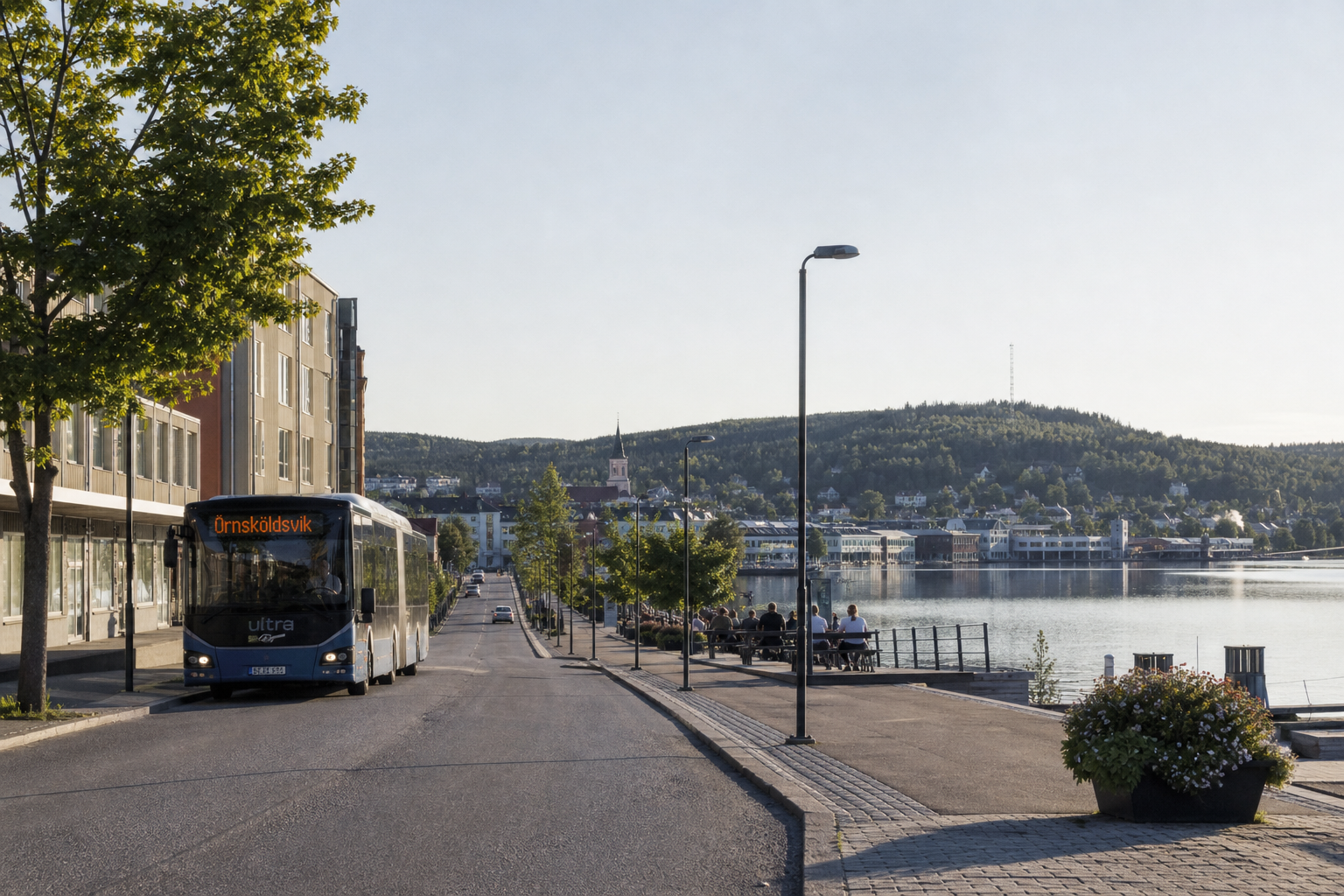
Understanding cannabis restrictions in Örnsköldsvik starts with an important distinction: Örnsköldsvik does not have a separate cannabis market or a city-specific legalization framework. The main rules come from Swedish national law, while local authorities deal with public order, prevention, healthcare and social support. This means that questions about cannabis in Örnsköldsvik usually involve the same legal principles that apply elsewhere in Sweden.
Sweden takes a restrictive approach to cannabis. Possession, use, transfer, cultivation and unlawful import can lead to criminal consequences, and drug-impaired driving is treated seriously. At the same time, people who need help with dependence or harmful use can seek healthcare without having to navigate the issue alone. This guide explains the practical position for residents, visitors and anyone researching weed in Örnsköldsvik.
How Swedish cannabis law applies in Örnsköldsvik
The legal framework is national rather than municipal. Örnsköldsvik Municipality cannot create a local recreational cannabis system that overrides Swedish criminal law. A person may therefore face legal problems for cannabis activity in a private home, outdoors, at a workplace or in another public setting.
Swedish narcotics legislation covers more than commercial selling. Depending on the circumstances, unlawful possession, personal use, production, preparation, transfer, acquisition and transportation may be relevant. The seriousness of a case can depend on factors such as the substance, quantity, conduct involved and any aggravating circumstances. Only a court and the responsible authorities can determine the outcome of an individual case.
The Swedish Police information on drugs and drug offences provides official background on how drug-related rules are enforced. Readers should treat informal claims about supposedly safe amounts or decriminalized personal use with caution; such claims do not replace current Swedish law.
Possession and personal use
Having cannabis for personal use is not a legal exception under Swedish law. Personal consumption is also criminalized, so using cannabis does not become lawful simply because no one else is supplied or because the amount is small. Police may investigate suspected offences, and a case can involve questioning, seizure, testing and referral to prosecutors or courts.
A cannabis-related record or legal process can have practical consequences beyond a fine or other penalty. Employment screening, travel plans, residence matters and professional licensing may be affected in some circumstances. The consequences depend on the case, the person’s situation and the final legal decision.
Buying, selling and sharing
Purchasing cannabis, giving it to another person or selling it creates additional legal risk. Sharing cannabis without payment is not automatically harmless, because transfer can still be treated as a narcotics offence. Online sellers and informal contacts may also expose buyers to fraud, unknown potency, contaminated products and police investigations.
There is no licensed recreational dispensary system in Örnsköldsvik. A shop, website or social media account that claims to offer ordinary THC cannabis legally should be approached with extreme caution. A product label or seller’s promise does not determine whether possession is lawful.
Public places, homes and local practical issues
Swedish national drug law applies in private and public locations. Using cannabis in a flat, hotel room, vehicle, forest area or public square does not create a general legal exemption. Public use may also lead to complaints, police attention or separate issues involving disturbance, trespass, smoking restrictions or municipal public-order rules.
Örnsköldsvik includes urban neighbourhoods, coastal areas, rural communities and busy transport routes. That geography does not change the law, but it can affect how a situation develops. Odour complaints, visible use, possession near events or concerns about young people may prompt residents, property owners or authorities to intervene. Visitors should not assume that a quiet outdoor location is legally safer than an indoor one.
Municipal services may support prevention and early intervention, particularly where drug use affects a young person, family life, education or employment. Local policies can shape outreach and public-space management, but they do not legalize cannabis possession or consumption.
Driving and travelling with cannabis
Driving after using cannabis is a major safety and legal concern. Swedish traffic rules address driving under the influence of drugs, and the presence of a narcotic substance in the body can be highly consequential. Intoxication, impairment, the type of test and the circumstances of the journey may all matter. A person should never drive, cycle in dangerous traffic or operate machinery after using cannabis.
There is also a difference between travelling within Örnsköldsvik and crossing a national border. Moving cannabis through an airport, port or across the Swedish border can raise customs and import issues in addition to ordinary possession rules. Travellers should not rely on a foreign prescription, a product purchased abroad or an assumption that a small amount will be overlooked.
Prescription medicines require particular care. A medicine that contains a controlled substance may be subject to documentation and transport requirements, especially during international travel. Before travelling, patients should check current requirements with the relevant authorities, their prescriber and the dispensing pharmacy.
Medical cannabis in Örnsköldsvik
Medical cannabis rules in Örnsköldsvik are also based on Swedish national regulation. Some cannabis-derived or cannabinoid-containing medicines may be prescribed or supplied under controlled conditions, but this is not the same as a general right to use cannabis for medical reasons.
A person should discuss symptoms with a licensed healthcare professional rather than buying cannabis from an informal source. Doctors assess the diagnosis, available treatments, risks, interactions and whether a regulated medicine is appropriate. Patients should follow the prescription exactly and keep medicines in their original packaging.
The Swedish Medical Products Agency is a useful official starting point for information about medicines, authorization and safe use. Rules can change, and product status may differ between a prescription medicine, a food supplement, a cosmetic and an unregulated online product.
Why self-medication can be risky
Unregulated cannabis products may have inaccurate strength information or contain substances that are not listed on the label. Cannabis can also affect attention, memory, reaction time and mental health. Risks may be greater for adolescents, people with a personal or family history of psychosis, and anyone taking medicines that affect the nervous system.
Medical advice is especially important when cannabis use is connected to anxiety, sleep problems, pain, nausea or stress. Treating the underlying condition through healthcare can be safer than relying on a product whose composition and legal status are uncertain.
CBD, hemp and low-THC products
CBD and hemp products are not automatically outside Swedish drug and medicine rules. The legal position may depend on the product’s ingredients, how it is made, its THC content, its intended use and the way it is marketed. A product sold lawfully in another country may still create problems in Sweden.
Consumers should be careful with oils, flowers, edibles, vapes and extracts advertised as hemp or CBD. Cannabis flower that is described as low-THC can still resemble prohibited cannabis and may contain more THC than expected. Food, cosmetic and medicine regulations can also apply separately from narcotics law.
Before buying or importing a product, check current information from Swedish authorities and ask the seller for clear, verifiable ingredient and compliance information. Avoid products that make unsupported medical claims or promise effects that sound too good to be true.
Health support and safer choices
Anyone worried about their own cannabis use, or another person’s use, can contact healthcare or local social services. A healthcare professional can discuss dependence, withdrawal, sleep, anxiety, concentration and other concerns confidentially within the limits of applicable rules. Emergency symptoms such as severe confusion, chest pain, loss of consciousness or dangerous behaviour require urgent medical attention.
For young people, parents and professionals, early support is often more useful than waiting for a crisis. Warning signs may include falling school or work performance, secrecy about substances, financial problems, changes in peer groups, repeated anxiety or using cannabis to cope with everyday problems.
Practical risk reduction does not make illegal use legal. The safest legal choice is not to use non-prescribed cannabis, not to drive after taking any intoxicating substance and not to accept products from unknown sources. People who already use cannabis should avoid mixing it with alcohol or sedating medicines and should seek professional advice if use is becoming difficult to control.
How Örnsköldsvik fits into the wider Swedish picture
Local questions often reflect broader Swedish debates about prevention, public health, treatment and criminal justice. Comparing nearby regional perspectives can be useful, provided readers remember that the underlying law remains national. For example, our guide to marijuana use in Sundsvall discusses similar legal and health considerations in a neighbouring part of northern Sweden, while the article on cannabis regulations in Umeå provides another regional point of comparison.
These local differences are mainly about geography, services, prevention work and community context—not different rights to possess or sell cannabis. Anyone facing an actual investigation, employment issue or prescription question should obtain advice suited to their individual circumstances.
Key points for residents and visitors
- Swedish national law governs cannabis restrictions in Örnsköldsvik.
- Possession and personal use are not generally lawful, even when the amount is small.
- Buying, selling, sharing, cultivating and importing cannabis can create additional offences.
- Do not drive or operate machinery after using cannabis or any intoxicating drug.
- Medical cannabis is limited to regulated medicines and professional healthcare processes.
- CBD and hemp labels do not automatically prove that a product is legal or safe.
- Seek healthcare or social support if cannabis use is affecting health, work, family or finances.
Conclusion
The central fact about cannabis restrictions in Örnsköldsvik is that local location does not create a separate recreational cannabis regime. Swedish national law restricts possession, use, supply, cultivation and import, while drug-impaired driving and unregulated products present additional risks. Medical use must be handled through approved healthcare and medicines channels, and CBD or hemp products require careful checking rather than assumptions based on marketing.
For accurate decisions, rely on current information from Swedish authorities and qualified healthcare professionals. If cannabis is already causing legal, personal or health problems, early advice is usually safer and more effective than waiting for the situation to escalate.