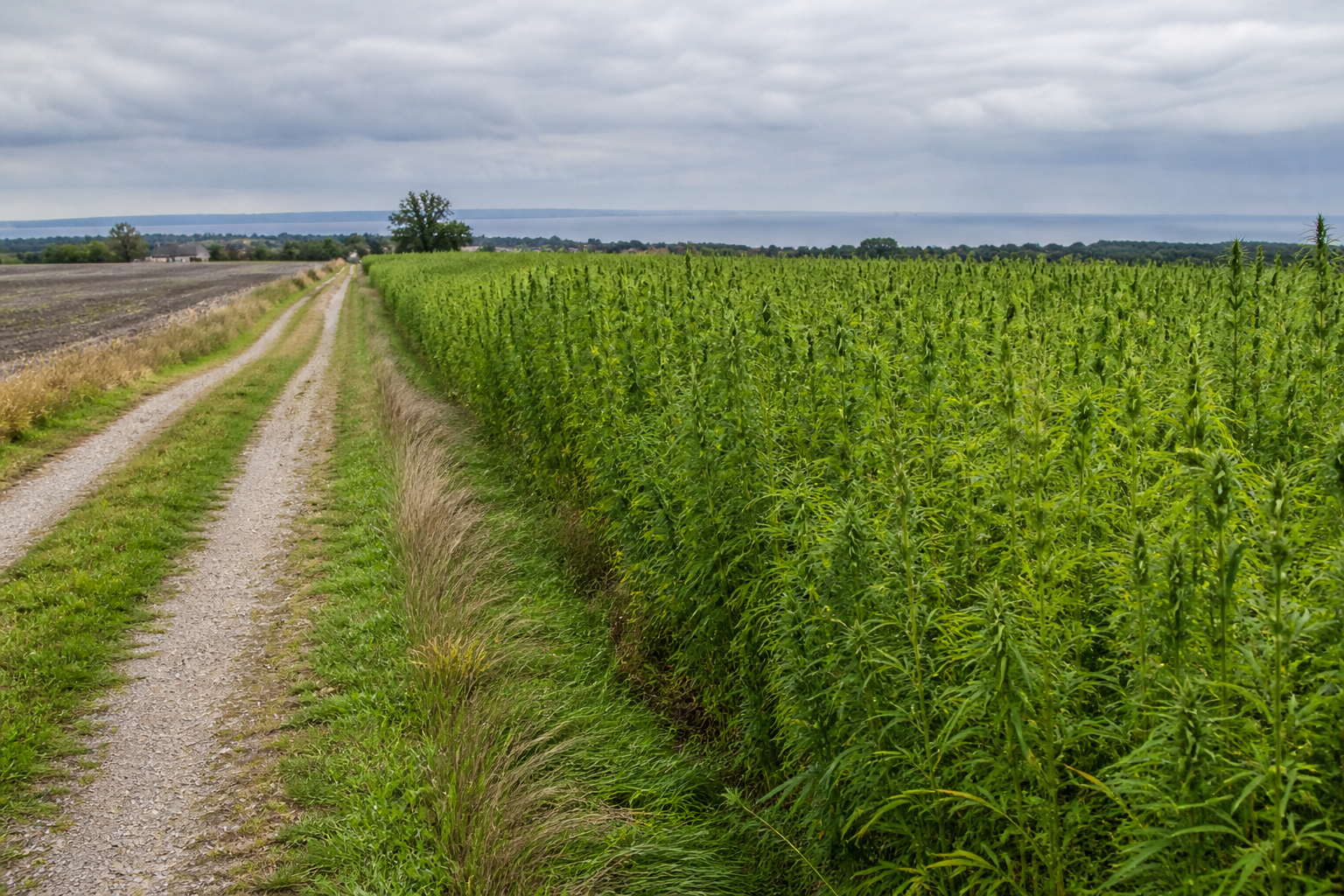
The hemp industry in Landskrona is best understood as an emerging opportunity rather than an established local sector. Industrial hemp can supply fibre, seed, oil and other raw materials, but cultivation and sales in Sweden operate within detailed agricultural, food, consumer and controlled-substance rules. For Landskrona, the subject connects farming, food production, construction materials, logistics and circular manufacturing.
This guide explains what industrial hemp is, where a local value chain could fit, which products are realistic, and why compliance matters. It does not suggest that cannabis sales are legal in the city. In Sweden, hemp with low THC and approved cultivation conditions must be distinguished carefully from cannabis grown or sold for intoxicating use.
What the hemp industry in Landskrona could include
Hemp is a form of Cannabis sativa cultivated for industrial or agricultural purposes. Unlike high-THC cannabis, industrial hemp is selected for low levels of tetrahydrocannabinol, or THC. Its usefulness comes from several parts of the plant, which can be processed into different product categories.
A potential Landskrona value chain could involve growers, seed suppliers, agricultural contractors, processors, manufacturers, retailers and businesses that use hemp-based materials. The city’s position in western Skåne gives the topic a practical regional dimension, although any commercial project would still need to prove its agronomic, financial and regulatory viability.
- Fibre: stalk fibre may be used in textiles, insulation, composites, paper and other material applications.
- Shives: the woody core of the stalk can be used in animal bedding, horticultural products and some construction materials.
- Seed: hempseed can be processed into food ingredients and cold-pressed oil when products meet food rules.
- Hemp-derived ingredients: extracts and cosmetic ingredients require careful assessment because their legal treatment depends on composition, intended use and claims.
- Research and services: local businesses could support trials, processing, logistics, testing, packaging or sustainable product design.
Industrial hemp in Landskrona: why location matters
Growing hemp is only one part of an industry. The crop becomes commercially useful when harvesting, drying, storage, processing and distribution are coordinated. A municipality with agricultural surroundings and access to transport infrastructure may be relevant to that chain, but proximity alone does not guarantee a viable business.
For industrial hemp in Landskrona, the most realistic near-term opportunities may be businesses that connect regional growers with processors elsewhere in Sweden or Europe. Fibre processing can require specialist equipment and sufficient volumes, while seed products need food-grade handling and reliable quality control. A local entrepreneur might therefore begin with sourcing, product development or distribution instead of building a complete processing plant.
Questions a local project should answer
- Is the proposed hemp variety approved for cultivation under the applicable Swedish and European rules?
- Can the farm secure suitable soil, crop rotation, machinery and harvesting arrangements?
- Where will the crop be dried, stored and tested?
- Who will buy the fibre, seed or other output, and what specifications will they require?
- Can the project remain profitable if yields, weather or market prices vary?
- Which authority regulates the specific product, and what documentation must be retained?
Hemp farming in Landskrona and the Swedish agricultural framework
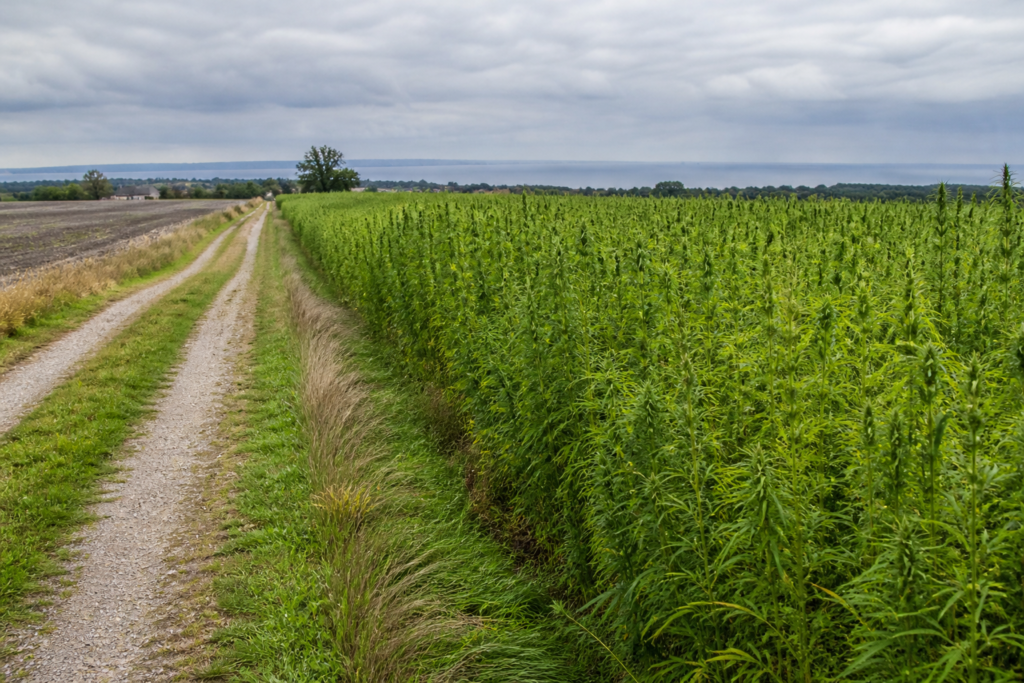
Hemp farming in Landskrona should begin with official agricultural guidance, not assumptions based on rules in other countries. Cultivation eligibility can depend on the seed variety, THC requirements, applications, inspections and documentation. Farmers should consult the Swedish Board of Agriculture’s official information before ordering seed or planting a crop.
Farmers also need to consider ordinary agricultural realities. Hemp is not automatically a low-risk or universally suitable crop. Soil conditions, sowing dates, weed pressure, weather, harvesting equipment and the intended end market all influence results. A crop grown for fibre has different requirements from one grown for seed, and a buyer may reject material that fails moisture, contamination or quality specifications.
Record keeping is particularly important. A responsible operator should retain seed information, field records, harvest details, laboratory results where relevant, delivery documents and customer specifications. These records help demonstrate what was cultivated and how the material entered the supply chain.
Hemp products in Landskrona: food, materials and consumer goods
The phrase hemp products in Landskrona covers very different categories, and each category can have a separate compliance pathway. Hempseed foods are not the same as CBD extracts, fibre insulation or cosmetic products. Businesses should identify the product first, then determine the applicable rules, labelling duties and marketing restrictions.
Food and hempseed
Hempseed, hempseed oil and related foods may be sold only when they comply with food-safety, ingredient and labelling requirements. A seller must avoid presenting a food as a medicine or making unsupported health claims. Traceability, allergen information, storage conditions and accurate product descriptions are part of responsible retail.
Fibre and construction materials
Fibre-based products may offer a route into insulation, biocomposites, packaging, textiles or interior products. Their environmental value should be assessed across the full life cycle, including fertiliser use, transport, processing energy, binders, durability and end-of-life treatment. “Hemp-based” does not automatically mean biodegradable, carbon negative or suitable for every building application.
CBD and extracts
CBD-related products need special caution. An extract’s legal status may depend on the presence of controlled substances, the plant part used, the product’s intended use and whether it is marketed as food, medicine, cosmetic or something else. The Swedish Medical Products Agency provides official regulatory information for medicines and medicinal claims. Businesses should also seek advice from the relevant food, consumer and municipal authorities before placing products on the market.
For a broader comparison of product categories and buying considerations, see this guide to hemp products in Östersund. The legal details still need to be checked for the specific product and current Swedish rules.
Hemp regulations in Landskrona: what businesses should verify
Hemp regulations in Landskrona are primarily shaped by national and European law, while local authorities may become involved through food control, environmental supervision, planning, waste management or business permits. The correct authority depends on the activity. A grower, food producer, cosmetic seller and pharmaceutical company will not face identical requirements.
Before investing, a business should create a compliance checklist covering the following areas:
- Cultivation: confirm permitted varieties, application procedures, THC limits and inspection obligations.
- Processing: establish whether the process changes the product’s regulatory status and whether testing is required.
- Food: assess ingredient permissions, food hygiene, traceability, labelling and novel-food questions where applicable.
- Medicinal claims: avoid claims that imply treatment or prevention unless the product is authorised for that purpose.
- Consumer protection: ensure packaging, advertising, pricing and online descriptions are accurate and not misleading.
- Waste and environment: manage plant residues, solvents, packaging and potential contaminants responsibly.
Rules can change, and a supplier’s statement that a product is “legal” is not a substitute for independent verification. Businesses should obtain current guidance before cultivation, import, processing or retail.
How Landskrona could build a responsible hemp value chain
A practical development strategy would focus on evidence and partnerships rather than rapid expansion. Farmers, researchers, manufacturers and public bodies could begin with small, clearly documented trials. The purpose would be to assess agronomic performance, processing needs, buyer demand and environmental impacts under local conditions.
Potential steps include:
- Mapping farms, processors, manufacturers and logistics providers in Skåne.
- Identifying one target market, such as fibre products or hempseed foods, instead of pursuing every category at once.
- Testing material quality through reputable laboratories and retaining transparent records.
- Comparing hemp with existing local materials on cost, durability, emissions and recyclability.
- Working with municipal and national authorities before commercial launch.
- Using clear language that distinguishes industrial hemp from intoxicating cannabis.
Lessons from other Swedish discussions about cannabis policy can also be useful, provided they are not treated as direct evidence of local hemp demand. For context, readers can compare the legal framework discussed in the guide to cannabis legality in Lund and the industry questions examined in the overview of the cannabis industry in Kristianstad.
Environmental considerations and realistic expectations
Hemp is often promoted as a sustainable crop, but environmental performance depends on how it is grown, processed and used. A local assessment should examine irrigation, fertiliser, pesticides, soil management, transport distances, processing energy and the useful life of the finished product. It should also distinguish between temporary carbon storage in a product and permanent removal of carbon from the atmosphere.
Hemp may contribute to crop diversification or provide renewable material inputs, but it is not a universal solution for agriculture or climate policy. Transparent measurement is more credible than broad green marketing. Businesses that publish clear sourcing and performance information are better placed to build trust with customers and commercial partners.
What consumers in Landskrona should look for
Consumers considering hemp-based goods should identify the product category and buy from a seller that provides a clear name, ingredient list, responsible contact information and appropriate usage instructions. Be cautious of products promising dramatic health effects, vague laboratory claims or guaranteed benefits.
For food, check labelling and storage information. For cosmetics, review the ingredient list and avoid assuming that a hemp reference proves a therapeutic effect. For building and textile products, ask about composition, durability and disposal. If a product appears to be marketed as a medicine, verify whether it has the required authorisation rather than relying on social media recommendations.
Conclusion
The hemp industry in Landskrona has potential in agriculture, materials, food, logistics and product innovation, but its development should be gradual and evidence-led. The strongest opportunities are likely to come from clearly defined products, dependable buyers, suitable processing arrangements and careful regulatory work.
Industrial hemp should not be confused with recreational cannabis, and local interest does not remove the need to follow Swedish rules. For farmers and entrepreneurs, the next step is to confirm cultivation requirements, speak with the relevant authorities, test the commercial case and build a transparent supply chain. That approach gives Landskrona a more credible basis for exploring hemp without overstating the size or maturity of the local market.