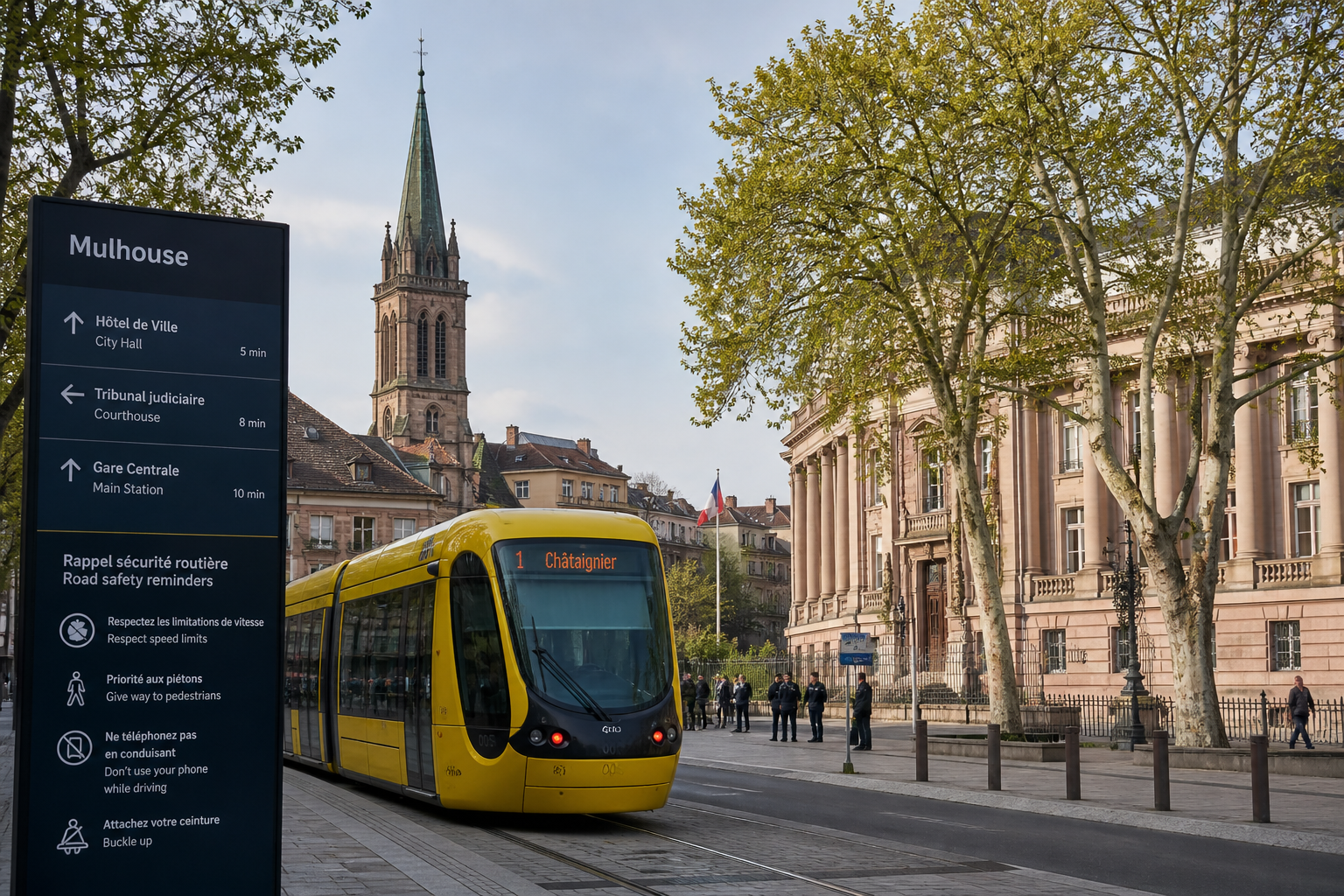
Understanding cannabis restrictions in Mulhouse requires looking first at French national law. Mulhouse does not operate a separate legal cannabis market, and recreational cannabis remains prohibited throughout France. Possessing, buying, selling, transporting, growing or using cannabis can lead to a fine or criminal prosecution, depending on the circumstances.
This guide explains the main rules for residents and visitors, including what they mean in public places, around transport, when driving and when dealing with CBD products. It is general information rather than legal advice. Enforcement decisions can depend on the facts of a case, the substance involved and a person’s previous history.
How French cannabis law applies in Mulhouse
The core rules in Mulhouse come from French national law, not from a city-specific recreational-use framework. Cannabis containing prohibited levels or forms of THC is treated as an illicit narcotic. The law covers more than smoking: acquisition, possession, transport, transfer and cultivation may all create legal exposure.
French law also prohibits personal use. A person stopped with a small amount may receive an on-the-spot fixed fine in appropriate cases, but a small quantity does not make cannabis legal. Police and prosecutors can consider other factors, including the quantity, packaging, suspected supply activity, location and the person’s conduct.
The official French government guidance on drug use and penalties provides a useful starting point for checking the current legal framework. Rules and enforcement procedures can change, so anyone facing a police investigation should obtain advice from a qualified French lawyer.
Cannabis laws in Mulhouse: possession, use and supply
Possession and personal use
Possessing cannabis for personal use remains unlawful in Mulhouse. Depending on the situation, authorities may issue a fixed criminal fine or pursue the matter through the courts. The fixed fine is not a licence to carry cannabis, and refusing to pay or disputing the circumstances can lead to further legal proceedings.
Using cannabis in a flat, hotel room, park, street or vehicle does not remove the legal risk. Private premises may reduce visibility, but they do not create a general exemption from French drug law. Visitors should also remember that accommodation providers can impose their own no-smoking and conduct rules.
Sharing and selling
Giving cannabis to another person can be treated as an offence even when no money changes hands. Selling, arranging supply or holding cannabis in a way that suggests distribution is considerably more serious than simple personal possession. A large quantity, multiple packages, scales, messages about sales or cash may attract particular scrutiny.
There is no lawful recreational dispensary system in Mulhouse. Shops or websites that appear to offer high-THC cannabis are not operating under a French recreational retail licence. Buying from an informal source also creates risks involving unknown potency, contamination, fraud and police action.
Public places, events and transport
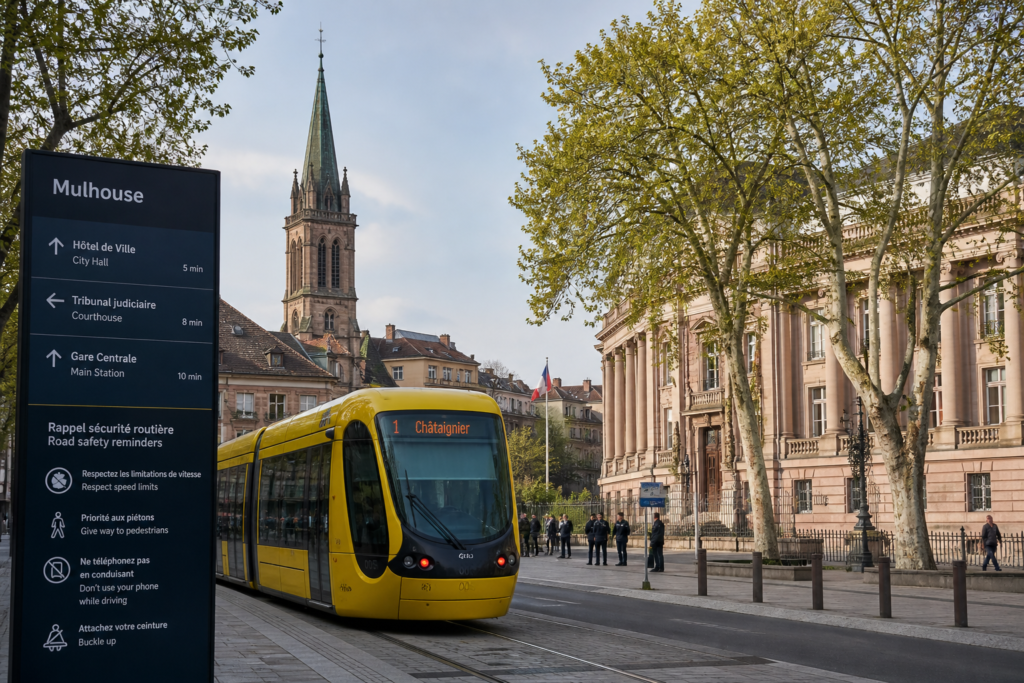
Public consumption can create both criminal and practical problems. Smoking or using cannabis on streets, in parks, near tram stops, outside stations or at events may attract police attention and can disturb other people. Mulhouse may also use local public-order measures for specific places or occasions, such as restrictions on smoking, nuisance, gatherings or access to public facilities.
Local rules do not legalise cannabis. They can add another layer of consequences, including removal from a venue, an administrative response to public nuisance or action for other conduct. A person should not assume that discreet use is permitted simply because no sign is visible.
Taking cannabis across the French border is especially risky. Mulhouse is close to Germany and Switzerland, but crossing a national border with cannabis can involve customs and trafficking concerns in addition to ordinary possession rules. Different laws in a neighbouring country do not provide permission to import cannabis into France or carry it out of France.
Driving after cannabis use
Driving after using cannabis is a major legal and safety risk in France. French authorities can prosecute drug-impaired driving when a prohibited substance is detected, and the offence is not based solely on whether the driver feels intoxicated. Residues can remain detectable after the noticeable effects have faded.
This means waiting until a person feels normal is not a reliable way to decide whether to drive. A positive test may lead to criminal penalties, licence consequences, vehicle-related disruption and insurance complications. The risk applies to cars, motorcycles and other motor vehicles, and a driver may also face separate consequences if an accident occurs.
- Do not drive after using cannabis.
- Do not accept a lift from someone who has used cannabis.
- Use a sober driver, public transport or a licensed taxi instead.
- Never combine cannabis with alcohol before travelling.
For visitors, this rule is particularly important when renting a car or travelling between Mulhouse, Basel, Strasbourg and nearby border areas. A foreign driving licence does not exempt anyone from French road-safety law.
CBD and low-THC products in Mulhouse
CBD products are not automatically the same as illegal recreational cannabis. Some CBD products may be lawfully sold when they meet French and European requirements, including applicable limits on THC and rules concerning the plant material, product type, labelling and marketing. However, a product’s presence in a CBD shop does not guarantee that every product is compliant.
Consumers should be cautious with flowers, resins, oils, edibles and vape products. Packaging can be inaccurate, laboratory information may be missing and products may contain more THC than expected. Some products can also create problems for drug testing even when marketed as CBD.
Do not confuse CBD legality with permission to use cannabis containing intoxicating THC. If buying a legal-looking product, check the ingredients, THC information, batch details and seller’s compliance information. Avoid products with unclear composition or claims that they can treat a medical condition.
The French government’s MILDECA information portal offers broader information on drugs, prevention and public policy. Medical questions should be discussed with a doctor or pharmacist rather than a commercial seller.
Medical cannabis and health-related questions
France has developed tightly controlled medical-cannabis arrangements and research initiatives, but these do not create a general right to buy or carry recreational cannabis. A patient should follow the exact instructions of the prescribing team and pharmacy and should not rely on cannabis obtained from friends, informal sellers or foreign markets.
Prescription medicines and products bought abroad may raise separate import, transport or customs issues. Anyone travelling with a cannabis-based medicine should check the documentation and cross-border requirements before departure. Do not assume that a prescription from another country automatically authorises possession in France.
From a health perspective, inhaled smoke can irritate the lungs, while THC may affect attention, reaction time, memory and anxiety. Risks may be greater for adolescents, pregnant people, people with a personal or family history of psychosis and anyone combining cannabis with alcohol or sedating medicines.
What visitors and residents should do if stopped
Stay calm and avoid arguments or sudden movements. Do not attempt to hide, discard or transfer a substance, as that can complicate the situation. Ask what procedure is being used and request an interpreter if communication is difficult. Visitors should keep identification and travel documents available, but should not sign a document they do not understand.
If the matter involves more than a minor possession allegation, a search, detention, suspected supply or a driving offence, legal advice is especially important. Consular services may assist foreign nationals with general support, but they cannot cancel French proceedings or provide a substitute for a defence lawyer.
Anyone worried about their own use can seek confidential health advice. A doctor, pharmacist or local addiction service can discuss dependence, withdrawal, safer choices and treatment without relying on informal online claims. Immediate medical danger, severe confusion, chest pain, loss of consciousness or suspected poisoning should be treated as an emergency by calling the appropriate French emergency service.
Practical checklist for cannabis in Mulhouse
- Assume that recreational cannabis is illegal in Mulhouse and elsewhere in France.
- Do not buy, carry, grow, share or transport high-THC cannabis.
- Do not take cannabis across the border into Germany or Switzerland.
- Never drive, cycle in dangerous traffic or operate machinery after using cannabis.
- Check CBD labels carefully and avoid products with uncertain THC content.
- Respect venue rules, accommodation policies and local public-order requirements.
- Seek professional legal or medical advice when the situation involves detention, driving, supply or a prescription.
For readers comparing local policy discussions, the site’s guides to cannabis regulations in Reims and marijuana legality in Toulon illustrate the same important principle: city names may change, but the central restrictions come from French national law.
Conclusion
Cannabis restrictions in Mulhouse are shaped primarily by France’s prohibition of recreational cannabis. Possession and use can result in a fixed fine or more serious proceedings, while supply, cultivation, border crossings and drug driving carry greater risks. CBD products require careful checking and do not provide a loophole for intoxicating cannabis.
The safest approach is straightforward: do not buy or carry illicit cannabis, never drive after use, avoid cross-border transport and obtain qualified advice for medical or legal questions. Because enforcement and product rules can evolve, confirm important decisions through current French government information or a professional familiar with the specific circumstances.