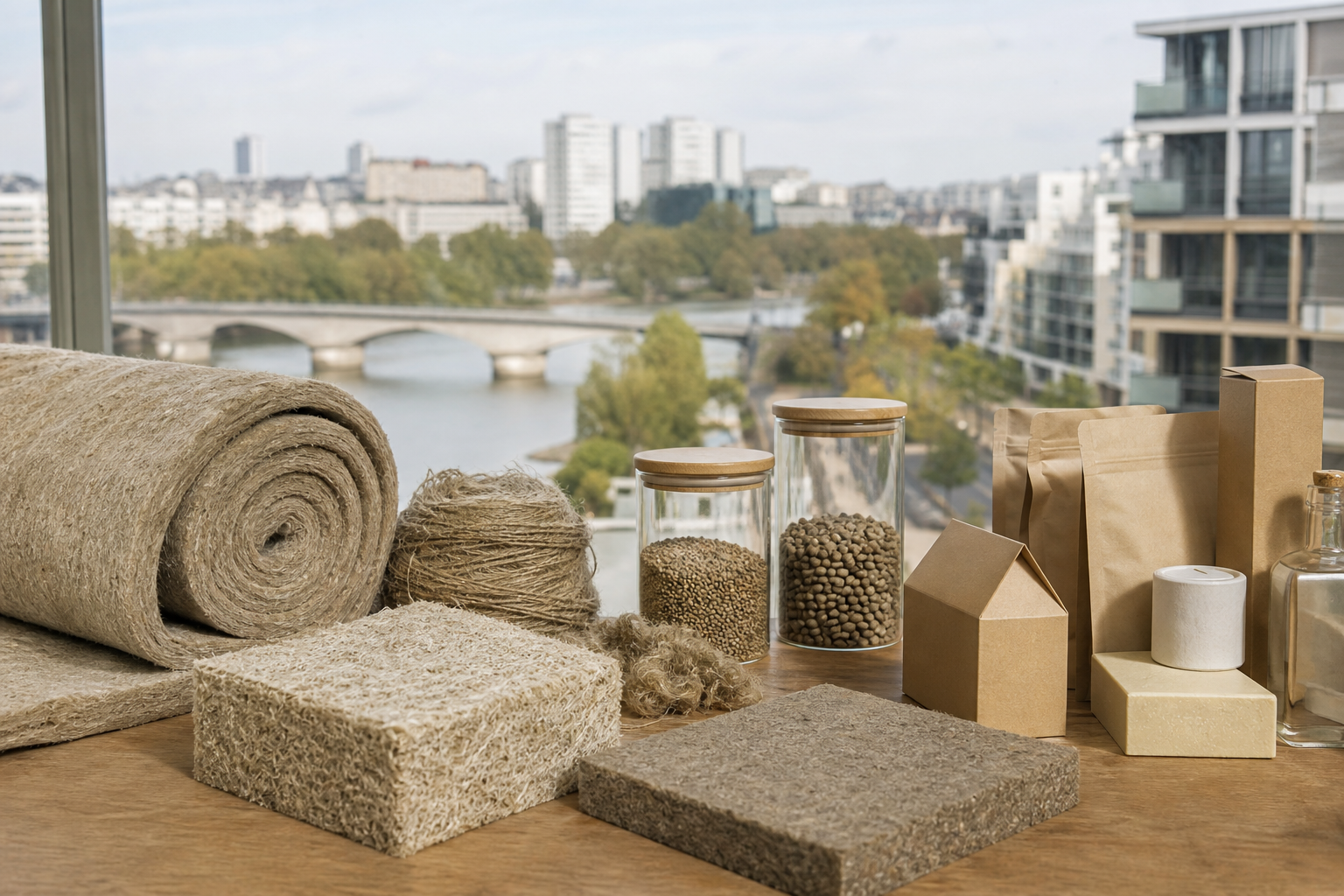
The hemp industry in Argenteuil is best understood as part of a wider French supply chain rather than as a large, established local farming sector. Argenteuil, in Val-d’Oise and within the Paris metropolitan area, offers connections to consumers, businesses, designers, builders and logistics providers. Those advantages can support hemp-related commerce, processing, education and services even when cultivation itself takes place elsewhere.
Hemp is also a broad term. Industrial hemp, CBD products, hemp seed foods, fibre, hurd and cannabis containing intoxicating levels of THC are not interchangeable categories. Each involves different expectations, safety considerations and legal obligations. This guide explains how the sector may develop around Argenteuil, what products are realistic, and how businesses and consumers can approach the subject responsibly.
What the hemp industry in Argenteuil actually includes
In everyday conversation, “hemp” can describe a plant, a raw material or a retail product. In an urban area such as Argenteuil, the most visible parts of the sector are likely to be distribution, retail, professional services and finished goods rather than extensive open-field cultivation inside the city.
Industrial hemp and its raw materials
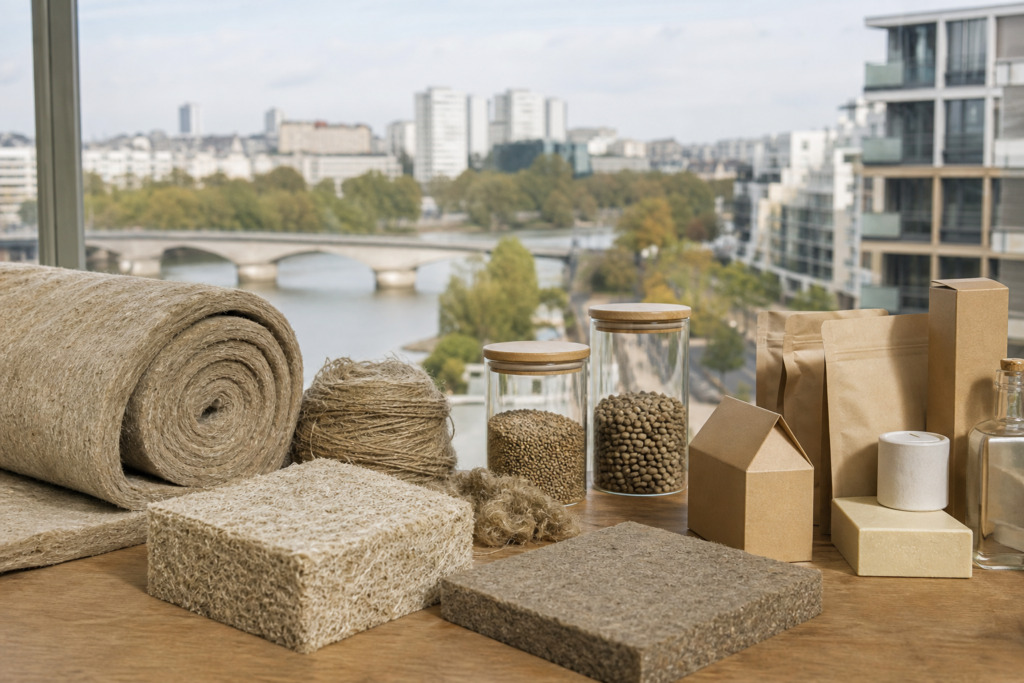
Industrial hemp is cultivated for applications such as fibre, hurd, seed and sometimes cannabinoids. Fibre can be used in textiles, insulation and composite materials. The woody inner core, known as hurd or shiv, can be incorporated into building products and animal bedding. Seeds are used in food products and pressed for oil.
These uses do not automatically make a product intoxicating. The plant variety, the part used, the extraction method and the final composition all matter. A business dealing in raw hemp must therefore maintain clear documentation about origin, processing and intended use.
Retail and consumer products
Hemp products in Argenteuil may include hemp seed oil, shelled seeds, protein powders, cosmetics, clothing, bags, paper goods and building materials. CBD products occupy a separate and more tightly scrutinised category. They should not be presented as recreational cannabis, and sellers should avoid unsupported medical claims.
A responsible local retailer would make product identity clear, provide ingredient and usage information, and source goods from suppliers able to demonstrate compliance. Attractive packaging alone is not evidence of quality or legality.
How French law shapes hemp in Argenteuil
French and European rules distinguish authorised industrial hemp from cannabis products containing prohibited or restricted levels of THC. The legal position can also depend on the product’s composition, intended use, presentation, labelling and route of sale. Rules may change, so businesses should check current requirements before importing, manufacturing or advertising products.
The French Ministry of Agriculture website is a useful starting point for official information about agriculture, plant production and food-related requirements. For public-health and controlled-substance issues, businesses should also consult the French Ministry of Health and seek professional legal or regulatory advice when the product is complex.
Industrial hemp is not the same as high-THC cannabis
Industrial hemp is selected and regulated for low THC and for practical outputs such as fibre and seed. High-THC cannabis intended for intoxication falls into a different legal category. Growing, possessing, selling or transporting prohibited cannabis can carry serious consequences in France.
This distinction is especially important in marketing. A company should not use images or language that imply a legal hemp product produces the effects of illicit cannabis. It should also avoid suggesting that a food, cosmetic or CBD item treats a disease unless the relevant claim has been specifically authorised.
CBD requires careful product compliance
CBD is a non-intoxicating cannabinoid, but a CBD-labelled product is not automatically safe or compliant. Contamination, inaccurate cannabinoid content, prohibited ingredients, inappropriate claims and poor labelling can all create risks. Products may also be subject to different rules depending on whether they are foods, cosmetics, e-liquids or other consumer goods.
Anyone considering CBD in Argenteuil should look for transparent labelling, a traceable manufacturer and accessible batch information. Consumers should be cautious about products that promise guaranteed medical results, conceal ingredients or provide no credible information about testing.
Where Argenteuil could fit into the French hemp economy
Argenteuil’s local value is likely to come from its relationship with the wider Paris region. A dense urban market can support specialist shops, wholesalers, creative businesses, construction suppliers, food brands and educational initiatives. The city can also function as a meeting point between producers outside the metropolitan area and customers inside it.
Distribution and logistics
Hemp-based goods are often easier to distribute than fresh agricultural products because many are shelf-stable. Seeds, oils, textiles, paper and building components can move through conventional commercial networks. Local businesses may therefore participate through warehousing, fulfilment, packaging, design, e-commerce or wholesale relationships.
That opportunity does not remove the need for traceability. A distributor should know who manufactured a product, which market rules apply, how it was stored and what records are needed if a product is withdrawn. Traceability is particularly important for ingestible goods and cannabinoid products.
Construction and renovation
Hemp-lime and other hemp-based materials attract interest because they can combine plant-based aggregate with a mineral binder. Hemp fibre may also appear in insulation, acoustic products and composites. These materials should be assessed according to their specific technical performance rather than marketed simply as “green.”
Builders and renovators working around Argenteuil need to consider fire performance, moisture behaviour, thermal properties, installation methods and compliance with French building requirements. A hemp material can be useful in the right application, but it is not a universal substitute for every conventional product.
Food, design and consumer goods
Hemp seed foods offer one of the clearest low-intoxication applications. Seeds and oil can be used in cooking, while fibres can support clothing, accessories and paper products. Local chefs, makers and designers may use these materials to create products with a visible connection to agricultural innovation.
Food businesses must still address allergen information, hygiene, ingredient rules, packaging and permitted claims. “Natural” does not mean exempt from food regulation, and a product’s sustainability message should be supported by a clear understanding of its supply chain.
Hemp cultivation in Argenteuil: potential and practical limits
Searches for hemp cultivation in Argenteuil should be interpreted carefully. Urban land pressure, fragmented plots, competing land uses and the need for suitable agricultural conditions can limit large-scale cultivation within the city. That does not make local participation impossible, but it makes smaller demonstrations, research partnerships, education and regional sourcing more plausible than a major municipal plantation.
Farmers and landowners considering cultivation need approved seed, reliable agronomic guidance and a clear plan for harvesting and processing. They must also understand inspection, documentation and the rules that distinguish authorised industrial production from prohibited cannabis cultivation.
For Argenteuil, a realistic model could involve partnerships with farms elsewhere in Île-de-France or other French regions. Local businesses could then contribute processing, branding, distribution, construction services or public education. This approach connects the city to the agricultural sector without overstating the amount of hemp grown locally.
Business opportunities and responsible growth
The strongest opportunities are likely to come from practical applications rather than hype. Entrepreneurs can examine where hemp solves a specific problem, improves a product or creates a more transparent supply chain.
- Specialist retail: sell clearly identified food, textile, cosmetic or industrial hemp products with accurate information.
- Construction supply: connect architects, contractors and manufacturers with suitable hemp-based insulation or composite materials.
- Food and hospitality: develop compliant recipes using hemp seeds or hemp seed oil without making medicinal promises.
- Design and fashion: use hemp fibre where durability, texture and sourcing are appropriate.
- Education: provide workshops for consumers, tradespeople and students on plant uses, regulation and environmental trade-offs.
- Logistics and fulfilment: support regional producers with storage, packaging and delivery services.
Before launching, a business should define its product category, identify the competent regulators, review labelling and advertising, test products where appropriate, and document supplier controls. A specialist adviser is particularly valuable for CBD, food, imports and products making health-related claims.
Environmental claims should be measured, not assumed
Hemp can be presented as a renewable raw material, but its environmental performance depends on farming practices, processing energy, transport, formulation and product lifespan. A hemp-based item is not automatically lower-impact than every alternative.
Businesses in Argenteuil can improve credibility by explaining where materials come from, how far they travel, what additives are used and whether the product can be repaired, reused or recycled. Clear comparisons are more useful than broad claims about being “eco-friendly.”
Local supply chains may reduce some transport distances, while specialised processing may still require materials to move across France or Europe. A transparent life-cycle perspective helps customers understand both the benefits and the limitations of hemp.
How consumers can assess hemp products in Argenteuil
Consumers looking for hemp in Argenteuil should first decide what they want: food, clothing, building material, cosmetics or a CBD product. The buying criteria differ between categories. For food, check ingredients and storage instructions. For cosmetics, review the full ingredient list. For construction products, request technical documentation. For CBD, look for precise cannabinoid information and avoid exaggerated promises.
- Check the product name, ingredients and intended use.
- Look for the manufacturer or importer’s identity and contact details.
- Ask whether testing or batch information is available when relevant.
- Be wary of claims that a product cures, prevents or replaces medical treatment.
- Keep receipts and packaging, especially for ingestible or cannabinoid products.
People taking medicines, pregnant or breastfeeding people, and anyone with a health condition should ask a qualified healthcare professional before using cannabinoid products. Hemp seed foods and CBD products should not be treated as interchangeable.
What the future may hold for Argenteuil
The future of the local sector will depend on regulation, consumer trust, technical performance and the ability of businesses to prove their claims. Argenteuil does not need to become a large cultivation centre to benefit from hemp. It could participate through responsible retail, regional partnerships, design, construction, food innovation, logistics and public education.
Progress is more likely when the sector is connected to established French agriculture and manufacturing rather than built around sensational claims. Training, transparent sourcing and cooperation with local professionals can help separate durable opportunities from short-lived trends.
Conclusion
The hemp industry in Argenteuil is an emerging opportunity shaped by metropolitan access, French regulation and the many uses of the hemp plant. Industrial hemp can contribute to textiles, food, construction materials, cosmetics and logistics, while CBD requires particularly careful attention to composition, labelling and lawful marketing.
For businesses, the best approach is to choose a clear product category, verify every regulatory requirement and make evidence-based claims. For consumers, responsible purchasing means checking labels, origin, testing information and health language. With those safeguards, Argenteuil can take part in the wider French hemp economy without confusing industrial hemp with prohibited high-THC cannabis.