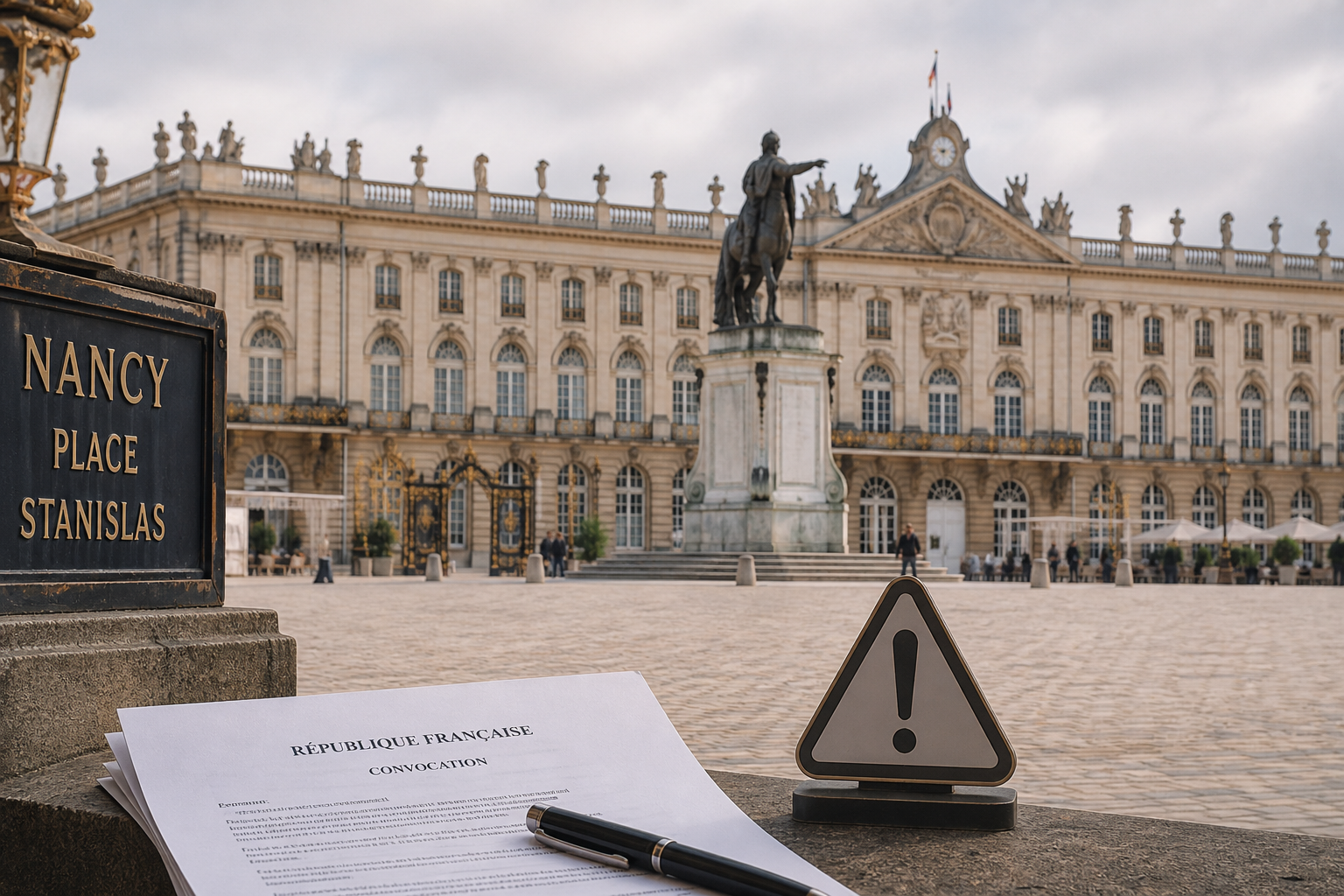
Understanding Marijuana restrictions in Nancy, France means looking primarily at French national law. Nancy does not have a separate recreational cannabis regime that makes possession, purchase or use legal. Whether someone is in the city centre, near the university area, at a festival or in a private residence, the main prohibitions come from the French national framework on narcotic drugs.
This guide explains the practical rules around weed in Nancy, including possession, consumption, public use, driving, CBD, medical access and possible police or court consequences. It is general information rather than legal advice. Rules and enforcement procedures can change, so anyone facing an investigation or charge should consult a qualified French lawyer.
How cannabis laws in Nancy work
The same national rules apply in Nancy as in the rest of France. Cannabis containing prohibited levels of THC is treated as a narcotic drug, and recreational production, sale, supply, possession and use are unlawful. A person does not avoid liability merely because the quantity is small or because the cannabis is intended for personal use.
French law distinguishes between the offence of using narcotics and more serious conduct such as importing, producing, selling or supplying them. The facts of each case matter, including the substance involved, the quantity, whether there is evidence of distribution and whether the person has previous convictions.
The official French government guidance on narcotics use describes the main penalties and the fixed-penalty procedure. For broader public-health information, the French government’s MILDECA information portal provides material about drugs, prevention and support services.
Possession and personal use in Nancy
Possessing cannabis for personal use remains illegal. Police may respond to suspected possession through an on-the-spot procedure, a fixed penalty or a criminal investigation, depending on the circumstances. A small amount does not make the conduct lawful; it may simply affect how authorities handle the case.
The fixed penalty for narcotics use
France introduced a fixed criminal penalty for certain cases of narcotics use. The standard amount is commonly stated as €200, with a reduced amount for prompt payment and an increased amount when payment is late. The exact procedure, eligibility and consequences depend on the circumstances and the current rules in force.
A fixed penalty is not the same as legal permission to possess cannabis. It records a criminal offence and may have consequences beyond the immediate payment, particularly where a person is stopped repeatedly or is involved in another offence. If a notice appears inaccurate, or if the person disputes the facts, they should obtain advice before missing a deadline or submitting a challenge.
More serious cases can be referred to prosecutors or courts. French law also allows imprisonment and a fine for unlawful use in circumstances that are not resolved through the fixed-penalty process. The maximum statutory penalties are not automatically imposed in every case, but they show why a cannabis stop should not be treated as a harmless administrative matter.
Public consumption and local practical restrictions
Smoking or consuming cannabis in a public place is especially risky. Public parks, streets, transport areas, nightlife districts and event venues may involve police patrols, security checks or complaints from residents. Nancy’s public authorities and venue operators can also apply ordinary rules on access, disorder, smoking and safety, even though the underlying drug offence is governed nationally.
There is no dependable “safe public place” in Nancy where recreational cannabis use becomes lawful. Consuming in a doorway, on a terrace or near a transport stop can attract attention and may expose other people to smoke. Police may also investigate related concerns such as public disorder, possession of other substances or suspected supply.
Visitors should not assume that a private apartment, hotel room or holiday rental eliminates all risk. Private use may be less visible, but possession and use can still breach French law. Hotels and landlords may impose their own no-smoking or no-drug policies, and complaints can lead to removal or police involvement.
Buying, selling and sharing cannabis
Buying cannabis in Nancy is unlawful, whether the transaction takes place through a street seller, a messaging service, a social-media contact or an informal acquaintance. There is no licensed recreational cannabis market in France comparable with regulated markets in some other countries.
Selling, supplying or transporting cannabis generally creates greater legal exposure than simple possession. Sharing cannabis without payment may still be treated as supply, depending on the facts. A person who carries cannabis for someone else can also face questions about transport or distribution, even if they did not receive money.
Online offers create additional risks. Products may be mislabelled, contaminated, stronger than advertised or connected to fraud. Sending controlled substances by post can create separate evidence and transport issues. Do not carry cannabis across the French border, even when travelling from a country with a different policy.
Driving and cannabis in Nancy
Driving after using cannabis is a serious risk under French law. France prohibits driving after narcotics use, and the offence is not limited to situations where a driver appears visibly impaired. A positive test can therefore create legal problems even when the driver believes the effects have worn off.
Police can use roadside screening during traffic checks or after a collision. A positive preliminary result may be followed by an evidential test under the applicable procedure. Penalties can include a fine, licence suspension or cancellation, and other consequences. When alcohol and narcotics are involved together, the situation can become more serious.
The safest approach is simple: do not drive, cycle in traffic or operate machinery after using cannabis. Arrange a sober driver or use public transport and allow sufficient time before returning to safety-sensitive activities. Residual effects such as slowed reactions, anxiety, drowsiness or impaired concentration can also create practical danger.
CBD rules and hemp products
CBD is not automatically the same as recreational marijuana, but CBD products are not risk-free from a legal perspective. Products sold in France must comply with applicable rules on THC content, product composition, labelling and marketing. A product described as CBD may still contain prohibited THC levels or inaccurate ingredients.
Consumers should be cautious with flowers, vapes, oils, edibles and imported products. Packaging claims are not a guarantee of compliance, and a product can create problems if it contains more THC than permitted. CBD products may also interact with medicines or cause side effects, especially when the contents are uncertain.
Do not confuse the availability of CBD products with permission to possess or consume THC-rich cannabis. Buying from an apparently visible shop or website does not legalise a non-compliant product. Travellers should also check transport and border rules before carrying any hemp-derived item between countries.
For readers comparing local topics, our guide to CBD shops and safer buying advice in Le Mans provides broader context on French CBD questions without changing the national rules that apply in Nancy.
Medical cannabis in Nancy
Medical cannabis in Nancy should not be confused with recreational use or self-medication. France has developed tightly controlled medical-cannabis access and pilot arrangements, but this does not create a general right to obtain cannabis from an ordinary shop or to use recreational products for a medical condition.
Patients should speak with a qualified doctor or pharmacist about symptoms, approved treatments and eligibility under the current French system. Do not substitute illicit cannabis for prescribed treatment, stop medication without medical guidance or assume that a foreign prescription automatically authorises possession in France.
Travellers carrying prescribed medicines should keep them in original packaging and carry appropriate medical documentation. Because controlled-drug rules can involve both French and international requirements, patients travelling from abroad should confirm the position with official French authorities, their prescriber and the relevant embassy or consulate before travelling.
Health, safety and support
Cannabis can affect memory, attention, coordination, mood and reaction time. Risks may be higher for adolescents, people with a personal or family history of psychosis, people with anxiety or depression and anyone combining cannabis with alcohol or other drugs. High-THC products can increase the likelihood of panic, confusion or unpleasant psychological effects.
- Avoid combining cannabis with alcohol, sedatives or other drugs.
- Do not drive or use machinery after consumption.
- Keep products away from children and pets.
- Seek urgent medical help for severe confusion, chest pain, breathing problems, loss of consciousness or a dangerous reaction.
- Speak with a healthcare professional if cannabis use is affecting sleep, work, study, relationships or mental health.
If someone feels unsafe after consuming an unknown product, remain with them, move away from traffic and other hazards, and contact emergency services when symptoms are severe. Health professionals can provide confidential help without relying on informal sellers for information about strength or ingredients.
What to do after a police stop
Stay calm, follow lawful instructions and avoid arguing in public. Do not sign documents you do not understand. Ask for clarification about the alleged offence and the procedure being used. If you receive a fixed-penalty notice, read the payment and challenge deadlines carefully rather than ignoring it.
For an interview, search, seizure or court summons, prompt advice from a French criminal lawyer is sensible. Visitors may need an interpreter. Keep copies of notices and record the date, location and basic circumstances, but do not publish personal details or evidence online while a matter is unresolved.
People looking for a wider comparison of French city guidance can also read our articles on marijuana use in Grenoble and cannabis use in Angers. These comparisons do not indicate different recreational laws; they illustrate how the same national framework affects local practical questions.
Key points for residents and visitors
- Recreational cannabis remains illegal in Nancy and throughout France.
- Possession and use can lead to a fixed penalty, investigation or prosecution.
- Public consumption creates additional practical and enforcement risks.
- Selling, supplying, importing and transporting cannabis are more serious offences.
- Driving after cannabis use is prohibited and can result in major licence consequences.
- CBD legality depends on compliant composition, THC limits, labelling and marketing.
- Medical access is controlled and should be discussed with qualified healthcare professionals.
Conclusion
The main rule is straightforward: cannabis in Nancy is governed by French national law, not by a local recreational market. Possession, use, purchase and supply of THC-rich cannabis remain unlawful, while public consumption and driving can create additional risks. CBD and medical products require separate, careful analysis rather than assumptions based on their labels.
Anyone in Nancy should avoid illicit purchases, never drive after using cannabis and seek professional legal or medical advice when a situation involves police, a prescription, travel or health concerns. Checking current official guidance is the safest way to respond when rules or procedures change.