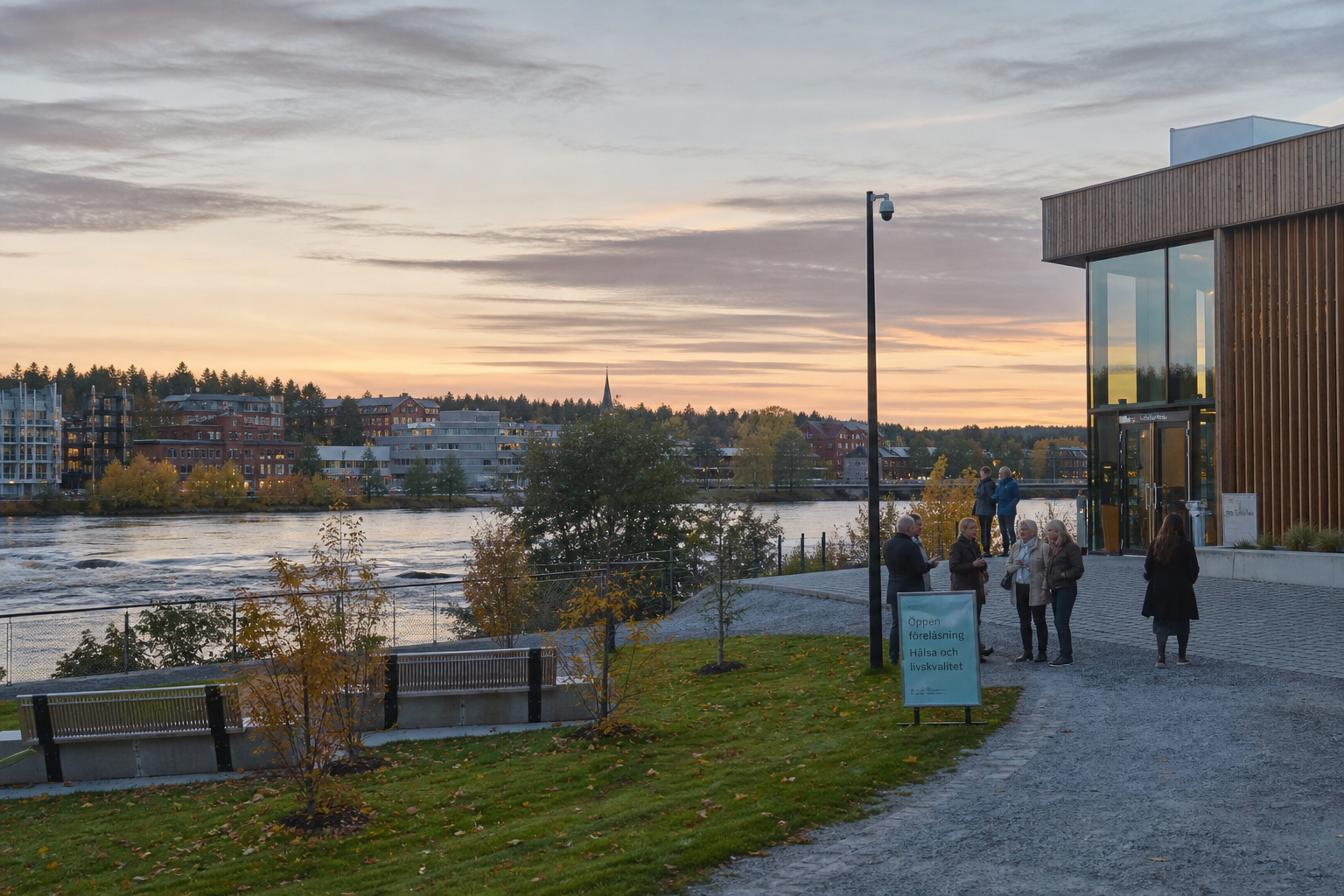
The Cannabis community in Skellefteå is not a single organisation or clearly defined public network. Instead, the phrase can describe several overlapping groups: people looking for reliable health information, patients asking about regulated treatment, families concerned about substance use, harm-reduction advocates and residents trying to understand Sweden’s strict drug laws. In a northern Swedish city shaped by close social networks, work, study and outdoor life, discussions about cannabis may happen privately rather than through visible public events.
This guide focuses on what can be discussed responsibly: the legal framework, health considerations, medical access, support options and ways to evaluate online information. It does not provide instructions for buying or using illegal drugs, and it does not assume that every person searching for cannabis information has the same needs.
Understanding the cannabis community in Skellefteå
Searching for cannabis in Skellefteå may lead to very different types of information. Some people are interested in public policy or changing attitudes. Others want to understand possible risks, ask about a prescription medicine, investigate CBD products or find help for themselves or someone close to them. These are separate questions and should not be treated as one market or one community.
Skellefteå is part of Västerbotten, a region where access to services can involve travel and where personal privacy may matter in smaller communities. That makes trustworthy digital information particularly important. At the same time, online groups can mix Swedish law, personal anecdotes, advertising and inaccurate medical claims. A useful starting point is to identify the question before trusting the source.
Different interests within the local discussion
- Health and prevention: residents may want clear information about dependence, mental health, driving and interactions with other substances.
- Medical questions: patients may be asking whether a cannabis-based medicine is appropriate, approved or available through the Swedish healthcare system.
- Policy and culture: students, journalists and community groups may be examining public attitudes, criminal justice or international comparisons.
- Family support: relatives may need advice on how to start a calm conversation or where to seek professional help.
- Product questions: consumers may be considering hemp or CBD products and need to distinguish legal status from marketing language.
These interests can coexist, but they require different evidence. A personal story may be meaningful without proving that a product is safe or medically effective for everyone.
Cannabis laws in Skellefteå and Sweden
Skellefteå follows Swedish national law; there is no separate municipal cannabis regime. Cannabis is classified as a narcotic in Sweden, and activities such as possession, use, acquisition and transfer can create legal consequences. The details of an individual case depend on the facts and should be assessed by a qualified legal professional rather than by an online forum.
Sweden’s approach also means that visitors should not assume that rules from another country apply locally. A product that is sold openly elsewhere may be restricted in Sweden because of its cannabinoid content, preparation, labelling or intended use. Importing products across borders can create additional legal and customs issues.
For broader context, readers can compare this overview with our guide to cannabis regulations in Umeå and our discussion of cannabis policy in Gävle. These nearby Swedish examples do not replace official advice, but they illustrate why national rules matter more than local assumptions.
Why online availability does not prove legality
Social media listings, private messages and online shops are not reliable evidence that a product is lawful. Sellers may use terms such as “natural,” “hemp,” “legal high” or “wellness” without providing dependable information about ingredients. A product’s name and advertised effect do not determine its legal classification.
Anyone uncertain about a product should avoid relying on a seller’s reassurance alone. Check current information from Swedish authorities, keep packaging and ingredient details, and seek professional advice if there is a concern about an imported or regulated product.
Health information for people in Skellefteå
Health effects vary according to the substance, strength, amount, frequency of use, age, mental health, other medicines and the setting. Cannabis can impair attention, reaction time, coordination and judgement. Driving or operating machinery after using an intoxicating substance creates serious safety risks, regardless of how capable a person feels.
Frequent or heavy use can become difficult to control for some people. Possible warning signs include spending more time obtaining or using cannabis, continuing despite problems at work or home, needing more to achieve a similar effect, or feeling unable to cut down. Some people also experience anxiety, low mood, sleep disruption or concentration difficulties.
Extra caution is important for adolescents, people with a personal or family history of psychosis or bipolar disorder, people taking sedating medicines and anyone combining cannabis with alcohol or other drugs. Combining substances can make impairment less predictable. A healthcare professional can provide advice based on a person’s medical history.
Finding dependable information
For public-health guidance, consult the Swedish Public Health Agency. It is a more dependable starting point than anonymous posts because official health information is developed for public guidance and can be updated as evidence and recommendations change.
Information should be specific about uncertainty. Claims that cannabis is universally harmless, cures a wide range of illnesses or carries no risk are not responsible. Equally, dramatic claims without evidence can make it harder for people to recognise genuine risks. Good information explains what is known, what is uncertain and when professional help is appropriate.
Medical cannabis in Skellefteå
Medical cannabis in Skellefteå should be understood through Sweden’s healthcare and medicines system, not through informal recommendations. Some cannabis-based medicines may be approved or prescribed in particular circumstances, while other products marketed as cannabis treatments may not be authorised medicines. A patient should discuss symptoms and treatment options with a licensed healthcare professional.
Do not stop an existing prescription or replace it with a cannabis product without medical advice. Clinicians need to consider diagnosis, previous treatments, side effects, interactions and the quality of the proposed medicine. They can also explain whether a referral, specialist assessment or other treatment pathway is relevant.
The Swedish Medical Products Agency provides official information about medicines, authorisation and regulatory responsibilities. Its guidance is more useful for medical and product questions than testimonials from sellers or influencers.
Questions to take to a healthcare professional
- What condition or symptom is being treated, and what evidence supports the proposed option?
- Could the product interact with current medicines, alcohol or other substances?
- What side effects should be monitored, and when should treatment stop?
- Is the product an authorised medicine, and how is its quality controlled?
- Could treatment affect driving, work, study or other safety-sensitive activities?
People who feel uncomfortable raising the subject can prepare a short list of symptoms, medicines and questions in advance. Honest information helps clinicians provide safer advice; it does not make informal drug use medically supervised.
CBD, hemp and product confusion
Interest in CBD and hemp does not necessarily indicate interest in intoxicating cannabis. Hemp fibres, seeds, food products, cosmetics and cannabinoid preparations can fall under different rules. The relevant issues may include the plant part used, cannabinoid content, contamination, labelling and whether a product makes medicinal claims.
Consumers should be cautious with products that have unclear ingredients or promise rapid relief for serious conditions. Independent testing is not guaranteed simply because a product appears professional. “CBD” on a label does not automatically mean that the product is risk-free, suitable for children, compatible with medicines or legal in every form.
Our background article on CBD products in Karlstad offers related Swedish context, while the same basic principle applies in Skellefteå: verify the product category and current official guidance before making a purchase or bringing anything across a border.
Support and safer conversations in the local community
A constructive cannabis community is not defined by normalising use or by judging people who use it. It can also mean creating space for accurate information, early support and respectful discussion. Friends and relatives can help by choosing a private moment, describing specific observations and asking open questions rather than making accusations.
If someone may be experiencing dependence, mental-health symptoms or problems at school, work or home, professional support is more appropriate than trying to manage the situation through an online group. A local healthcare centre, addiction service or emergency service can help identify the right next step. Immediate danger, severe confusion, chest pain, breathing problems or a suspected overdose requires urgent medical attention.
Practical principles for community discussion
- Separate legal questions, medical questions and personal opinions.
- Check claims against Swedish authorities or qualified healthcare professionals.
- Avoid sharing someone else’s personal information, photographs or messages without consent.
- Do not promote unverified sellers, imported products or unsafe combinations.
- Use non-judgemental language so people are more likely to ask for help early.
How to assess cannabis information online
Reliable information usually identifies its source, explains limitations and avoids guarantees. Be wary of anonymous testimonials presented as medical proof, claims that a product works for everyone, pressure to buy quickly and advice that dismisses legal or health risks. A source that earns money from a product deserves especially careful scrutiny.
It is also useful to check the date of a page. Laws, product classifications and health guidance can change. Swedish-language information may be more directly relevant than general international content, but language alone is not a quality guarantee.
For readers comparing cities, our articles on marijuana education in Borlänge and cannabis information in other Swedish locations show how local searches can be connected to wider national questions. The safest approach remains the same: verify the law, consider health, protect privacy and seek qualified help when needed.
Conclusion
The cannabis community in Skellefteå is best understood as a collection of conversations rather than a single formal scene. Residents may be asking about cannabis culture, health, medical treatment, CBD products, family concerns or Swedish policy. Each question deserves accurate, context-specific information.
Because national Swedish law applies in Skellefteå, informal availability does not establish legality. Health risks should be taken seriously, medical decisions should involve licensed professionals and online claims should be checked against authoritative sources. A responsible local discussion can reduce stigma without minimising harm, helping people make informed decisions and find support when they need it.