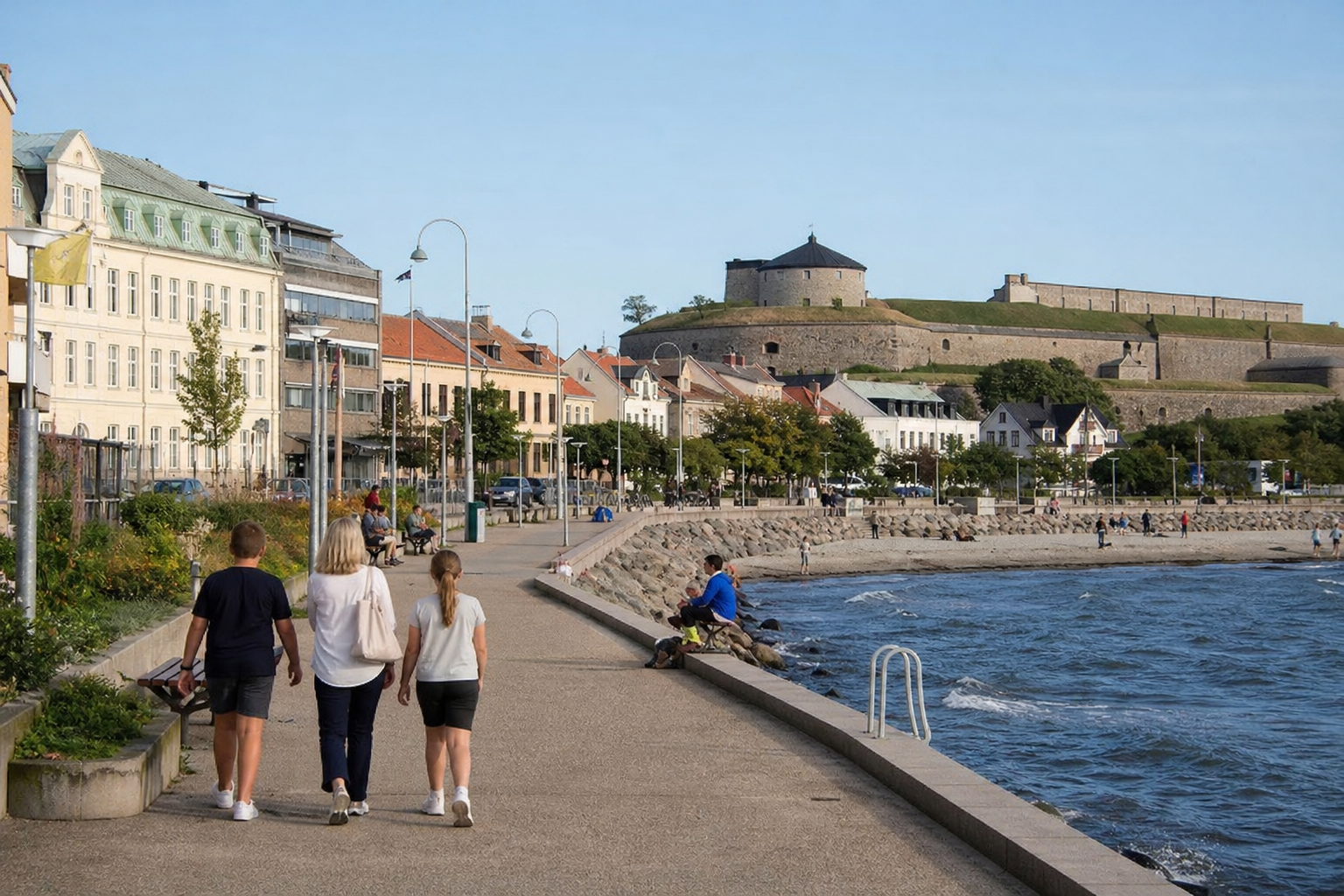
Marijuana culture in Varberg is best understood through the wider Swedish framework rather than through the idea of a visible, legal cannabis scene. Varberg is a coastal town in Halland with a strong public identity built around the sea, wellness, tourism, music, outdoor life and community events. Those surroundings can shape how people discuss cannabis, but they do not create a separate local legal system.
For anyone searching for weed in Varberg, the most important starting point is that cannabis remains illegal for recreational possession, use, production and supply in Sweden. The practical questions are therefore less about finding a cannabis marketplace and more about understanding the law, separating fact from rumour, recognising health risks and knowing where to seek legitimate help.
Marijuana culture in Varberg and the Swedish context
There is no reliable basis for describing Varberg as either unusually cannabis-friendly or unusually opposed to cannabis. Local attitudes are likely to vary by age, social group, personal experience and views on drug policy. Some people may treat cannabis as a private lifestyle issue, while others associate it with health concerns, impaired driving, criminal markets or risks to young people.
That range of views is important. A few public conversations, social-media posts or anecdotes do not measure the behaviour of an entire town. Searches for cannabis in Varberg may also bring up content from other parts of Halland, national debates or commercial claims that do not reflect local reality.
Varberg’s position between larger urban areas can increase exposure to different opinions and cultural influences. However, proximity to Gothenburg or Halmstad does not change Swedish law in Varberg. Nor does a festival, private gathering or tourist season create an exception to the rules on narcotics.
Cannabis laws in Varberg
Swedish narcotics law applies in Varberg in the same way as elsewhere in the country. Cannabis is classified as a narcotic, and unlawful possession, use, transfer, cultivation and handling can lead to criminal consequences. The seriousness of a case depends on factors such as the substance, quantity, conduct and circumstances.
Personal use is not a legal loophole. A person can face consequences for consuming cannabis even when they did not sell it or possess a large amount. Driving under the influence is also a serious safety and legal issue. Cannabis can affect reaction time, attention, judgement and coordination, and the safest choice is never to drive after using an impairing substance.
The Swedish Narcotic Drugs Penal Act is the primary legal reference for the criminal framework. Because laws and enforcement practices can change, readers should rely on official sources rather than social media, informal sellers or old forum discussions.
What the law means for visitors
Visitors sometimes assume that a holiday town, hotel, beach area or private rental offers more relaxed rules. It does not. Bringing cannabis across a border, carrying it on public transport or storing it in accommodation can create additional legal and practical problems. Products labelled as CBD, hemp or cannabis-derived are not automatically lawful either; their ingredients, classification and compliance with Swedish rules matter.
Anyone facing a legal issue should seek qualified legal advice. Do not assume that advice from another country applies in Sweden, and do not treat a retailer’s description as proof that a product is legal.
Local attitudes, public space and social boundaries
Discussion of marijuana in Varberg can be influenced by the town’s public spaces: beaches, parks, promenades, nightlife venues, residential areas and outdoor gathering places. Regardless of personal views, using an intoxicating substance in shared spaces can create conflict, distress or safety concerns for other people.
Smoke and odour can affect neighbours, children and people with respiratory sensitivities. Public intoxication can also make others feel unsafe, particularly around transport hubs, events and busy evening areas. A respectful approach means not exposing others to smoke, not involving unwilling people and not treating a public place as permission to use an illegal drug.
It is also useful to distinguish cultural expression from commercial promotion. Music, art, clothing and online language may reference cannabis without representing actual use or support for illegal sales. Likewise, a discussion about reform is not evidence that reform has occurred.
Health questions about cannabis
Cannabis affects people differently, but possible short-term effects include impaired attention, slower responses, anxiety, dizziness, confusion and problems with coordination. Strong products or unfamiliar settings may increase the chance of panic or unpleasant psychological effects. Combining cannabis with alcohol or other drugs can make impairment less predictable.
Frequent use may become difficult to control. Some people experience cravings, use more than intended or find that cannabis interferes with school, work, relationships, sleep or finances. Higher-risk patterns can be especially concerning for adolescents and people with a personal or family history of psychosis or other serious mental-health conditions.
Health information should come from medical or public-health services rather than advertising. The Public Health Agency of Sweden provides national public-health information and is a more dependable starting point than anonymous online claims.
When urgent help is needed
Seek urgent medical assistance if someone has severe confusion, chest pain, difficulty breathing, a seizure, loss of consciousness, extreme agitation or thoughts of self-harm. Do not leave the person alone or attempt to manage a serious reaction with more substances. Tell healthcare staff what was taken, if known, and when it was used. Accurate information helps clinicians provide safer care.
Medical cannabis in Varberg
Medical cannabis in Varberg should not be confused with recreational use or over-the-counter wellness products. In Sweden, certain cannabis-based medicines may be prescribed in specific medical circumstances, but this does not make ordinary cannabis possession legal. A medical claim on a website or product label is not the same as a prescription.
People with pain, nausea, muscle spasticity or other symptoms should discuss treatment with a licensed healthcare professional. Clinicians can assess the diagnosis, existing medicines, possible interactions and evidence-based alternatives. Buying an unregulated product online may expose a person to inaccurate dosing, contamination or an ingredient profile that does not match the label.
CBD products require particular caution. The words “hemp” and “CBD” do not guarantee that a product is free from controlled substances or suitable for a particular medical condition. Anyone taking prescribed medicines should ask a healthcare professional or pharmacist before adding a cannabis-derived product.
How to evaluate information about weed in Varberg
Online searches can produce a mixture of legal information, personal stories, coded advertisements and misleading health claims. A careful reader should ask who created the content, whether the source identifies its evidence and whether the information is current.
- Check Swedish government, police, healthcare or public-health sources for legal and medical claims.
- Be cautious of sellers promising guaranteed effects, discreet delivery or cures for serious conditions.
- Do not treat anonymous reviews as proof of product quality, safety or legality.
- Look for clear information about ingredients, risks, age restrictions and professional oversight.
- Remember that laws in Canada, parts of the United States or other countries do not automatically apply in Sweden.
Readers interested in comparing regional discussions can also review our articles on cannabis use in Halmstad and marijuana tourism in Helsingborg. These comparisons can provide context, but they should not be used as substitutes for current Swedish legal or medical advice.
Safer choices for residents and visitors
The safest choice under Swedish law is not to use illegal cannabis. For people who are already concerned about their use, a non-judgmental conversation with healthcare services can be more useful than trying to solve the problem alone. Early support may help with sleep, anxiety, cravings, relationships or other issues connected with use.
Practical safety also includes protecting other people. Never drive or cycle while impaired, never give cannabis to someone without clear consent, and keep any potentially harmful substance away from children and pets. If a friend becomes unwell, focus on immediate safety and contact emergency services when symptoms are serious.
For people researching policy, a constructive local discussion can focus on prevention, treatment access, youth education, impaired driving, public safety and the quality of available evidence. These topics are more useful than repeating unverified claims about a hidden local market.
Conclusion
Marijuana culture in Varberg is not a separate legal category; it is part of a broader Swedish debate shaped by law, health, social attitudes and local community life. Varberg’s coastal identity and connections across Halland may influence conversations, but they do not make recreational cannabis legal or guarantee a distinctive cannabis scene.
The clearest approach is to verify information through authoritative sources, treat health risks seriously, avoid impaired driving and seek professional support when cannabis use becomes difficult to control. For residents and visitors alike, understanding the boundaries of Swedish law and respecting shared public spaces are the most responsible ways to navigate the subject.