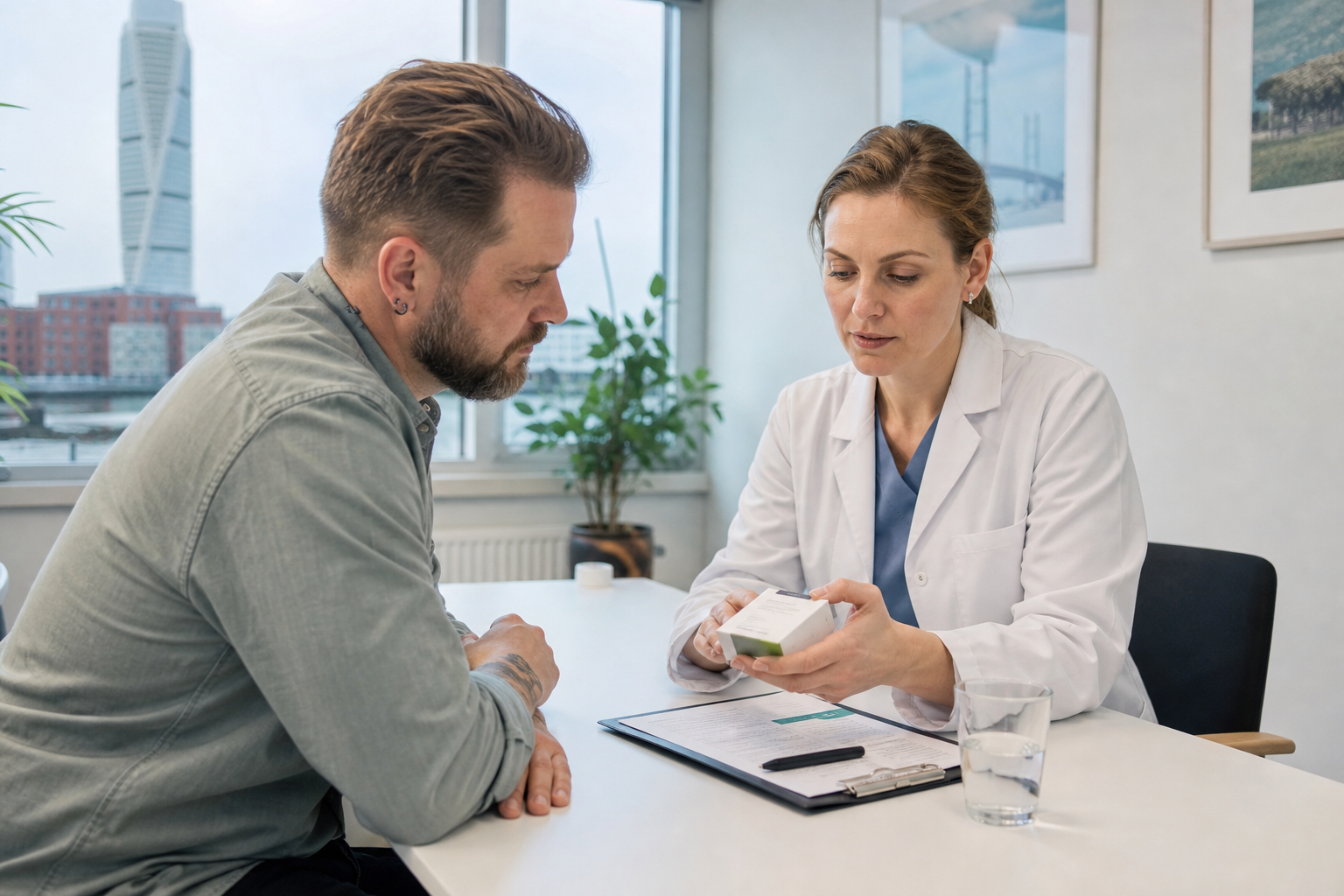
People searching for medical cannabis in Oxie are usually trying to understand two separate issues: whether cannabis-based treatment can be prescribed in Sweden and how to obtain care safely in the Oxie area. Swedish rules do not create a special cannabis system for Oxie or Malmö. Prescribing, dispensing, possession and driving are governed by national law, while healthcare decisions are made by licensed medical professionals.
This guide explains the legal framework, the difference between prescribed medicine and recreational cannabis, what a medical assessment may involve, and where residents can seek reliable advice. It is general information, not a diagnosis or a substitute for advice from a doctor or pharmacist.
How medical cannabis in Oxie is regulated
Oxie is a district of Malmö, but it has no separate local rules for cannabis medicines. A patient in Oxie follows the same Swedish framework as a patient elsewhere in Skåne. Cannabis-based treatment may be considered in selected medical circumstances, but a person cannot legally turn ordinary cannabis bought or obtained privately into a medical treatment simply by using it for symptoms.
Swedish healthcare distinguishes between authorised medicines, medicines prescribed for an individual situation, and products that are not legally marketed as medicines. The exact route depends on the product, its active ingredients, the patient’s condition and the prescriber’s clinical judgement. The Swedish Medical Products Agency provides official information about medicines, authorisation and regulatory requirements.
Some cannabis-derived or cannabis-based medicines are authorised for particular indications. Other preparations may be considered by a doctor under rules that require a careful assessment of benefit, risk and available alternatives. Availability is therefore not the same as an unrestricted right to request any cannabis product.
Medical cannabis in Oxie: what access normally involves
A person who believes cannabis-based treatment may help should begin with healthcare rather than a private seller or an informal online source. The first step is normally a consultation with a doctor who can review symptoms, diagnosis, previous treatments, current medicines and relevant risks.
What a clinician may assess
- The underlying condition and whether the diagnosis is clear.
- How severe and persistent the symptoms are.
- Which standard treatments have already been tried and how they worked.
- Possible interactions with prescription medicines, alcohol or other substances.
- Personal or family history of psychosis, severe anxiety, substance-use problems or cardiovascular disease.
- Whether impairment could create risks at work, during childcare or while driving.
A doctor may decide that a cannabis-based medicine is inappropriate, especially when the expected benefit is uncertain or the risks are significant. A request for treatment is not automatically a prescription. Patients should also be cautious of services that promise guaranteed approval, sell products without a proper medical review or present recreational cannabis as equivalent to regulated medicine.
Once a medicine is prescribed, a pharmacy can advise on dispensing, storage, administration and practical questions. Patients should use only the product, strength and schedule supplied by the prescriber. Changing the dose or replacing a prescribed preparation with a different product can alter both effects and risks.
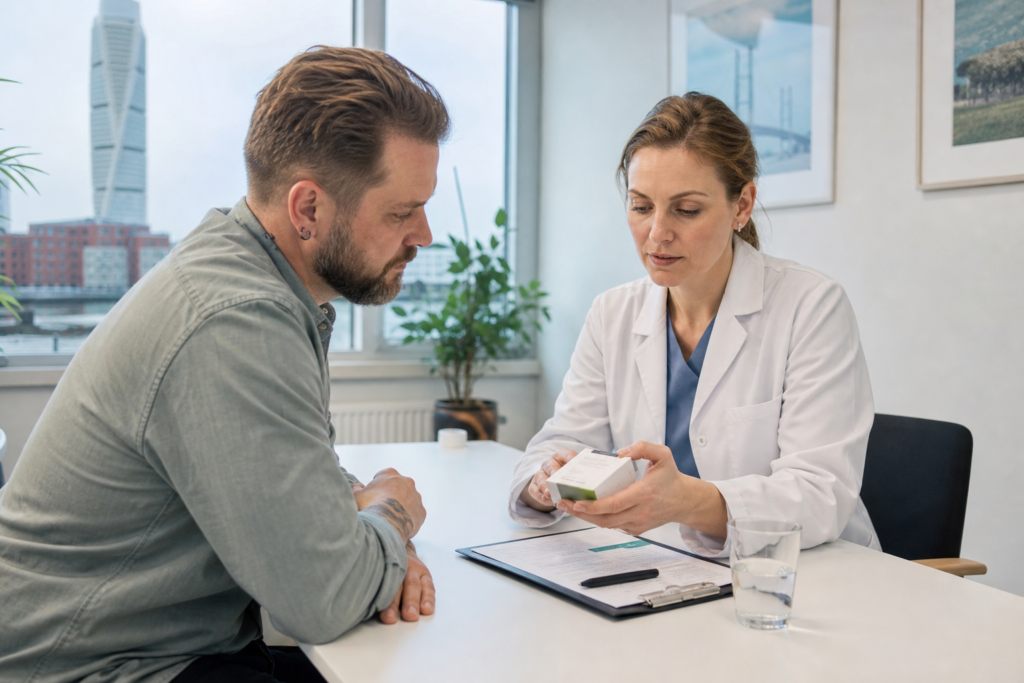
Understanding cannabis in Oxie versus recreational cannabis
The phrase cannabis in Oxie may refer to several different things: a prescribed medicine, CBD products, hemp products or illicit cannabis. These categories should not be treated as interchangeable. A product’s label, online marketing or claim that it is “natural” does not prove that it is legal, medically suitable or accurately dosed.
Prescribed treatment is connected to a patient, a medical decision and a regulated supply chain. Recreational possession, purchase and use remain illegal in Sweden. A medical reason stated after the fact does not generally transform an unlawfully obtained product into lawful medicine.
CBD also requires care. Some CBD products may contain trace amounts of tetrahydrocannabinol, or THC, and products sold online may have uncertain composition. Whether a product is lawful can depend on its ingredients, classification, intended use and how it is marketed. Readers interested in the wider distinction between hemp, CBD and controlled cannabis can review this related guide to CBD legality and product rules in Sweden.
What “weed in Oxie” can mean legally
Searches for weed in Oxie often reflect a desire to find treatment locally, but the phrase usually describes non-prescription cannabis rather than a regulated medicine. Sweden does not operate legal recreational cannabis shops or local medical dispensaries in Oxie. Buying from an unregulated source can expose a person to criminal, health and financial risks, including unknown potency, contamination and misleading claims.
Patients should not import cannabis products casually when travelling to or from Sweden. Prescription documentation may be relevant for some medicines, but it does not automatically permit every cannabis product to cross a border. Import rules can depend on the substance, formulation, quantity, destination and travel documents. Anyone travelling with a prescribed medicine should obtain current advice from the responsible authority, prescriber and pharmacy before departure.
Cannabis laws in Oxie: possession, use and driving
The cannabis laws in Oxie are Swedish national laws. Unauthorised possession, acquisition and use of narcotic substances can lead to criminal consequences. A person who is considering treatment should keep prescription and pharmacy information available and ask a pharmacist how the medicine should be stored and documented.
Driving deserves particular attention. Cannabis-based medicines may cause sleepiness, slower reactions, impaired attention, dizziness or changes in judgement. THC can also remain detectable after the noticeable effects have ended. Swedish road-traffic rules are strict, and a patient should never assume that a prescription makes driving safe or legally risk-free.
- Do not drive if the medicine causes impairment, drowsiness, dizziness or difficulty concentrating.
- Ask the prescriber or pharmacist about driving, operating machinery and dose timing.
- Do not combine the medicine with alcohol, sedatives or other intoxicating substances unless a clinician specifically advises you.
- Keep the medicine in its original packaging and follow the prescribed instructions.
For a broader overview of risk reduction and Swedish legal context, see this guide to cannabis safety and Swedish law. The local town named in that article does not change the national rules, but the practical safety principles are relevant to residents of Oxie.
Potential benefits and risks of cannabis-based treatment
Cannabis medicines may help some patients with specific symptoms or conditions, but the evidence and approved uses vary by product. Treatment should be based on a defined clinical goal, such as improving a symptom that has not responded adequately to other options. It should not be approached as a general cure for pain, insomnia, anxiety or every chronic condition.
Possible unwanted effects
- Sleepiness, dizziness and reduced coordination.
- Problems with concentration, memory or reaction time.
- Dry mouth, nausea or changes in appetite.
- Increased anxiety, agitation or unpleasant psychological effects.
- Changes in heart rate or blood pressure.
- Dependence or problematic use, particularly with THC-containing products.
Risks may be greater for adolescents, pregnant or breastfeeding people, individuals with a history of psychosis or mania, and people taking medicines that affect the central nervous system. A clinician may recommend avoiding cannabis-based treatment or monitoring it particularly closely in these situations.
Patients should contact healthcare services promptly if they experience severe confusion, hallucinations, chest pain, fainting, serious allergic symptoms or thoughts of self-harm. In an emergency in Sweden, call 112. For non-urgent medical guidance, residents can use their healthcare provider or the national health information service, 1177 Vårdguiden.
How to prepare for a medical appointment in Oxie or Malmö
A well-prepared consultation helps a doctor judge whether cannabis-based treatment is appropriate. Bring a list of current medicines and supplements, information about allergies, previous diagnoses and a short record of symptoms. Include what has been tried, the dose where known, how long it was used and whether it caused side effects.
It can also help to describe the treatment goal in practical terms. For example, explain whether pain affects sleep, mobility, work or daily activities rather than focusing only on the wish to obtain cannabis. Ask which authorised treatments are available, what evidence supports the proposed option, how success will be measured and when treatment will be reviewed.
Useful questions for a clinician or pharmacist
- Is there a cannabis-based medicine that is relevant to my diagnosis?
- What benefits should reasonably be expected, and over what period?
- What side effects or interactions should I watch for?
- Can I drive, work, exercise or care for children while taking it?
- How should the medicine be stored and what should I do if I miss a dose?
- When will the treatment be reviewed or stopped if it does not help?
Finding reliable information instead of informal cannabis advice
Online discussions can mix personal experiences, commercial claims and information from countries with very different laws. A product legal in another jurisdiction may be controlled or unavailable in Sweden. Before acting on an online recommendation, check the medicine’s status with a Swedish prescriber, pharmacy or official health authority.
For residents of Oxie, the most practical route is to contact an appropriate healthcare provider in the Malmö area, explain the medical problem and ask for an evidence-based assessment. There is no need to use a local cannabis club, informal dealer or unverified “prescription” service. If a treatment is clinically justified, the healthcare team can explain the lawful process and any limitations.
Conclusion
Medical cannabis in Oxie is governed by Swedish national rules, not by a separate local market. Some cannabis-based medicines may be prescribed in carefully selected circumstances, but access depends on a medical assessment, the specific product and applicable regulations. Unregulated weed, CBD products and prescribed medicines are different categories, and a medical intention does not make an illegally obtained product lawful.
The safest approach is to speak with a qualified clinician, use only medicine obtained through an appropriate pharmacy channel, follow the prescribed instructions and avoid driving or mixing substances when impairment is possible. Reliable advice from Swedish healthcare and medicines authorities is more useful than informal claims about cannabis availability in Oxie.