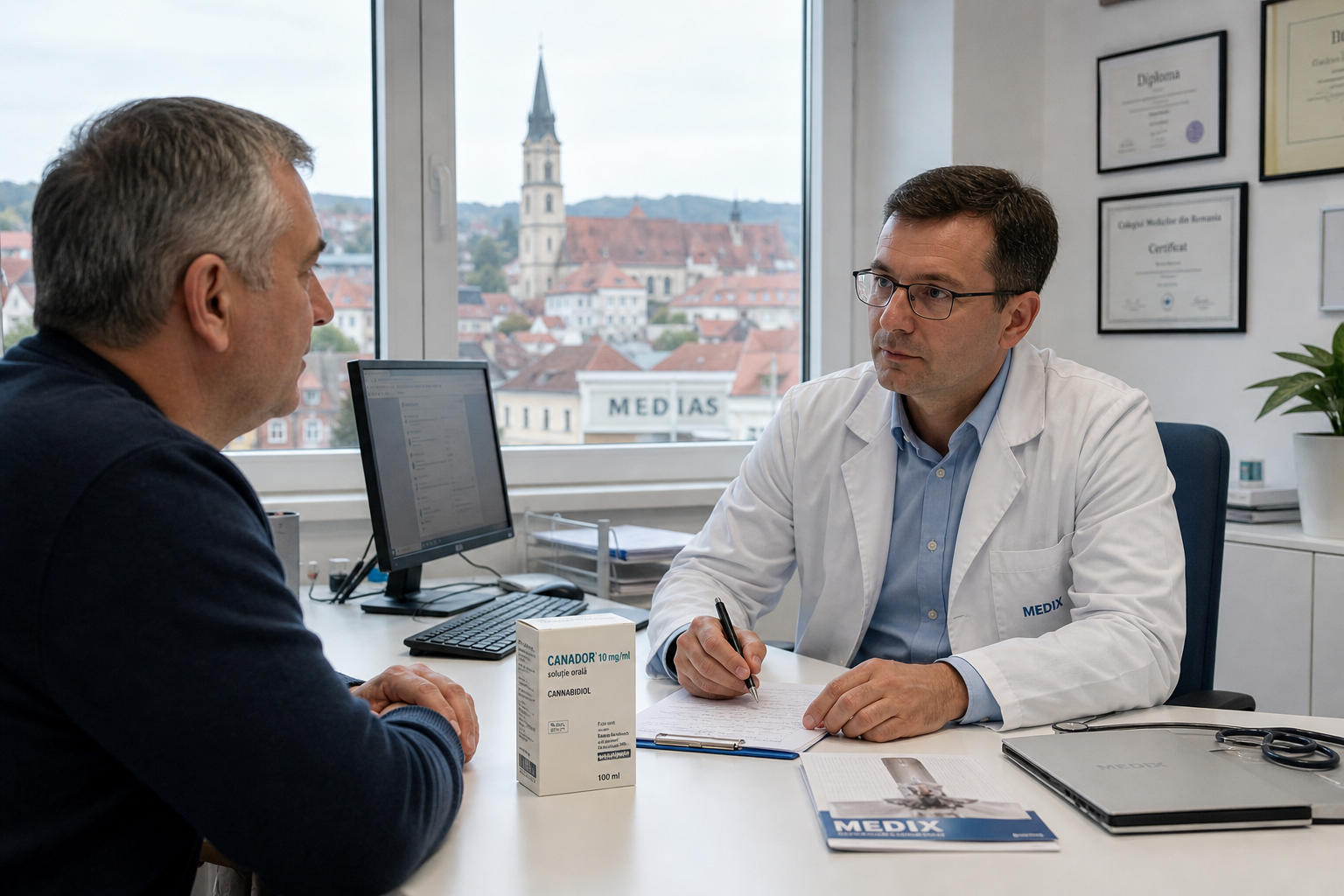
Interest in medical cannabis in Mediaș is growing as patients look for options for persistent pain, sleep problems, neurological symptoms and other difficult conditions. However, the phrase “medical cannabis” can refer to very different things: an authorized medicine, a pharmacy product, a CBD preparation or an unregulated cannabis product. These categories do not have the same medical evidence, legal status or safety profile.
For people in Mediaș, the safest approach is to begin with a qualified doctor, confirm the status of any proposed product and use only a legitimate pharmacy or healthcare pathway. Romanian rules can be restrictive, and products sold online or described informally as “medical marijuana” may not be approved medicines. This guide explains how to approach treatment discussions, what the law means in practice and how to reduce avoidable risks.
What medical cannabis means in Romania
Medical cannabis is not one single treatment. In clinical practice, the relevant product may be a standardized medicine containing a cannabinoid, a preparation made under controlled pharmaceutical conditions or another authorized medicine that affects the endocannabinoid system. A bag of cannabis flower, an edible or an oil with unclear ingredients should not automatically be treated as a medical product.
The distinction matters because authorization, composition, dose and quality control determine how a medicine can be prescribed and supplied. A product’s label, social-media description or seller’s claim is not proof that it is approved for treatment. Patients should ask for the exact product name, active ingredients, concentration, instructions and authorization status before using it.
Romanian legislation regulates narcotic and psychotropic substances, while medicines are also subject to pharmaceutical authorization and prescription rules. The Romanian official legislative portal is a useful place to check current legal texts, but legal wording can be difficult to interpret without professional advice.
Medical cannabis in Mediaș: what patients can realistically do
Residents of Mediaș generally follow the same national framework as patients elsewhere in Romania. There is no separate municipal medical-cannabis system that changes the national rules. A patient’s practical route usually begins with a family doctor or a relevant specialist, followed by an assessment of the diagnosis, previous treatments, current medicines and potential contraindications.
Start with a clinical assessment
Before asking about a cannabinoid medicine, prepare a short record of symptoms. Include when the problem began, how it affects daily life, previous diagnoses, treatments tried, side effects and any history of anxiety, psychosis, addiction, heart problems, pregnancy or liver disease. This information helps the doctor decide whether a cannabinoid-based option is medically appropriate or whether another treatment needs attention first.
A doctor may also need to distinguish symptoms that appear similar but have different causes. For example, insomnia related to pain, depression, medication use or sleep apnoea should not be approached in exactly the same way. Cannabis should not be used as a substitute for diagnosis.
Ask about the exact medicine, not just the word “cannabis”
Useful questions include:
- Is the proposed product an authorized medicine or a food, cosmetic or supplement?
- Which active cannabinoids does it contain, and in what concentration?
- What is the intended dose and how will it be adjusted?
- How long should treatment be tried before its benefit is reviewed?
- What side effects and drug interactions should be monitored?
- Can the product be dispensed legally through a Romanian pharmacy?
- What should the patient do if the medicine is unavailable?
These questions are especially important because “CBD” and “medical cannabis” are often used interchangeably in advertising even though they are not equivalent. CBD products may contain little or no THC, but their purity, concentration and legal classification can vary.
Cannabis laws in Mediaș and the difference between treatment and possession
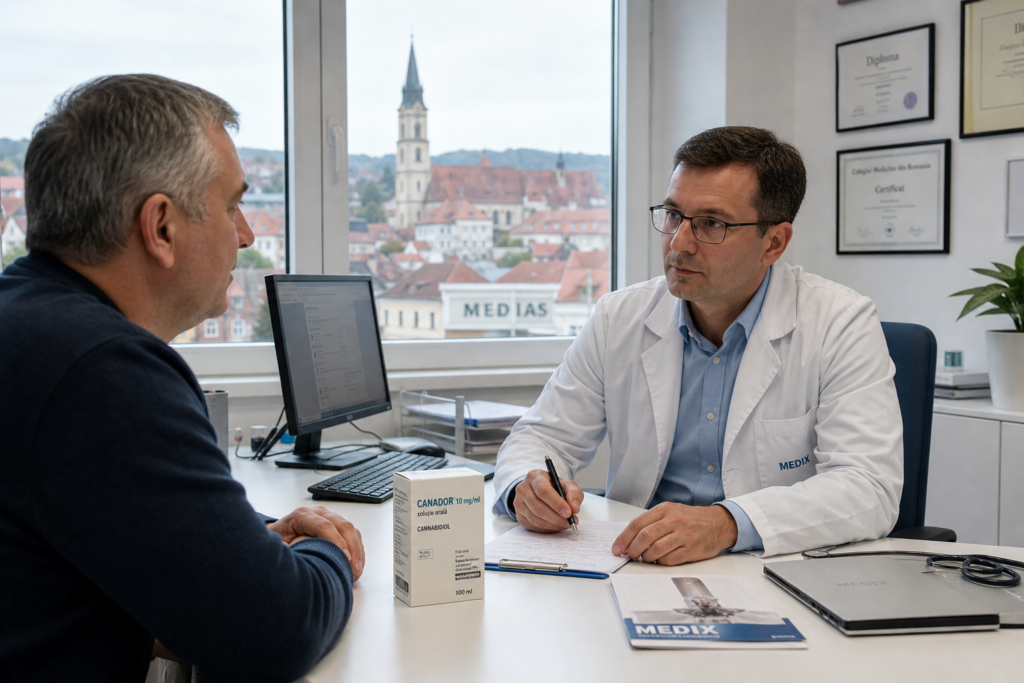
Cannabis laws in Mediaș are principally Romanian national laws. The fact that a product is intended for pain or anxiety does not by itself make possession, purchase or import lawful. A person should not assume that a doctor’s general recommendation, an online consultation or a foreign prescription automatically authorizes every cannabis product in Romania.
THC-containing products can create legal and health risks when they are obtained outside an authorized medical channel. Driving after using a psychoactive product is particularly risky. Impairment may occur even when someone believes the dose was small, and roadside or laboratory procedures do not turn an unregulated product into a lawful medicine.
Patients should keep the original packaging, prescription or dispensing documentation for any authorized medicine and follow the supplied instructions. They should never carry loose cannabis, unlabeled oils or homemade preparations while travelling. When a product is imported, transported or supplied across borders, additional rules may apply.
For regulatory and medicine-safety information, consult the National Agency for Medicines and Medical Devices of Romania. Its official information can help patients and healthcare professionals identify the appropriate authority, although it should not replace individual medical or legal advice.
Finding legitimate care and pharmacy support in Mediaș
Mediaș patients may need to contact a local family doctor, specialist clinic or pharmacy to understand whether a particular authorized medicine can be prescribed and supplied. Availability can change, and a pharmacy may need to order a product or explain that it is not part of its current stock. Calling ahead is more useful than relying on an online advertisement.
A legitimate pharmacy should be able to identify the product, explain whether it requires a prescription and provide normal packaging and patient information. Be cautious if a seller refuses to disclose ingredients, promises a guaranteed cure, offers unusually high THC concentrations or pressures you to pay through an untraceable method.
Readers researching local products can also review general guidance on checking CBD products and their labeling. The location is different, but the principles—verifiable ingredients, responsible purchasing and realistic claims—are relevant to shoppers in Mediaș.
CBD, hemp and cannabis: avoiding common confusion
Hemp-derived goods, CBD oils, cannabis flower and prescription medicines are separate categories. A product labelled “hemp” may be a food or cosmetic rather than a medicine. A CBD oil may contain trace THC, and the actual concentration may differ from the front-label impression. A product marketed as “full spectrum” may include several plant compounds but still lack the clinical evidence and pharmaceutical consistency expected of an authorized medicine.
This does not mean every CBD product is dangerous or useless. It means the user needs to know what question the product can reasonably answer. A cosmetic cannot be assumed to treat epilepsy, cancer or chronic pain. A supplement should not replace prescribed care. Anyone taking anticoagulants, sedatives, antiepileptic medicines, antidepressants or other regular treatments should ask a doctor or pharmacist about possible interactions before trying CBD or a cannabinoid product.
Consumers should avoid products with no batch number, no complete ingredient list, no responsible manufacturer information or no instructions in a language they understand. Independent laboratory testing can be helpful, but a screenshot of a test report is not the same as reliable, product-specific quality assurance.
Potential benefits and risks of cannabinoid medicines
Some cannabinoid medicines may have a role in carefully selected conditions, but evidence differs by product, condition and dose. A medicine supported for one indication should not be assumed to work for every type of pain, inflammation or sleep difficulty. The realistic aim is usually a measurable improvement in a specific symptom, not a universal cure.
Possible adverse effects include dizziness, drowsiness, impaired attention, dry mouth, nausea, changes in mood and faster heartbeat. THC can cause intoxication, anxiety or paranoia, particularly at higher doses or in people who are vulnerable to psychotic symptoms. CBD may also cause side effects and may affect how other medicines are processed by the body.
Do not combine a psychoactive cannabis product with alcohol, sleeping tablets, opioids or other sedatives unless a clinician has specifically addressed the risk. Do not drive, operate machinery or perform safety-sensitive work if the medicine affects alertness. Keep all products away from children and pets, and avoid homemade edibles because the dose is difficult to measure.
A practical consultation checklist for Mediaș residents
A short, organized consultation can make the discussion more productive. Bring a list of medicines and supplements, relevant medical records and any information about products already used. Be honest about non-prescribed cannabis use; this allows the clinician to assess side effects, tolerance and interactions without judgment.
- Describe the main symptom and how it is measured in daily life.
- Explain which treatments have already been tried and what happened.
- Ask whether a cannabinoid medicine is appropriate for the diagnosis.
- Confirm the exact product, route of administration, dose and review date.
- Ask which side effects require stopping treatment or seeking urgent care.
- Confirm how the medicine should be obtained and documented.
- Schedule a follow-up instead of increasing the dose independently.
If a doctor does not recommend cannabis, that does not mean the symptoms are being dismissed. It may mean the expected benefit is uncertain, the risks are too high or a different diagnosis and treatment deserve priority. A second opinion from an appropriate specialist can be more useful than buying an unverified product.
What to do if access is difficult
Patients may encounter limited availability, uncertainty about prescribing or confusion between a medicine and a commercial CBD product. Ask the treating clinician what evidence-based alternatives are available and whether another specialist is appropriate. Keep records of the product names and advice received, but do not interpret an availability problem as permission to source cannabis informally.
For broader context, readers may find it useful to compare this topic with information about cannabis research and evidence in Romania. Research findings can inform a discussion, but they do not automatically establish that a product is authorized or suitable for an individual patient.
Emergency symptoms after using a cannabis or CBD product—such as severe confusion, chest pain, fainting, breathing difficulty, seizure or extreme agitation—require urgent medical attention. Tell emergency staff exactly what was taken, how much and when. Accurate information helps clinicians treat the problem safely.
Medical cannabis in Mediaș: a safe decision framework
The most reliable path is simple: identify the medical problem, discuss it with a qualified clinician, verify the product and follow up on its effects. Search phrases such as cannabis in Mediaș or weed in Mediaș may produce informal listings, but search visibility is not evidence of legal status, quality or medical value. The same caution applies to claims that a product is “natural,” “legal everywhere” or “stronger than prescription treatment.”
Medical cannabis access in Mediaș should therefore be approached as a healthcare and regulatory question, not as a retail-shopping exercise. National law, product authorization and professional supervision matter more than a seller’s promise. Patients who document their symptoms, ask precise questions and avoid unverified products are better placed to make a safe, informed decision.
Conclusion
Medical cannabis in Mediaș may be relevant for some patients, but the correct route depends on the diagnosis, the authorized product and Romanian prescribing and supply rules. CBD products, hemp goods and unregulated THC products should not be confused with prescription medicines. Start with a doctor, verify information through official sources, use legitimate pharmacy channels and never change a dose or drive while impaired. This approach protects both health and legal safety while leaving room for an evidence-based conversation about treatment.