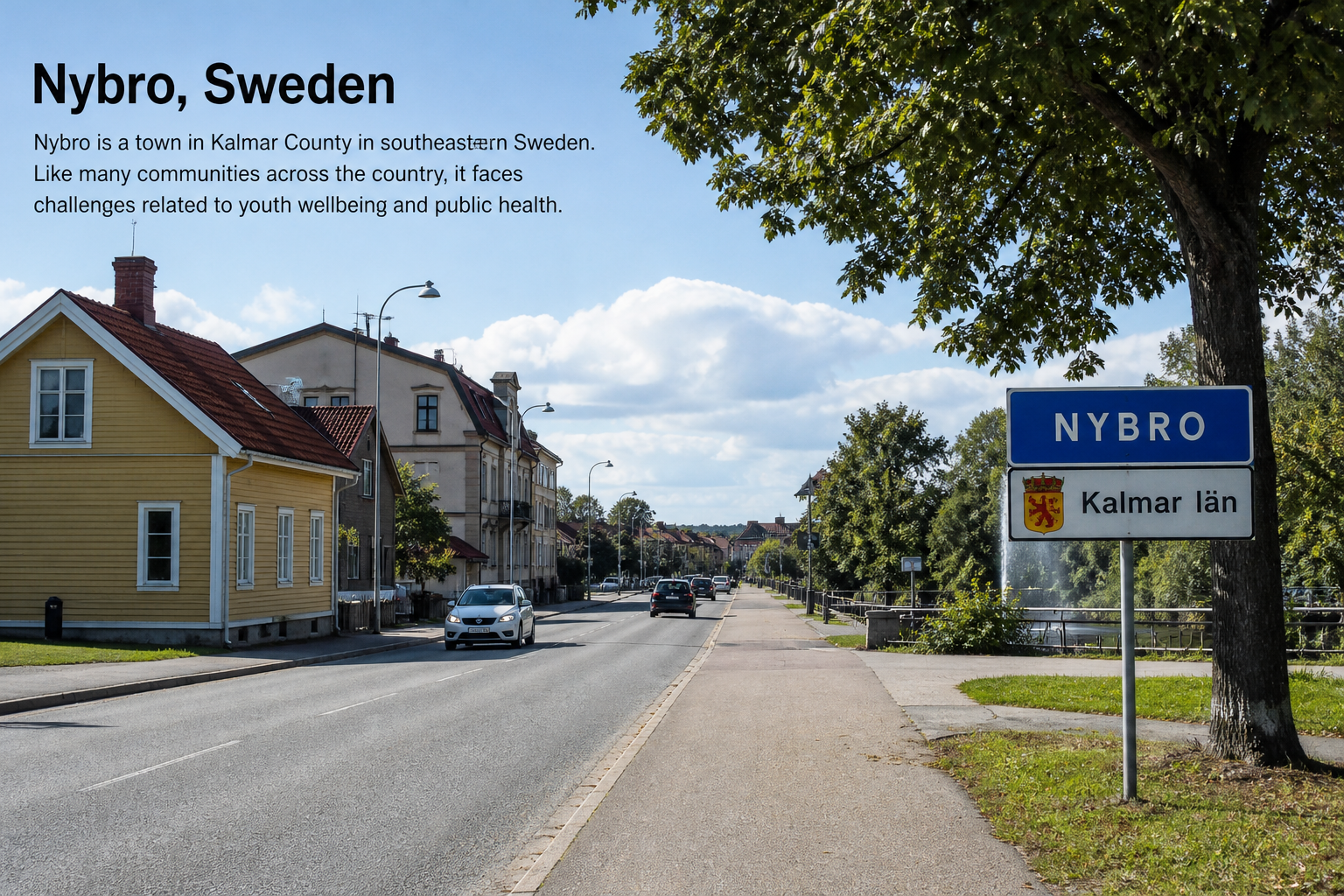
The marijuana market in Nybro is best understood as a question of law, public health, and local demand rather than as a conventional retail sector. Nybro is a small locality in Kalmar County, and there is no lawful storefront market where adults can buy recreational cannabis. Swedish national rules apply in Nybro just as they do elsewhere in the country: possession, purchase, sale, production, and distribution of cannabis can lead to criminal penalties.
People searching for weed in Nybro may encounter informal online claims, private offers, or discussions about cannabis use. Those sources do not establish that a seller is legitimate, that a product is safe, or that a transaction is legal. This guide explains what can reasonably be said about cannabis in Nybro without treating an opaque illicit market as a normal business or encouraging illegal activity.
What the marijuana market in Nybro actually looks like
Nybro does not have a regulated recreational cannabis market. There are no licensed cannabis dispensaries comparable to those found in jurisdictions that permit adult-use sales, and cannabis is not sold through Sweden’s ordinary alcohol or pharmacy systems for general consumption. Any recreational supply is therefore outside a legal, transparent retail framework.
Local market estimates should be treated cautiously. Authorities do not generally publish a reliable, town-by-town turnover figure for illicit cannabis sales in Nybro. Police seizures, treatment contacts, wastewater studies, or national surveys can describe aspects of drug use, but they cannot be converted automatically into a precise estimate of local sales, market value, or the number of users.
Why online listings are not reliable market data
Search results and social-media posts can make the cannabis market in Nybro appear larger or more organized than it is. Listings may be scams, outdated advertisements, attempts to collect personal information, or offers involving products that are mislabelled. A photograph, claimed strain name, or stated THC percentage is not independent verification.
Illegal sellers also have no general duty to test products, disclose contaminants, or provide accurate labelling. Cannabis may vary considerably in potency, and products sold as cannabis can contain unexpected substances. From a consumer-safety perspective, the absence of regulation is one of the market’s defining characteristics.
Cannabis laws in Nybro and across Sweden
The cannabis laws in Nybro are Swedish national laws, not separate municipal rules. Cannabis is classified as a narcotic substance, and unauthorized possession, use, transfer, cultivation, import, and sale can be offences. The seriousness of a case depends on factors such as the substance, quantity, conduct, and evidence. A small amount is not automatically legal simply because it is for personal use.
Sweden’s restrictive approach also means that travelling to another country where cannabis is permitted does not make it lawful to bring cannabis back into Sweden. Border rules, customs controls, and criminal law can apply to cannabis, cannabis products, and certain preparations containing cannabinoids.
For a general overview of how Sweden approaches alcohol and drug policy, readers can consult the Swedish Government’s alcohol and drugs policy information. For questions about medicines, approved products, and regulatory matters, the Swedish Medical Products Agency is a more appropriate starting point than an anonymous seller or forum.
Potential consequences of illegal involvement
Legal consequences may follow several kinds of conduct, including possession for personal use, sharing cannabis with another person, selling it, growing plants, or importing products. A person can also face practical consequences involving employment, education, driving, immigration matters, or professional licensing, depending on the circumstances and any resulting record.
Driving after using cannabis creates a separate and serious safety concern. Impairment can affect reaction time, attention, judgement, and coordination. Do not drive, cycle in traffic, or operate machinery while impaired. Waiting until a person feels normal is not a dependable legal or safety test because impairment and detectable substances do not always align neatly.
Medical cannabis in Nybro: what access means
Medical cannabis in Nybro is not the same as recreational cannabis. Some cannabis-based medicines may be available through the Swedish healthcare system under medical supervision, but access depends on the individual diagnosis, clinical judgement, the medicine involved, and the applicable approval or prescription route. A doctor does not simply prescribe unregulated marijuana from an informal market.
Patients should discuss symptoms and treatment options with a licensed healthcare professional. They should also tell clinicians about cannabis use, other medicines, alcohol, pregnancy, mental-health conditions, and any history of substance-use problems. This information helps a healthcare professional assess interactions and risks without relying on marketing claims.
Buying a product described as “medical” online does not make it an approved medicine. A product may have inaccurate cannabinoid levels, contamination risks, or ingredients that interact with prescribed treatment. The practical distinction is important: medical care involves assessment, product quality controls, dosing guidance, follow-up, and documentation.
Readers seeking a broader explanation of regulated treatment pathways can compare this topic with our guide to medical cannabis access in Sala. The location differs, but the central point is the same: Swedish medical access is governed by national rules and professional care, not by local recreational availability.
CBD, hemp, and products marketed as legal
Confusion about CBD and hemp often affects searches for cannabis in Nybro. “CBD,” “hemp,” and “cannabis” are not interchangeable labels. A product’s legal position can depend on its cannabinoid content, plant material, intended use, formulation, and whether it is regulated as a food, cosmetic, medicine, or another product category.
Consumers should not assume that a low-THC claim is sufficient. Some cannabis-derived products may fall under rules that restrict their sale or use, while a product marketed as a supplement may raise separate food or medicines-law questions. Products containing THC can create legal problems even when the seller describes them as wellness goods.
- Check the product’s ingredients and producer identity rather than relying on a strain name.
- Be cautious with claims that a product is “fully legal everywhere in Sweden.”
- Do not assume that hemp packaging proves the absence of controlled cannabinoids.
- Ask a qualified pharmacist or relevant authority when the product’s classification is unclear.
Health and safety issues behind the local market
The lack of a regulated recreational market makes it difficult to know the potency, purity, and origin of cannabis sold informally. High-potency products may increase the likelihood of anxiety, panic, confusion, impaired memory, or problematic use. Risks may be greater for adolescents and people with a personal or family history of psychosis, bipolar disorder, or other mental-health conditions.
Frequent use can become difficult to control. Warning signs include using more than intended, spending significant time obtaining or recovering from use, neglecting responsibilities, continuing despite problems, or feeling unable to stop. Combining cannabis with alcohol or sedating medicines can increase impairment and accident risk.
Anyone experiencing severe confusion, chest pain, difficulty breathing, a seizure, loss of consciousness, or an acute mental-health crisis should seek urgent medical help. In Sweden, call 112 for an emergency. For non-urgent health advice, contact Swedish healthcare services rather than asking an unverified seller for medical guidance.
Our related overview of cannabis safety and Swedish legal considerations provides additional general harm-awareness context. It should not replace an assessment by a healthcare professional.
How to research the Nybro market responsibly
Responsible research separates verified information from rumours. If you are studying drug policy, local commerce, or public health, focus on sources that explain their methods and limitations. National government publications, official health agencies, academic research, court records, and transparent statistical reports are more useful than anonymous price lists or promotional posts.
- Define the question: legality, treatment access, public health, or market economics.
- Check whether a source refers to Nybro specifically or to Sweden as a whole.
- Distinguish police activity from actual prevalence or total market size.
- Record the publication date because laws, products, and enforcement priorities can change.
- Avoid contacting sellers or sharing personal information to verify an unlicensed market.
Price comparisons are especially unreliable. Informal prices can change with availability, potency claims, location, supply disruptions, and fraud. A quoted amount does not show product quality, demand across the whole town, or the true size of the market. Publishing such figures without a reliable method can mislead readers and unintentionally promote illegal purchasing.
What visitors and residents should remember
For residents, the safest legal assumption is simple: recreational cannabis is not legally available for purchase in Nybro. For visitors, crossing a municipal boundary does not change Swedish drug law. Do not carry cannabis into Nybro, take it across the Swedish border, or assume that a cannabis-related product is acceptable because it is sold legally somewhere else.
If the concern is pain, sleep, anxiety, or another health issue, seek an appropriate medical assessment instead of self-treating with an unlabelled product. If the concern is substance use, confidential support from healthcare or addiction services is more reliable than trying to manage an unsafe supply alone.
Conclusion
The marijuana market in Nybro is not a transparent legal retail market. It is better described as an informal and legally risky supply environment shaped by Sweden’s national drug laws, limited medical pathways, and uncertainty about product quality. There is no dependable public figure for the town’s illicit market size, and online listings should not be mistaken for evidence.
Understanding weed in Nybro requires more than finding a seller or comparing prices. The key questions are whether a product is lawful, whether it is medically appropriate, whether its contents are known, and what risks follow from possession or use. Accurate information, official sources, and professional healthcare advice provide a safer basis for decisions than anonymous market claims.