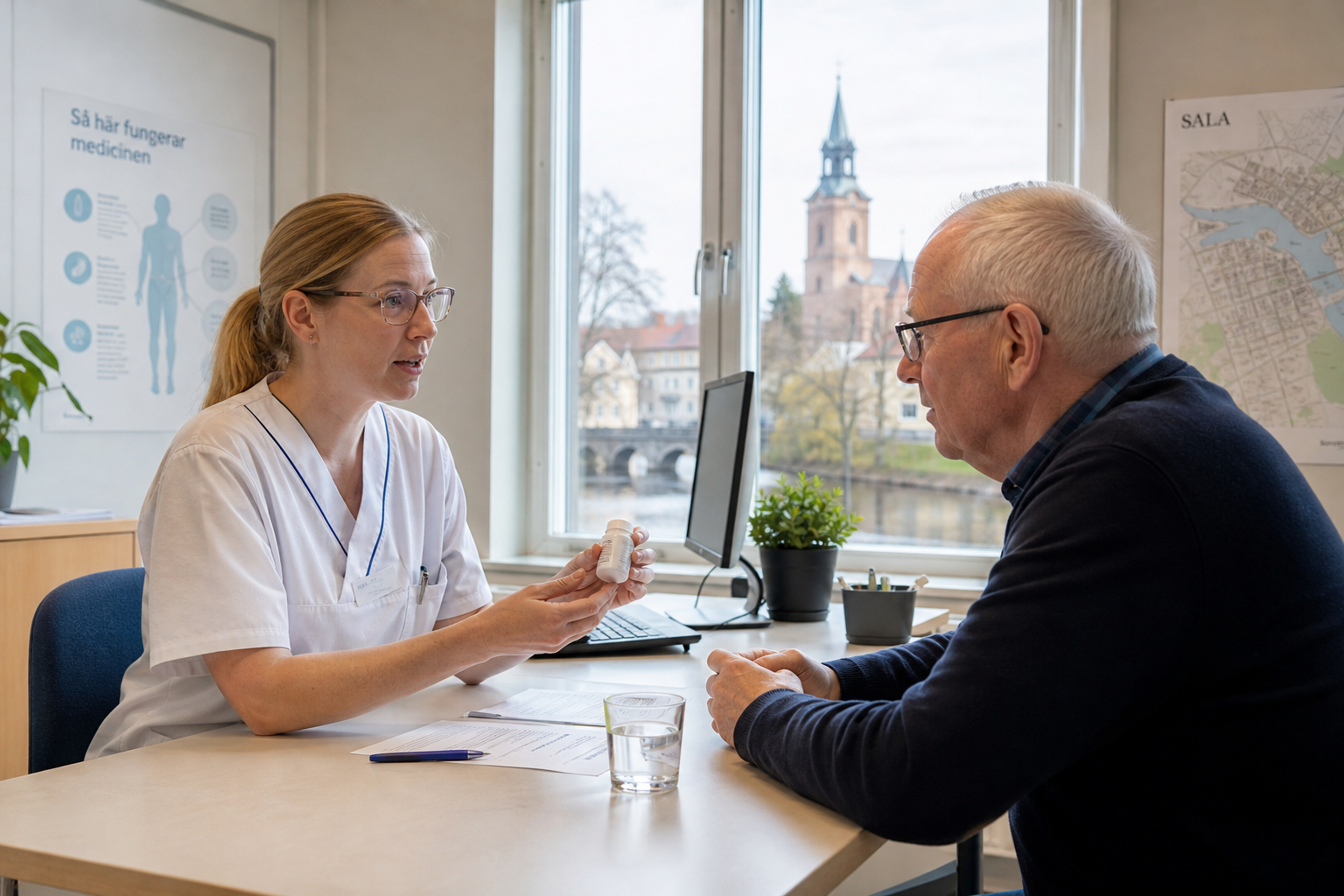
Understanding medical cannabis in Sala starts with an important distinction: Sweden does not generally permit people to buy cannabis for personal medical use without a prescription. Access depends on an individual medical assessment, an approved medicinal product, and a prescription handled through the Swedish healthcare and pharmacy system.
For residents of Sala, the process is broadly the same as elsewhere in Sweden. Local healthcare providers can assess symptoms and treatment history, but the rules governing controlled medicines are national. This guide explains what patients should know about consultations, prescriptions, pharmacies, driving, travel, CBD products and the difference between medical treatment and recreational cannabis.
How medical cannabis in Sala is regulated
Swedish medicines law treats cannabis and cannabis-derived substances carefully. A product being described as “natural,” “CBD,” or “medical” does not automatically make it lawful to possess or use. The product’s ingredients, concentration, formulation, authorization status and method of access all matter.
In practice, a patient normally needs a doctor to determine whether cannabis-based treatment is medically appropriate. The doctor must consider the diagnosis, previous treatments, possible interactions, side effects and the evidence for the proposed medicine. A request from a patient does not guarantee that a prescription will be issued.
The Swedish Medical Products Agency provides national information about medicines, authorization and regulatory requirements. Patients should use official information rather than relying on social media claims or advice from unlicensed sellers.
Getting assessed for medical cannabis in Sala
The first step is usually to contact an appropriate healthcare provider and explain the condition, symptoms and treatments already tried. Depending on the situation, this may involve primary care, a specialist clinic or another licensed healthcare service. A consultation can take place locally or through a regional referral pathway, but the prescribing decision must be made by a qualified clinician.
What to prepare for an appointment
- A clear description of symptoms, their duration and how they affect daily life.
- A list of current and previous medicines, including non-prescription products and supplements.
- Relevant diagnoses, test results and treatment records.
- Information about side effects or inadequate results from earlier treatments.
- Any history of substance-use problems, mental-health symptoms, pregnancy or other factors that may affect safety.
Be honest about any cannabis use, including products purchased online or from informal sources. This information helps a clinician assess risks and avoid dangerous interactions. It does not create a legal route for using unprescribed cannabis.
Prescriptions, products and pharmacies
When a clinician considers cannabis treatment appropriate, the prescribed product and dosage should be followed exactly. Patients should ask what the medicine is called, why it has been selected, how it should be taken, how it will be monitored and what to do if it causes unwanted effects.
Availability can vary by product and pharmacy. A pharmacy may need to order a medicine, and a prescription may have specific dispensing conditions. Patients should not assume that a product sold in another European country, on an international website or in a Swedish shop has the same legal status as a prescribed medicine in Sweden.
Use a legitimate pharmacy and keep the original packaging and prescription information. Do not share prescribed cannabis medicine with another person, even if they have similar symptoms. Do not alter the dose or combine it with alcohol, sedatives or other medicines without medical advice.
Cannabis in Sala versus recreational cannabis
The phrase cannabis in Sala can refer to very different situations. A cannabis-based medicine supplied through a lawful medical channel is not the same as cannabis bought, grown, possessed or used without authorization. A prescription does not create a general permission to obtain cannabis from an informal market.
People searching for “weed in Sala” should be especially cautious about confusing local availability with legality. Informal sellers cannot verify concentration, contamination, identity or dosage. Products may also contain THC or other substances that create legal and health risks.
Swedish rules can apply to possession, use, cultivation, production, import and distribution. The fact that cannabis is intended for symptom relief does not by itself remove those risks. If a person is unsure about a product or a legal question, they should consult a healthcare professional, pharmacist or qualified legal adviser instead of relying on a seller’s description.
For broader context about Swedish rules and how they may affect visitors, see this guide to cannabis laws for foreigners in Sweden. The same general caution applies in Sala: local geography does not change national drug law.
CBD products and hemp: why labels can be misleading
CBD is not a simple legal shortcut. A product marketed as CBD oil, hemp extract or a wellness product may still raise legal or regulatory questions, especially if it contains THC or is presented as a medicine. Food, cosmetics, supplements and medicines are subject to different requirements, and a product’s label may not accurately describe its contents.
Do not assume that a product is safe to drive with or lawful to bring across a border merely because it contains little or no intoxicating THC. Some products may also interact with prescription medicines or cause unexpected effects. Ask a pharmacist or doctor for product-specific advice.
Readers interested in the distinction between hemp products and cannabis should also review information about hemp products and Swedish rules. General hemp guidance should not be treated as approval for using an unprescribed cannabis product.
Driving, work and everyday safety
Cannabis-based medicines may cause sleepiness, dizziness, slower reactions, impaired concentration or other effects that make everyday activities unsafe. These risks can be greater when treatment begins, when the dose changes or when the medicine is combined with alcohol or other sedating substances.
A prescription does not automatically mean that driving is safe or legally permitted in every circumstance. Patients should ask their prescriber or pharmacist for specific advice, follow the medicine’s warnings and avoid driving if impaired. Employers may also have workplace safety rules that are relevant, particularly for jobs involving vehicles, machinery, heights or responsibility for other people.
When to seek medical help
- Severe confusion, extreme drowsiness or unusual behaviour.
- Chest pain, difficulty breathing or signs of a serious allergic reaction.
- Severe anxiety, hallucinations or thoughts of self-harm.
- Persistent vomiting, fainting or other worrying symptoms.
For general healthcare guidance and help understanding when to contact Swedish healthcare services, consult 1177 Vårdguiden. In an emergency, call the appropriate emergency service rather than waiting for an online response.
Travelling to or from Sala with cannabis medicine
Travel requires extra planning. Rules may differ between Sweden and the destination country, even when the medicine was prescribed lawfully in Sweden. Border authorities may ask for evidence of the prescription, the patient’s identity and the medicine’s original packaging. Some countries prohibit specific substances or require advance permits.
Before travelling, contact the embassy or competent authority of the destination country and ask the prescribing clinic or pharmacy what documentation is available. Keep the medicine in its original labelled container and carry only the amount needed for the trip unless official guidance says otherwise. Do not mail cannabis medicine internationally or place it in another person’s luggage.
Importing a product purchased abroad can create separate legal issues. A product that is available in another country may not be authorized for possession or use in Sweden. This is particularly important for oils, capsules, flowers, vapes and edible products sold online.
Questions to ask a Swedish healthcare provider
A focused conversation can help you make an informed decision. Consider asking:
- What diagnosis or symptoms is the treatment intended to address?
- What alternatives have been considered, and why might this option be suitable?
- What benefits should be monitored, and how soon should a review take place?
- What side effects, interactions and warning signs should I know about?
- Can I drive, work safely and travel while using this medicine?
- How should the medicine be stored, collected and disposed of?
Do not stop another prescribed medicine or start cannabis treatment without professional advice. A treatment plan should include follow-up, not just an initial prescription.
Key takeaways for patients in Sala
- Medical cannabis access in Sala follows Swedish national rules.
- A licensed clinician must assess whether a cannabis-based medicine is appropriate.
- Only obtain prescribed medicine through a legitimate pharmacy or authorized route.
- Do not treat CBD, hemp or online cannabis products as automatically legal or safe.
- Ask about impairment before driving, working in safety-sensitive roles or combining medicines.
- Check destination-country requirements before travelling with any cannabis-based medicine.
Conclusion
For patients researching medical cannabis in Sala, the safest route is a formal healthcare assessment followed by careful use of an appropriately prescribed product. Local availability, online advertising and informal recommendations do not replace Swedish medical and legal requirements. Keep records, ask clear questions, use a legitimate pharmacy and seek professional advice about driving, interactions and travel. This approach helps separate lawful medical treatment from unregulated cannabis products and reduces avoidable health and legal risks.