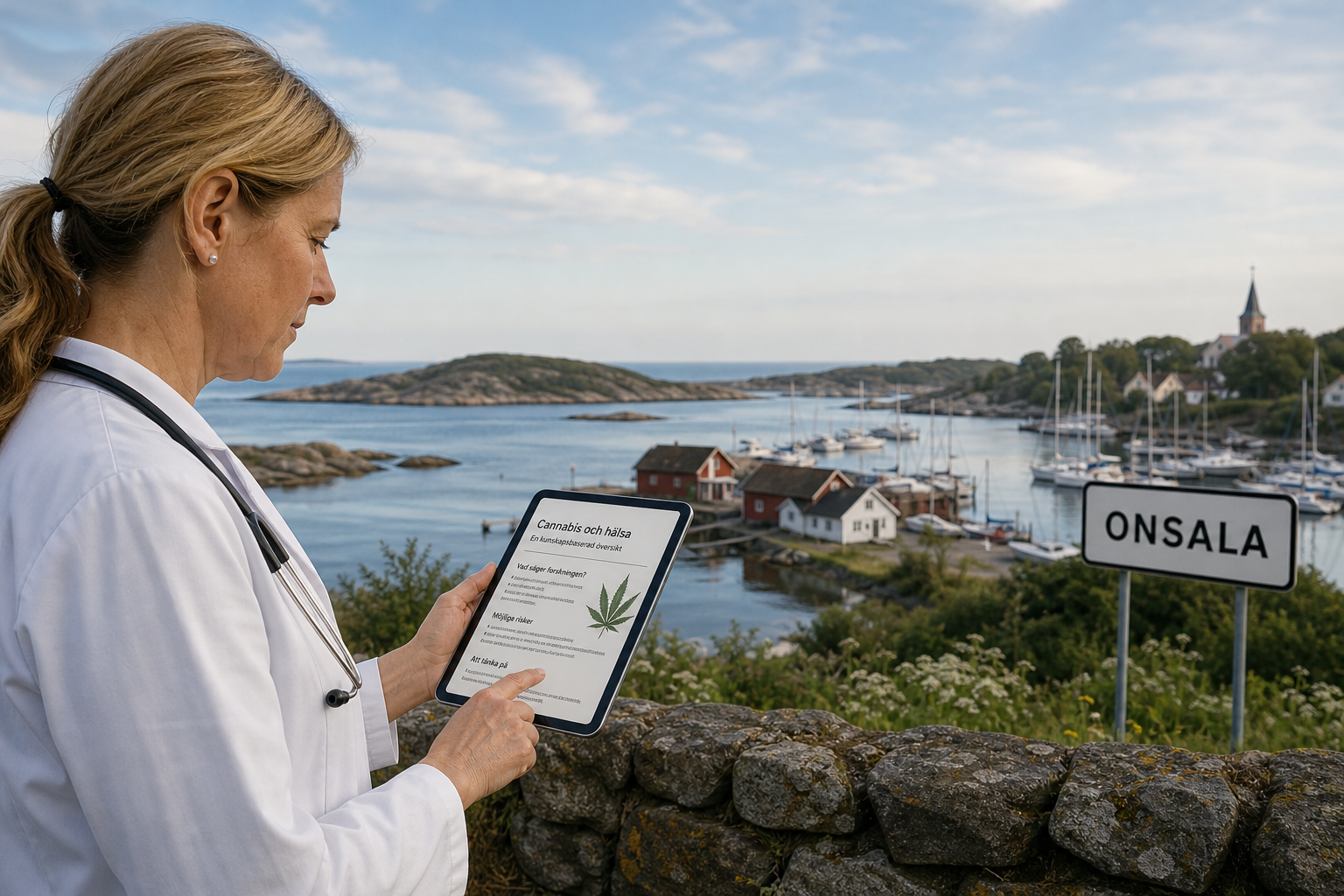
Reliable Marijuana health information in Onsala should cover more than the effects of cannabis. People in Onsala may also want to understand Swedish drug rules, the difference between medical treatment and non-prescribed use, possible interactions, and where to get confidential healthcare advice. This guide explains the main health considerations in clear terms without encouraging illegal possession or unsafe consumption.
Onsala is in Kungsbacka Municipality, Halland County, but Swedish national health and drug laws apply locally. Whether you are researching weed in Onsala, asking about a prescribed product, or concerned about someone else’s use, the safest approach is to separate health information from assumptions about legality or product quality.
What cannabis is and why health effects vary
Cannabis products can contain several compounds. THC is the main intoxicating cannabinoid and can affect attention, memory, coordination, reaction time and perception. CBD is not intoxicating in the same way, but a CBD-labelled product is not automatically risk-free or legally permitted. Products may also differ in strength, composition, contaminants and accuracy of labelling.
The response to cannabis depends on dose, potency, frequency of use, age, previous experience, mental health, other medicines and the method of administration. Eating or drinking a cannabis product can produce delayed effects, making it easier to take more before the first dose is felt. Inhaled cannabis may act sooner, but smoking exposes the lungs to irritating combustion products. No route removes the possibility of impairment or adverse effects.
Immediate effects and warning signs
Short-term effects may include relaxation, altered time perception, drowsiness, impaired concentration, anxiety, dizziness, dry mouth, a faster heartbeat and reduced coordination. Some people experience panic, confusion or suspicious thoughts, particularly after using a high-THC product or combining cannabis with alcohol or other drugs.
Do not drive, cycle in traffic, operate machinery or take responsibility for vulnerable people while impaired. Feeling normal does not reliably prove that attention and reaction time have returned to a safe level. Alcohol can increase impairment and may make nausea, dizziness or poor judgement more likely.
When urgent help is needed
Call 112 in Sweden for a medical emergency. Urgent assessment is appropriate if someone has severe breathing problems, chest pain, a seizure, collapse, extreme agitation, serious confusion, signs of psychosis, or cannot be woken. Stay with the person, remove access to more substances, and tell healthcare staff what was taken if known. Accurate information helps clinicians make safer decisions.
Longer-term risks of cannabis use
Frequent or high-potency use can increase the likelihood of tolerance, cravings and difficulty cutting down. Cannabis use disorder may show up as spending more time obtaining or using cannabis, continuing despite problems, neglecting responsibilities, or repeatedly trying and failing to stop. Dependence is a health issue, not a moral judgement, and support can help.
Regular smoking may irritate the airways and worsen cough or other respiratory symptoms. Cannabis can also affect learning, memory and motivation while a person is intoxicated or recovering from use. Risks are especially important for teenagers and young adults because the brain continues developing through adolescence and early adulthood.
People with a personal or family history of psychosis, bipolar disorder or serious anxiety should discuss cannabis risks with a healthcare professional before using any cannabinoid product. Cannabis may worsen symptoms or interact with prescribed treatment. Pregnancy and breastfeeding are additional situations in which professional advice is important; avoiding non-prescribed cannabis is the safest general approach.
Cannabis in Onsala and Swedish law
Cannabis in Onsala is subject to Swedish national law rather than a separate local cannabis policy. Non-prescribed cannabis possession, purchase, transfer and use can have legal consequences. Bringing cannabis into Sweden, sharing it with another person or driving after using drugs can create additional legal and safety risks.
A product sold informally may have an unknown THC concentration, contaminants or a different composition from what the seller claims. Buying from an unregulated source also removes the quality controls and patient monitoring associated with prescribed medicines. Claims that a product is “natural,” “CBD-only” or “legal” should not be treated as proof of either safety or lawful status.
For broader context, see this practical guide to cannabis safety in Stenungsund and the related discussion of medical cannabis in Sala. The legal position can change and depends on the specific substance, product, conduct and circumstances, so personal legal questions should be directed to a qualified Swedish legal adviser or an official authority.
Medical cannabis in Onsala: what patients should know
Medical cannabis in Onsala means treatment prescribed and monitored through the Swedish healthcare system, not simply using a recreational product for a health complaint. A clinician must assess the diagnosis, previous treatments, potential benefits, contraindications and interactions. A prescription does not mean that every cannabis product is suitable or that a patient can legally substitute another product.
Patients should provide a complete list of medicines, supplements, alcohol use and relevant medical history. Tell the prescriber about pregnancy plans, heart problems, liver disease, anxiety, depression, psychosis or a history of substance dependence. Possible side effects and practical issues such as sedation, driving and work-related safety should be discussed before treatment begins.
Do not change the dose, share prescribed medicine or order unverified cannabinoid products online without professional advice. If a treatment causes severe anxiety, fainting, unusual thoughts, allergic symptoms or other worrying changes, contact healthcare promptly. The Swedish Medical Products Agency provides official information about medicines and regulatory matters, while individual treatment decisions belong with a healthcare professional.
Safer decisions if cannabis has already been used
- Do not mix cannabis with alcohol, sedatives, opioids or other intoxicating substances.
- Do not drive or perform hazardous work while affected, and arrange a sober way home.
- Avoid using alone if there is a known history of panic, psychosis, seizures or serious heart symptoms.
- Keep products away from children and pets, especially edible products that may resemble ordinary food.
- Do not assume a small amount will have the same effect each time; potency and personal tolerance can vary.
- Seek advice before using cannabis alongside prescription medicines or treatment for mental health conditions.
These steps reduce some immediate risks but cannot make illegal or unregulated cannabis safe. The most reliable way to reduce cannabis-related harm is not to use non-prescribed products.
Where to seek support in Onsala
For non-emergency healthcare advice in Sweden, contact 1177 Vårdguiden online or by phone. You can ask about symptoms, local healthcare options and how to discuss substance use with a clinician. A health professional can help with sleep problems, anxiety, pain, withdrawal symptoms or concerns about dependence without requiring you to diagnose yourself.
If you want to reduce or stop cannabis, start by identifying when and why use occurs. Triggers may include stress, social settings, boredom, insomnia or contact with particular people. A clinician or addiction service can help create a plan, manage sleep and mood changes, and consider treatment for underlying problems. If someone is in immediate danger, has severe confusion or may have taken several substances, call 112 rather than waiting for an appointment.
Questions to ask a healthcare professional
- Could cannabis interact with my prescription medicines or alcohol use?
- Could my symptoms be caused or worsened by cannabis?
- What warning signs mean I should seek urgent care?
- What evidence-based treatments are available for my condition?
- Where can I get help if I want to reduce or stop using cannabis?
Conclusion
Good Marijuana health information in Onsala should be practical, non-judgemental and grounded in both health and Swedish legal realities. Cannabis can impair judgement, affect mental and physical health, interact with medicines and lead to dependence, particularly with frequent or high-potency use. Non-prescribed cannabis is not made safe by informal labelling, and local availability does not change national law.
If you have used cannabis and feel unwell, seek medical advice promptly; call 112 for an emergency. For ongoing questions, 1177 and local healthcare services can guide you toward confidential support and safer, evidence-based care.