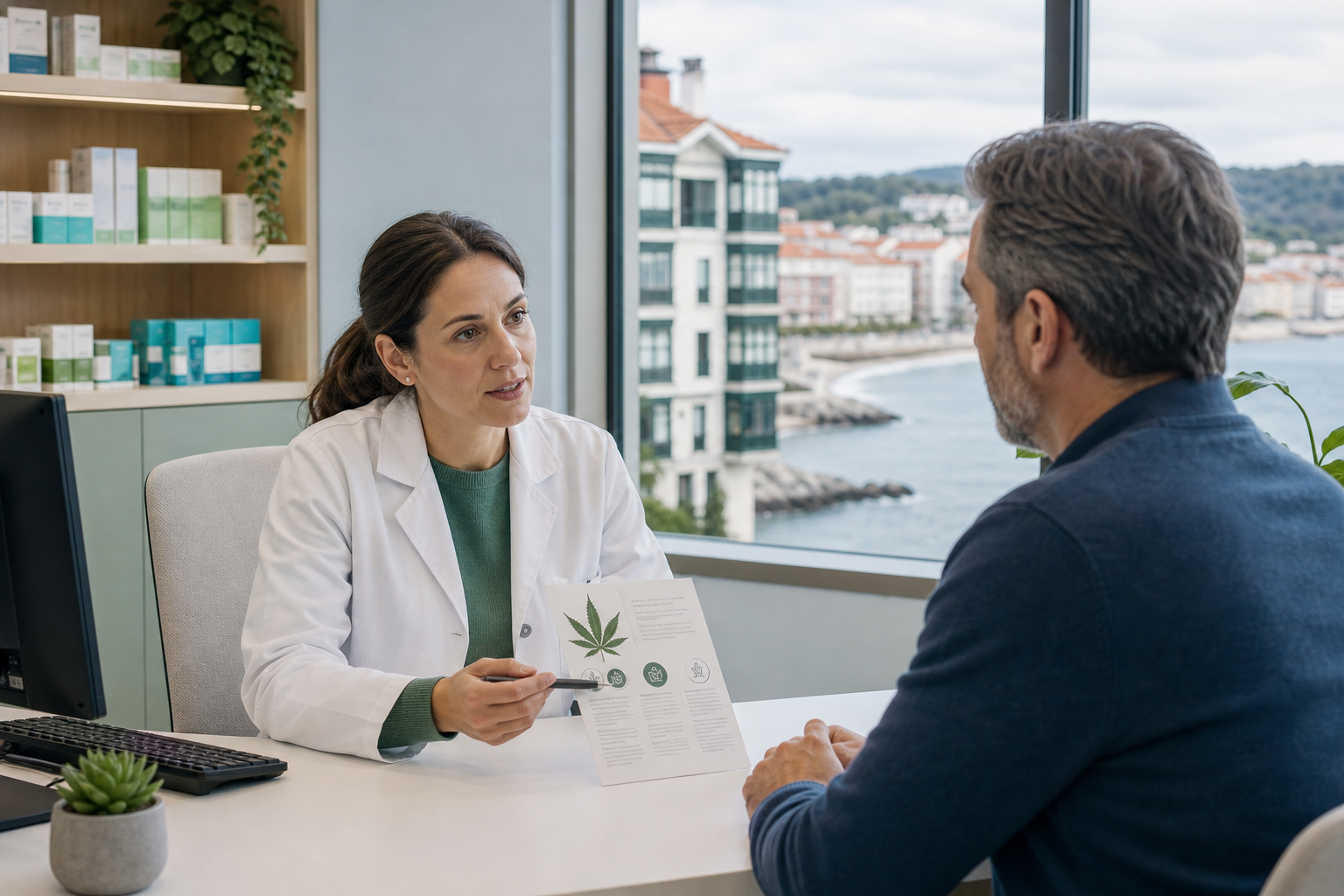
Reliable marijuana health information in Getxo should cover more than whether cannabis is legal or available. People in Getxo, visitors to the Biscay coast and their families may also need to understand short-term effects, longer-term risks, medicine interactions, driving rules and where to seek help. Cannabis products vary considerably in strength and composition, so a product that feels manageable to one person may cause serious anxiety, impairment or other problems for another.
This guide provides general health information, not a diagnosis or personal medical advice. Spanish rules can change, and local services may apply their own intake procedures. For urgent symptoms, call 112 or attend an emergency department. For non-urgent concerns, speak with a doctor, pharmacist or a health professional through the Basque public health system.
What cannabis does to the body and mind
Cannabis contains compounds that affect the brain and nervous system. Tetrahydrocannabinol, or THC, is the main intoxicating compound. Cannabidiol, or CBD, is not intoxicating in the same way, but CBD products are not automatically risk-free and may contain other cannabinoids or contaminants.
After using THC, someone may experience relaxation, altered time perception, increased appetite, drowsiness or changes in sensory awareness. Other people experience anxiety, panic, suspiciousness, confusion, nausea or a faster heartbeat. The response depends on dose, potency, route of administration, previous experience, sleep, mental health, other substances and the surrounding environment.
Smoking, vaping and edible products
Smoking cannabis exposes the lungs to irritating combustion products. Vaping avoids combustion but is not harmless: devices, oils and cartridges can differ in quality, and some products may contain unexpected ingredients. Edibles can take much longer to produce effects than inhaled cannabis. This delay makes accidental overconsumption more likely, particularly when a person takes more because they do not feel an immediate effect.
Mixing cannabis with alcohol, sedatives, opioids or other drugs can increase impairment and may make adverse reactions harder to predict. Anyone taking prescribed medicines should ask a doctor or pharmacist about possible interactions rather than assuming that a plant-based product is compatible.
Marijuana health information in Getxo: the main risks to know
Health risks are not identical for every user, but several warning areas deserve attention. The risk of harm generally increases with frequent use, high-THC products, use at a young age, combining substances and using cannabis despite negative effects.
- Impaired attention and coordination: Cannabis can reduce reaction time, concentration, memory and judgement. These effects can affect cycling, driving, swimming, climbing and other activities where a mistake may cause injury.
- Mental health symptoms: Cannabis may worsen anxiety or trigger panic in some people. Frequent or high-potency use is also associated with a greater risk of psychotic symptoms, especially among people with a personal or family history of psychosis or bipolar disorder.
- Dependence: Some people develop cannabis use disorder, which can involve cravings, difficulty cutting down, tolerance and continued use despite problems at school, work, home or in relationships.
- Respiratory irritation: Regular smoking can cause cough, phlegm and airway irritation. Avoiding smoke removes one source of harm but does not eliminate the risks of THC or other delivery methods.
- Heart and circulation effects: Cannabis can temporarily raise heart rate and may cause dizziness or faintness. People with cardiovascular conditions should seek individual medical advice.
- Pregnancy and breastfeeding concerns: Avoiding cannabis is the safest approach during pregnancy and breastfeeding because exposure may affect the developing infant and evidence about product safety remains limited.
For a wider discussion of warning signs and practical precautions, see this related guide to cannabis risks and safety considerations. The information is general and does not replace a clinical assessment.
Weed in Getxo: safer decisions if someone chooses to use
There is no completely risk-free way to use non-prescribed cannabis. However, practical measures can reduce the chance of acute harm. Avoid driving or operating machinery after use, and do not rely only on feeling sober: impairment may persist after the most noticeable effects fade.
- Do not combine cannabis with alcohol or other intoxicating substances.
- Avoid using alone, particularly if the product is unfamiliar or unusually strong.
- Do not take more edible cannabis simply because effects have not appeared quickly.
- Keep products away from children, pets and anyone who could mistake them for food.
- Do not share smoking or vaping equipment, and avoid use in enclosed spaces around other people.
- Stop and seek advice if use is causing panic, memory problems, low motivation, conflict or difficulty meeting daily responsibilities.
People with a history of psychosis, severe anxiety, bipolar disorder, substance dependence, serious heart disease or pregnancy should discuss cannabis with a healthcare professional before using it. Adolescents and young adults may be more vulnerable to effects on learning, attention and mental wellbeing because brain development continues into early adulthood.
Cannabis in Getxo and mental health
A sudden panic reaction can include intense fear, racing thoughts, trembling, chest discomfort, nausea and a sense that something terrible is happening. Moving to a quiet, familiar place, staying with a calm trusted person, avoiding additional substances and taking slow breaths may help while the effects pass. Do not restrain or confront someone who is frightened or confused unless there is an immediate safety threat.
Call 112 for severe breathing difficulty, chest pain, a seizure, collapse, loss of consciousness, extreme agitation, suspected poisoning or symptoms of a serious allergic reaction. Urgent help is also appropriate when someone is at risk of harming themselves or others. If a person is unconscious but breathing, place them on their side and do not give food, drink or more drugs while waiting for emergency services.
For continuing anxiety, low mood, hallucinations, paranoia or sleep disruption, arrange a medical appointment even if the symptoms seem linked to cannabis. Early support can help distinguish intoxication from an underlying mental health condition.
Medical cannabis in Getxo: what patients should understand
Medical cannabis is not the same as buying a recreational product and using it for a health complaint. A clinician should assess the diagnosis, current medicines, treatment history and potential risks. Depending on the condition and the applicable Spanish framework, treatment may involve specific authorised preparations and professional monitoring rather than general cannabis flower or unregulated oils.
Patients should tell their doctor about all cannabis, CBD, alcohol, supplements and recreational drugs they use. This information helps clinicians assess sedation, interactions, changes in symptoms and whether a different treatment is needed. Do not stop prescribed medicine or change a dose because of advice from a social media post, shop assistant or informal source.
The Spanish Agency of Medicines and Medical Devices publishes official information about medicines and regulatory matters. Patients can also ask a pharmacist or their healthcare team how an authorised product should be stored, measured and taken.
Some products sold as CBD or hemp products may be marketed in ways that imply medical benefits without providing reliable clinical evidence. Labels can be incomplete, and the amount of THC may not match expectations. Treat therapeutic claims cautiously and avoid products that promise to cure serious diseases.
Cannabis laws in Getxo: why health and legal advice overlap
Getxo follows Spanish national law, alongside rules and enforcement practices that can affect public spaces. Possession or use in public may lead to administrative consequences, while activities such as supply, trafficking or unlawful cultivation can carry more serious penalties. Private settings do not turn every cannabis activity into a legal one, and travelling with cannabis across borders creates additional risks.
Legal status also matters for health because fear of penalties can delay medical care. Emergency clinicians need accurate information about what was taken, how much and when. Seeking urgent treatment for a suspected poisoning is more important than worrying about embarrassment. For general background on practical legal distinctions, read this guide to cannabis safety, law and travel considerations in Spain.
For current official legal information, consult the Boletín Oficial del Estado and obtain personal advice from a qualified Spanish legal professional when the situation involves possession, cultivation, transport, sale or travel. Online summaries may be outdated or fail to distinguish criminal offences from administrative violations.
Where to seek help in Getxo
For a non-urgent question, start with a primary-care doctor or pharmacist and explain the product, route, approximate amount, timing and any other substances involved. If cannabis use is becoming difficult to control, ask about addiction and mental-health services available through the Basque health system. A confidential, non-judgmental conversation is more useful than trying to manage repeated problems alone.
Family members can focus on specific observations rather than accusations: missed work, risky driving, worsening anxiety, money problems, withdrawal from friends or repeated attempts to stop. Encourage an appointment and offer practical support, while setting clear boundaries around driving, violence, childcare and drug use in the home.
Conclusion
Good health information about cannabis in Getxo includes effects, product risks, mental health, medicine use, driving, emergency symptoms and the legal context. The safest option for people who are pregnant, underage, vulnerable to psychosis, managing heart disease or taking interacting medicines is to avoid cannabis unless a qualified clinician advises otherwise. Anyone experiencing severe symptoms should call 112, while people concerned about regular use can seek early support through healthcare services. Reliable information and honest communication make safer decisions more likely than assumptions based on product labels or informal advice.