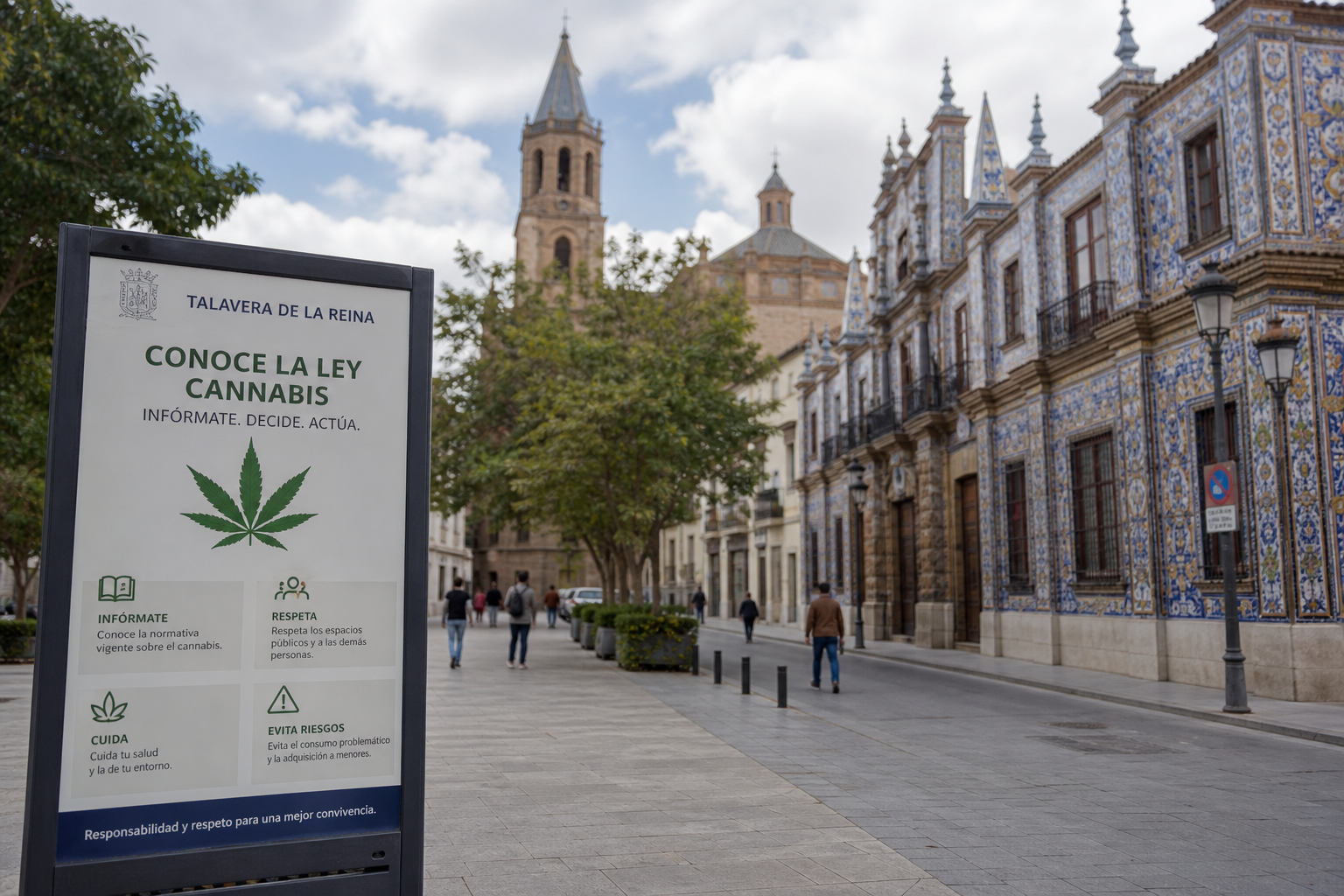
Understanding Cannabis risks in Talavera de la Reina means looking beyond whether cannabis is socially visible or easy to discuss. People in Talavera de la Reina, visitors passing through Castilla-La Mancha and anyone considering cannabis use should understand the possible effects on health, the limits of Spanish law and the practical dangers associated with public consumption, driving and unknown products.
Spain does not treat cannabis as fully legal for general recreational use. The legal position depends on the conduct involved, the location, the amount, evidence of trafficking and whether public safety is affected. This guide offers general information, not legal or medical advice. Rules and official interpretations can change, so serious legal concerns should be checked with a qualified professional or the relevant authority.
What are the main cannabis risks in Talavera de la Reina?
The risks in Talavera are broadly the same as elsewhere in Spain, but local circumstances can make poor decisions more consequential. Public use may lead to police intervention, while impaired driving can endanger other road users and create serious legal consequences. A product obtained informally may also have unknown potency, contaminants or a different substance than expected.
Risk is influenced by several factors:
- The concentration of THC and the amount consumed.
- Whether cannabis is smoked, vaporised, eaten or combined with alcohol or medicines.
- A person’s age, tolerance, mental health, physical health and previous experience.
- The setting, including whether the person is alone, in public or responsible for children or other people.
- Whether the product came from a controlled and reliable source.
Even experienced users can misjudge the strength of a product. Edibles are particularly difficult to assess because effects may take longer to appear and can last much longer than expected.
Health effects and unwanted reactions
Short-term effects
Cannabis can affect memory, attention, coordination, reaction time and judgement. Some people experience relaxation or euphoria, while others develop anxiety, panic, dizziness, nausea, confusion or paranoia. These effects can make walking near traffic, cycling, swimming, using machinery or making decisions unsafe.
Smoking cannabis can irritate the airways. Combining it with alcohol may increase impairment and make nausea, dizziness or loss of coordination more likely. Mixing cannabis with prescription medicines or other drugs can also create risks that are difficult to predict. Anyone taking regular medication should ask a doctor or pharmacist about possible interactions rather than assuming cannabis is harmless because it is plant-based.
Longer-term and higher-risk concerns
Frequent or heavy use may contribute to dependence, reduced motivation for some people and problems with concentration or daily functioning. The risks are more concerning when cannabis use begins during adolescence, when products contain high levels of THC, or when a person already has a history of anxiety, depression, psychosis or substance-use problems.
Some people develop cannabis use disorder and find it difficult to reduce or stop. Warning signs include using more than intended, prioritising cannabis over work or relationships, needing increasingly larger amounts, or continuing despite physical, emotional or legal problems. Support from a healthcare professional is appropriate if these signs appear.
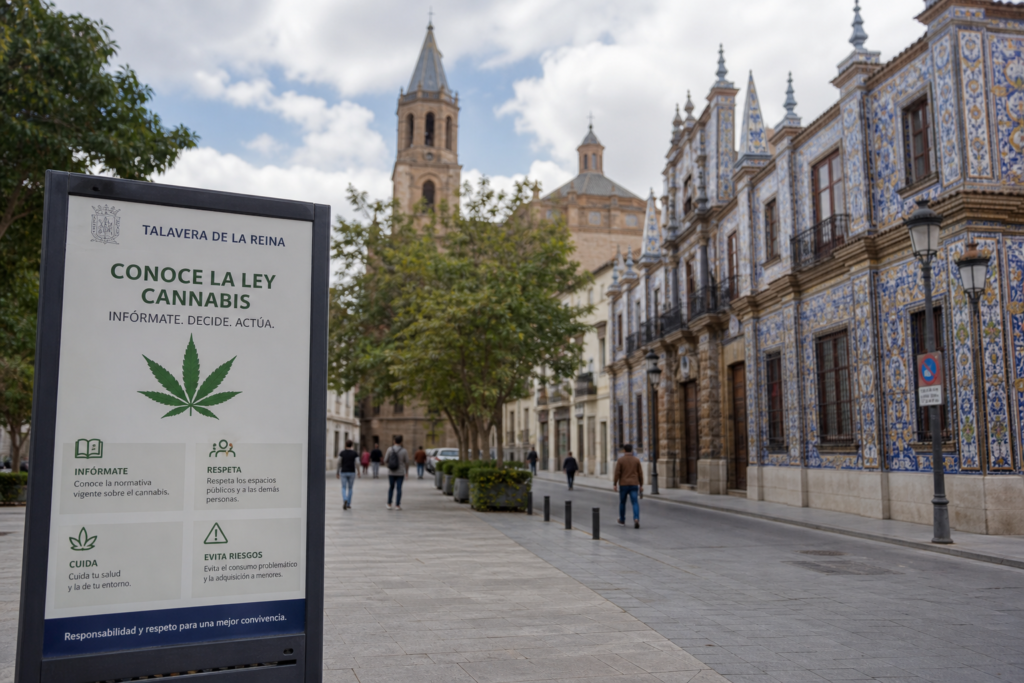
Reliable public-health information about drug effects and prevention is available through the Spanish National Plan on Drugs. It can help users, families and professionals identify risks without relying on informal claims about potency or safety.
Cannabis laws in Talavera de la Reina
There is no separate recreational cannabis regime for Talavera de la Reina. National Spanish law applies, alongside local rules concerning public spaces and civic conduct. Personal possession or consumption is not a guarantee of legality in every setting. Possession or use in public places, establishments open to the public or collective transport can result in an administrative sanction, even where there is no evidence of supply.
Conduct associated with trafficking, distribution, organised supply or cultivation intended for distribution can be treated much more seriously than simple personal use. The legal assessment may depend on the facts, including quantity, packaging, communications, money, location and other evidence. Cannabis grown or stored at home is not automatically risk-free if authorities believe it is connected with supply or if it creates a nuisance or safety issue.
The official text of Spain’s Organic Law 4/2015 on public safety is the appropriate starting point for understanding administrative offences involving public drug consumption or possession. It is written in legal language, so anyone facing a search, seizure, fine or criminal allegation should seek individual legal advice.
Public use, private spaces and social clubs
Using cannabis discreetly in a private setting does not create a universal legal right to buy, possess or share it. Social-club arrangements are not a simple equivalent to licensed retail dispensaries, and membership does not remove all legal risk. Visitors should not assume that a club, accommodation provider or private gathering is authorised to sell cannabis or permit consumption.
In Talavera, the safest practical approach is to avoid public consumption, never share cannabis with strangers, and keep away from schools, youth settings, public events and any situation where possession could create concern. Do not carry cannabis across national borders, even if it was obtained legally elsewhere.
Driving and transport risks
Driving after using cannabis is one of the most serious risks for residents and visitors. THC can impair reaction time, lane control, attention and judgement. A person may feel capable of driving while still being affected. Cannabis can also remain detectable after the most noticeable subjective effects have faded, so trying to calculate a safe waiting period is unreliable.
Do not drive, cycle in traffic or operate machinery after consuming cannabis. Arrange a sober driver, use public transport or wait until you are clearly unimpaired and legally able to travel. Never combine cannabis with alcohol before travelling.
Police checks and road-safety enforcement can have consequences separate from any question about whether the cannabis was for personal use. A positive test, unsafe driving or an accident can lead to different legal and insurance problems. If someone has consumed cannabis in Talavera, the responsible choice is to avoid driving altogether.
Risks from unknown products and informal purchases
People searching for weed in Talavera de la Reina may encounter products advertised through informal contacts or social media. There is no reliable way to confirm strength, contaminants or authenticity from packaging alone. Products sold as cannabis may contain unexpectedly high THC levels, synthetic cannabinoids or other substances with more unpredictable effects.
Vaping products and concentrates deserve particular caution because they can deliver a large dose quickly. Homemade extracts, unlabelled oils and products with exaggerated medical claims are especially difficult to assess. Avoid products with unclear ingredients, damaged packaging or promises of guaranteed health benefits.
Never buy or accept cannabis for a minor, and do not give it to another person without knowing their health history, medication use and tolerance. Sharing also creates legal and safety risks, especially if the recipient becomes unwell.
Medical cannabis in Talavera de la Reina
Searching for medical cannabis in Talavera de la Reina should lead to a qualified healthcare professional rather than an informal seller. Medical use is not the same as self-medicating with recreational cannabis, and a doctor needs to consider the diagnosis, evidence for treatment, dosage, side effects and possible interactions.
Do not replace prescribed treatment with cannabis without medical supervision. Products obtained online or from an unregulated source may have inaccurate labels and may not meet pharmaceutical quality standards. Patients should keep medicines in their original packaging and ask about travel documentation if they need to carry any cannabis-related medicine.
A pharmacist, primary-care clinician or specialist can discuss approved treatments, alternatives and whether a symptom requires urgent assessment. A person experiencing severe anxiety, hallucinations, chest pain, breathing difficulty, collapse or repeated vomiting after consuming cannabis should seek urgent medical help. Call emergency services on 112 if there is immediate danger, loss of consciousness, severe breathing difficulty or a suspected poisoning.
How to reduce harm
No method makes non-prescribed cannabis risk-free, but practical steps can reduce the chance of injury:
- Do not use cannabis before driving, cycling in traffic, swimming, working at heights or operating machinery.
- Avoid combining cannabis with alcohol, sedatives, stimulants or other drugs.
- Do not use alone if there is a history of panic, fainting, psychosis or serious medical problems.
- Be particularly cautious with edibles because effects can be delayed and prolonged; do not take repeated amounts simply because the first effects have not appeared.
- Keep products away from children and pets, preferably in a locked container.
- Stop using and seek advice if cannabis causes repeated panic, hallucinations, severe vomiting or worsening mental-health symptoms.
- Do not rely on a friend’s estimate of potency or on a product’s marketing claims.
Visitors looking for broader regional context can also review this practical guide to marijuana rules for tourists in Toledo, while readers interested in nearby legal terminology may find the overview of cannabis decriminalization in Guadalajara useful. Local context differs, but national law remains central.
What to do after a problem
If someone becomes distressed after using cannabis, move them to a calm, safe place and stay with them. Do not give them more cannabis, alcohol or unprescribed medication. Speak calmly, monitor breathing and consciousness, and provide emergency responders with honest information about what was taken and when. Accurate information helps clinicians choose safer treatment.
If the concern is dependence rather than an immediate emergency, contact a healthcare professional or local addiction-support service. Seeking help early can prevent problems from affecting employment, relationships, finances or legal status.
Conclusion
The main cannabis risks in Talavera de la Reina involve impairment, mental and physical health effects, unknown product strength, public-use penalties and driving after consumption. Cannabis in Talavera de la Reina is not covered by a simple legal-versus-illegal distinction: the setting, behaviour and purpose matter. Avoid public use and driving, treat informal products with caution, keep cannabis away from minors and seek medical or legal advice when the situation is serious. Responsible choices begin with recognising that a familiar product can still create significant health and legal consequences.