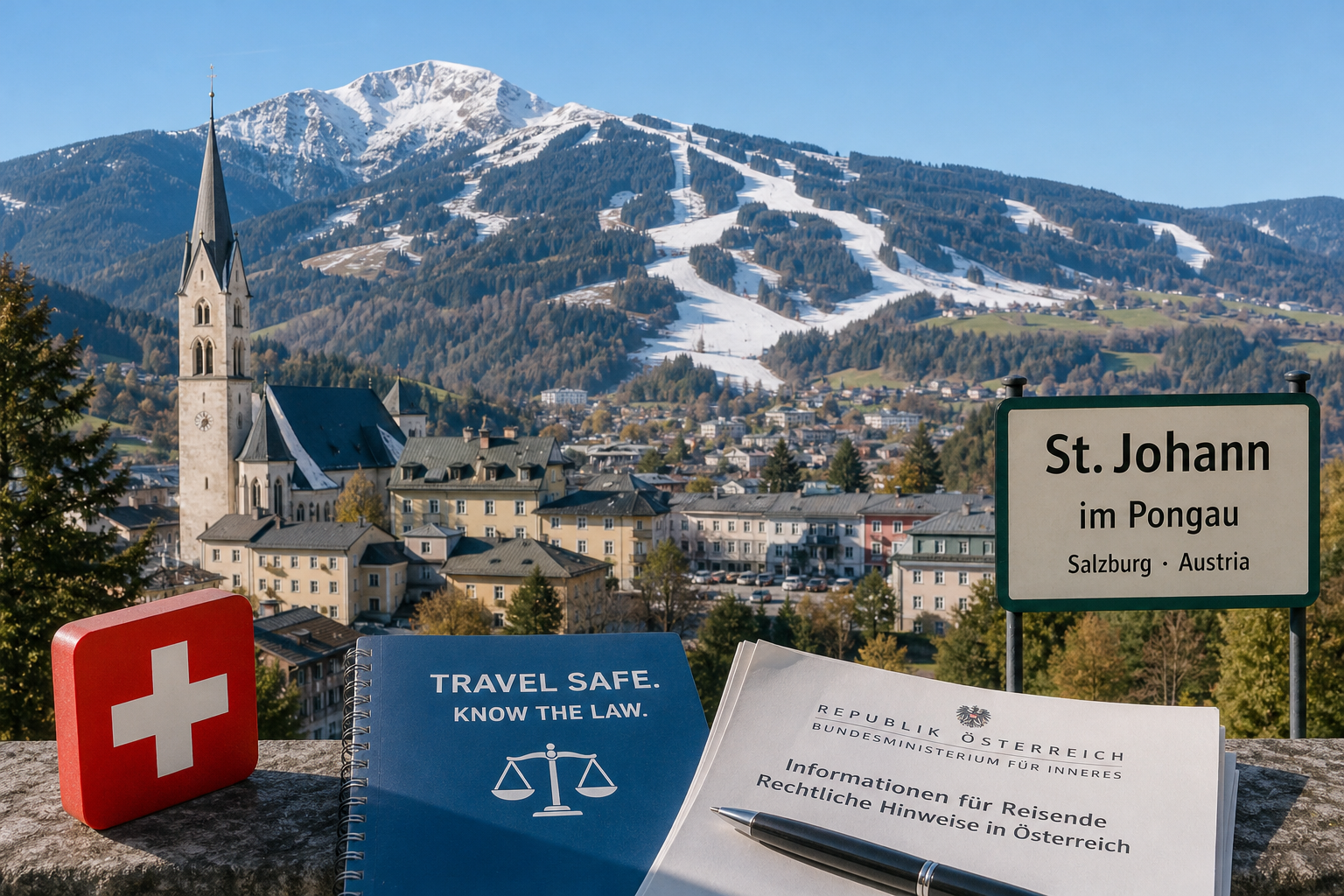
Marijuana facts about St. Johann im Pongau are especially useful for visitors who associate the town with skiing, hiking and tourism but are less familiar with Austria’s cannabis rules. St. Johann im Pongau does not have a separate local cannabis market or a special recreational-use regime. The main rules come from Austrian federal law, while ordinary local regulations still matter in places such as hotels, ski areas, public transport and other shared spaces.
This guide explains the practical position without encouraging illegal drug use. It covers possession, consumption, medical treatment, CBD products, driving, travel and health concerns. Laws and enforcement policies can change, so anyone facing a legal issue should obtain current advice from an Austrian lawyer or an official authority.
Cannabis laws in St. Johann im Pongau
The legal position in St. Johann im Pongau is principally the same as elsewhere in Austria. Cannabis containing controlled psychoactive substances is generally regulated under Austria’s narcotics framework. Recreational possession, acquisition, supply and cultivation can create legal problems, even when a person describes the quantity as being for personal use.
Personal use is not the same as legal use. Austrian authorities may have options involving health assessments, treatment measures or conditional procedures in some cases, but those possibilities do not create a general right to possess or consume marijuana. The outcome can depend on the substance, amount, prior history, conduct, evidence and other facts.
For current statutory wording, the Austrian Legal Information System is the appropriate official starting point. It contains Austria’s published laws and regulations, although legal texts can be difficult to interpret without professional help.
Possession, sharing and selling
Carrying cannabis in a jacket, backpack, vehicle or holiday apartment can expose a person to investigation. Sharing marijuana with another person is more serious than simple possession, and supplying or selling it can lead to substantially greater consequences. A person should not assume that giving a small amount to a friend is harmless or outside the law.
Police attention may also arise from related conduct, such as public disorder, nuisance, trespass, driving concerns or carrying cannabis across a border. A cannabis product purchased legally in another country is not automatically lawful to bring into Austria.
Weed in St. Johann im Pongau: public places and accommodation
People searching for weed in St. Johann im Pongau may be looking for a place to consume, but there is no general public-use permission to rely on. Hotels, hostels, holiday apartments, restaurants, bars, ski lifts and mountain facilities can impose their own strict no-smoking or no-drug policies. A private balcony is not necessarily a safe or permitted place if smoke, odor or behavior affects other guests.
Consumption in public can create additional problems even apart from the underlying drug offense. Smoke near children, entrances, queues or crowded outdoor areas may lead to complaints. In a resort town, a complaint can quickly involve accommodation staff, security or police. Visitors should follow posted rules and respect requests from property owners.
Events, nightlife and outdoor recreation
St. Johann im Pongau’s recreational setting does not change drug law. Ski slopes, lifts, trails, public squares and festival areas are not exemptions. Cannabis use can also impair reaction time, coordination, judgment and the ability to respond to changing conditions. Those effects are particularly dangerous on skis, snowboards, bicycles, roads, climbing routes and mountain trails.
Do not mix cannabis with alcohol or other intoxicating substances. Combining substances can make impairment less predictable and increase the risk of accidents, panic, vomiting or poor decision-making. If someone becomes confused, unconscious, severely agitated or has trouble breathing, seek emergency medical assistance immediately.
Cannabis in St. Johann im Pongau and travel considerations
Travelers should treat cannabis in St. Johann im Pongau as a legal and safety issue, not as an ordinary tourist purchase. Do not carry marijuana, resin, THC products, infused food or vaping liquids across the Austrian border. Border controls and customs rules can apply even when the journey is short or takes place within the Schengen Area.
Austria’s rules are separate from the rules of Germany, Italy, Switzerland or any other neighboring country. A product allowed in one jurisdiction may be restricted in another. This is especially important for edibles, extracts, concentrates and prescription products, which may be treated differently from dried plant material.
Keep medicines in their original packaging and carry documentation when traveling with a prescribed controlled medicine. Before international travel, confirm the requirements with the relevant embassy, customs authority, doctor or pharmacist. Do not rely only on a product label or on advice from a retailer in another country.
For broader travel planning, our guide to cannabis laws for travelers in Mistelbach provides a useful Austria-focused comparison, while the article on cannabis travel restrictions in Hollabrunn discusses common border and transport concerns.
Medical cannabis in St. Johann im Pongau
Medical cannabis in St. Johann im Pongau is not the same as recreational marijuana. Medical treatment must be assessed through Austria’s healthcare system, and access depends on the diagnosis, the medicine, the prescriber and applicable rules. A doctor may prescribe an authorized cannabinoid medicine when medically appropriate, but that does not mean a patient can freely purchase any cannabis flower, edible or extract.
Patients should speak with a qualified Austrian doctor or pharmacist about treatment options, contraindications, dosage and documentation. Do not use another person’s prescription, order unverified products online or assume that a foreign medical-cannabis authorization automatically permits possession in Austria.
People considering medical treatment should also discuss a history of psychosis, bipolar disorder, anxiety, depression, heart problems, pregnancy, breastfeeding and current medicines. Cannabis-based medicines may cause dizziness, sedation, changes in concentration or interactions with other drugs. A health professional can explain whether the potential benefits outweigh the risks.
Our related overview of marijuana health information in Lienz covers medical questions, risks and safer-use considerations that are relevant to residents and visitors throughout Austria.
CBD and low-THC products
CBD is not identical to intoxicating marijuana. CBD products may contain little or no THC, but their legality depends on the product category, ingredients, labeling, intended use and Austrian or European rules. Oils, cosmetics, foods, supplements, flowers and vaping products may not be regulated in the same way.
A label saying “CBD” is not a guarantee that a product is lawful, safe or free of THC. Some products can be mislabeled or contain enough THC to cause impairment or a positive test. Travelers should be particularly cautious with CBD flowers, gummies, cartridges and imported oils.
Do not confuse industrial hemp with unrestricted recreational cannabis. Hemp varieties and hemp-derived products can be subject to specific requirements, and a product that is lawful for sale in one country may not be lawful to possess or transport in Austria. When in doubt, avoid carrying the product and seek advice from an official source.
Driving and workplace risks
Driving after using cannabis is unsafe and can have legal consequences. Feeling calm or capable does not prove that attention, reaction time and judgment have returned to normal. Residual effects may last longer than the noticeable high, particularly after edibles or concentrated products.
The same caution applies to skiing, snowboarding, operating machinery and working at height. Employers, transport operators and accommodation providers may have safety policies that prohibit impairment or possession on their premises. A prescription does not automatically make it safe or lawful to drive while affected.
Safer choices for visitors
- Do not buy, carry, share or transport unverified cannabis products.
- Never drive, ski or operate equipment while impaired.
- Follow the smoking, drug and nuisance policies of your accommodation and activities.
- Keep prescribed medicines in original packaging with appropriate documentation.
- Do not mix cannabis with alcohol, sedatives or other drugs.
- Seek medical help for severe confusion, chest pain, breathing difficulty, seizures or loss of consciousness.
Health facts and warning signs
Cannabis can affect memory, attention, coordination, perception and decision-making. Some people experience anxiety, panic, paranoia, rapid heart rate or nausea. Risk can be greater with high-THC products, large doses, unknown potency, frequent use, adolescence or a personal or family history of psychotic illness.
Edibles deserve particular caution because effects may take longer to appear than inhaled effects. Taking more too soon can result in an unexpectedly intense and prolonged reaction. Smoking can irritate the lungs, while vaping products may contain contaminants or ingredients that are not clearly identified.
Dependence is another important concern. Signs can include unsuccessful attempts to cut down, cravings, spending substantial time obtaining or using cannabis, and continuing despite problems at school, work, relationships or health. Anyone concerned about their use can contact a doctor or addiction-support service without waiting for a crisis.
How to check current information
Official sources are more reliable than social-media posts, travel forums or informal advice from sellers. Austria’s public health information is available through the Austrian public health portal. For a legal question, consult the current text of the relevant law and obtain professional advice when the situation involves police contact, international travel, a prescription or an employment matter.
Local tourism offices can explain accommodation and event policies, but they are not a substitute for legal or medical advice. If police stop you, remain calm, avoid arguments and ask for legal assistance if you are being questioned or investigated. Do not sign documents you do not understand.
Conclusion
The main marijuana facts about St. Johann im Pongau are straightforward: local scenery and tourism do not create a cannabis exemption, recreational possession and supply can carry legal risks, and medical products must be handled through legitimate healthcare channels. CBD labels do not guarantee legality, while driving or skiing under the influence can endanger both the user and others.
Visitors can reduce risk by leaving cannabis products at home, checking current Austrian rules, respecting no-smoking and no-drug policies, and asking qualified professionals about medical needs. When laws or health circumstances are unclear, official authorities, doctors, pharmacists and lawyers are safer sources than online rumors.