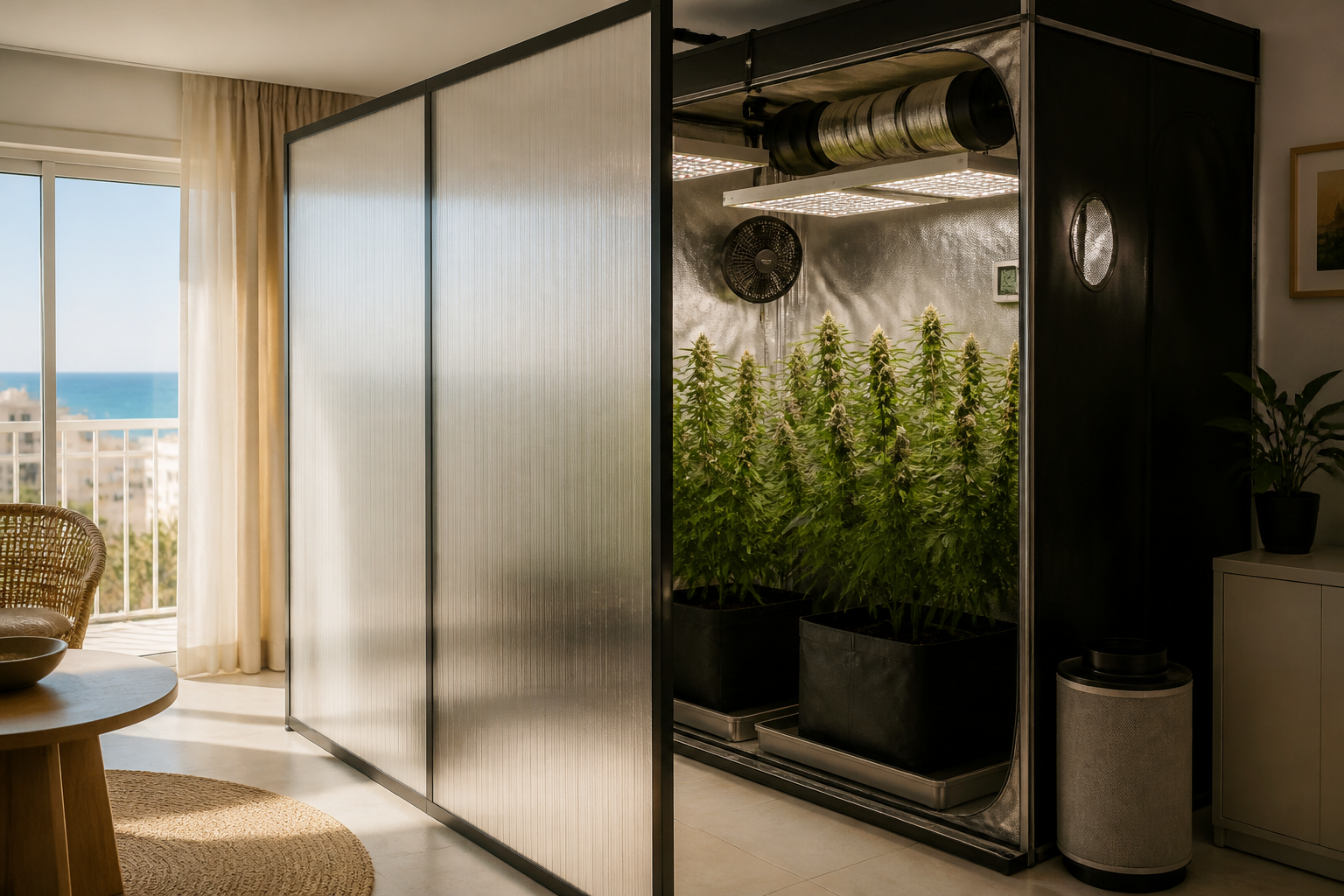
Understanding marijuana cultivation laws in Torrevieja requires more than asking whether growing a plant at home is simply legal or illegal. Spanish law distinguishes between private conduct, cultivation linked to drug distribution, and cannabis plants that are visible from public places. The location of a property, the number and maturity of plants, evidence of intended supply, and the effect on neighbours can all influence how authorities assess a situation.
This guide explains the main legal issues for residents, landlords and visitors. It covers private growing, public visibility, possession, electricity and nuisance concerns, criminal risks, and practical steps for reducing avoidable problems. It is general information, not legal advice. Anyone facing a search, seizure, complaint or criminal investigation should speak with a qualified Spanish lawyer.
How Spanish law approaches cannabis cultivation
Spain does not provide a simple nationwide rule saying that every adult may grow a fixed number of cannabis plants. Instead, several legal provisions may apply depending on the purpose and circumstances of the cultivation. Personal use inside a private setting is treated differently from cultivation intended to facilitate trafficking, and administrative rules apply when cannabis is visible or consumed in public.
The Spanish Criminal Code is central when authorities believe cultivation forms part of a drug-trafficking offence. Article 368 covers acts involving cultivation, preparation, trafficking or promotion of illegal drug consumption when the conduct is connected with supply or distribution. The wording and penalties can depend on the substance, scale, circumstances and other aggravating or mitigating factors. The official Spanish Criminal Code on the BOE should be consulted for the statutory text.
In practical terms, a private grow does not automatically prove trafficking. However, a claim of personal use is not an automatic exemption either. Investigators and courts may look at the complete evidence, including packaging, weighing equipment, customer messages, cash, multiple cultivation areas, unusual quantities, distribution records or testimony from other people.
Is growing cannabis at home in Torrevieja allowed?
Home cannabis growing in Torrevieja occupies a legally sensitive area. Spanish case law has sometimes treated limited cultivation for personal consumption differently from commercial or collective supply, particularly where the plants are kept in a genuinely private place and there is no evidence of distribution. That does not create a guaranteed right to cultivate, and outcomes depend on the facts of each case.
A private balcony, rooftop terrace, garden or holiday-apartment patio may not receive the same treatment as an enclosed indoor room. Even when the plants are intended only for personal use, visibility from a street, neighbouring building or other public area can create a separate administrative problem. A private home also does not override tenancy terms, community rules, fire-safety requirements or local nuisance controls.
What authorities may consider
- Whether plants or cultivation equipment are visible from a public place.
- Whether the site appears secure and private rather than accessible to the public.
- The number, size and stage of the plants.
- Whether there are indications of personal use or supply to other people.
- Complaints about odour, noise, humidity, mould, lighting or electrical risks.
- Whether the person cultivating the plants owns the property or has permission to use it.
- Whether cannabis is being transported, sold, shared or advertised.
These factors should not be interpreted as a legal checklist that guarantees safety. They illustrate why two apparently similar gardens can receive different attention from police, prosecutors, landlords or a residents’ association.
Public visibility and administrative offences
One of the most important issues for cannabis laws in Torrevieja is whether plants can be seen from public areas. Spain’s citizen-security legislation addresses the illegal planting or cultivation of drugs in places visible to the public when it is not already a criminal offence. This can include plants seen from a road, public walkway or other publicly accessible area.
The official Organic Law 4/2015 on citizen security sets out the relevant administrative framework. Depending on the classification of the conduct and the procedure, authorities may seize plants or other items and begin sanction proceedings. A person should not assume that a small number of plants avoids the issue if they are plainly visible or generate repeated complaints.
Torrevieja’s coastal environment includes apartments, shared residential complexes, balconies and closely spaced homes. That makes privacy and visibility especially important. A plant that cannot be seen from the street may still be visible to neighbours, building staff or visitors, while odour can travel beyond the cultivator’s property. Visibility is not the only relevant concern, but it is one of the clearest ways a private activity can become exposed to administrative enforcement.
Criminal cultivation versus personal-use cultivation
The most serious risk arises when cultivation is linked to supply. Spanish authorities may investigate whether plants were grown to sell, distribute, facilitate consumption by others or support an organised operation. This can lead to criminal proceedings rather than only an administrative fine.
Evidence that may increase suspicion includes large or unusually intensive growing operations, separate rooms with professional equipment, substantial harvested material, lists of customers, packaging materials, payment records and communications about sales. No single item necessarily proves a crime, but the combined evidence can be important.
Sharing cannabis can also create legal risk. Giving cannabis to friends, supplying a social group or transporting it for another person may be viewed differently from possessing a small amount for personal use. Cannabis clubs do not create a blanket authorisation for commercial sales, and a club’s presence or membership does not automatically protect conduct that authorities view as trafficking.
For a useful comparison of the legal issues, see this guide to cannabis cultivation laws in Burgos. The underlying national rules are relevant in Torrevieja too, although local circumstances and enforcement contact can differ.
Possession, transport and use in Torrevieja
Cultivation is only one part of the legal picture. Possessing or carrying cannabis in public can result in administrative action, even when the substance was grown for personal use. Public consumption and possession in places, establishments or public transport can create additional problems under citizen-security rules.
Driving after using cannabis is particularly risky. Spanish road-safety enforcement can address the presence of drugs in a driver’s system, and impairment, testing and traffic circumstances may affect the consequences. Cannabis should not be used before driving, cycling in traffic or operating machinery. Visitors should also avoid carrying cannabis through airports, ports, borders or other transport controls.
In a private home, the legal analysis may differ from public possession, but private does not mean consequence-free. Police action may follow a complaint, suspected supply, domestic dispute, fire risk or other investigation. The safest approach is not to move cannabis between locations and not to involve other people in cultivation or distribution.
Tenants, landlords and community properties
Renting a flat in Torrevieja introduces contractual and property-law concerns. A tenancy agreement may restrict alterations, high electricity use, commercial activity, odour or conduct that disturbs neighbours. A landlord may take action if cultivation damages the property, breaches the lease or creates a safety concern, even if criminal trafficking cannot be proved.
Apartment owners must also consider the building’s community rules. Ventilation ducts, balconies, terraces, shared electricity systems and structural modifications can affect other residents. Strong odours, condensation, insects, lighting visible at night and excessive equipment noise may lead to complaints or civil disputes.
Practical questions before cultivating
- Do you have clear permission to use the property for this purpose?
- Could plants, lights, ventilation equipment or other signs be visible or disruptive?
- Could humidity, wiring or heat create a fire or property-damage risk?
- Would another resident, visitor or contractor have access to the growing area?
- Are you storing or transporting cannabis in a way that could create public or legal exposure?
These questions do not turn cultivation into a formally authorised activity. They help identify tenancy, safety and privacy issues that are often overlooked when people focus only on plant numbers.
Safer and more responsible legal steps
Anyone considering cultivation should obtain personalised advice from a Spanish lawyer familiar with criminal, administrative and property law. This is especially important if police have contacted you, equipment has been seized, a neighbour has complained, or another person is involved.
Do not sell, advertise or arrange deliveries of cannabis. Do not allow a private grow to become a shared supply system. Keep children and visitors away from plants, chemicals, electrical equipment and stored cannabis. Avoid unsafe wiring, improvised heating and blocked ventilation. A suspected electrical or fire hazard should be addressed by a qualified professional rather than concealed.
If you are a tenant, read the lease and ask a lawyer about permission before making changes to the property. If you are part of a homeowners’ association, check the community’s governing documents. If a dispute develops, keep communications factual and seek advice instead of threatening or confronting neighbours.
What visitors to Torrevieja should know
Tourists should not assume that relaxed attitudes toward cannabis in some destinations apply in Torrevieja. A holiday rental is still subject to Spanish law, the owner’s terms and any building rules. Visitors should not grow plants in accommodation, carry cannabis in public or take it across an international border.
People arriving with prescribed medicines should check the requirements for travelling with medication before departure. A prescription from another country does not automatically resolve every border, possession or documentation issue. Ask the relevant Spanish authorities or a qualified professional about current requirements rather than relying on informal advice.
Key points about weed cultivation rules in Torrevieja
- Spanish law does not establish a universal plant-count allowance for personal cultivation.
- Private cultivation may be assessed differently from cultivation connected with supply, but it is not automatically risk-free.
- Plants visible from public places can create an administrative offence and may be seized.
- Sales, distribution, organised supply and evidence of trafficking can lead to criminal proceedings.
- Tenancy agreements, community rules, nuisance complaints and fire safety remain relevant.
- Public possession, consumption, transport and drug-impaired driving can create separate legal problems.
- Legal advice should be obtained for any active investigation or property dispute.
Conclusion
The main lesson from Torrevieja cannabis cultivation regulations is that privacy, purpose and surrounding circumstances matter. A discreet private grow may be treated differently from a visible balcony crop or a commercial-style operation, but there is no universal rule that guarantees legality. Public visibility, evidence of distribution, landlord consent, community impact and safe property use all deserve attention.
For current guidance, rely on official Spanish legislation and qualified local legal advice. If the issue involves a search, seizure, complaint or possible criminal allegation, avoid making assumptions based on plant numbers or online anecdotes. A lawyer can assess the specific facts and explain the available rights and options.