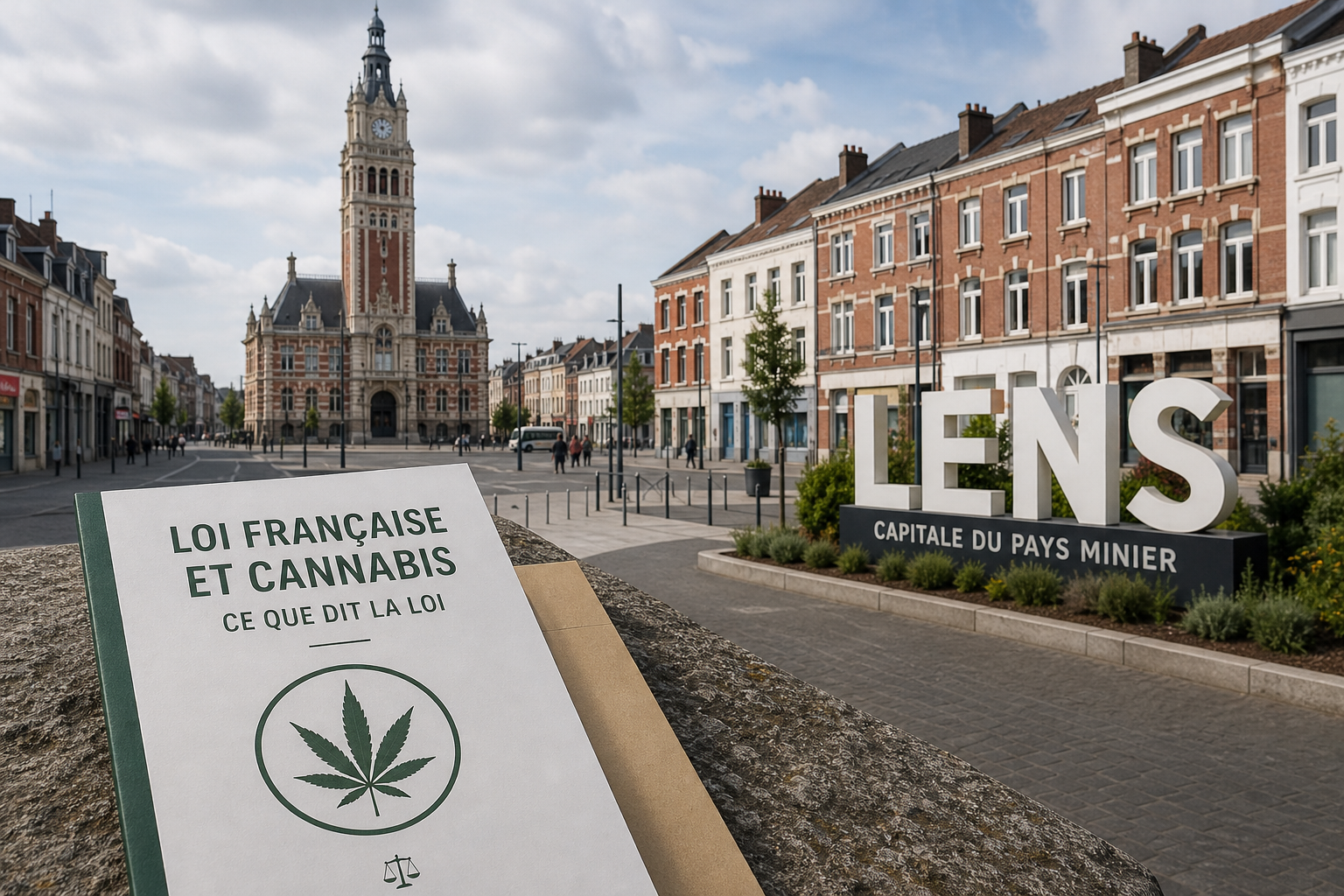
Understanding Marijuana cultivation laws in Lens, France requires looking beyond local customs or assumptions about personal use. Lens does not have a separate legal system for cannabis cultivation: the main rules come from French national law, and they apply across Pas-de-Calais. Growing a cannabis plant at home, on a balcony or in a garden can create criminal and practical risks even when the intended use is personal.
This guide explains the position for residents and visitors, distinguishes prohibited cannabis cultivation from regulated hemp production, and outlines what medical users should know. It is general legal information rather than individual legal advice. Rules and enforcement policies can change, so anyone facing a police investigation or prosecution should consult a qualified French lawyer.
How cannabis cultivation laws in Lens, France work
The core answer is straightforward: recreational cannabis cultivation is not legally permitted in Lens. French law restricts the production, manufacture, possession, acquisition and use of cannabis and cannabis resin outside authorized legal or medical frameworks. A private grow is not made lawful simply because the plants are few, hidden from neighbors or intended only for the grower.
The same principle applies to indoor cultivation. A tent, grow lamp, hydroponic setup or a single plant can be evidence of cultivation. Renting the property does not change the rule, and a landlord’s permission cannot authorize an activity prohibited by national law. The location may be a flat in central Lens, a house in a nearby commune or another property in the arrondissement; the legal framework remains French national law.
For current explanations of drug offences and possible sanctions, consult the French public-service information on drug-related penalties. Official summaries are useful, but the exact consequences depend on the facts, the evidence and the prosecutor’s approach.
Is growing cannabis at home legal in Lens?
No. Growing cannabis in Lens for recreational use is generally prohibited, whether the plants are grown from seed or cuttings and whether the crop is intended for sale or personal consumption. French law does not create a broad personal-cultivation allowance comparable to the systems found in some other countries.
Personal use is not a cultivation exemption
A frequent misunderstanding is that growing for yourself is treated differently from growing for customers. Personal intent may matter when authorities assess a case, but it does not create a right to cultivate. Cultivation is a production activity, and authorities may investigate the number of plants, equipment, harvested material, communications, money movements and other evidence when deciding how to proceed.
Possession or use can also lead to separate legal consequences. In some straightforward possession or use cases, authorities may issue a fixed penalty notice, but that does not mean a person is entitled to grow cannabis. A cultivation investigation can be more serious, particularly where there are multiple plants, substantial equipment, evidence of distribution or unsafe electrical installations.
Outdoor, balcony and indoor growing
Changing the growing location does not change its legal status. Outdoor cultivation in a private garden remains risky. A balcony can attract complaints, expose plants to public view and create evidence of cultivation. Indoor growing may be less visible, but heat, unusual electricity use, odors, water damage and ventilation equipment can bring the activity to the attention of neighbors, landlords or emergency services.
There can also be non-criminal consequences. A tenant may face a dispute with a landlord, property damage claims or insurance problems after an unauthorized installation. If an electrical modification creates a fire or flooding risk, the consequences can extend beyond the cannabis offence.
What penalties can apply to cannabis cultivation in France?
French criminal law distinguishes between different conduct and circumstances, so there is no single penalty that accurately describes every cultivation case. Authorities and courts can consider the scale of production, whether the crop was organized, whether there was intent to supply others, the person’s previous record and whether other offences are involved.
Potential consequences may include seizure of plants and equipment, police custody, a criminal investigation, prosecution, fines and imprisonment. A case involving a small number of plants is not automatically treated like an organized commercial operation, but it is also not automatically ignored. The difference between personal cultivation and trafficking-related conduct is assessed from the evidence rather than from the grower’s description alone.
The official Legifrance database provides access to the French codes and legislation. Because legal provisions are detailed and can be amended, readers should check the current text or obtain professional advice before relying on a particular article or penalty range.
Factors that can make a case more serious
- A large number of plants or repeated harvests.
- Equipment suggesting a planned or professional operation.
- Packaging, customer messages, cash or other evidence of supply.
- Electricity tampering, fire hazards or damage to rented property.
- Involvement of minors, vulnerable people or other criminal conduct.
- Importation of seeds, plants or cannabis products across a border.
These factors do not determine the result on their own. They illustrate why assumptions based on plant count or personal intent can be unsafe.
Hemp is different, but the exception is narrow
Industrial hemp is not the same as growing high-THC marijuana. French and European rules allow certain hemp varieties and products under conditions relating to approved varieties, THC limits, permitted plant parts and the purpose of production. These rules are designed for regulated agricultural or commercial activity, not for converting a private garden into a cannabis crop.
A person should not assume that buying hemp seed makes any form of cultivation lawful. Seed labeling, variety certification, agricultural requirements and product composition can all matter. Growing a variety marketed as CBD cannabis may still raise legal questions if the plant or product falls outside the applicable requirements.
CBD does not create a home-growing right
CBD products sold lawfully in France do not automatically authorize consumers to grow cannabis plants. The legality of a finished CBD product depends on the product and its compliance with applicable rules; it is not a blanket permission for home cultivation. Consumers should also be cautious with products whose labels do not clearly identify ingredients, THC content or the responsible seller.
This distinction is especially important for people searching for weed in Lens and encountering online claims that CBD status makes all cannabis activity legal. CBD and THC are different substances, but the surrounding plant, production method and regulatory conditions still matter.
Medical cannabis and cultivation in Lens
Medical need does not generally allow a patient to grow cannabis at home. Access to medical cannabis in France is controlled through the national healthcare and medicines framework, and any authorized treatment must be obtained through the applicable medical and pharmacy channels. A prescription or therapeutic recommendation is not a personal cultivation license.
Patients should speak with a doctor or pharmacist about lawful treatment options, eligibility and availability. They should not assume that a product purchased abroad, a prescription from another country or a CBD product is interchangeable with an authorized French medical treatment.
For related context, see our guide to medical cannabis access and safer use in France. The city in that article is different, but the national framework is the relevant starting point for Lens.
What this means for visitors and residents
Visitors sometimes believe that rules are more relaxed in a city known for nightlife, festivals or tourism. That is not a safe assumption in Lens. Cannabis in Lens remains subject to French law, regardless of whether someone is a resident, student, seasonal worker or tourist.
Travelers should never bring cannabis, cannabis plants, resin, THC products or cultivation equipment across the French border. Border controls and customs investigations can involve separate offences, and another country’s legal rules do not protect a traveler in France. Mailing cannabis or seeds can also create importation and distribution issues.
Do not carry harvested material in public, consume in shared spaces or drive after using cannabis. Driving under the influence is a distinct public-safety issue, and cannabis detection can lead to serious consequences even when a person believes the effects have worn off.
Local enforcement and practical legal precautions
The phrase cannabis laws in Lens can suggest that the city council sets its own cultivation rules. In practice, local authorities may deal with complaints, public-order issues, housing concerns and investigations, but a municipal policy cannot legalize recreational cultivation that national law prohibits.
If police contact you about suspected cultivation, remain calm, avoid obstructing officers and ask for legal assistance. Do not destroy plants, delete messages or move equipment in an attempt to conceal evidence. Those actions can create additional problems. If you are a tenant, consider obtaining advice before making statements about property access, damage or responsibility for installations.
For anyone who discovers a suspected grow operation in a building, safety should come first. Do not enter a dangerous room or handle exposed wiring. Report immediate fire or electrical risks to the appropriate emergency service, and use ordinary housing or police channels for non-emergency concerns.
Common myths about growing cannabis in Lens
- “One plant is always legal.” France does not provide a general one-plant exemption for recreational cultivation.
- “Private property means police cannot intervene.” Privacy and property rights do not legalize prohibited production or prevent lawful investigation.
- “CBD plants are automatically allowed.” Hemp exceptions are conditional and do not amount to a consumer home-growing permission.
- “Medical use makes cultivation legal.” Medical access and personal cultivation are separate issues.
- “If there is no sale, there is no offence.” Production itself can raise legal concerns even without proof of sale.
Key takeaways for Lens
- Recreational home cultivation of cannabis is not generally legal in Lens or elsewhere in France.
- Personal use does not create a cultivation exemption.
- Indoor, outdoor and balcony growing can all create legal and property-related risks.
- Industrial hemp is subject to narrow, regulated conditions and should not be confused with marijuana cultivation.
- Medical cannabis access does not normally permit patients to grow their own plants.
- Travelers should not transport cannabis, plants or cultivation equipment across borders.
- For a live case, rely on a French lawyer and current official legal sources rather than online anecdotes.
Conclusion
The practical position is clear: local cannabis regulations in Lens do not create a recreational home-cultivation right. The decisive rules are national French rules, and they can expose growers to criminal investigation, seizure and prosecution. Hemp and regulated medical products operate within separate frameworks with specific conditions; neither should be treated as permission to grow marijuana privately.
Residents and visitors should avoid cultivation, cross-border transport and unverified products. When a legal or medical need exists, use official French services, licensed healthcare professionals and qualified legal advice. That approach is safer than relying on claims that a small crop, a CBD label or personal use automatically makes cultivation lawful.