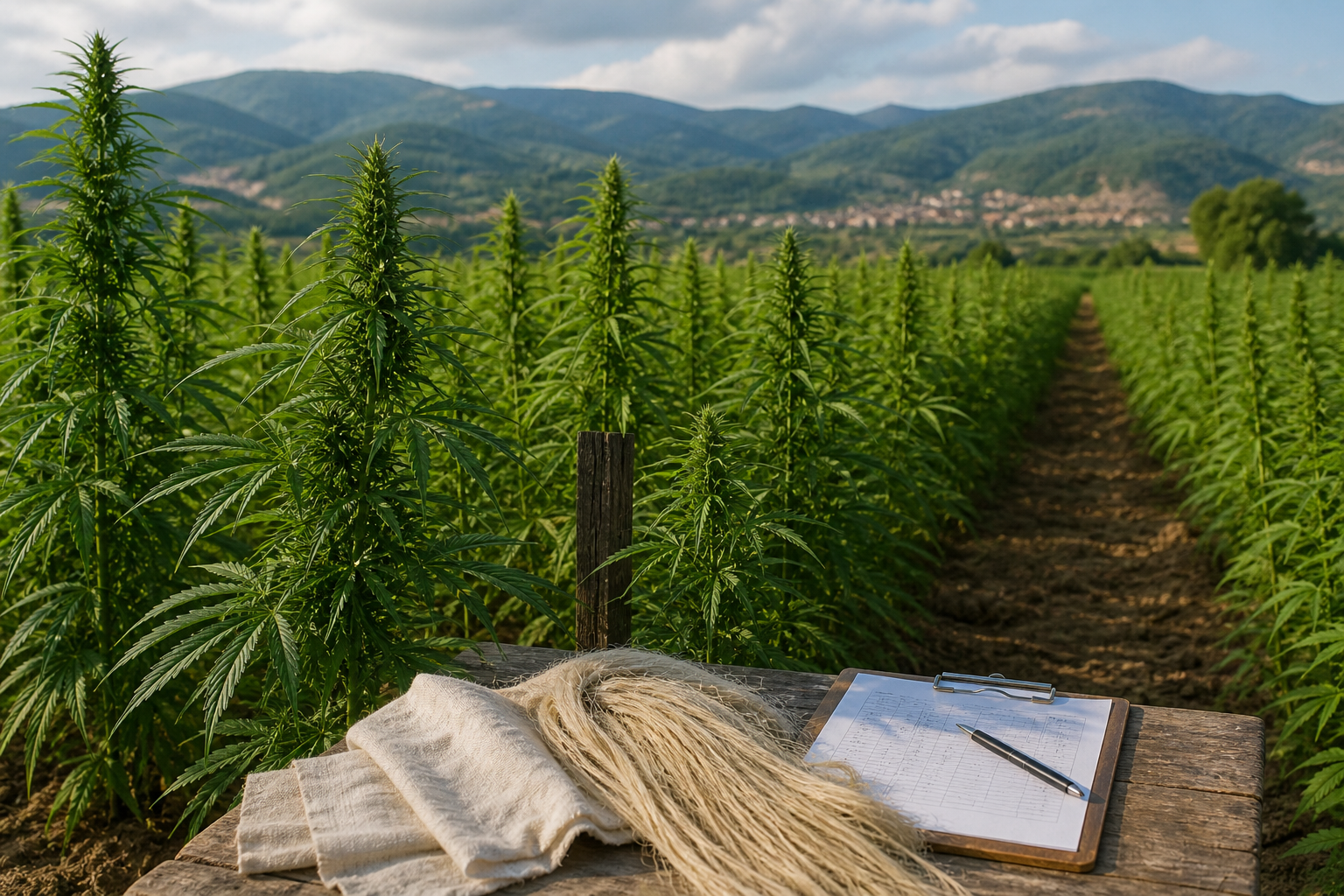
Hemp in Bursa, Turkey is best understood through the distinction between industrial hemp and cannabis grown for intoxicating effects. Hemp can refer to approved low-THC varieties used for fiber, seed, textiles, food ingredients and other industrial purposes. It does not mean that a person may freely grow, possess or process any cannabis plant.
Bursa has strong agricultural, textile and manufacturing networks, so hemp may attract interest from farmers, researchers, manufacturers and consumers. However, local commercial potential does not remove the need for national authorization. Cultivation, seed sourcing, harvesting, processing and sale can all raise separate compliance questions. This guide explains the practical framework without treating hemp as an unregulated crop.
What hemp means in Bursa
In everyday conversation, “hemp” and “cannabis” are sometimes used interchangeably. Legally and commercially, that can create serious confusion. Industrial hemp is generally associated with approved varieties and non-intoxicating applications, while cannabis containing significant levels of THC is subject to much stricter controls.
The same plant can also be treated differently depending on its intended use. Fiber production, seed production, food manufacturing, cosmetics, laboratory research and pharmaceutical activity may involve different rules. A product labelled “hemp” is not automatically lawful merely because it contains no obvious reference to cannabis.
Why the distinction matters
- Industrial hemp: May be considered for regulated fiber, seed or other approved uses when the required permissions are in place.
- High-THC cannabis: Is not equivalent to an ordinary agricultural hemp crop and can create criminal and regulatory exposure.
- CBD products: Require particular caution because extraction, concentration, labelling and sale may be regulated separately from hemp seed or fiber products.
- Seeds and seedlings: Must come from an appropriate, documented source. Imported, exchanged or planted material may create additional obligations.
Hemp cultivation in Bursa: permission comes first
Anyone considering hemp cultivation in Bursa should begin with the responsible agricultural authorities rather than purchasing seed. Turkey regulates hemp cultivation through national rules administered through agricultural institutions. Permission may depend on the crop’s purpose, the location, the variety, documentation and inspection requirements.
Bursa’s climate and agricultural capacity do not by themselves establish a right to plant hemp. A field that is suitable for another crop is not automatically approved for hemp. The applicant should ask whether the specific district and parcel can be used, whether the intended variety is accepted, and which documents must be submitted before planting.
The Turkish Ministry of Agriculture and Forestry is the appropriate starting point for national agricultural information. For local procedures, applicants should also contact the Bursa Provincial Directorate of Agriculture and Forestry and request current written guidance.
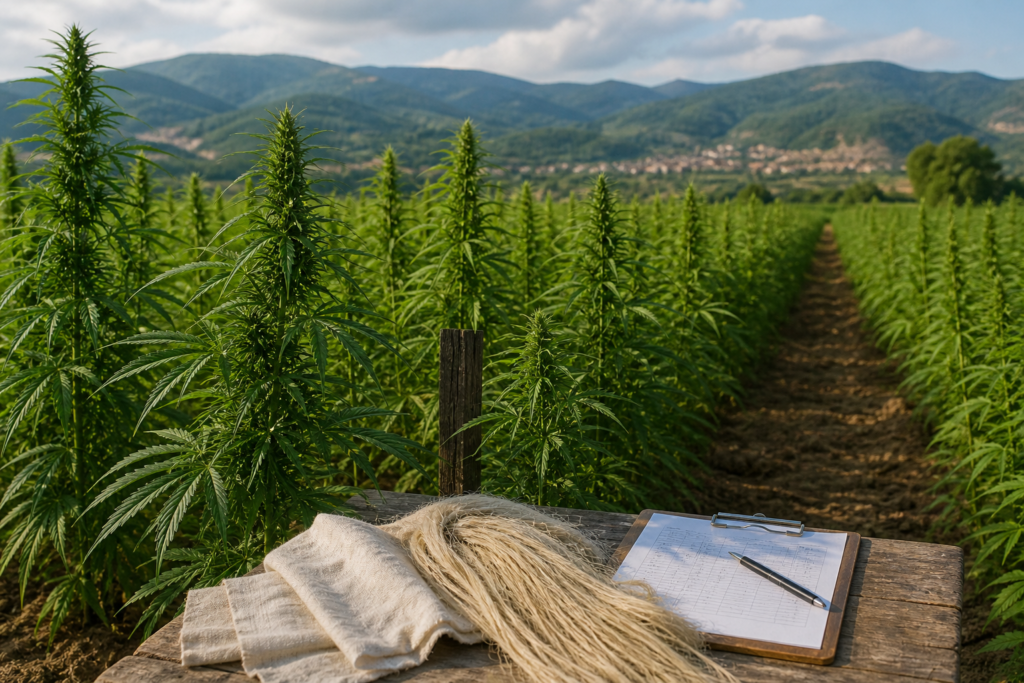
Questions to ask before applying
- Is the proposed hemp activity permitted in the intended Bursa district and parcel?
- What purpose must be declared: fiber, seed, research, breeding or another approved use?
- Which varieties and seed suppliers are accepted under the current rules?
- What land records, identity documents, contracts or technical plans are required?
- When must the application be filed, and are field inspections required?
- How must the crop, harvest and remaining plant material be recorded?
These questions are important because a permit, where available, is not necessarily transferable between parcels or uses. A farmer should retain applications, approvals, invoices, seed labels, test reports and delivery records. Good documentation can help demonstrate that the crop was intended for an authorized industrial purpose.
Hemp regulations in Bursa and the wider Turkish framework
The phrase hemp regulations in Bursa usually describes national rules applied locally, not a separate Bursa cannabis code. Local officials may handle applications and inspections, but the underlying requirements come from Turkish legislation and administrative decisions. Rules can change, so older online articles or social-media claims should not be treated as current legal advice.
Regulatory risk may arise at several stages. Growing without authorization is one issue; selling harvested material, transporting it, extracting cannabinoids or advertising a finished product may create additional issues. A business should therefore map its entire supply chain instead of asking only whether the seed is lawful.
Common compliance areas
- Land and cultivation: Confirm the parcel, crop purpose and approval before planting.
- Seed provenance: Keep official labels, invoices and variety information.
- Testing: Use suitable laboratory testing where THC or product composition must be verified.
- Processing: Check whether decortication, milling, extraction or formulation requires another authorization.
- Labelling: Avoid medical, therapeutic or intoxicating claims that are not permitted for the product category.
- Transport and storage: Maintain batch records and documents that explain what the material is and where it came from.
Businesses should obtain advice from a Turkish lawyer or compliance professional familiar with agricultural products, food law and controlled substances. A general business registration or food permit should not be assumed to cover hemp cultivation or cannabinoid processing.
Industrial hemp in Bursa: realistic uses
Industrial hemp in Bursa may be relevant to several existing sectors, especially textiles, packaging, construction materials and agricultural processing. Hemp fiber can be evaluated for yarns, woven materials, nonwoven products and composites. Hemp hurd, the woody inner portion of the stalk, may be considered for insulation, animal bedding or building applications when the relevant product standards are met.
Hemp seed is a separate commercial category. It may be used in foods or oils only when the ingredient, processing method, food-safety requirements and labelling are compliant. A company should verify the applicable Turkish rules before importing, manufacturing or selling a food product containing hemp-derived ingredients.
Potential advantages for local businesses
- Connections to Bursa’s textile and manufacturing supply chains.
- Opportunities to test fiber blends and lower-volume specialty materials.
- Potential use of agricultural by-products in packaging or composite products.
- Research opportunities involving agronomy, processing efficiency and material performance.
These are possible business directions, not guarantees of profitability or legal approval. The most useful early step is often a small, documented feasibility study covering cultivation permission, seed supply, expected yields, processing equipment, testing and a confirmed buyer.
CBD, food and consumer products
Consumers searching for hemp products in Turkey should read the label carefully. Hemp seed oil is not the same as CBD oil, and neither is automatically the same as a medicine. Product names, cannabinoid content, health claims, import status and the seller’s authorization all matter.
CBD products deserve particular caution. A product may be marketed online as “natural” or “legal” while lacking reliable laboratory information or proper authorization. Consumers should not assume that a foreign product’s legality follows it into Turkey. Importing, possessing or selling a cannabinoid extract may involve rules that differ from those applying to hemp seed foods or fiber goods.
Practical checks for buyers
- Identify the exact ingredient rather than relying on the word “hemp.”
- Look for a batch number, manufacturer details and credible laboratory documentation.
- Be cautious about products claiming to treat anxiety, pain, epilepsy or other medical conditions.
- Ask the seller whether the product is authorized for sale in Turkey, not merely lawful in its country of origin.
- Do not travel with oils, flowers, extracts or edible products without confirming their status.
For broader regional context, readers can compare the practical issues discussed in our guide to CBD in İzmir and our overview of cannabis in Istanbul. The same basic principle applies: product labels and online marketing do not replace official authorization.
Hemp and cannabis in Bursa: what visitors should know
Visitors may encounter hemp clothing, seed foods or cosmetic products in shops and markets. That does not mean cannabis flowers, resin, THC edibles or homemade extracts are permitted. Cannabis in Bursa remains a separate legal concern from approved industrial hemp.
Do not buy or carry cannabis products based on assumptions about local tolerance. Avoid transporting plant material across provincial or international borders, and never take a product onto an aircraft without specific legal confirmation. If questioned by authorities, travelers should provide accurate information and seek qualified legal assistance rather than relying on informal advice.
How to plan a compliant hemp project
A sensible project plan should separate legal research from commercial enthusiasm. First define the product: stalk fiber, seed, food ingredient, cosmetic, research material or another category. Next identify every activity involved, including cultivation, storage, processing, testing, transport and sale.
- Define the activity: Write a short description of the crop and final product.
- Confirm the location: Ask the Bursa agricultural authority about the parcel and district before signing supply agreements.
- Verify the variety: Obtain documentation from a traceable supplier and confirm that the seed is acceptable.
- Build records: Keep land documents, applications, approvals, invoices, test results and batch information.
- Check downstream rules: Review food, cosmetics, advertising, waste and transport requirements as relevant.
- Obtain professional review: Have a Turkish agricultural or regulatory specialist examine the plan before planting or importing.
This approach reduces the risk of investing in seed, equipment or marketing before the legal route is clear. It also helps a prospective buyer distinguish a legitimate industrial supply chain from an informal cannabis transaction.
Conclusion
Hemp may offer interesting opportunities for Bursa’s agricultural, textile and manufacturing economy, but it is not a free-use crop. Hemp laws in Bursa must be understood as part of Turkey’s national controlled-cultivation and product rules, applied through local agricultural authorities.
Before planting, importing, processing or selling anything described as hemp, confirm the exact product category, location requirements, approved variety and necessary permits. Keep complete records and obtain current advice from the relevant Turkish authorities. For consumers and visitors, the safest approach is to distinguish clearly between hemp seed or fiber goods and cannabinoid-rich cannabis products, and never rely on labels or internet claims alone.