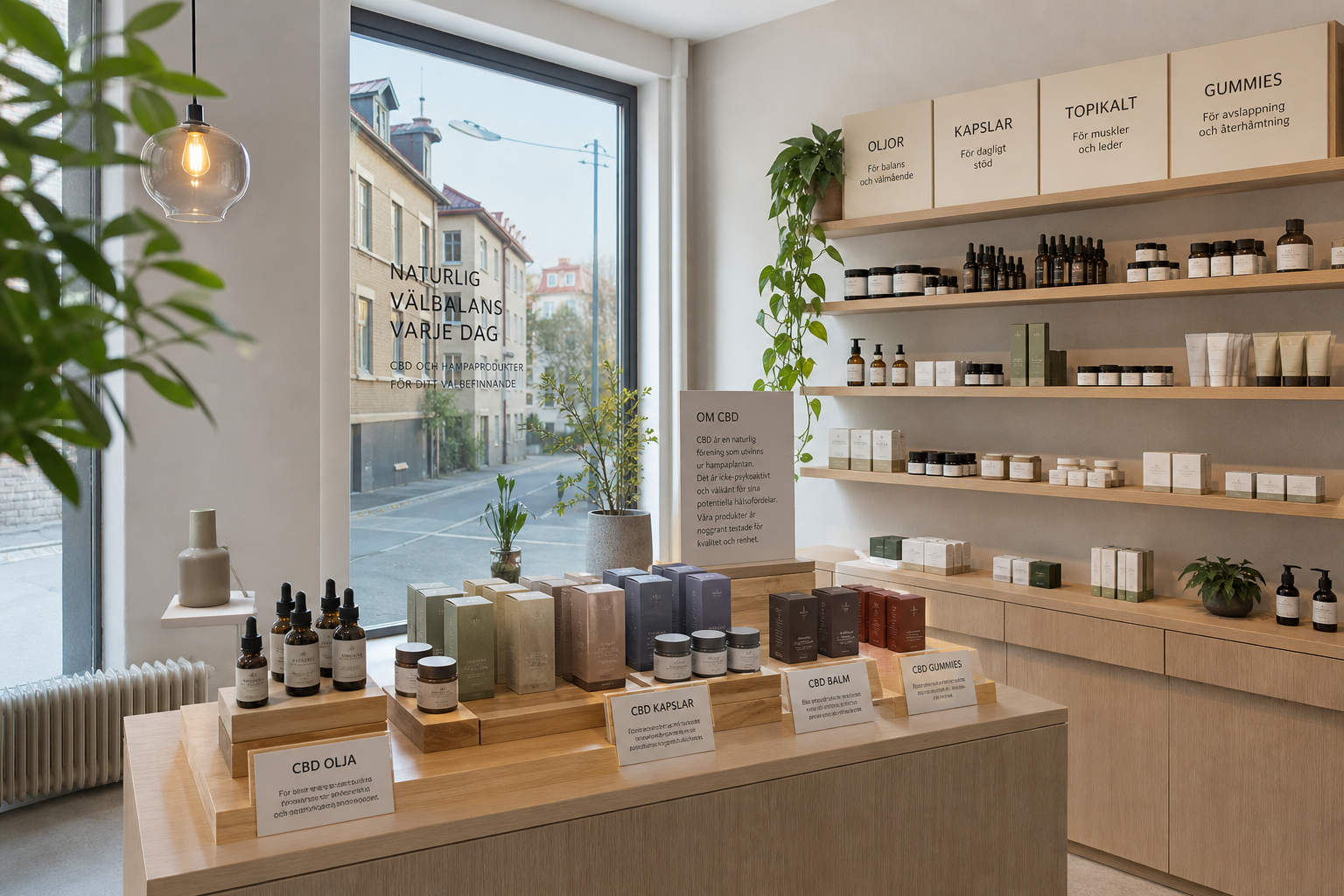
Searching for CBD shops in Northeast Gothenburg can be confusing because CBD products are sold through different kinds of businesses, including specialist retailers, wellness stores, vape shops and online sellers. The nearest shop may not always be the best option, and a product labelled “hemp” is not automatically legal, tested or suitable for consumption.
This guide explains how to assess CBD retailers around northeastern Gothenburg, what Swedish rules mean in practice, which questions to ask before buying and how to avoid confusing CBD with recreational cannabis. It focuses on practical, lawful purchasing rather than recommending a particular seller or making medical claims.
What counts as Northeast Gothenburg?
“Northeast Gothenburg” is a useful everyday description rather than a single official retail district. Depending on the context, people may include areas such as Gamlestaden, Kviberg, Kortedala, Utby, Bergsjön, Hjällbo and Angered. Shops can be spread across local centres, transport corridors and larger commercial areas, so checking the exact address, opening hours and product range before travelling is sensible.
Some retailers may describe themselves as CBD specialists even when most of their products are cosmetics, clothing, accessories or hemp-based goods. Others may have an online catalogue but only a limited in-store selection. For that reason, a search result or map listing should be treated as a starting point, not proof that a business carries a particular product or operates under a specific licence.
CBD shops in Northeast Gothenburg and Swedish law
CBD is not a single legal category in Sweden. The rules can depend on the product’s ingredients, intended use, THC content, presentation and route of administration. A product marketed as a cosmetic is assessed differently from an ingestible oil, food supplement or medicine. Labels such as “natural,” “full spectrum” or “THC-free” do not replace legal compliance or laboratory evidence.
Swedish enforcement has treated THC as especially important. Even a product presented as CBD may create legal problems if it contains a controlled amount of THC. Consumers should not assume that a commonly cited European hemp threshold automatically makes every finished product lawful in Sweden. Rules and enforcement can also change, so current advice from the relevant Swedish authorities matters more than an old shop description or social-media post.
For official regulatory information, consult the Swedish Medical Products Agency. It is also wise to check travel and import requirements with Swedish Customs before ordering CBD from another country or carrying it across a border.
CBD, hemp and cannabis are not interchangeable
Hemp refers to varieties of the cannabis plant and can be used for fibre, seeds, food ingredients and other products. CBD is one compound found in cannabis plants. Cannabis products containing intoxicating THC are a separate legal and health issue. A product made from hemp seed oil, for example, is not the same as a CBD extract, while a CBD extract is not the same as marijuana.
This distinction is important when researching cannabis in Gothenburg. A retailer selling legal hemp merchandise does not imply that it sells THC cannabis, and a CBD shop cannot legally provide recreational marijuana merely because both products are associated with the same plant.
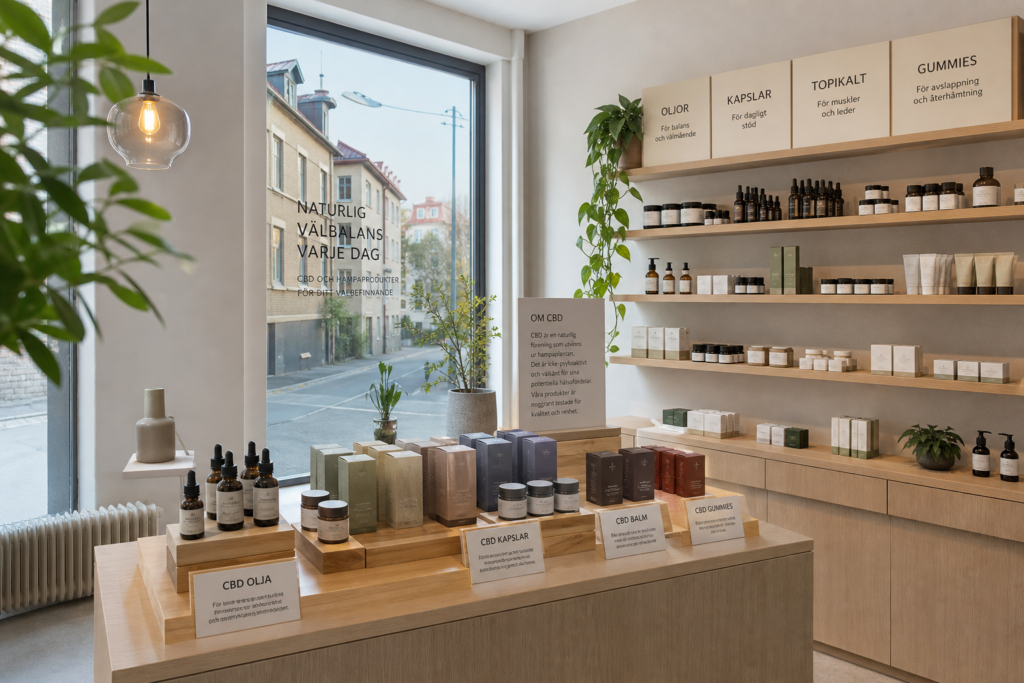
How to assess CBD stores in northeast Gothenburg
A responsible retailer should be able to explain what a product is, who made it and how its contents were checked. Staff should not promise to diagnose, prevent or cure a medical condition. They should also avoid suggesting that CBD is risk-free or that a stronger product is necessarily better.
Check the product information
Before buying, look for a complete label in Swedish or another language you can understand. The packaging should identify the manufacturer or responsible importer, net quantity, batch or lot information, ingredients and appropriate usage instructions. If the product is intended for the skin, it should be labelled as a cosmetic and provide the information normally expected for that type of product. If it is intended to be swallowed, do not assume that a “wellness” label makes it an approved food or medicine.
Be cautious when a package gives only a large CBD number without explaining whether it refers to the whole bottle, each serving or the total extract. “500 mg hemp extract” and “500 mg CBD” are not equivalent descriptions. A transparent seller should clarify the concentration and serving information rather than relying on vague marketing.
Ask for independent testing
A certificate of analysis, often called a COA, can provide useful information when it is specific to the product and batch. Ideally, it should identify the testing laboratory, date, batch number and measured levels of CBD, THC and relevant contaminants. A generic certificate with no matching batch number is much less useful.
Testing may cover pesticides, heavy metals, solvents, microbes and other contaminants, depending on the product. However, a COA is evidence about a sample, not a guarantee that every item on a shelf is identical. If a seller refuses to provide any meaningful testing information, consider choosing a different product or retailer.
Look for realistic claims
Marketing language can reveal whether a shop takes compliance seriously. Claims that CBD will cure cancer, replace prescribed treatment, eliminate anxiety immediately or guarantee sleep are warning signs. Personal testimonials may describe one person’s experience, but they are not proof of effectiveness or safety for everyone.
Be particularly careful with products advertised as “legal weed,” “strong cannabis,” or a way to feel high without legal consequences. Those phrases can blur the difference between non-intoxicating CBD products and substances that may contain THC or other psychoactive compounds.
Buying CBD oil in Gothenburg: questions to ask
If you are considering buying CBD in Gothenburg, prepare a few direct questions before paying. A trustworthy seller should answer clearly or explain what information is unavailable.
- What exactly is in the product, and is it intended for skin use, inhalation or ingestion?
- What is the measured CBD concentration per bottle and, where relevant, per serving?
- Does the latest batch-specific laboratory report show any THC?
- Which company manufactured or imported the product?
- How should the product be stored, and what is its best-before date?
- Are there warnings for pregnancy, breastfeeding, allergies or interaction with medicines?
- What is the shop’s returns policy if the packaging is damaged or the batch information is missing?
Do not feel pressured to buy because a product is described as limited, premium or unusually potent. A lower-cost product with clear documentation may be a more sensible choice than an expensive item with impressive but unverifiable claims.
Health and safety considerations
CBD can affect people differently, and “plant-based” does not mean free from side effects. Possible concerns include drowsiness, digestive symptoms, changes in appetite and interactions with medicines. Product contamination or inaccurate labelling can add further risks. People with liver conditions, those who take regular medication, and anyone who is pregnant or breastfeeding should speak with a qualified healthcare professional before using a CBD product.
Do not use a CBD product as a substitute for prescribed treatment without medical advice. If a doctor or pharmacist asks what you are taking, bring the packaging or a clear photograph of the ingredients and batch details. This is more useful than simply saying that the product is “hemp-based.”
Use extra caution with vapes and inhaled products. Ingredients that appear acceptable in a food or cosmetic may not be suitable for the lungs. Avoid products with unclear additives, unlabelled cartridges or no manufacturer information. Keep all CBD products away from children and pets, and store them in their original packaging.
CBD legality in Gothenburg compared with recreational cannabis
Local shopping districts do not create separate cannabis laws. The same Swedish national framework applies in Gothenburg, including the northeast. This means that a shop’s location, branding or willingness to discuss cannabis does not establish that a product is lawful.
People searching for weed in Gothenburg may encounter websites or sellers using CBD terminology to attract attention. Do not treat those offers as legitimate CBD retail. Recreational cannabis and THC-containing products can involve criminal penalties, while possession, use, supply and import may raise different legal questions. Buying from an informal seller also removes the quality controls and product information that a regulated retail environment should provide.
For broader context on local terminology and the distinction between cannabis information and legal access, see our guide to marijuana laws and health considerations in Gothenburg. Readers comparing Swedish cities may also find the overview of CBD rules and buying considerations in Malmö useful, although local availability does not change national law.
Online orders, imports and travel
Buying online can offer more product information, but it also creates additional risks. A seller may operate outside Sweden, display a certificate from a different batch or use shipping language that does not explain customs responsibilities. The fact that a website accepts Swedish kronor or delivers to Gothenburg does not prove that its products comply with Swedish requirements.
Before ordering, identify the seller’s legal business name, country of dispatch, ingredients and refund process. Check whether the product contains THC and whether the product category is lawful for its intended use in Sweden. Avoid carrying unverified oils, flowers, cartridges or extracts across borders. Customs officers may assess the actual contents rather than relying on a product title such as “hemp” or “CBD.”
Never assume that a CBD product bought abroad can be taken on a flight or transported through another country without restrictions. Travel rules may differ between departure, transit and destination countries. If the legal status is unclear, leaving the product at home is the safer option.
A practical checklist for visiting a CBD retailer
- Confirm the shop’s exact address and current opening hours.
- Decide whether you are looking for a cosmetic, hemp-seed product or another clearly defined category.
- Read the full label before discussing price or strength.
- Ask for a recent, batch-specific laboratory report.
- Check for THC information and avoid unsupported “legal high” claims.
- Ask about medicine interactions and seek professional advice when appropriate.
- Keep your receipt, packaging and batch details after purchase.
- Do not drive, cycle or operate machinery if a product makes you drowsy or affects your concentration.
Conclusion: choosing CBD carefully in Northeast Gothenburg
Finding CBD shops in Northeast Gothenburg is less about locating the most persuasive advertisement and more about checking legality, product identity and evidence of quality. Retailers around Gamlestaden, Kortedala, Bergsjön, Angered and nearby areas may offer very different products, so compare documentation rather than relying on shop names or customer claims.
Choose products with clear labels, identifiable manufacturers and relevant batch testing. Treat THC content, online imports and medical claims as serious issues, and remember that CBD does not provide a legal route to recreational cannabis. When health conditions, medicines or travel are involved, advice from a qualified professional or the appropriate Swedish authority is the safest next step.