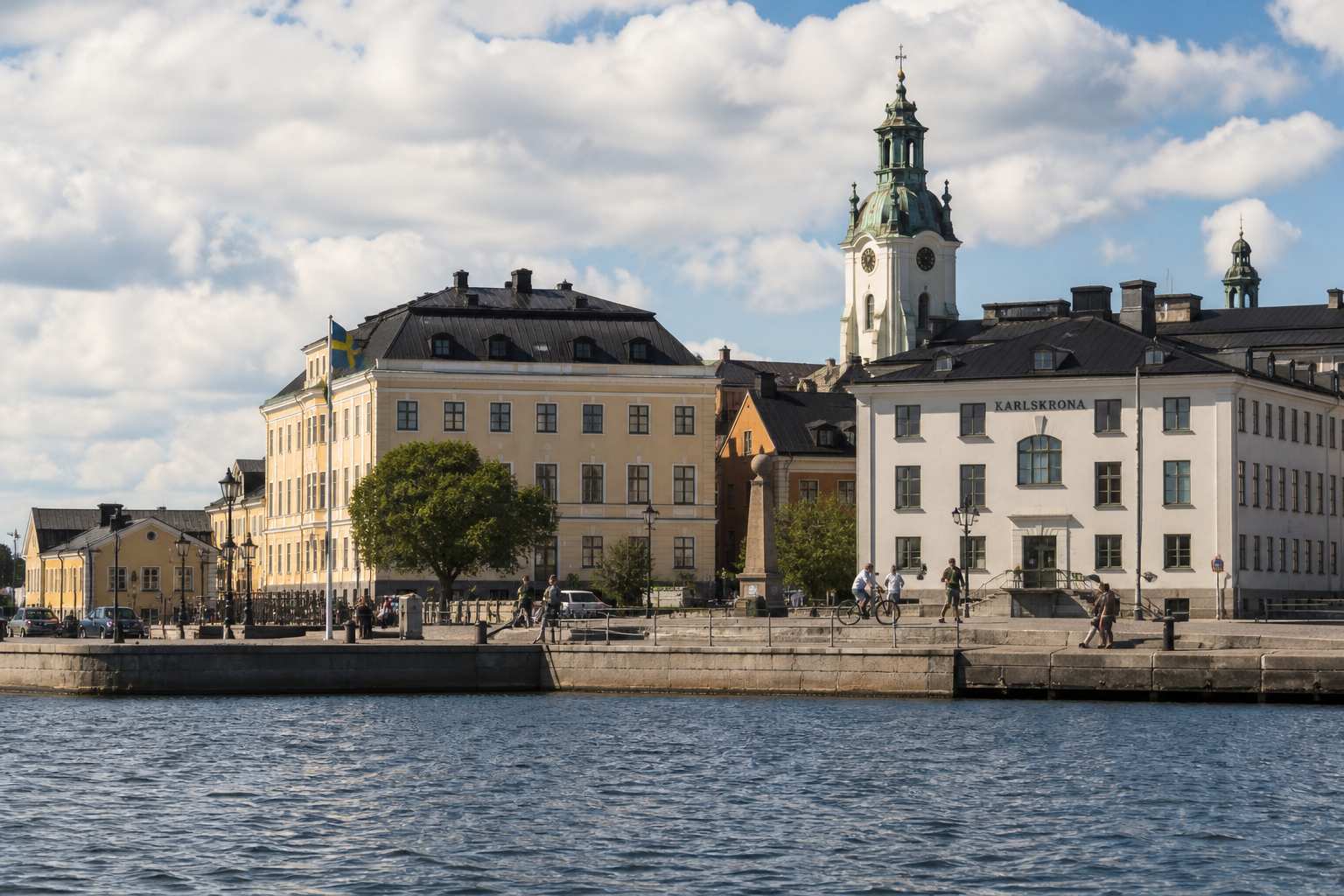
Cannabis trends in Karlskrona are best understood through Sweden’s national laws, public-health approach and the realities of a coastal city with residents, students, commuters and visitors. Karlskrona does not have a separate cannabis market or local legal framework. The same Swedish rules apply whether someone is in the city centre, on an island, at a festival or travelling through Blekinge.
That distinction matters. Online searches for cannabis in Karlskrona may mix together questions about legality, CBD products, medical treatment, drug testing, nightlife and travel. These are separate issues with different risks. This guide provides a factual overview without encouraging illegal use, and it explains where people can find more reliable information than social-media claims or informal sellers.
Cannabis trends in Karlskrona and the Swedish legal framework
Sweden takes a restrictive approach to cannabis. Cannabis is classified as a narcotic, and unauthorized possession, use, production, sale and transfer can lead to criminal consequences. The fact that a substance is used privately, purchased online or described as natural does not make it legal.
In practice, the consequences depend on the circumstances, including the substance, quantity, suspected offence and available evidence. Police and courts—not a shop, website or social-media account—determine how an incident is handled. A person may also face practical consequences such as questioning, disruption to travel, problems connected with driving or effects on employment and education.
Anyone looking up cannabis laws in Karlskrona should therefore begin with national Swedish information rather than assuming that local custom changes the rules. For a wider comparison of Swedish legal and safety questions, see this overview of cannabis awareness in Kalmar.
Possession, use and driving
Possession and use are not made lawful by consuming cannabis at home or away from public view. Driving after using cannabis is particularly risky. Impairment can affect attention, reaction time, coordination and judgement, while Swedish drug-driving rules can create serious legal problems even when someone believes they are capable of driving.
The safest approach is simple: do not drive after using cannabis, do not carry cannabis across borders, and do not assume that a small amount is consequence-free. Visitors should be especially cautious because unfamiliarity with Swedish procedures is not a defence.
What people mean by weed in Karlskrona
The phrase weed in Karlskrona can refer to several different things: illegal cannabis, hemp products, CBD, prescribed medicines or general curiosity about local availability. These categories should not be treated as interchangeable. Products sold through informal channels may have uncertain strength, contamination risks or a composition different from the label.
There is also no reliable basis for treating online listings, private messages or local rumours as evidence of a safe or legal supply. An attractive package, Swedish-language advertising or a claim that a product is “legal” does not establish compliance with Swedish rules.
CBD and hemp products
CBD and hemp products require careful checking. Their legal status can depend on the product’s ingredients, THC content, intended use, formulation and how it is marketed. Food, cosmetics, oils, vape products and supplements may be subject to different requirements, and a product that is lawful in another country may not be lawful in Sweden.
Consumers should check the label, the identity of the seller and whether the product is intended for human consumption. They should also be wary of products promising to treat anxiety, pain or other medical conditions without professional oversight. A lack of an obvious intoxicating effect does not guarantee that a product is free from THC or suitable for drug-tested work.
For general public-health information, the Swedish Public Health Agency is a more dependable starting point than promotional content from a seller.
Medical cannabis in Karlskrona
Medical cannabis in Karlskrona is not the same as recreational access through a dispensary. Sweden does not operate a broad, recreational dispensary system. Some cannabis-based medicines may be prescribed in specific medical circumstances, but decisions belong to a qualified healthcare professional and depend on the patient’s condition, treatment history and the medicine’s approval or authorization.
People who believe cannabis could help with pain, sleep, spasticity, nausea or another symptom should discuss the issue with healthcare staff rather than buying an unverified product. A clinician can consider alternatives, interactions, mental-health factors and the risks of dependence or impairment. Patients should never alter a prescribed treatment without medical advice.
Healthcare information should come from established services. Sweden’s 1177 healthcare information service can help readers understand how to seek care and prepare questions for a healthcare professional. It cannot replace an individual assessment.
Questions to ask a healthcare professional
- What diagnosis or symptom is being treated?
- What evidence supports the proposed medicine?
- Could it interact with current prescriptions, alcohol or other substances?
- Could it affect driving, work, study or drug testing?
- What warning signs should prompt urgent medical help?
Health and prevention issues in Karlskrona
Local cannabis discussions often focus on availability, but health context is more useful than speculation about a city’s reputation. Cannabis can affect memory, attention, coordination and reaction time. Some people experience anxiety, panic, paranoia or other unpleasant psychological effects. Risks may be greater for adolescents, people with a personal or family history of psychosis, and those using several substances at once.
Frequent use can become difficult to control. Warning signs include spending more time obtaining or using cannabis, continuing despite problems at school or work, withdrawing from activities, needing more to achieve the same effect, or finding that attempts to stop repeatedly fail.
Prevention works best when it is practical and non-judgmental. Parents, teachers, youth workers and healthcare professionals can focus on sleep, stress, mental health, peer pressure and access to confidential support rather than relying only on scare messages. For a related discussion of education and safer choices, read this guide to marijuana education in Borlänge.
When urgent help is needed
Seek urgent medical assistance if someone has chest pain, severe confusion, difficulty breathing, a seizure, loss of consciousness, extreme agitation or thoughts of self-harm after using a substance. Do not leave an unwell person alone, and tell healthcare staff what may have been taken. Accurate information can help professionals provide safer treatment.
Tourism, nightlife and public spaces
Karlskrona’s archipelago, waterfront areas and events may attract visitors who assume that a holiday setting means relaxed drug rules. It does not. Cannabis use or possession can create legal and practical problems in accommodation, public spaces, transport hubs and venues. Smoke can also affect other people, including children and individuals with respiratory sensitivity.
Visitors should not carry cannabis into Sweden or take it onward to another country. Border controls and foreign laws add separate risks, and a product obtained legally elsewhere may still be prohibited on arrival. Prescribed medicines should remain in their original packaging, and travellers should check current official requirements before departure.
There is no responsible basis for promoting Karlskrona as a cannabis destination. A better travel plan is to follow local rules, use licensed accommodation and transport, avoid impaired activities and seek help if a health issue develops.
How to assess cannabis claims online
Search results can make local cannabis trends appear more established than they are. City-level data may be limited, while anecdotal posts often reflect marketing, personal experience or rumours rather than representative evidence. A responsible reader should separate documented information from claims about what is supposedly common in Karlskrona.
- Check whether the source is a public authority, healthcare provider or qualified research organisation.
- Look for a publication date and confirm that the information applies to Sweden.
- Be cautious with guaranteed effects, miracle-cure language and claims of “risk-free” products.
- Do not treat customer reviews or encrypted-market listings as proof of safety or legality.
- Compare health claims with independent medical guidance before making decisions.
For a regional comparison, this article about the cannabis industry and legal context in Kristianstad illustrates why national regulation should be kept separate from assumptions about local availability.
What may shape future cannabis discussions
Future debate in Karlskrona is likely to reflect broader Swedish questions: how prevention should address youth use, how healthcare should evaluate cannabis-based medicines, how authorities respond to new psychoactive products, and how consumers interpret CBD and hemp marketing. These are policy and public-health questions, not evidence that recreational cannabis has become legal.
Changes in another European country also do not automatically change Swedish law. Anyone following reform debates should verify developments through current Swedish authorities and healthcare sources. Responsible reporting should also avoid presenting a single anecdote as a city-wide trend.
Practical guidance for residents and visitors
- Assume that non-prescribed cannabis remains illegal in Sweden.
- Do not buy, sell, carry or share cannabis through informal channels.
- Check CBD and hemp products carefully instead of relying on labels alone.
- Speak with healthcare staff about symptoms, prescribed cannabis-based medicines or concerns about dependence.
- Never drive or operate equipment while impaired.
- Get urgent help for severe physical or psychological symptoms.
- Use official sources when laws, medicines or travel requirements may have changed.
Conclusion
Cannabis trends in Karlskrona are less about a distinct local market than about how national Swedish law, health information, online commerce and travel habits meet in a coastal community. Cannabis remains legally restricted, medical access is controlled through healthcare, and CBD or hemp products require careful evaluation. Reliable information is more valuable than rumours about weed in Karlskrona or claims that local practice creates an exception. Residents and visitors can reduce risk by following Swedish rules, avoiding impaired driving, checking product claims and seeking qualified medical advice when needed.