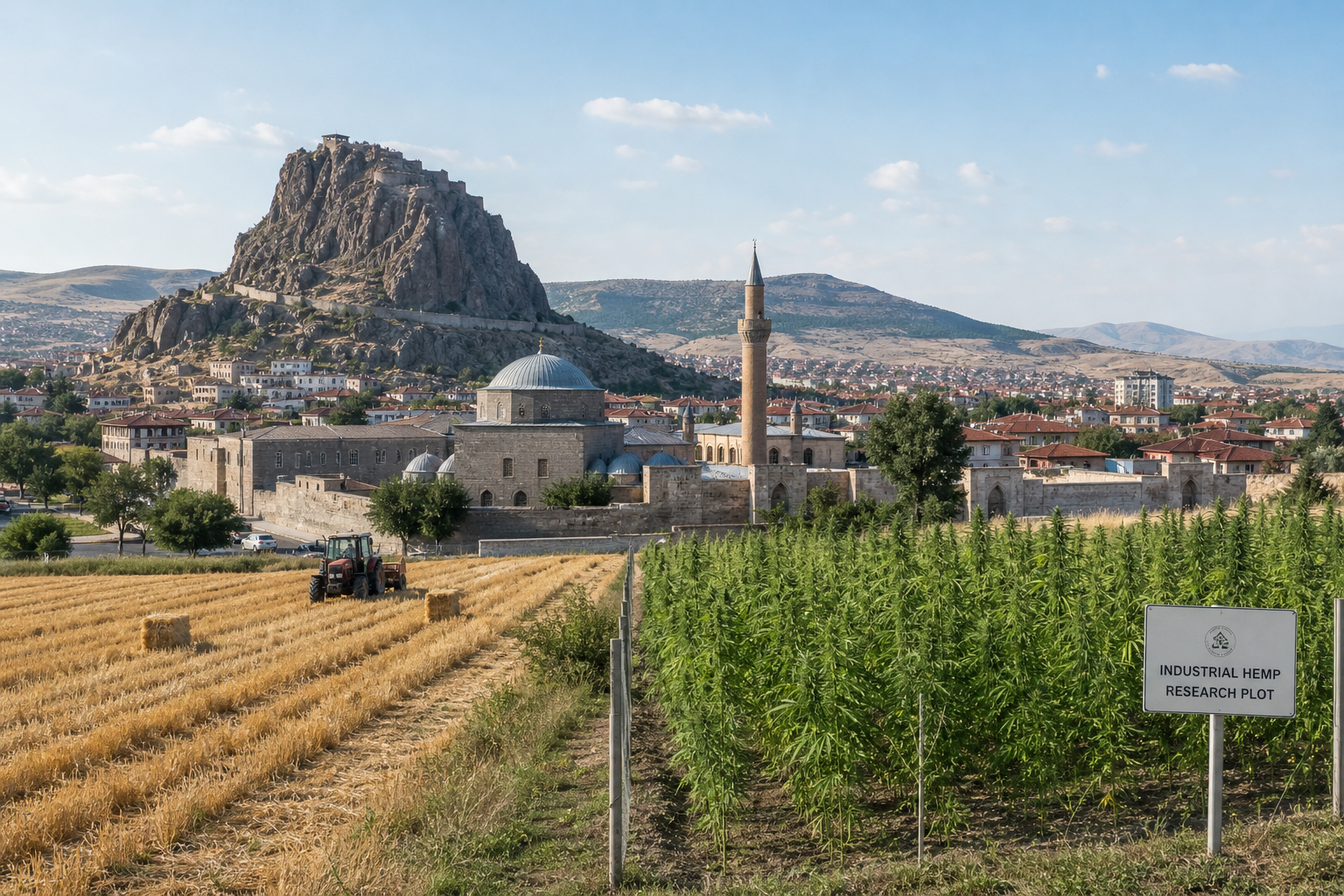
Understanding Cannabis Trends in Afyonkarahisar requires more than looking for signs of a recreational market. Afyonkarahisar is a historic inland city shaped by agriculture, thermal tourism, education and transport links, while cannabis remains a legally sensitive subject in Turkey. Current discussion is better understood through regulation, hemp policy, public-health awareness, medical research and the risks faced by residents or visitors who make assumptions based on laws in other countries.
This article separates cannabis from industrial hemp, explains why online claims can be unreliable, and outlines practical ways to assess information without encouraging illegal activity. It is not legal or medical advice. Rules and enforcement can change, so anyone facing a personal legal or health issue should consult an appropriately qualified professional or Turkish public authority.
How cannabis in Afyonkarahisar fits Turkey’s wider framework
Local cannabis policy does not operate independently from national law. In Afyonkarahisar, as elsewhere in Turkey, recreational possession, use, supply and cultivation can create serious legal consequences. A visitor should not assume that a product is lawful because it is described as natural, sold online, available in another country or labelled as CBD.
The legal status of a product can depend on its ingredients, concentration, intended use, documentation and route of sale. Industrial hemp is a separate policy category from cannabis cultivated for intoxicating use, but the distinction does not mean that every hemp-derived product is automatically permitted. Border controls, police checks and transport rules also matter.
For a general international health perspective, the World Health Organization’s cannabis information is a useful starting point. For current national information, readers should also consult the Turkish Ministry of Health and other competent Turkish authorities rather than relying on social-media posts or informal vendors.
Why “weed in Afyonkarahisar” searches can mislead
Searches for “weed in Afyonkarahisar” may produce a mixture of travel content, advertisements, rumours and pages written for other jurisdictions. Search visibility is not evidence that a supplier is licensed or that a product is legal. It also does not confirm product quality, laboratory testing or the accuracy of a health claim.
People looking for cannabis in Afyonkarahisar should therefore treat offers of delivery, discreet transport or guaranteed medical benefits as warning signs. Purchasing, carrying or sharing an unverified product can create both legal and health risks, particularly when its contents are unknown.
Key cannabis trends in Afyonkarahisar
1. Greater attention to hemp and regulated agriculture
One important trend is the effort to discuss hemp in practical terms rather than treating it as identical to high-THC cannabis. Hemp can be associated with fibre, seed, food ingredients, textiles and other industrial applications, subject to applicable permissions and controls. That distinction may interest farmers, researchers and businesses, but it does not create a general right to plant or process cannabis.
Afyonkarahisar’s agricultural identity makes questions about crop suitability, licensing, traceability and market demand more relevant than sensational claims about a local cannabis boom. Any proposed cultivation project would need to satisfy national and local requirements, use approved seed or plant material where required, and comply with inspection and record-keeping rules.
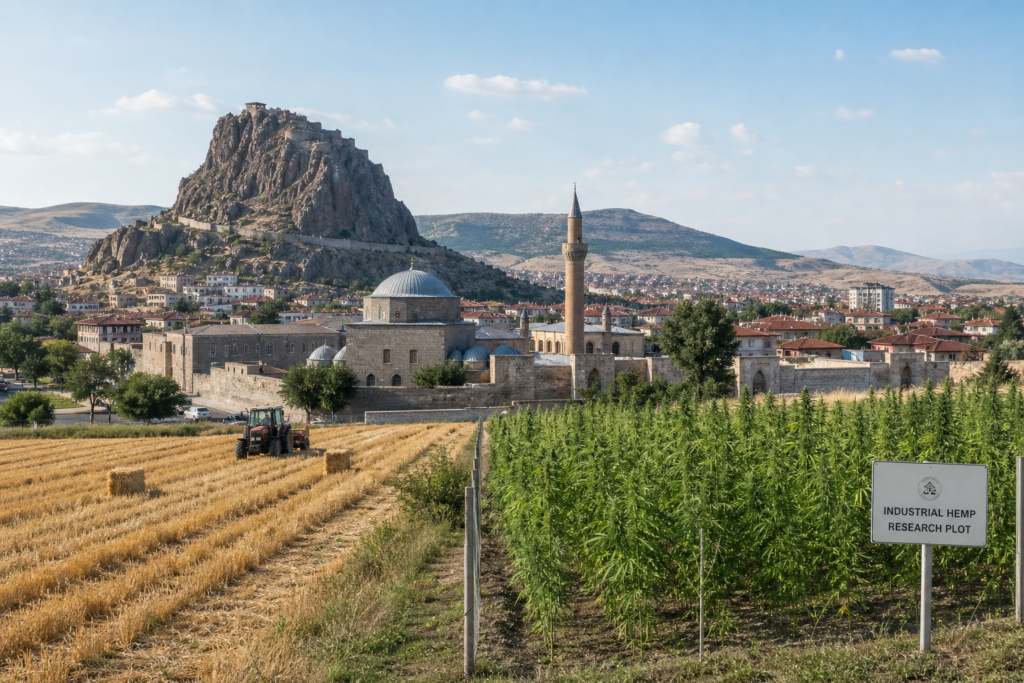
The most responsible coverage of hemp in the province should focus on verified agricultural information, permitted end uses and the economic realities of processing. It should avoid presenting hemp as a loophole for recreational production or as a guaranteed source of income.
2. Public-health communication is becoming more important
Another trend is a shift from simple “legal or illegal” messaging toward health literacy. Cannabis products can vary in potency and composition, and intoxication can affect attention, memory, coordination and decision-making. Risks may be higher for adolescents, people with a history of psychosis or certain mental-health conditions, and anyone combining cannabis with alcohol or other drugs.
Public-health communication is especially important in a city that receives domestic and international visitors for thermal facilities, heritage attractions and regional travel. Clear information can discourage impaired driving, unsafe self-medication and the assumption that a product sold in a tourist setting has passed meaningful quality controls.
Medical questions should be handled by a licensed clinician. A person taking prescribed medicines should not add cannabis, CBD or an online supplement without discussing possible interactions with a healthcare professional. A product’s label is not a substitute for clinical assessment.
3. Online retail claims are receiving closer scrutiny
Digital marketplaces have made it easier to encounter oils, flowers, edibles, cosmetics and supplements described with cannabis-related language. Yet packaging terms such as “hemp,” “natural,” “THC-free” or “therapeutic” do not, by themselves, establish legality, purity or effectiveness.
Consumers should be cautious about products that lack a manufacturer identity, batch information, ingredient list, testing documentation or clear instructions. Even where a product is presented as non-intoxicating, contamination, mislabelling and interactions remain possible concerns. Buying from an informal source also makes complaints and product recalls more difficult.
Medical cannabis in Afyonkarahisar: separating treatment from marketing
Interest in medical cannabis in Afyonkarahisar reflects a wider international conversation about cannabinoid-based medicines. That interest should not be confused with unrestricted access to cannabis. Medical treatment depends on the indication, the medicine, the patient’s history and the rules governing prescribing and dispensing in Turkey.
Evidence is not equally strong for every condition or product. Some cannabinoid medicines may have specific clinical uses, while broad claims that cannabis cures pain, cancer, anxiety or insomnia are not a safe basis for self-treatment. People with persistent symptoms should seek a diagnosis rather than replacing prescribed care with an unverified product.
Patients can prepare for a medical discussion by recording symptoms, current medicines, allergies and previous treatments. They should ask about expected benefits, side effects, interactions, driving restrictions and follow-up. A clinician can also explain whether an approved treatment exists and whether referral to a specialist is appropriate.
Tourism, transport and personal risk
Afyonkarahisar’s location and thermal-tourism profile can create a misleading impression that a relaxed holiday environment means relaxed drug rules. It does not. Hotels, spas, restaurants, bus stations and transport routes remain subject to Turkish law, and a traveller’s home-country prescription or cannabis card may not provide permission in Turkey.
Visitors should avoid carrying cannabis across borders, accepting packages for another person or transporting an unverified product between cities. Driving after using an intoxicating substance is particularly dangerous and may have legal consequences even when the person believes the effects have faded.
For broader context on how travel, local law and health risks intersect, readers may also find our guides to cannabis tourism in Antalya and the cannabis laws in Konya useful comparisons. Local differences in geography or tourism do not override national restrictions.
How to follow local developments responsibly
Reliable monitoring is more useful than chasing rumours. Readers interested in cannabis trends in Afyonkarahisar can use a simple verification process:
- Check Turkish government announcements and current legal texts before acting on a claim.
- Distinguish industrial hemp, prescription medicines, CBD-labelled products and intoxicating cannabis.
- Look for the issuing institution, publication date and exact wording of any reported rule.
- Question claims about guaranteed medical outcomes, easy profits or “legal” delivery.
- Use a licensed doctor or pharmacist for personal health questions.
- Do not share, transport or purchase an unknown product for someone else.
Local reporting should also avoid publishing unverified vendor names or treating an arrest, rumour or isolated social-media post as proof of a citywide trend. Responsible journalism describes what is documented, identifies uncertainty and gives readers a practical route to authoritative information.
What may shape the future
Future discussion is likely to centre on regulation rather than a conventional recreational market. Relevant issues include agricultural licensing, hemp supply chains, laboratory testing, consumer protection, medical research and public education. Universities, healthcare institutions, farmers and policymakers may all contribute, but progress depends on evidence and compliance.
Economic interest alone cannot establish that a crop is suitable, that a product is safe or that a legal reform has occurred. Afyonkarahisar’s strongest opportunities may lie in transparent research, regulated agricultural experimentation where permitted, and health communication that helps people understand the difference between established medicine and commercial promotion.
Conclusion
The most meaningful cannabis trends in Afyonkarahisar are not evidence of an open recreational market. They are the growing need to distinguish hemp from intoxicating cannabis, evaluate medical claims carefully, understand national restrictions and improve public-health information. Residents and visitors should treat cannabis-related offers with caution, avoid assumptions based on foreign laws and verify current rules through Turkish authorities.
A measured approach protects both personal health and legal interests. It also gives Afyonkarahisar a more useful public conversation—one based on documented policy, responsible agriculture, clinical evidence and accurate local reporting rather than speculation.