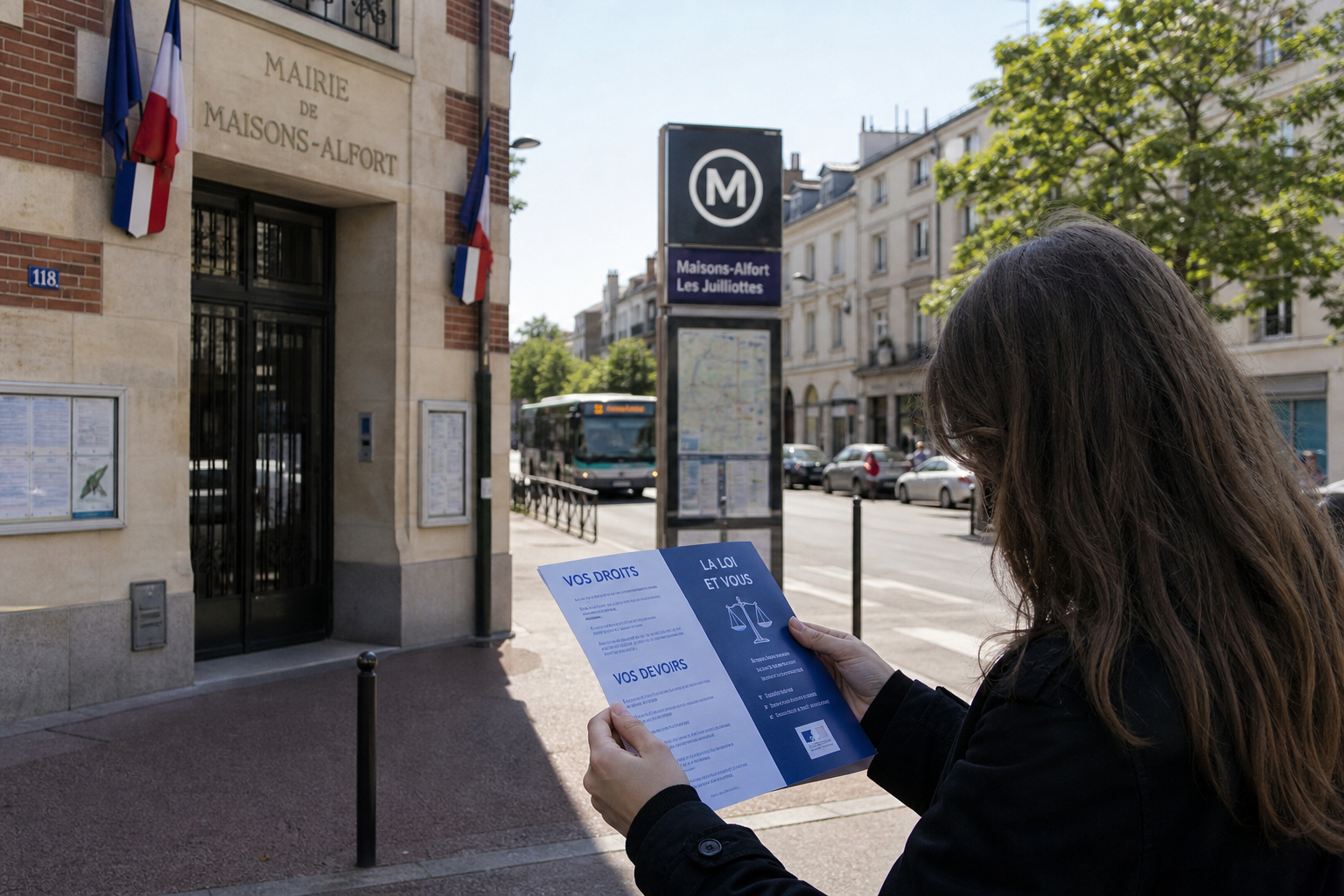
Understanding cannabis possession regulations in Maisons-Alfort means looking primarily at French national law. Maisons-Alfort does not have a separate municipal cannabis code that legalises possession or creates a local recreational market. The same rules that apply throughout France apply in the Val-de-Marne commune, whether a person is carrying cannabis near the town centre, a railway station, a park, a private residence or a local event.
French law treats cannabis as a narcotic drug. Possession, purchase, transport, use and supply can all create legal consequences. The response may depend on the quantity, the circumstances, the person’s age, previous history and whether authorities suspect personal use or a wider offence. This guide explains the practical framework without suggesting that a particular amount is safe or legal.
What cannabis possession means under French law
Recreational cannabis is not legal in Maisons-Alfort or elsewhere in France. A person who holds cannabis for personal use may be stopped, questioned, searched under the applicable procedural rules and prosecuted or fined. Possession is not automatically legal because the quantity is small, the substance is intended for private consumption or it was obtained from another country.
French authorities can distinguish between simple use-related conduct and more serious conduct such as trafficking, resale, importation or organised supply. That distinction affects how a case is handled, but it does not create a legal personal-possession limit. There is no general rule allowing adults to possess a fixed number of grams for recreation.
For an overview of the national fixed-penalty framework, consult the official Service-Public.fr information on the fixed fine for drug use. Official guidance should be checked again because procedures and enforcement policies can change.
Cannabis laws in Maisons-Alfort: fines and possible proceedings
In some cases involving drug use or possession for personal use, police may issue a fixed criminal fine, commonly known as an amende forfaitaire délictuelle. The standard amount is generally €200, with a reduced amount when paid within the relevant period and an increased amount if payment is late. The notice itself sets out the applicable deadlines and sums.
A fixed fine is not the same as legalisation or decriminalisation. It is a criminal-law response to an offence and may have consequences beyond the immediate payment. If the matter is contested, unpaid or connected to other suspected offences, it may proceed through the courts instead of ending with a simple payment.
The fixed-fine procedure is not guaranteed in every situation. Police and prosecutors may consider the circumstances, the type of conduct, the person’s age and identity, evidence of supply, the presence of other offences and any relevant criminal history. A larger quantity may attract closer scrutiny, but quantity alone is not a reliable legal test because there is no universal personal-use threshold that makes possession lawful.
When the situation may be more serious
Authorities may treat conduct more seriously when there are indications of selling, sharing for payment, importing, exporting, cultivating, storing cannabis for distribution or participating in an organised network. Packaging, scales, messages, cash, repeated transactions or testimony may be relevant evidence, although the legal assessment depends on the complete circumstances.
Driving after using cannabis creates a separate and particularly serious risk. French road-safety rules prohibit driving after using narcotics, and a positive test can lead to criminal proceedings even if the driver does not feel impaired. Combining cannabis with alcohol can create additional legal and safety problems. Anyone who may have consumed cannabis should not drive, cycle in dangerous conditions or operate machinery.
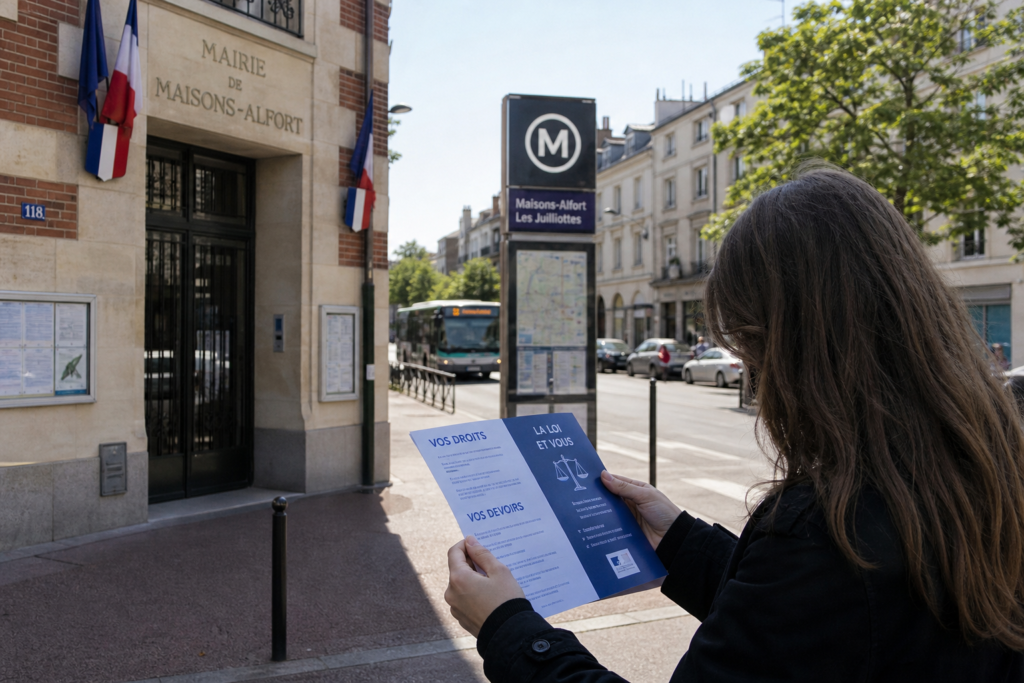
Weed in Maisons-Alfort: where possession rules apply
The rules apply in public and private settings. Carrying cannabis on a street, in a vehicle, at a station or in a park can expose a person to a police check. Keeping it in a home does not transform it into a lawful product. Landlords, employers, schools, transport operators and event organisers may also apply their own rules about possession, entry and conduct.
Public consumption can draw attention and may lead to intervention even before a possession issue is fully assessed. Smoking near children, schools, healthcare facilities or busy public spaces can create additional concerns involving public order, exposure to smoke and safeguarding. A local sign, venue policy or municipal order may impose further restrictions, but such local measures do not legalise possession elsewhere.
Maisons-Alfort is connected to the wider Paris region by public transport, so travelling with cannabis between communes can introduce additional practical risks. Moving the substance from one location to another does not make it lawful, and crossing a departmental boundary does not change the national rules.
Police checks, searches and your practical response
A person stopped by police should remain calm, avoid arguing in public and provide accurate identity information when legally required. Do not attempt to hide, discard or hand the substance to another person. Such actions can create further suspicion or safety risks. Do not sign a document that you do not understand; ask for clarification and, where appropriate, request legal assistance.
If cannabis is seized, ask what procedure is being used and keep any official paperwork. A notice will normally explain the alleged offence, payment deadline and available challenge process. Missing a deadline can increase the amount due or allow the matter to progress. A lawyer can explain the specific procedure, especially where there is an allegation of supply, importation, cultivation, driving or an offence involving a minor.
Visitors should not assume that a foreign prescription, cannabis card or licence automatically authorises possession in France. Documents issued abroad may not provide a defence under French law. Travellers should also avoid taking cannabis across the French border, including in luggage, because importation can be treated more seriously than domestic personal use.
CBD is different, but not risk-free
CBD products are not the same as high-THC cannabis, but their legality depends on the product, its composition, its presentation and how it was obtained. French and European rules have developed through legislation and court decisions, and products marketed as CBD must still comply with applicable requirements. A product labelled “CBD” is not automatically lawful.
Consumers should be cautious with flowers, resins, oils, food products and vaping liquids. Some products may contain more THC than stated, may be incorrectly labelled or may expose a user to a positive roadside test. CBD does not make driving after consumption risk-free, particularly where a product contains trace THC or affects alertness.
For anyone comparing cannabis in Maisons-Alfort with CBD products, the key point is that low-THC commercial products and illicit cannabis are governed by different rules. Check the packaging, seller information and current official guidance rather than relying on informal claims or social-media advertisements.
Medical cannabis and prescriptions
France has developed tightly controlled medical-cannabis arrangements, but this does not amount to a general right to possess recreational cannabis. Access, prescribing, dispensing and approved indications are governed by national health rules. Patients should speak with a French healthcare professional and use only medication supplied through the authorised route.
A patient should not assume that ordinary cannabis bought outside the medical system becomes lawful because it is used to manage pain, anxiety, sleep problems or another condition. Self-medication can create health, legal and driving risks. A prescription from another country may also require specific recognition or documentation before medication can be carried into France.
National public-health information is available from the French government’s MILDECA drug information website, which provides broader information about drugs, prevention and public policy. For an individual medical question, a doctor or pharmacist is more appropriate than an online seller.
Health and safety considerations
The legal issue is only one part of the risk. Cannabis can affect attention, memory, coordination, reaction time and judgement. Effects vary with THC concentration, dose, frequency of use, the method of consumption and whether alcohol or other medicines are involved. Edibles may take longer to produce effects and can lead to accidental overconsumption.
- Do not drive or operate machinery after using cannabis.
- Avoid mixing cannabis with alcohol, sedatives or other psychoactive substances.
- Keep products away from children and pets.
- Seek urgent medical assistance for severe confusion, chest pain, breathing difficulty, loss of consciousness or extreme agitation.
- Ask a healthcare professional about repeated use, dependence, anxiety, psychosis risk or interactions with prescribed medicines.
People under 18, pregnant people and those with a personal or family history of psychosis should be especially cautious and seek professional advice. Legal uncertainty is not a substitute for medical guidance.
Common misunderstandings about cannabis possession in Maisons-Alfort
“A small amount is legal.”
There is no general recreational possession allowance. A small amount may be handled differently from evidence of trafficking, but it remains capable of triggering enforcement.
“Private possession cannot be punished.”
Keeping cannabis at home does not create an exemption. Privacy may affect how authorities become aware of conduct, but it does not legalise the substance.
“CBD flowers are always safe to carry.”
CBD products must comply with applicable rules, and product quality can vary. Labelling, THC content and the intended use matter.
“A prescription from abroad settles the issue.”
Cross-border medicine rules are specific. Travellers should verify requirements with the relevant French authorities and healthcare professionals before carrying any cannabis-based medicine.
What residents and visitors should remember
The practical rule for cannabis possession law in Maisons-Alfort is straightforward: recreational possession is not authorised, and local familiarity does not reduce the legal risk. A fixed fine may be possible in some personal-use cases, but it is not guaranteed and does not apply to every situation. Supply, importation, cultivation, driving and offences involving minors can lead to much more serious consequences.
If you are unsure whether a product is legal, do not carry it in public, transport it across borders or drive after using it. Keep official notices, seek qualified legal advice when necessary and use government or healthcare sources rather than relying on sellers or anonymous forums. The same approach applies to anyone researching cannabis laws in Maisons-Alfort before visiting or moving to the area.
Conclusion
Maisons-Alfort follows French national cannabis law: recreational cannabis possession remains prohibited, with enforcement ranging from a possible fixed fine in some personal-use cases to court proceedings for more serious conduct. There is no universal legal quantity, and private use, foreign documentation or a CBD label does not automatically remove the risk. The safest approach is to avoid illicit possession, never drive after cannabis use, verify medical and CBD rules through official channels and obtain legal advice if police or prosecutors become involved.