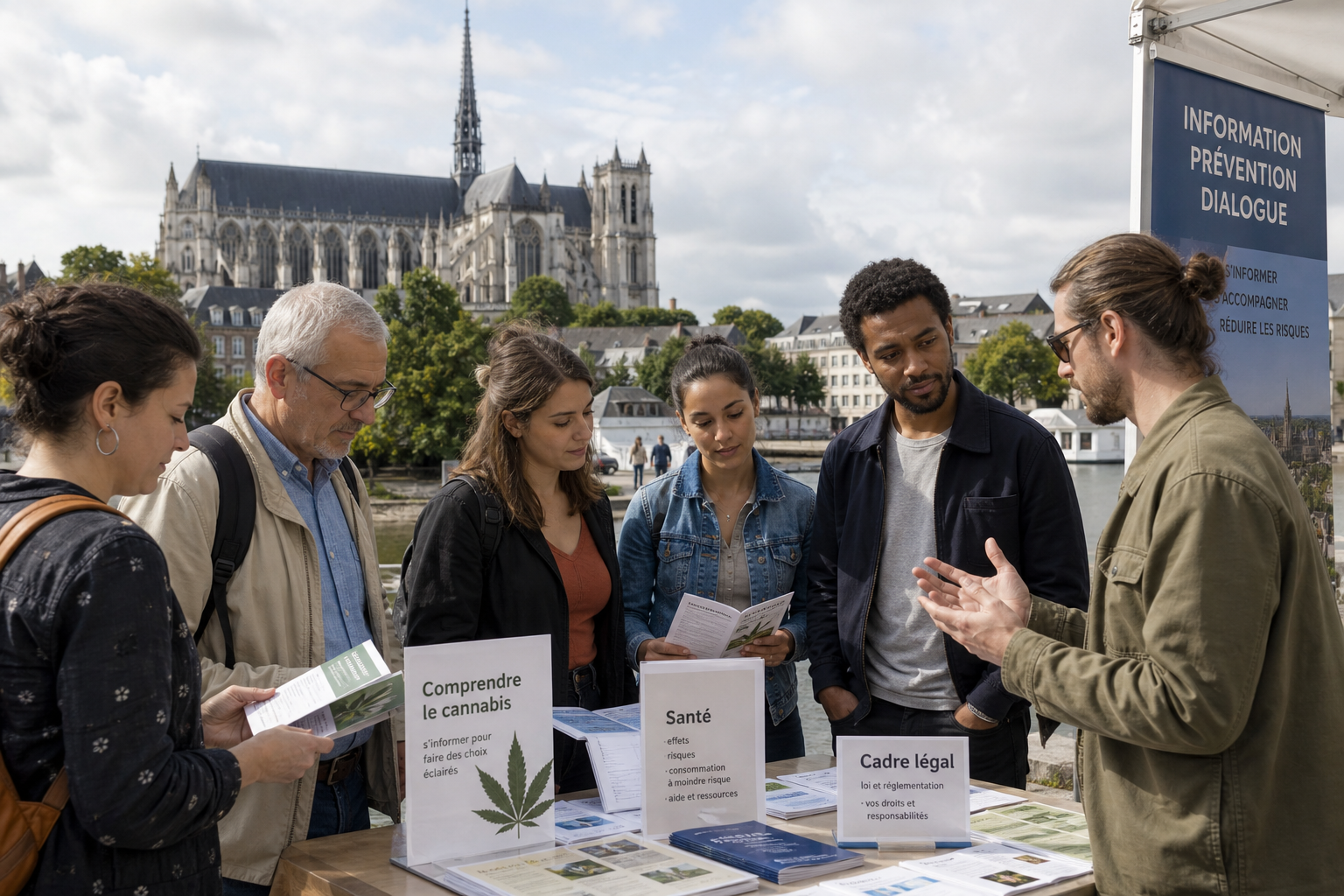
Good marijuana education in Amiens should do more than explain where cannabis is discussed. Residents, students, workers and visitors need clear information about French law, health risks, CBD products, medical care and practical ways to avoid harm. Amiens follows national French rules: local neighborhoods, university areas and nightlife districts do not create separate legal exceptions for recreational cannabis.
This guide uses “marijuana” and “cannabis” as familiar terms, while distinguishing illegal recreational products from regulated medicines and lawful hemp-derived products. It is educational rather than legal or medical advice. Rules and official guidance can change, so anyone facing a specific legal or health situation should consult an appropriate French authority or qualified professional.
What marijuana education in Amiens should cover
People searching for cannabis in Amiens may be looking for very different information. Someone may want to understand a news story, assess a health concern, identify a CBD product, or learn what the law means before travelling. A useful explanation starts by separating four subjects:
- Law: recreational use, possession, supply, cultivation and driving are treated differently, but none should be assumed legal simply because cannabis is common or openly discussed.
- Health: effects vary with potency, frequency, age, personal vulnerability, other substances and the method of consumption.
- Products: intoxicating cannabis, CBD, hemp food products and prescribed medicines are not interchangeable categories.
- Support: confidential medical, addiction and emergency services are available when use causes concern.
That framework is more reliable than street terminology or social-media claims. It also helps people ask precise questions instead of assuming that a product labelled “natural,” “CBD” or “hemp” is automatically risk-free.
Cannabis laws in Amiens and across France
French drug law applies in Amiens in the same way it applies elsewhere in mainland France. Recreational cannabis containing intoxicating THC is not legally sold for ordinary adult use. Using or possessing it can lead to a fixed penalty procedure in some circumstances, while more serious or repeated cases may involve prosecution and heavier penalties. Supply, trafficking, importing, exporting and commercial cultivation carry substantially greater legal risks.
The exact response can depend on the facts, including the quantity, circumstances, prior history and whether the conduct involves supply or other offences. A fixed penalty is not permission to possess cannabis, and paying one does not make future possession lawful. The official French public-service information on drug use and penalties is a better reference than informal advice.
Public spaces create additional practical problems. Consumption near schools, transport facilities, workplaces or other crowded places can create safety, safeguarding or public-order concerns. Driving after using cannabis is especially serious: impairment and legal consequences can exist even when a person does not feel intoxicated. Combining cannabis with alcohol or sedating medicines can further reduce judgement and reaction time.
For visitors, crossing a border with cannabis is not a safe workaround. A product obtained legally in another country may still create problems when brought into France. Travellers should check current customs and legal guidance before carrying any cannabis, CBD product or medicine across an international border.
Understanding weed in Amiens without relying on rumours
The phrase weed in Amiens is informal and may refer to products with very different contents. Street cannabis can vary in strength and may be contaminated or inaccurately described. A photograph, smell or seller’s claim cannot reliably establish the THC level, ingredients or safety of a product.
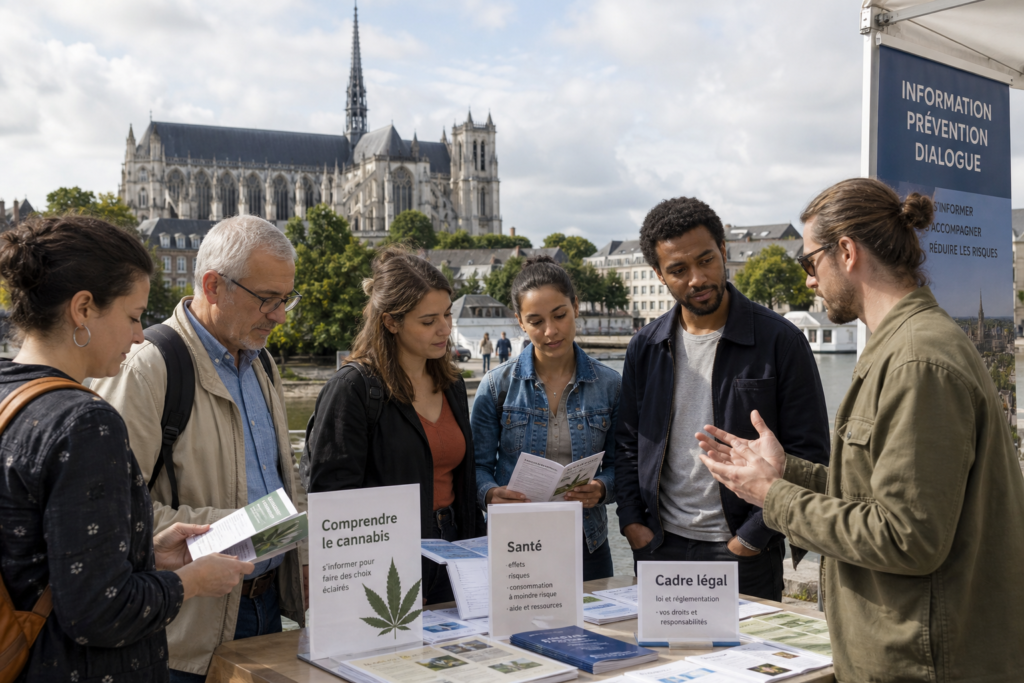
People should also be cautious with edibles, oils, vapes and concentrates. Inhaled products can produce effects quickly, while edible products may take longer to act and can lead to accidental overconsumption when someone assumes the first dose “did nothing.” Concentrates may contain much higher THC levels than traditional plant material. Unknown vape liquids can carry additional risks because their ingredients and manufacturing standards may be unclear.
There is no completely risk-free way to use an intoxicating drug. The safest choice is not to use it. If someone nevertheless decides to consume, risk-reduction principles include not driving, not mixing substances, avoiding unknown products, staying with trusted people and waiting for effects before taking more. These steps reduce some risks but do not remove legal exposure or guarantee a safe outcome.
Health effects and warning signs
Short-term effects
Cannabis can affect attention, memory, coordination, reaction time and judgement. Some people experience relaxation or euphoria; others experience anxiety, panic, confusion, nausea or unpleasant changes in perception. A strong reaction can be more likely when the product is potent, the dose is uncertain, the person is inexperienced or other substances are involved.
Anyone who has used cannabis should avoid driving, cycling in traffic, operating machinery or taking responsibility for another person when impaired. A sober friend can help reduce immediate practical risks. If symptoms are severe, rapidly worsening or unusual for the person, seek urgent medical help and explain honestly what was taken.
Longer-term concerns
Frequent or heavy use can interfere with learning, work, relationships, motivation or finances. Some people develop dependence and find it difficult to cut down despite problems. Cannabis can also worsen anxiety, low mood or psychotic symptoms in vulnerable individuals. Risk is particularly important for adolescents and young adults because brain development continues through this period.
Smoking cannabis exposes the lungs to irritants. Mixing cannabis with tobacco can reinforce nicotine dependence and makes it harder to identify which substance is causing symptoms. People who are pregnant, breastfeeding, taking psychiatric medication or managing a heart or mental-health condition should discuss cannabis with a healthcare professional rather than relying on online anecdotes.
CBD in Amiens: legal does not mean risk-free
CBD in Amiens is widely discussed, but CBD products must be distinguished from intoxicating cannabis. CBD itself is not generally associated with the same intoxicating effect as THC, yet products can differ in composition, quality and labelling. Some may contain trace amounts of THC or other ingredients. A product’s legal status can depend on its formulation, THC content, marketing and compliance with applicable French and European rules.
Consumers should avoid treating CBD as a guaranteed treatment for pain, insomnia, anxiety or addiction. Evidence and product quality vary, and CBD can interact with medicines. Anyone taking prescription medication should ask a pharmacist or doctor before using it. Do not use a CBD product before driving if its ingredients or effects are uncertain.
Responsible purchasing means checking the label, batch information, ingredients, manufacturer details and any available laboratory documentation. Avoid products making dramatic medical promises or claiming to cure serious diseases. Comparing a CBD product with a regulated medicine is misleading: authorised medicines undergo a different evaluation and monitoring process.
For broader context on hemp-derived products and consumer questions, see this related guide to hemp, CBD and French product rules. The location differs, but the national legal distinctions are useful when evaluating products in Amiens.
Medical cannabis in Amiens: do not self-medicate
Searches for medical cannabis in Amiens often reflect real symptoms that have not been adequately managed. Medical treatment should begin with a consultation, not with an informal purchase. A doctor can review the diagnosis, existing medicines, previous treatments and potential contraindications. Patients should never stop prescribed treatment or replace it with cannabis without clinical advice.
France has developed specific frameworks and clinical pathways for certain cannabis-based medicines and conditions. Availability, eligibility and prescribing arrangements may depend on current national policy and the individual patient’s situation. Pharmacies and healthcare professionals are the appropriate places to ask about lawful access, monitoring and alternatives.
Keep a clear record of any product used, including its name, strength, amount, timing and effects. This information can help a clinician identify side effects or interactions. It is particularly important to disclose cannabis use before surgery, during pregnancy or when starting medicines that affect the nervous system.
Where to seek help in Amiens
People do not need to wait for a crisis before asking for support. A general practitioner, pharmacist or mental-health professional can discuss anxiety, sleep problems, pain, dependence and medication interactions. France also has specialised addiction consultation services known as CSAPA, which provide assessment, support and referral. Availability and opening arrangements should be checked locally.
For immediate danger, severe confusion, chest pain, breathing problems, loss of consciousness, seizures or thoughts of self-harm, call emergency services. Stay with the person if it is safe, keep packaging or product information available, and tell responders what may have been consumed. Honest information supports safer treatment and is more useful than trying to conceal the substance.
For a wider comparison of public-health and legal issues in another French city, our cannabis education guide for Tours covers similar questions about law, health and safer choices. The same national principles apply in Amiens, although local services and contact details may differ.
Practical advice for students, residents and visitors
- Check the source: prefer official government, public-health, medical or addiction-service information over anonymous posts and sales claims.
- Protect your driving record: never drive after cannabis use, and plan a sober route home in advance.
- Keep products away from children: especially edibles, oils and attractive packaging.
- Do not share medicines: prescribed cannabis-based products are intended for the patient and condition assessed by the prescriber.
- Respect private and public settings: avoid exposing other people to smoke and do not assume a private rental permits illegal activity.
- Plan for support: if use is becoming frequent, expensive or difficult to control, speak to a professional early.
Education is most useful when it avoids both exaggeration and complacency. Cannabis is not harmless, but fear-based claims can also make people distrust accurate advice. A balanced approach explains what is known, identifies uncertainty, and directs people to qualified help when the situation is personal or urgent.
Conclusion
Marijuana education in Amiens means understanding the national French legal framework, recognising the difference between THC cannabis, CBD and medical products, and taking health and road safety seriously. Recreational cannabis remains illegal, local familiarity does not change that position, and unknown products carry avoidable risks. Clear information can help residents and visitors make safer decisions, recognise warning signs and seek professional support without delay. When laws, products or treatment options are uncertain, official services and qualified healthcare professionals are the most dependable sources.