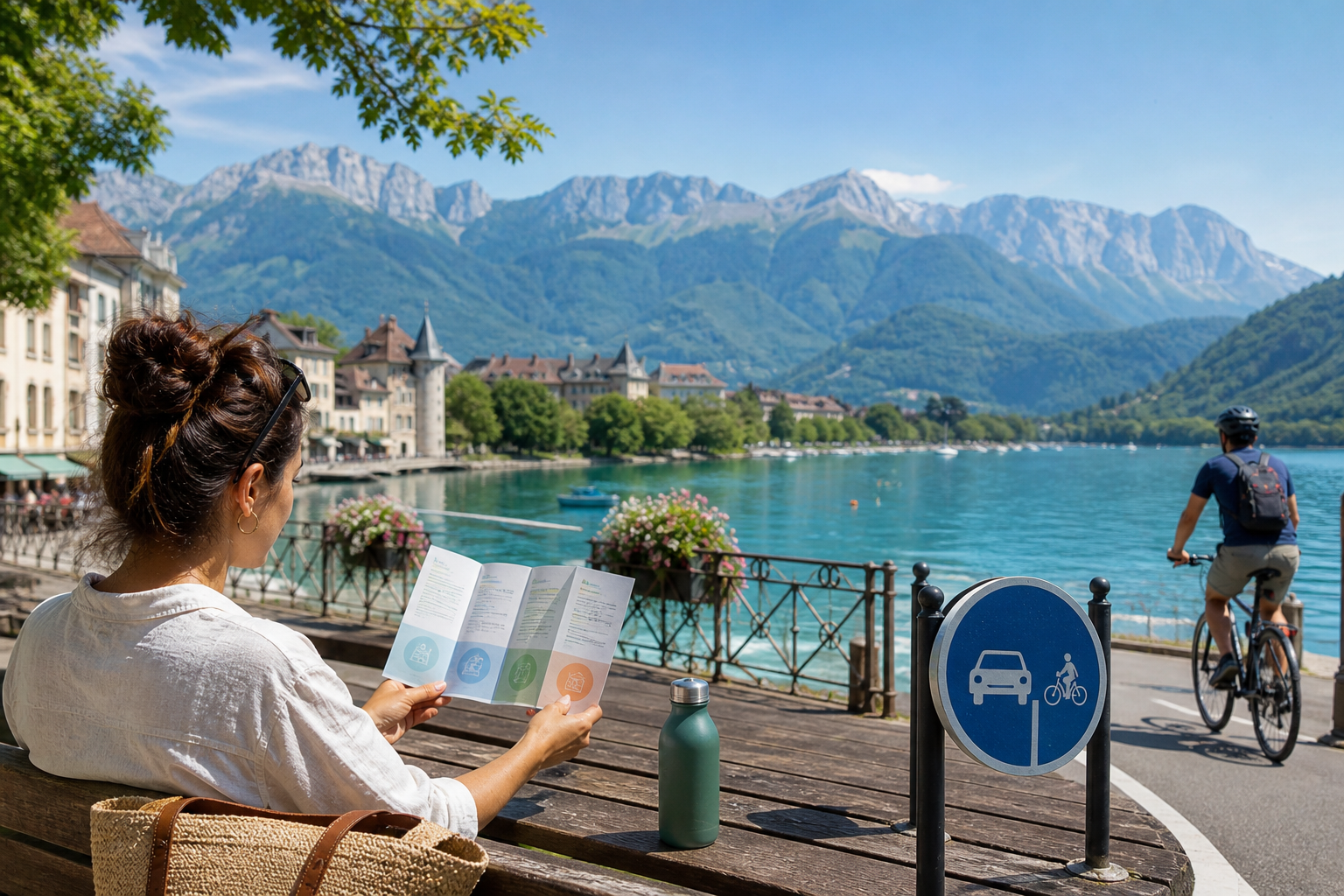
Understanding Cannabis awareness in Annecy means looking beyond tourist assumptions and online claims. Annecy is known for its lake, outdoor activities and international visitors, but cannabis remains governed mainly by French national law. Residents and visitors should understand the rules around possession, use, supply, CBD, driving and health before making decisions.
This guide provides practical, non-judgmental information about cannabis in Annecy. It is not legal or medical advice, and regulations can change. When a situation involves immediate danger, severe symptoms or uncertainty about a legal process, contact an appropriate emergency, health or legal service.
Cannabis awareness in Annecy: the legal starting point
Annecy does not have a separate cannabis market or a special local rule that makes recreational cannabis legal. French national law applies in the city, around Lake Annecy, in accommodation, on public transport and at nearby outdoor destinations. Cannabis containing prohibited levels of THC is illegal to possess, buy, sell, share or produce.
Personal use is also an offence. Depending on the circumstances, police may issue a fixed penalty for certain cases of drug use, while more serious or disputed situations can lead to court proceedings. Possession, supply, cultivation and involvement with trafficking can expose a person to substantially greater legal consequences than simple use.
For current information on penalties and procedures, consult the French government’s official information about drug use and sanctions. The precise response can depend on the substance, quantity, circumstances, previous history and decisions by the authorities.
Public places and private accommodation
Using cannabis in a street, park, beach, restaurant terrace, festival area or other public place creates legal and practical risks. It can also affect other people, including children and visitors who do not consent to exposure to smoke. Hotel rules, holiday-rental conditions and campsite policies may prohibit smoking or drug use even in private rooms or outdoor areas.
Keeping cannabis out of shared spaces is not a substitute for compliance with French law. Do not assume that a balcony, vehicle, lakeside area or secluded hiking location is exempt from national rules. Avoid carrying cannabis across borders, including when travelling to or from Switzerland or another European country. Border and customs issues can be especially serious because laws differ between countries.
Weed in Annecy: why assumptions can be misleading
Searches for weed in Annecy may return informal offers, social-media accounts or advice from people who confuse CBD with high-THC cannabis. These sources cannot verify legality, product contents or safety. Buying from an unregulated seller may expose someone to unknown potency, contaminants, fraud, theft or pressure to purchase other substances.
There is no reliable way to identify the contents of a product from its colour, smell, packaging or claimed strain name. A product labelled “natural” or “legal” may still be unsuitable, incorrectly labelled or illegal under French rules. Do not treat a local recommendation as proof that a product is lawful.
CBD is not the same as recreational cannabis
CBD products are subject to a different legal framework from cannabis sold for its intoxicating effects. In France and the European Union, hemp-derived products must meet applicable requirements, including rules concerning THC content and the type of product. Enforcement and product compliance can be complicated, particularly for flowers, resins, food products, oils and imported items.
A CBD product may be non-intoxicating or have very low THC, but it is not automatically risk-free. It can cause drowsiness, interact with medicines and create uncertainty for people subject to drug testing. Product labels may also be incomplete or inaccurate. For broader context, see this guide to CBD laws and safer buying considerations in Lyon; the underlying national rules still apply in Annecy.
Do not carry CBD products across an international border without checking the destination and transit countries’ rules. A product that is permitted where it was purchased may create problems elsewhere.
Health risks and lower-risk decisions
Cannabis can affect attention, reaction time, memory, coordination, mood and perception. The effects vary according to THC concentration, amount, frequency of use, personal health, other substances and the setting. Edibles and drinks can be particularly difficult to judge because effects may take longer to appear and can last longer than expected.
Frequent or high-THC use may contribute to dependence and can worsen anxiety, paranoia or other mental-health symptoms in some people. People with a personal or family history of psychosis, significant anxiety, heart problems, pregnancy or medication use should seek professional medical advice before using cannabis or CBD. Adolescents and young adults may be more vulnerable to harms involving learning, concentration and mental health.
Practical steps to reduce immediate harm
- Do not mix cannabis with alcohol, sedatives, stimulants or other drugs.
- Do not drive, cycle on busy roads, operate equipment or take part in lake and mountain activities while impaired.
- Keep products away from children and pets, preferably in a clearly labelled, secure container.
- Do not share products, especially with anyone who is underage, pregnant, unwell or taking medication.
- Avoid taking more because effects have not appeared yet, particularly with edible products.
- Stop and seek help if there is severe confusion, chest pain, difficulty breathing, loss of consciousness, extreme agitation or suspected poisoning.
In an emergency in France, call 15 for medical assistance or 112 for the European emergency number. Give responders accurate information about what was taken and when. Calling for medical help is more important than trying to conceal the substance.
Cannabis laws in Annecy and driving
Cannabis laws in Annecy apply strictly to road safety. Driving after using cannabis is illegal in France, and enforcement is not based only on whether a person feels impaired. A positive test can create legal consequences, and combining cannabis with alcohol increases danger and may aggravate the legal response.
This matters especially in Annecy, where people may drive around the lake, use mountain roads, rent scooters or continue by car after an evening out. Do not rely on a few hours of sleep, coffee, a shower or a subjective feeling of sobriety. Plan a sober driver, public transport, a taxi or accommodation within walking distance instead.
Visitors should also remember that a driving offence can affect insurance, employment, travel plans and a foreign driving licence. For more general safety context, the article on marijuana use and practical precautions in Grenoble discusses issues that are similarly relevant across French cities.
Medical cannabis in Annecy: separating treatment from self-medication
People searching for medical cannabis in Annecy may be looking for relief from pain, sleep problems, anxiety or another condition. Recreational cannabis should not be treated as a substitute for diagnosis or prescribed care. Self-medicating can delay treatment, interact with existing medicines or make symptoms harder to assess.
Access to cannabis-based medical treatment in France depends on the applicable national framework, clinical indications, authorised products and medical supervision. A doctor or pharmacist can explain approved options and whether another treatment is more appropriate. Do not buy prescription medicines or cannabis products from informal sellers, and do not change a prescribed medicine without speaking to a healthcare professional.
Keep a record of any product used, including its label, strength, amount and timing, and tell a clinician about cannabis or CBD use. This information can help identify side effects and interactions. Anyone experiencing persistent anxiety, low mood, paranoia, sleep disruption or difficulty controlling use should seek confidential support rather than waiting for the problem to worsen.
Where to seek help
France’s public drug-information service offers confidential information and guidance about drugs, dependence and support options. The Drogues Info Service website can help people identify appropriate resources. A general practitioner, pharmacist, local hospital or addiction support service can also provide advice based on an individual’s health and circumstances.
Support is appropriate even when someone has not decided to stop using cannabis. Useful questions include how often use occurs, whether tolerance or cravings are increasing, whether it affects work or study, and whether it has caused conflict, financial problems or unsafe driving.
Responsible cannabis awareness for residents and visitors
Good awareness is not about encouraging or condemning every individual choice. It is about making informed decisions and recognising the effects on other people. In Annecy, that includes respecting smoke-free environments, avoiding use around children, protecting shared accommodation from odours and waste, and never leaving discarded material in parks, streets, beaches or hiking areas.
Visitors should plan before arriving rather than trying to find products locally. Check French rules, confirm accommodation policies and avoid carrying cannabis or questionable CBD products across borders. Residents can help by correcting misinformation, discouraging impaired driving and directing friends toward healthcare or support services when needed.
Local scenery does not reduce risk. Swimming, boating, cycling, climbing and hiking all require attention and coordination. Combining impairment with cold water, steep terrain, traffic or changing weather can turn a personal decision into an emergency for the individual and rescuers.
Conclusion
Cannabis in Annecy is subject to French national law, not a special tourist exception. High-THC cannabis remains illegal, CBD products require careful attention to compliance, and driving after use is a serious safety and legal concern. Health risks vary, but impaired judgement, dependence, mental-health effects and interactions with alcohol or medicines deserve attention.
The safest approach is to verify information through official sources, avoid unregulated products and cross-border transport, never drive while affected, and seek professional help when use becomes difficult to control. Clear, practical cannabis awareness can help residents and visitors enjoy Annecy responsibly while reducing preventable legal, health and community harms.