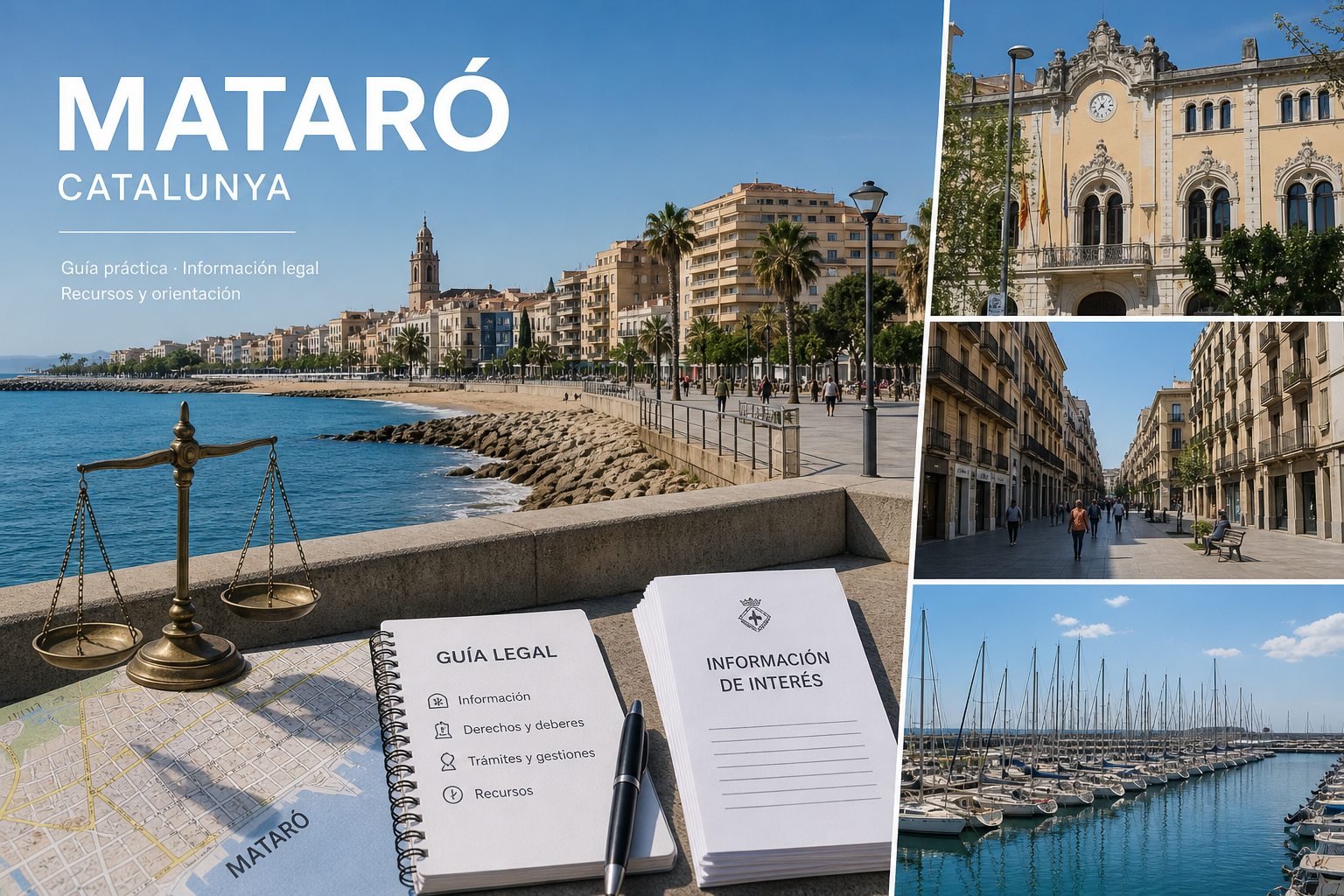
Understanding Cannabis access laws in Mataró requires separating Spanish national law from local rules and practical risks. Mataró is in Catalonia, but cannabis is not regulated through a fully legal recreational retail system like alcohol. The rules differ depending on whether cannabis is possessed privately, used in public, cultivated, supplied to another person, or obtained as a medical product.
This guide explains the main legal boundaries for residents and visitors looking for reliable information about weed in Mataró. It is general educational information, not legal advice. Enforcement, court interpretation and regulations can change, so anyone facing a police investigation or prosecution should speak with a qualified Spanish lawyer.
How cannabis is regulated in Mataró
Spain’s core cannabis rules are national. Mataró cannot create a local recreational market that overrides criminal law or national administrative penalties. The city may, however, enforce public-order rules, regulate municipal spaces and respond to nuisance, smoking or safety issues under applicable Catalan and Spanish provisions.
The most important distinction is between private conduct and activity that affects public spaces or involves supply. Spanish law does not treat all cannabis-related conduct identically. A small amount kept for personal use in a genuinely private setting is not automatically the same as public possession, public consumption, sale or organized distribution.
The official text of Spain’s Organic Law 4/2015 on public security is the most relevant starting point for administrative offences involving public drug consumption or possession. The wording and application of the law matter, particularly when a person is stopped in a street, station, park, beach or other publicly accessible place.
Cannabis laws in Mataró: possession and personal use
Private possession
Private possession for personal use is generally treated differently from possession in public. That does not mean cannabis is legally sold or that every private situation is risk-free. The quantity, circumstances, packaging, communications, location and evidence of intended supply can all affect how authorities interpret a case.
There is no simple nationwide “safe amount” that guarantees lawful possession. A person carrying several portions, scales, customer messages or large quantities may attract allegations of distribution even without a completed sale. Personal-use arguments are therefore highly fact-dependent.
Possession or use in public
Possessing or consuming cannabis in public can lead to an administrative sanction. Public places can include streets, parks, beaches, transport areas, venues and other locations accessible to the public. Police may also seize the substance and record the incident.
Visitors should not assume that discreet use on a quiet street, in a vehicle or near the seafront is acceptable. A private balcony may also create issues if smoke, disturbance or visibility affects neighbours or a public area. The safest legal approach is not to consume in public and to avoid carrying cannabis in circumstances where it could be treated as public possession.
Supply, sharing and cultivation
Sale, commercial distribution and trafficking are much more serious than personal possession. Spanish criminal law can apply when cannabis is supplied to another person, particularly where there is profit, organized activity, repeated conduct or evidence that the substance will reach others. Sharing with friends is not automatically risk-free; the absence of payment does not by itself eliminate legal exposure.
Home cultivation is also not a blanket permission. A private crop may raise fewer issues when it is genuinely for personal use and not visible or accessible from public areas, but visibility, scale and indications of distribution can change the assessment. Cultivation in a shared building, communal area or location visible to neighbours may create additional problems.
Anyone considering cultivation should obtain individualized advice rather than relying on internet claims about plant numbers. Spanish courts assess the facts of each case, and local police action can occur before a court makes a final determination.
Cannabis clubs and access in Catalonia
Cannabis social clubs have operated in parts of Spain, including Catalonia, but a club is not automatically a licensed dispensary. Membership, private premises and an association structure do not create a general right to sell cannabis to the public. Clubs may face legal, licensing, tax, health, nuisance and criminal-law questions.
A visitor should be cautious about any organization promising guaranteed legal access, delivery, public consumption or cross-border transport. Marketing language is not proof that a club complies with Spanish law. Clubs can also have internal requirements such as identification, membership records and house rules, but those procedures do not remove national legal risks.
For broader context on regional cannabis issues, readers can compare this topic with the guide to cannabis law and responsible choices in Tarragona. The same national framework may apply, but municipal enforcement and the facts of an individual situation can differ.
Medical cannabis in Mataró
Medical cannabis is not the same as buying recreational cannabis from a shop or club. Access depends on the applicable Spanish health framework, the product, the indication, the prescriber and the authorized supply route. Patients should not assume that a foreign prescription, an online advertisement or a cannabis-club membership provides lawful medical access in Spain.
People seeking medical cannabis in Mataró should begin with a qualified healthcare professional. Ask about approved treatments, potential interactions, side effects, driving restrictions and whether a product is legally available through the appropriate pharmacy or healthcare channel. Do not stop prescribed treatment or replace it with an unregulated cannabis product without medical guidance.
The Spanish Agency of Medicines and Medical Devices (AEMPS) publishes official information about medicines, health regulation and developments affecting authorized medical products. Its material is more reliable than social-media claims or sales messages from unverified suppliers.
CBD, hemp and products sold in Mataró
CBD products should not be treated as interchangeable with high-THC cannabis. Product category, intended use, labeling, ingredients and applicable EU and Spanish rules all matter. A product described as “hemp,” “CBD” or “legal cannabis” may still be unsuitable for ingestion, may contain trace cannabinoids or may be marketed in a way that does not match its lawful category.
Consumers should check whether a product is intended for external use, food use, cosmetics or another regulated purpose. Avoid products with unclear ingredients, exaggerated medical promises or no responsible seller information. Do not drive after using a cannabinoid product, especially where THC contamination or impairment is possible.
For nearby regional background, the guide to hemp and CBD products in Badalona discusses practical buying considerations without treating CBD as a substitute for regulated medical care.
Travel, transport and everyday precautions
Local access questions often become travel questions. Carrying cannabis from another country into Spain can create border and customs problems even if possession might be treated differently in a private domestic setting. Taking cannabis on a flight, ferry or international train is particularly risky. Never assume that a product bought legally elsewhere can be imported into Spain.
Within Spain, transporting cannabis through public areas can still lead to police intervention or an administrative case. Keep in mind that driving under the influence, or driving after consuming a substance that results in a positive test, can have serious consequences. A person should not drive, cycle or operate machinery after using cannabis.
- Do not consume cannabis in streets, parks, beaches, stations, vehicles or other public places.
- Do not carry cannabis across national borders or onto public transport without specialist legal advice.
- Do not buy from sellers who cannot explain the product, its legal category or its ingredients.
- Do not assume that a club membership makes possession, supply or transport lawful.
- Keep cannabis away from children, pets, medicines and anyone who has not consented to exposure.
What to do after a police stop
Stay calm, avoid confrontation and follow lawful instructions. Do not sign documents you do not understand. Ask for an interpreter if language is a problem, and seek legal advice promptly if officers issue paperwork, seize a substance or allege a criminal offence. Administrative and criminal procedures are different, so the document received and the deadline shown on it matter.
Record the date, location, authority involved and any reference number. Keep copies of notices and do not ignore deadlines. A local solicitor can explain whether an allegation concerns an administrative offence, a criminal investigation or another matter.
Safer decision-making for residents and visitors
The lowest-risk option under Spanish law is not to use or carry cannabis in public and not to purchase from informal sellers. If someone chooses to use cannabis privately, they should consider impairment, anxiety, medication interactions, pregnancy, mental-health history and the possibility of accidental exposure to others.
Do not combine cannabis with alcohol or sedating medicines, and do not rely on product strength estimates from informal sources. New or inexperienced users face a greater risk of unwanted effects, especially with concentrated products or edible preparations, which can take longer to produce effects and may last longer than expected.
If severe confusion, chest pain, breathing difficulty, loss of consciousness or a dangerous reaction occurs, contact emergency services. A health professional can provide help without relying on informal advice from a seller or club.
Conclusion
Cannabis access laws in Mataró do not create a normal recreational retail market. Private and public conduct are treated differently, while public possession or use can trigger administrative action and supply-related conduct can become a criminal matter. Cannabis clubs, home cultivation, CBD products and medical access each involve separate conditions and should not be treated as automatic legal exceptions.
For a responsible approach, avoid public consumption, do not transport cannabis across borders, verify health information through official sources and obtain professional legal or medical advice when the situation is specific. Rules can develop over time, so check current official guidance before making decisions in Mataró or elsewhere in Spain.