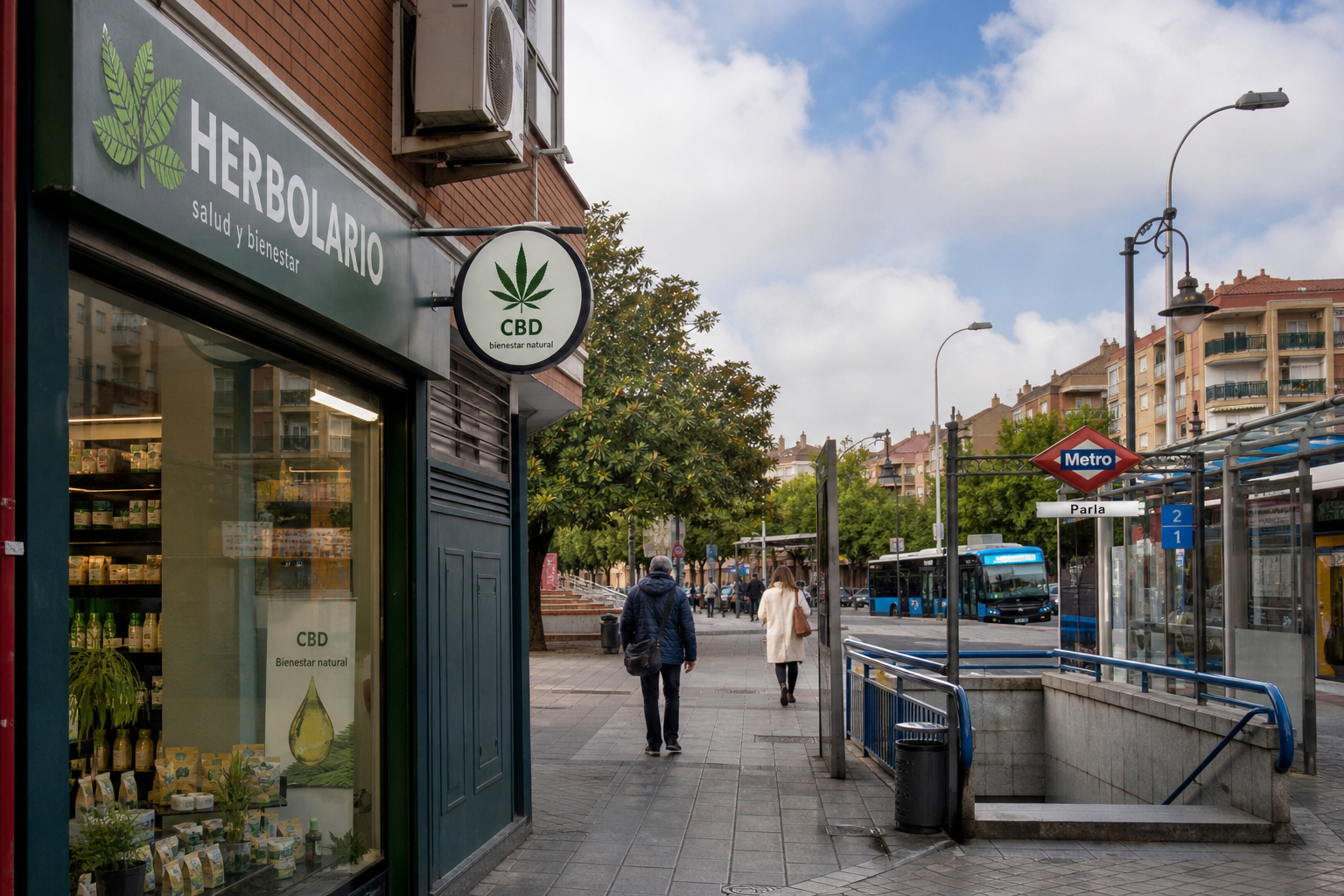
The Marijuana market in Parla is shaped less by conventional retail than by Spain’s complex distinction between private conduct, public-order rules, medical access, CBD products and criminal trafficking. Parla, a municipality south of Madrid, follows national Spanish law while also applying local public-space and business rules. That means visitors and residents should avoid assuming that the presence of cannabis culture makes commercial buying or public consumption lawful.
This guide explains how the local market should be understood, what products may be encountered, where the main legal risks arise and how to make safer, better-informed decisions. It does not identify sellers or provide instructions for obtaining illegal drugs. Laws and official policies can change, so anyone facing a specific legal or medical issue should consult a qualified professional and check current government information.
What the marijuana market in Parla actually includes
In everyday conversation, “market” can mean several different things. It may refer to illicit cannabis sales, private growing, cannabis-related social activity, CBD retail, hemp products or the regulated medical supply chain. These categories do not have the same legal status in Spain.
There is no ordinary, nationwide recreational cannabis retail system comparable to a licensed dispensary model. A shop openly advertising cannabis with intoxicating THC for general recreational sale should not automatically be treated as legal. Products sold through informal channels may also have uncertain strength, unknown contaminants, inaccurate labeling or an undisclosed origin.
By contrast, some lawful businesses may sell hemp-derived goods, accessories, cosmetics or CBD products subject to applicable product rules. The legality of a product depends on its ingredients, THC content, intended use, labeling and route of sale. A product being displayed in a store or promoted online is not conclusive proof that every claim or use is permitted.
Parla’s connection with the wider Madrid area
Parla is part of the Madrid metropolitan area, so its residents may encounter information, products and social networks extending beyond the municipality. However, traveling to another town does not remove Spanish national restrictions. Public transport, streets, parks, nightlife areas and other shared spaces can create additional risks when cannabis is carried or consumed in public.
For broader regional context, readers can compare this guide with information about the cannabis market in Móstoles. The legal principles are national, although enforcement priorities, local licensing and public-space conditions may differ.
Cannabis laws in Parla: the essential legal framework
The most important distinction is between administrative violations and criminal offences. Under Spanish law, possession or use of drugs in public places or on public transport can lead to an administrative sanction, even when the amount is intended for personal use rather than sale. Public consumption can create similar consequences. The exact outcome depends on the circumstances and the authorities involved.
Drug trafficking, distribution, supply and possession intended for trafficking are potentially criminal matters. Indicators such as packaging, communications, cash, scales or the quantity involved may be considered alongside other evidence. Driving under the influence of drugs also creates serious legal and safety risks, regardless of whether the cannabis was purchased legally or obtained privately.
Spain’s public-security framework is set out in the official text of Organic Law 4/2015. This source is useful for checking the legal wording rather than relying on social media summaries or assumptions based on another country’s rules.
Private possession and private use
Private possession for personal use is not the same legal question as possession in a public place, but it should not be described as a general right to buy, sell or consume cannabis without restriction. The circumstances matter, including where the substance is found, who can access it, whether other people are exposed and whether authorities suspect supply to others.
Home cultivation is also not a simple nationwide permission. A private grow may raise fewer public-order concerns when it is genuinely personal and concealed from public view, but cultivation can become legally risky if plants are visible, if the quantity appears inconsistent with personal use or if there is evidence of distribution. Property rules, landlord conditions and community regulations may create additional problems.
The guide to cannabis smoking laws in Alcorcón offers a useful neighboring comparison, particularly on the difference between private settings and public spaces.
Weed in Parla: why informal buying is risky
People searching for weed in Parla may encounter informal offers through messaging apps, social networks, acquaintances or unlicensed premises. These channels provide no reliable quality control and can expose buyers to legal, financial and personal-safety problems. A seller’s claim about strain, THC percentage or purity is not independent verification.
Illicit cannabis can be contaminated with mold, pesticides, solvents or other substances. Edible products are especially difficult to assess because the dose may be unknown and effects can be delayed. Concentrates and high-potency products may produce stronger impairment and a greater likelihood of anxiety, panic, confusion or other adverse effects.
Consumers should be particularly cautious about products that:
- Promise guaranteed effects or medical cures.
- Have no ingredient list, batch information or responsible business details.
- Use packaging designed to imitate sweets or appeal to children.
- Are sold as “legal THC” without explaining the applicable product category.
- Require payment in advance to an unknown person or involve pressure to meet in an isolated location.
CBD products and hemp in Parla
CBD is not the same as intoxicating cannabis. It generally does not produce the classic “high” associated with THC, but product quality and legal treatment depend on formulation and intended use. Oils, cosmetics, food supplements, flowers and vaping products may fall under different rules. A CBD label alone does not establish that a product is compliant, safe or suitable for ingestion.
Buyers should inspect the label for the manufacturer or responsible operator, ingredients, batch details, warnings and a credible route for contacting the seller. Be skeptical of medical claims such as promises to treat cancer, chronic pain, depression or addiction. Such claims require appropriate evidence and authorization; a shop assistant or influencer is not a substitute for a clinician.
It is also important to remember that trace amounts of THC may matter for people subject to drug testing, professional driving requirements or safety-sensitive employment. “Hemp-derived” does not automatically mean risk-free in every personal or legal situation.
For a related explanation of labeling and purchasing considerations, see this guide to CBD products in Terrassa. The same general caution applies in Parla: assess the actual formulation and documentation rather than relying only on marketing language.
Medical cannabis in Parla and access to care
Searches for medical cannabis in Parla often reflect a genuine need for pain management, sleep support or help with another health condition. Cannabis-based treatment should be discussed with a doctor, particularly when the patient takes medicines that may interact with cannabinoids or has a history of psychosis, severe anxiety, cardiovascular problems or substance-use difficulties.
Medical access is not equivalent to recreational dispensary access. Patients should use authorized healthcare and pharmacy channels where applicable, keep prescriptions and product documentation, and avoid buying purported medical products from informal sellers. A commercial product that mentions a condition on its packaging may not have been evaluated or approved to treat that condition.
Anyone already using cannabis for a health problem should tell their clinician what product they use, how often and in what amount. Accurate information helps a professional identify possible interactions, dependence, withdrawal, impaired driving or symptoms that require another form of care. The Spanish Ministry of Health’s National Plan on Drugs provides official public-health information and prevention resources.
Safer decision-making for residents and visitors
The safest approach is to separate legal status from personal risk. Even when a person believes an activity is private, cannabis can affect reaction time, memory, coordination and judgment. Do not drive, cycle in dangerous traffic or operate machinery after using it. Combining cannabis with alcohol or sedating medicines can increase impairment.
- Keep cannabis and any edible products away from children and pets.
- Do not consume in streets, parks, stations, vehicles or other public areas.
- Avoid unknown concentrates, homemade extracts and products with unclear ingredients.
- Do not share products with minors or pressure anyone to use them.
- Seek urgent medical help for chest pain, severe confusion, loss of consciousness, breathing difficulties or a serious panic reaction.
- If use is becoming difficult to control, speak with a healthcare professional or local addiction-support service.
Visitors should also remember that taking cannabis across borders can create serious legal problems. Carrying a product from another country, even one purchased legally there, does not make it lawful to import into Spain. Travelers can review the practical issues in this cannabis travel safety guide for Getafe, while applying the same caution to journeys involving Parla.
How to evaluate cannabis-related businesses in Parla
Some businesses may operate in cannabis-adjacent sectors such as hemp clothing, CBD cosmetics, cultivation equipment or educational services. A responsible business should explain what it sells, identify the operator, provide appropriate product information and avoid promising impossible health outcomes. It should also respect age restrictions and avoid encouraging public consumption or unsafe driving.
Consumers can ask whether a product is intended for external use, whether laboratory documentation is available and whether the labeling matches the actual contents. They should not confuse a membership model, a private association or a delivery service with a government license for unrestricted recreational sales. If a business cannot explain its legal basis clearly, caution is appropriate.
The future of the market
The cannabis landscape in Parla may evolve as Spain debates regulation, medical access, hemp commerce and public-health policy. Future changes should be judged by the text of enacted laws and official guidance, not by headlines suggesting that legalization has already occurred. National reforms would still need to be understood alongside regional health rules, local licensing, product standards and enforcement practice.
For now, the practical market remains divided: illicit recreational supply carries substantial legal and health risks; CBD and hemp products require careful assessment; and medical use belongs within appropriate healthcare channels. This distinction is more useful than treating every cannabis-related product or business as part of one legal industry.
Conclusion
The marijuana market in Parla is best understood as a legally restricted and highly varied environment rather than a conventional retail market. Public possession or use can result in sanctions, supply and trafficking can become criminal matters, and product labels do not guarantee safety or legality. CBD, hemp and medical products must be assessed according to their specific formulation and authorized purpose.
Residents and visitors can reduce risk by avoiding informal sellers, keeping cannabis out of public spaces, never driving while impaired and seeking professional advice for medical concerns. Checking official sources and asking qualified local professionals is safer than relying on online rumors or assumptions imported from countries with different cannabis laws.