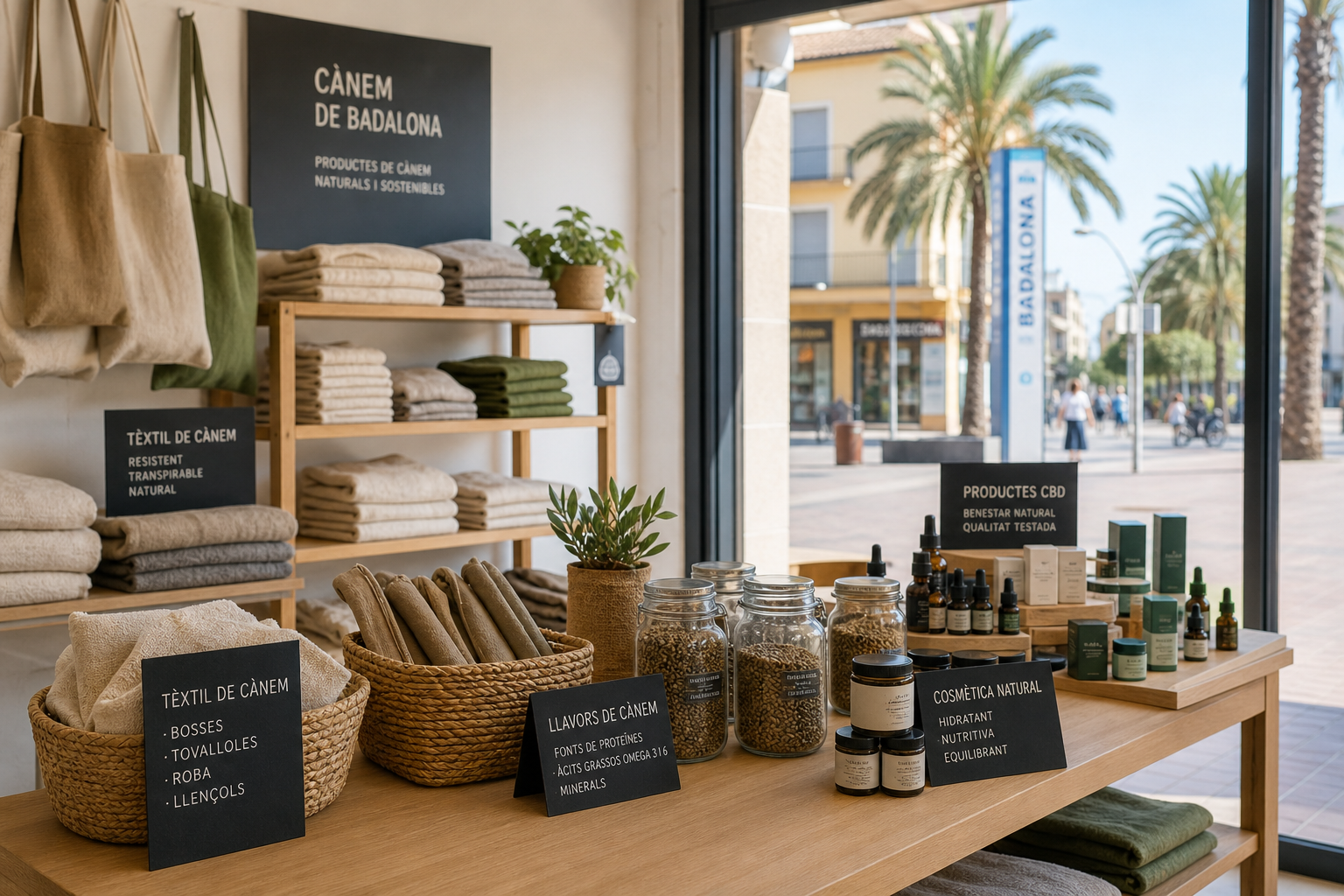
Interest in hemp products in Badalona has grown as shoppers encounter CBD oils, hemp-seed foods, cosmetics, clothing and other goods in specialist stores and online. These products are not all the same: their ingredients, intended uses, labelling requirements and legal treatment can differ significantly.
This guide explains how to approach hemp shopping in Badalona without confusing industrial hemp with intoxicating cannabis. It covers common product categories, sensible checks before buying, the Spanish regulatory context and practical questions for residents and visitors. It is general information, not medical or legal advice.
What counts as a hemp product?
Hemp is commonly used to describe varieties of the cannabis plant cultivated for industrial or commercial purposes, especially those associated with low levels of tetrahydrocannabinol, or THC. Hemp products may be made from the plant’s seeds, fibres, leaves or extracts. The word “hemp” alone does not tell you exactly what a product contains or whether it is suitable for a particular use.
For example, hemp fibre can be used in textiles, rope, paper and building materials. Hemp seeds are used in foods such as protein powders, flour and oils. Hemp seed oil is different from CBD oil: it is generally valued as a culinary ingredient and does not have the same extract profile as a cannabinoid product.
CBD, or cannabidiol, is another category that often appears in conversations about hemp. CBD is not the same as THC and is not generally marketed for intoxication. However, a CBD product can still raise regulatory, quality, labelling and safety questions. The route by which it is sold matters, as do its ingredients and claims.
Hemp products in Badalona: the main categories
CBD oils and extracts
CBD oils are usually sold in bottles with a stated concentration, serving guidance and ingredient list. In Spain, products presented for oral consumption require particular caution because the regulatory status of CBD as a food ingredient is distinct from that of a topical cosmetic or a technical product. A bottle labelled as a cosmetic should not automatically be treated as an approved food supplement.
Check whether the product clearly states its intended use. Avoid products that make dramatic promises about curing diseases, replacing prescribed treatment or producing guaranteed results. Those claims are warning signs regardless of how attractive the packaging looks.
Cosmetics and personal-care products
Hemp seed oil, hemp extracts and CBD may appear in creams, balms, soaps and other topical products. Buyers should look for a complete ingredient list, responsible-use directions, batch information and the identity of the responsible company. Topical application does not mean that every product is suitable for broken skin, sensitive skin or use near the eyes.
People with allergies, chronic skin conditions or a history of reactions should consider asking a pharmacist or healthcare professional before using a new product. A small patch test may be sensible for some cosmetics, but it cannot guarantee that a reaction will not occur.
Hemp foods and seeds
Hemp seeds and hemp seed oil are familiar food ingredients and may be found in health-food ranges. They can contribute protein, fats and flavour, but they are still foods rather than medicines. Follow the serving information and store oils as directed, particularly when refrigeration is recommended after opening.
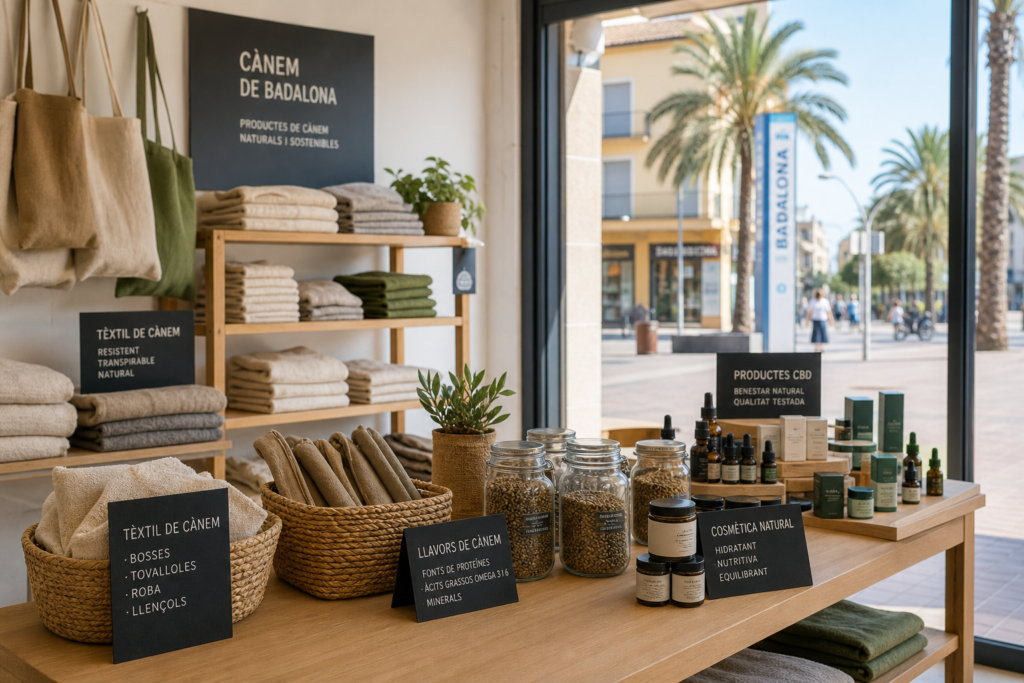
Do not assume that a food containing hemp seeds is equivalent to an extract containing CBD. These products can have different formulations and regulatory requirements. Consumers interested in hemp food products in Catalonia should read the label rather than relying on the front-of-pack use of the word “hemp.”
Textiles, fibres and household goods
Hemp fibre is one of the least complicated hemp categories from a consumer-safety perspective. Clothing, bags, paper and household goods do not normally raise the same questions as ingestible extracts. Nevertheless, check washing instructions, material composition and any chemical treatments if you have sensitive skin or specific sustainability requirements.
CBD in Badalona and the Spanish legal context
There is no single rule that applies to every product described as hemp. Spanish and European requirements can depend on the plant part, THC content, product presentation, intended use and whether the item is a food, cosmetic, industrial article or medicinal product.
Consumers should be especially careful with ingestible CBD. CBD foods and supplements have been treated as a novel-food issue in the European regulatory framework, and a product being displayed online or in a shop does not by itself prove that it has the necessary authorization for the claimed use. For general food-safety information, consult the Spanish Agency for Food Safety and Nutrition.
Medicinal claims are a separate matter. A retail oil cannot be assumed to be an authorized medicine simply because its label refers to pain, anxiety, sleep or inflammation. Medicines are subject to their own controls, and anyone seeking treatment should discuss options with a qualified healthcare professional. The Spanish Agency of Medicines and Medical Devices provides official information about medicines and health products.
Rules can also change, and local enforcement does not create a separate Badalona cannabis regime. Searches for cannabis laws in Badalona should therefore be understood within the wider Spanish and Catalan framework. A shop’s existence is not proof that every product on its shelves is authorized for every advertised purpose.
How to assess hemp shops in Badalona
When comparing hemp shops in Badalona, focus on transparency rather than on the boldest claims or highest stated concentration. A responsible retailer should be able to explain what a product is, how it is intended to be used and which information appears on the packaging.
- Read the product category: confirm whether it is a cosmetic, food, fibre item, technical product or something else.
- Check the ingredients: look for the full ingredient list, carrier oils, allergens and additives.
- Look for batch details: a batch number, expiry or best-before information and a traceable manufacturer are useful quality indicators.
- Review laboratory information carefully: where testing is offered, it should identify the product or batch and report cannabinoid content in a clear, understandable way.
- Question extreme claims: promises of guaranteed medical outcomes, instant effects or universal benefits are not reliable buying guidance.
- Ask about intended use: a product labelled for external use should not be swallowed, even if a salesperson suggests otherwise.
- Keep the receipt: retain proof of purchase and packaging in case you need to ask about a reaction, return or product complaint.
Online purchasing requires the same checks. A polished website, customer reviews or a large social-media following does not replace clear labelling and a traceable seller. Be cautious when a seller does not provide a company name, contact information, ingredient list or understandable instructions.
Hemp, cannabis and “weed in Badalona”: important distinctions
Some people search for weed in Badalona or cannabis in Badalona when they actually want non-intoxicating hemp or CBD. These terms should not be treated as interchangeable. “Weed” commonly refers to cannabis containing THC and intended for intoxicating use, while hemp products may be made from seeds or fibre and may contain no meaningful amount of THC.
CBD products are also not a legal shortcut for buying or using recreational cannabis. Possession, consumption, public use, cultivation, supply and transport can involve different rules and risks. Product labels that mention hemp or CBD do not authorize public consumption, driving after use or the purchase of controlled cannabis.
For broader background on the distinction between private use, clubs and public conduct, readers may find this guide to marijuana laws in Barcelona useful. Barcelona and Badalona are separate municipalities, but the comparison can help explain why local location does not remove the need to follow national and regional rules.
Buying and using hemp products more safely
Before purchase
Decide what you actually need. Someone looking for a durable fabric or a cooking ingredient does not need an extract marketed with wellness language. If you are considering a cannabinoid product, identify whether it is intended for external use and ask a pharmacist or clinician about potential interactions, particularly if you take regular medicines or have a medical condition.
After purchase
Follow the label, do not exceed the recommended use and keep products away from children and pets. Store oils and cosmetics according to the manufacturer’s instructions. Do not drive or operate machinery if a product makes you feel drowsy, impaired or otherwise unwell.
Stop using a product and seek appropriate advice if you experience a concerning reaction. Urgent symptoms such as breathing difficulty, facial swelling, severe dizziness or confusion require prompt medical attention. Do not assume that a “natural” label guarantees safety.
For visitors to Badalona
Visitors should avoid carrying unlabelled oils, flowers or extracts across borders. Travel rules can differ from local retail rules, and a product purchased legally in one jurisdiction may create problems when transported elsewhere. Keep products in their original packaging and check the rules that apply to your destination before travelling.
Where hemp fits into Badalona’s wider retail landscape
Badalona’s proximity to Barcelona means shoppers may encounter a broad mix of specialist retailers, health stores, pharmacies, markets and online sellers. Availability can change, so a local search is best used to identify options rather than as proof of quality or legality.
There is also a useful difference between a shop selling industrial hemp goods and a business presenting itself as a cannabis club or dispensary. The products, membership arrangements and legal questions may be completely different. Consumers should ask for precise information instead of relying on familiar cannabis terminology.
For a comparison with another Spanish city where hemp, CBD and industrial uses are discussed together, see this practical overview of hemp in Zaragoza. The principles of checking labels, intended use and official guidance remain useful, even though local businesses and enforcement conditions may differ.
Questions to ask before choosing a product
- What exactly is the product intended to be used for?
- Is it a food, cosmetic, industrial article or medicinal product?
- Does the label identify the ingredients and the responsible company?
- Is there a batch number and an expiry or best-before date?
- Does the seller make medical claims that seem too broad or certain?
- Could the product interact with medication or be unsuitable for my circumstances?
- What rules apply if I take it outside the home, drive or travel?
A retailer that cannot answer basic questions clearly may not be the right place to buy. Choosing a simpler, well-labelled product is usually more sensible than selecting the strongest-sounding or most heavily promoted option.
Conclusion
Hemp products in Badalona cover a wide range of goods, from fibre and textiles to seeds, cosmetics and CBD-related products. The safest way to shop is to identify the product category, read the label, avoid unsupported health claims and distinguish hemp from THC-rich cannabis. Official Spanish guidance is more reliable than social-media recommendations, while professional advice is important when health conditions or medicines are involved.
Whether you are a resident comparing local retailers or a visitor curious about CBD in Badalona, responsible buying starts with realistic expectations. Hemp is a versatile material and ingredient, but the word itself is not a guarantee of legality, quality, effectiveness or safety.