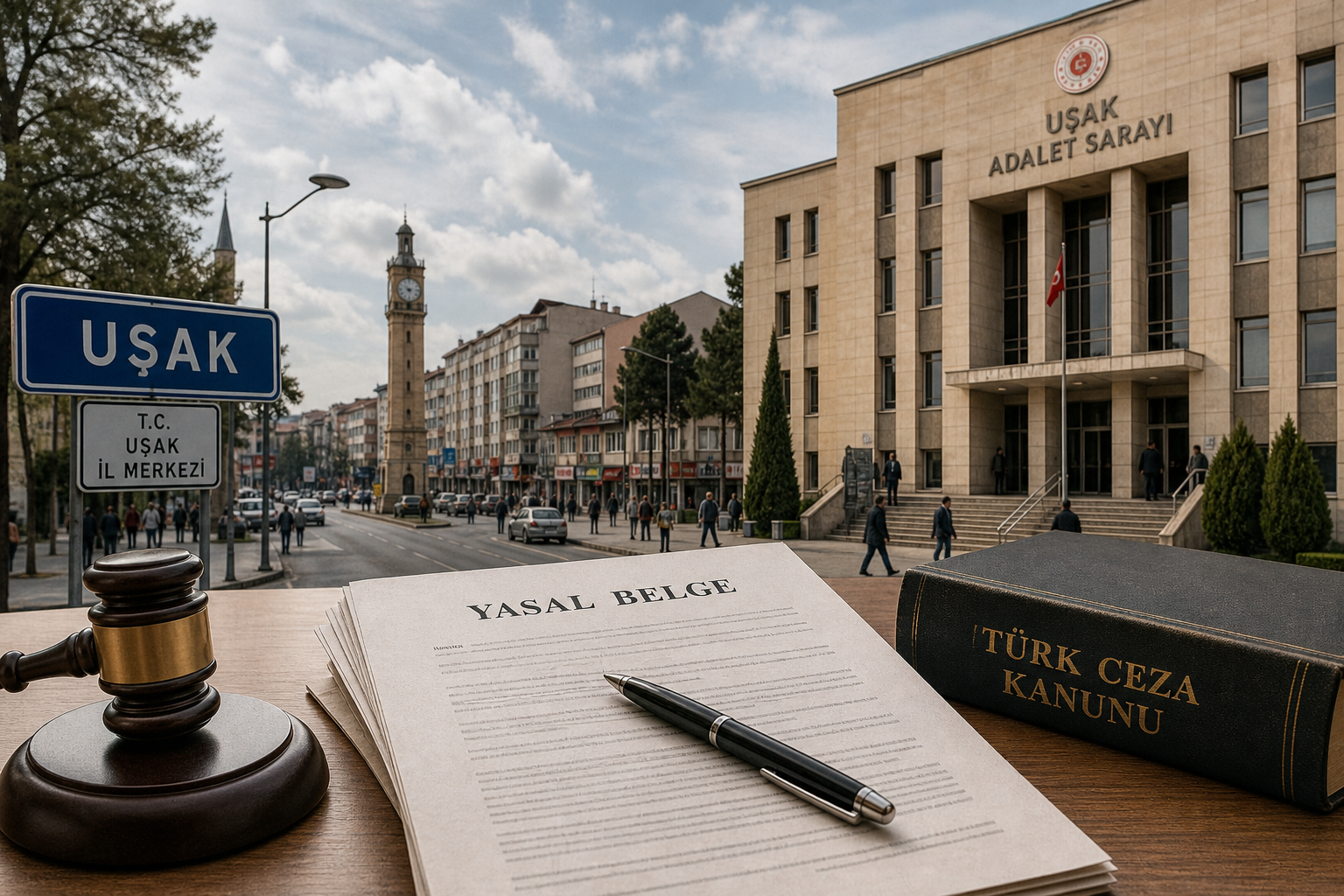
Understanding Cannabis penalties in Uşak, Turkey requires looking at Turkey’s national criminal law rather than a separate municipal rulebook. Uşak, like other Turkish cities, applies the same national provisions to possession, personal use, cultivation, sale, transport and importation. The legal outcome can depend on the substance, quantity, purpose, evidence, prior history and conduct during the investigation.
This guide explains the main legal categories in plain language. It is general information, not legal advice and not a substitute for speaking with a Turkish criminal defence lawyer. Anyone questioned, searched or arrested should request legal assistance and an interpreter where needed.
Do cannabis penalties in Uşak differ from the rest of Turkey?
Generally, no. Turkish criminal law is national, so the basic rules applying to cannabis in Uşak are the same rules used in İzmir, Ankara, İstanbul and other provinces. Local police, prosecutors and courts may handle a case in different ways depending on its facts, but Uşak does not have a separate legal cannabis market or a city-level possession limit.
The most important distinction is whether authorities view the conduct as use or possession for personal use, or as a drug-trafficking offence. A small amount does not automatically guarantee a particular result, and a larger amount does not alone establish intent to sell. Investigators and courts may examine packaging, communications, money, weighing equipment, admissions and other evidence.
For the underlying statutory text, readers can consult the official Turkish Penal Code text. Because legislation and court practice can change, the current text and professional advice should be checked before relying on any general summary.
How Turkish law treats cannabis in Uşak
Personal use and possession
Article 191 of the Turkish Penal Code addresses purchasing, receiving or possessing narcotic or stimulant substances for personal use, as well as using them. The provision carries a stated imprisonment range of two to five years. In practice, the law also provides a framework involving postponement of filing a public case, supervision and possible treatment for qualifying first-time or lower-level personal-use cases.
This framework should not be mistaken for legalization or a guaranteed dismissal. A person may face testing, reporting requirements, treatment assessments or other obligations. Breaching supervision conditions, repeating the conduct during the relevant period or failing to comply with an order can lead to prosecution. The exact process depends on the prosecutor’s decision, the evidence and the person’s procedural history.
Accordingly, marijuana possession in Uşak remains legally risky even when the person claims the cannabis was only for personal consumption. A statement that the substance belonged to someone else, or that it was intended for a group, can also create complicated factual questions rather than removing risk.
Sale, supply and trafficking
Conduct treated as supplying or trafficking cannabis is substantially more serious than personal use. Article 188 covers activities such as selling, offering, giving, transporting, storing or purchasing narcotics for sale. The statute provides severe prison penalties and judicial fines, with higher consequences for importation, exportation or manufacture.
Authorities may treat sharing cannabis with another person as legally significant even when no money changes hands. Claims that an exchange was a gift, repayment or social arrangement do not automatically prevent a supply allegation. Where a case involves schools, dormitories, places of worship or similar protected locations, the law can provide additional aggravation.
Foreign nationals should also consider possible immigration consequences, including detention during proceedings, removal decisions or entry restrictions. These outcomes are fact-specific and should be assessed by both a criminal lawyer and, when necessary, an immigration lawyer.
Cultivation, production and importation
Growing cannabis at home is not a general legal exception in Uşak. Cultivation, processing or production may be investigated under serious narcotics provisions, particularly when authorities believe the activity was intended to supply others. Importing cannabis, including bringing it across a border or ordering it from abroad, can create particularly severe exposure.
The fact that a plant is small, immature or grown for personal use does not make the activity automatically lawful. Questions may include the number of plants, equipment, location, communications and alleged purpose. Cannabis seeds, extracts, oils and products can also raise different legal and regulatory issues depending on their composition and intended use.
What can happen after a cannabis-related stop in Uşak?
A typical case may begin with a search, seizure, roadside stop, report from another person or investigation into a suspected supply network. Police may secure the suspected substance and send it for forensic analysis. The laboratory result, rather than appearance alone, can be important in determining what substance is involved.
A person may be taken to a police station for questioning and later referred to the prosecutor or a judge. Procedural safeguards matter at this stage. A suspect has the right to a lawyer, the right to avoid self-incrimination and the right to an interpreter when they do not understand the language adequately. People should not sign a statement they cannot read or understand.
- Ask whether you are being treated as a witness, suspect or arrested person.
- Request a lawyer before making detailed statements.
- Ask for an interpreter if Turkish is not sufficiently understood.
- Do not destroy messages, hide evidence or contact potential witnesses to coordinate stories.
- Keep copies of official documents and note deadlines for court or supervision appointments.
These steps do not guarantee a particular legal result. They help protect basic procedural rights and reduce the risk of avoidable misunderstandings.
Health, driving and public-order risks
Legal exposure is only one concern. Cannabis can affect attention, reaction time, memory and judgment. Driving after using it can endanger the driver and others and may trigger separate traffic or criminal consequences. A person should not drive, ride a motorcycle or operate machinery when impaired.
Public consumption can lead to police intervention and may create additional public-order concerns even apart from the narcotics investigation. Smoking near children, schools or crowded public areas also increases the practical likelihood of complaints and enforcement attention.
Health questions should be handled through licensed healthcare professionals. The Turkish Medicines and Medical Devices Agency is the relevant national regulator for medicines and medical products. A product described online as medical cannabis, CBD or hemp is not automatically approved for possession, sale or use in Turkey.
Medical cannabis and CBD: what visitors and residents should know
Medical need does not create a broad personal-use exemption. Prescription medicines and regulated products are subject to their own rules, documentation requirements and active ingredients. Travellers should not assume that a cannabis medicine legally obtained abroad can be brought into Turkey without prior confirmation.
Before travelling with any medicine, check current Turkish import and customs requirements with the relevant official authority and carry original packaging and valid medical documentation. Do not rely solely on a seller’s statement that a product is legal. Oils, edibles, flowers and vape products can contain controlled cannabinoids or may be mislabelled.
People looking for medical cannabis in Uşak should discuss lawful treatment options with a licensed doctor and pharmacist. Online advertisements, informal sellers and social-media recommendations are not reliable evidence of legal status or product safety.
How location and local context can affect a case
Although the law is national, practical circumstances in Uşak can shape how a case develops. A suspected offence near a transport route, accommodation, school or entertainment venue may attract a different investigative focus than a private-use allegation. The location itself does not prove intent, but it can become part of the evidence considered by authorities.
For broader regional context, our guide to cannabis policy in nearby Denizli explains why local geography does not replace Turkey’s national framework. Readers can also compare the practical discussion in our article on cannabis law and public health in Kütahya.
Searches for weed in Uşak or cannabis in Uşak may produce informal sources that confuse hemp, CBD and high-THC cannabis. Those categories should not be treated as interchangeable. Product labels, laboratory findings and applicable regulations matter more than marketing language.
Common mistakes to avoid
- Assuming a small quantity is automatically legal: Turkish law does not create a simple public possession allowance.
- Using foreign legal advice: Rules from Canada, parts of the United States or European countries may not apply in Turkey.
- Bringing products across the border: Importation can carry much more serious consequences than domestic personal-use allegations.
- Ignoring a summons or supervision condition: Missing appointments can worsen the procedural position.
- Posting about the incident: Public comments, messages and photographs may become relevant evidence.
- Paying an informal intermediary: Only qualified legal representatives should provide legal assistance or communicate officially on a person’s behalf.
What to do if you are investigated
If police contact you about cannabis, remain calm and avoid obstructing officers. Ask for the reason for the procedure, request a lawyer and use an interpreter if necessary. Do not guess, speculate or provide a detailed narrative before receiving advice. A lawyer can review the seizure record, laboratory report, search procedure and classification of the alleged conduct.
Residents should use a lawyer licensed to practise in Turkey. Visitors should contact their embassy or consulate for information about local legal-service lists, while understanding that consular staff cannot cancel Turkish proceedings or provide a defence.
The most useful documents may include the search and seizure record, custody paperwork, laboratory analysis, summons, supervision order and any court decision. Keep them secure and give complete information to counsel, including prior incidents and prescribed medicines.
Key takeaways on cannabis laws in Uşak
Cannabis laws in Uşak are governed primarily by Turkish national law. Personal use and possession can lead to criminal proceedings and supervision or treatment measures, while supply, cultivation for distribution, production and importation can result in far more severe penalties. Sharing cannabis may still create supply-related risk, and medical or foreign legality does not automatically provide a defence.
Anyone facing a real investigation should obtain prompt, confidential advice from a Turkish criminal lawyer. For everyone else, the safest approach is to avoid possession, use, transport and cross-border movement of cannabis or unverified cannabinoid products in Turkey.
Conclusion
Uşak does not operate under a separate cannabis regime: the same Turkish criminal provisions apply as elsewhere in the country. The difference between personal use and supply is crucial, but the classification depends on evidence and the circumstances of the case. Understanding the law, protecting procedural rights and seeking qualified advice early are more reliable than relying on rumours about local tolerance or online product claims.