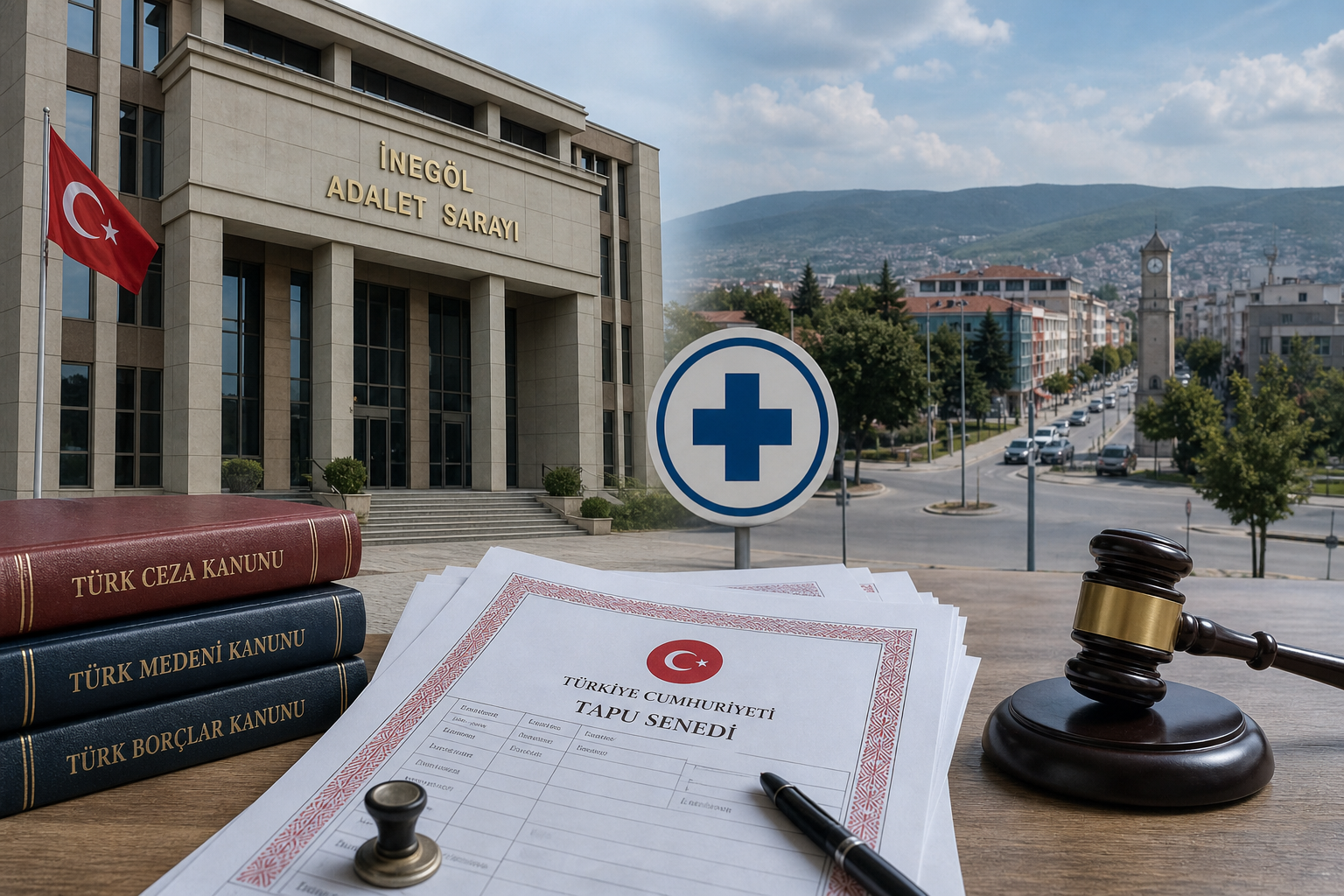
Understanding Marijuana restrictions in İnegöl, Turkey requires looking beyond local custom or informal advice. İnegöl is a district of Bursa Province, but the main rules governing marijuana, cannabis resin, cannabis plants and related preparations come from Turkish national law. Police, prosecutors and courts apply those rules locally, and the consequences can be serious even where a person believes the amount is small or intended only for personal use.
This guide explains the legal framework in plain language, including possession, consumption, cultivation, supply, medical use, driving and travel. It is general information rather than legal advice. A person questioned, detained or charged in İnegöl should speak with a qualified lawyer in Turkey as soon as possible.
How cannabis laws in İnegöl are determined
There is no separate İnegöl cannabis regime that makes recreational marijuana lawful. The relevant framework is primarily national legislation, including the Turkish Penal Code, Law No. 5237, and the rules governing controlled substances under Law No. 2313 on the Control of Narcotic Drugs. Local enforcement may involve the police, gendarmerie, prosecutors and courts, depending on the location and circumstances.
The Turkish Penal Code treats personal use and more serious drug offences differently, but that distinction does not mean personal possession is permitted. Classification can depend on the evidence, the quantity, packaging, communications, money transfers, statements and other facts. The difference between alleged personal use and supply is therefore a legal assessment, not a safe quantity that everyone can rely on.
For a broader comparison of how similar issues are discussed elsewhere in Turkey, see this overview of cannabis restrictions in Karaköprü. The local setting differs, but the national legal framework remains the essential reference point.
What marijuana restrictions in İnegöl, Turkey mean in practice
Possession and personal use
Possessing marijuana for personal use can expose a person to criminal investigation and prosecution. Consuming it can also create legal risk, including when consumption takes place in a private residence. A private setting does not automatically make possession or use legal, and carrying cannabis in a vehicle, bag or accommodation can create additional evidence during a search.
In cases treated as use-related under Turkish law, authorities may consider measures connected with treatment, supervision or rehabilitation. The exact outcome depends on the legal classification and the decisions of the prosecutor and court. These possibilities should not be understood as an automatic dismissal or as permission to continue using cannabis.
Sale, supply and sharing
Supplying marijuana is substantially more serious than possessing it for personal use. Sale is not required for authorities to investigate a supply allegation. Sharing cannabis with another person, arranging delivery, storing it for someone else or receiving payment may all be examined as evidence of distribution.
Large quantities, multiple packages, scales, customer messages, unexplained cash or coordinated transport can increase suspicion of a supply-related offence. Turkish narcotics offences can carry severe penalties, so anyone accused of selling, transporting or organizing cannabis should obtain urgent legal representation and should not assume that an informal explanation will resolve the matter.
Cultivation and cannabis plants
Growing cannabis plants at home, on agricultural land or in another location can create criminal exposure. The legal position is not changed simply because the plants are immature, the crop is small or the grower claims personal use. Cultivation can also involve separate questions about seeds, equipment, electricity use and alleged intent.
Industrial hemp is a different subject from illicit marijuana cultivation. Agricultural production may be permitted only under applicable authorization and conditions. A person should not treat a hemp-related license, seed purchase or agricultural activity as permission to grow drug-producing cannabis. The plant variety, purpose, documentation and regulatory requirements matter.
Is weed in İnegöl available legally?
People searching for weed in İnegöl should be cautious about websites, social-media accounts and informal sellers claiming that cannabis is legal or discreetly available. An online offer does not prove that a product is lawful, and contacting a seller may create records that later become relevant to an investigation. Purchasing, importing, storing or distributing marijuana remains legally risky.
There is also no general recreational cannabis retail system comparable to regulated dispensary markets in some other countries. A shop selling a product as herbal, natural or CBD-based is not automatically authorized to sell intoxicating cannabis. Product labels can be inaccurate, and a parcel or item described as a supplement may still raise customs, narcotics or consumer-safety concerns.
Medical cannabis in İnegöl: what patients should know
Questions about medical cannabis in İnegöl should be directed to a licensed Turkish physician and the relevant health authorities, not to an unlicensed seller. Medical treatment involving cannabis-derived substances depends on the specific product, its active ingredients, its authorization status and the prescription or approval process that applies to it.
A foreign prescription does not automatically authorize a traveler to bring cannabis into Turkey. Patients should verify import and customs requirements before travel and carry only medicines that are lawfully prescribed, appropriately packaged and supported by official documentation. Even then, advance confirmation from the competent Turkish authorities may be necessary.
The official Turkish Ministry of Health website is a more reliable starting point for health-system information than commercial cannabis websites. A doctor or pharmacist can help distinguish an approved medicine from an unregulated oil, edible, flower or vape product.
Travel, possession and customs risks
Transporting cannabis into İnegöl from another Turkish city can create a separate risk from possessing it at home. Moving it across provincial boundaries, carrying it on public transport or storing it in a vehicle may attract attention during a traffic stop or search. Bringing cannabis into Turkey from abroad is especially serious because border and customs controls can lead to a criminal investigation.
- Do not bring marijuana, cannabis resin, cannabis flowers or cannabis-infused products across the Turkish border.
- Do not assume that a foreign medical card, prescription or purchase receipt is sufficient.
- Check any medicine or supplement with official Turkish authorities before travel.
- Do not carry another person’s package, luggage or medicine without understanding its contents and legal status.
- If detained or questioned, request a lawyer and an interpreter where needed.
Travelers should also remember that airports, bus terminals, hotels and rented vehicles do not create a legal exception. Statements made during an initial search can become important later, so a person should avoid guessing about a product’s contents or signing documents that they do not understand.
Driving and public safety
Using cannabis before driving can create both criminal and road-safety consequences. Intoxication may impair reaction time, judgment and coordination, and police action may follow a collision, dangerous driving allegation or roadside suspicion. A driver should never operate a car, motorcycle or commercial vehicle after using marijuana or any medicine that may impair alertness.
Passengers and vehicle owners can also face practical complications if cannabis is found in a car. Ownership, knowledge and control are fact-sensitive issues, but allowing an unlawful substance to remain in a vehicle can lead to questioning and possible seizure while the circumstances are investigated.
What to do if authorities become involved
Anyone stopped, searched or summoned in relation to cannabis in İnegöl should take the situation seriously. The safest practical steps are focused on lawful process rather than trying to destroy evidence, hide a substance or coordinate stories with other people.
- Remain calm and avoid obstructing police, gendarmerie or customs officials.
- Ask why you are being questioned and request a lawyer promptly.
- Use a qualified interpreter if you do not understand Turkish legal documents or questions.
- Do not sign a statement that you cannot read or understand.
- Tell your lawyer about the substance, its source, travel history and any prescription or medical documentation.
- Keep copies of seizure records, summonses and court documents, and follow official deadlines.
The official Turkish National Police website can help readers identify the competent law-enforcement institution, but it is not a substitute for individualized legal advice. A lawyer can explain procedural rights, the allegations, potential measures and the importance of the evidence in the particular file.
Health and harm-reduction considerations
Legal risk is only one reason to avoid unregulated marijuana. Products obtained through informal channels may have unknown strength, contaminants or misleading labels. Edibles can take longer to produce effects, increasing the risk of accidental overconsumption. Combining cannabis with alcohol, sedatives or other drugs can increase impairment and medical danger.
Anyone experiencing severe anxiety, confusion, chest pain, breathing problems, loss of consciousness or an unsafe reaction should seek emergency medical help. Do not drive the affected person. A healthcare professional should be told honestly what was taken, when it was taken and whether other substances were involved.
People who use cannabis regularly and want to stop can seek confidential advice from a doctor or addiction-treatment service. Asking for healthcare support is different from assuming that a product is legally approved; both health needs and legal requirements should be considered separately.
Common misunderstandings about cannabis in İnegöl
- “A small amount is always legal.” There is no general recreational possession permission based solely on a person’s estimate of quantity.
- “Private use cannot be investigated.” A home or hotel room does not automatically remove criminal risk.
- “CBD means every cannabis product is lawful.” Legality depends on the product, ingredients, authorization and applicable rules.
- “A foreign prescription solves the problem.” Imported medicines may require advance approval and supporting documentation.
- “Hemp and marijuana are identical under every rule.” Industrial hemp and drug-producing cannabis can be treated differently, but cultivation still requires compliance with applicable authorization.
For additional context on possession and consumption issues in another Turkish locality, readers can review this practical guide to cannabis consumption in Malatya. It should be read as general information rather than a substitute for current advice in İnegöl.
Conclusion
Marijuana remains legally restricted in İnegöl under Turkey’s national drug-control framework. Possession and use can trigger investigation, while cultivation, supply, transport and importation may lead to much more serious allegations. Medical claims, CBD labeling, private consumption and small quantities do not automatically create an exemption.
The most responsible approach is to avoid unlicensed cannabis, verify medicines through official Turkish health channels before travel, never drive after using an impairing substance and seek a qualified lawyer if authorities become involved. Rules and enforcement can change, so current professional advice is essential for any individual case.