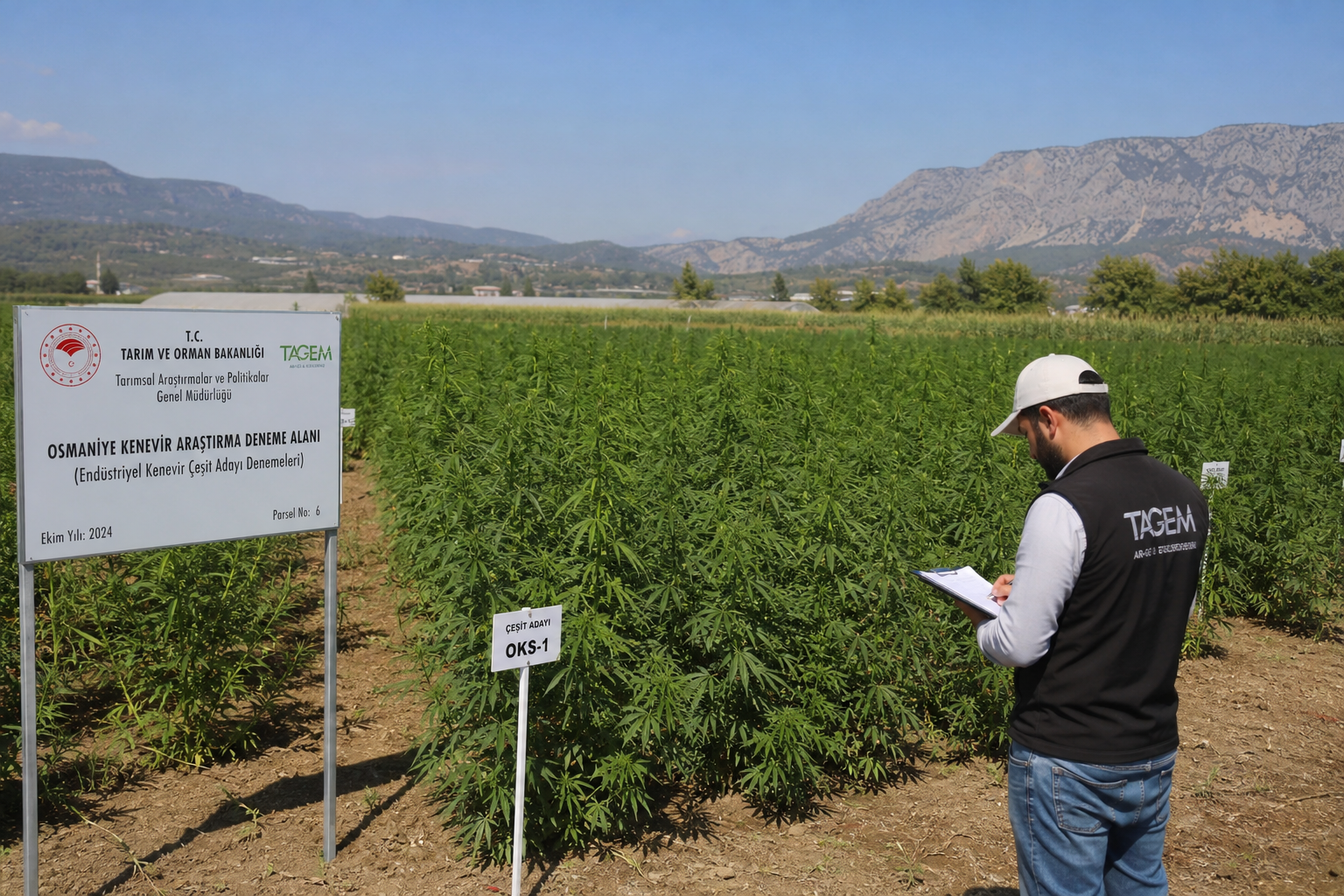
Cannabis research in Osmaniye is best understood through Turkey’s national legal framework, agricultural conditions and public-health priorities rather than through claims of a large, independent local cannabis industry. Osmaniye is a predominantly agricultural province in southern Turkey, so questions about hemp cultivation, plant science and rural development can be relevant. However, scientific research is not the same as recreational availability, and local interest does not change national rules.
This guide explains what can reasonably be investigated in Osmaniye, how to distinguish hemp research from drug-related research, and where readers can find reliable information. It also addresses common online searches such as weed in Osmaniye and cannabis in Osmaniye without treating search language as evidence of legal supply or local acceptance.
What cannabis research in Osmaniye can mean
The phrase “cannabis research” covers several different fields. A study may examine plant genetics, fiber production, agricultural yields, pharmacology, clinical medicine, drug policy, environmental effects or patterns of use. These areas require different methods, permissions and sources of evidence.
For Osmaniye, a responsible research agenda could include agricultural trials involving approved hemp varieties, analysis of soil and climate suitability, studies of fiber-processing opportunities, or public-health research on awareness and substance-related harms. None of these topics should be presented as proof that marijuana cultivation or recreational sales are permitted.
Hemp and drug cannabis are not interchangeable
Hemp is generally discussed as an industrial crop with low levels of intoxicating cannabinoids, while drug cannabis refers to plants or products associated with psychoactive use. The legal treatment of each can differ, and legal definitions may depend on cultivation purpose, plant variety, cannabinoid content, licensing and government oversight.
That distinction matters in Osmaniye because an article about agricultural hemp can easily be misunderstood as an article about legal marijuana. Researchers should identify the plant material, intended use and authorization process precisely. Product labels, social-media posts and informal sellers are not substitutes for laboratory testing or official permission.
Turkey’s legal context and cannabis laws in Osmaniye
There is no separate municipal cannabis regime for Osmaniye that overrides Turkey’s national legislation. The relevant rules concern controlled substances, cultivation, medicines, agricultural production, research approvals and public health. The practical meaning of cannabis laws in Osmaniye is therefore the application of national law within the province.
Readers should check current requirements with the competent Turkish authorities before considering cultivation, possession, import, export, processing or research. Rules can change, and a permitted scientific or industrial activity may require a specific license, approved facility, documented supply chain and inspection. The official Turkish Ministry of Agriculture and Forestry is a suitable starting point for agricultural regulations and institutional information.
Criminal, pharmaceutical and public-health questions may involve other Turkish authorities. A general web article cannot determine whether a particular seed, extract, medicine or cultivation plan is lawful. Anyone planning a legitimate study should obtain written advice from the relevant institution and qualified legal and scientific professionals.
Osmaniye’s agricultural setting and research questions
Osmaniye’s agricultural economy makes crop science a more credible starting point than speculation about a recreational market. Research could examine whether approved industrial hemp varieties are appropriate for local conditions, how irrigation affects fiber quality, or whether processing and transport infrastructure can support a compliant value chain.
These questions must be answered through properly designed trials rather than assumptions based on the province’s climate. A credible agricultural project would document the variety, seed source, field location, planting conditions, crop management, sampling method and laboratory results. It would also address cross-pollination, traceability and the disposal of plant material.
Potential topics for a compliant study
- Comparing fiber, seed and biomass characteristics of authorized industrial varieties.
- Measuring water use, disease pressure and soil requirements under controlled conditions.
- Assessing the feasibility of local processing, storage and transport.
- Studying farmer awareness of licensing, recordkeeping and crop destruction requirements.
- Evaluating environmental risks, including accidental spread and effects on surrounding crops.
A university or agricultural research body would need to establish the legal basis for each project before fieldwork begins. Research involving human participants, controlled substances or medical claims may require additional ethics review and specialist authorization.
Medical cannabis research in Osmaniye
Searches for medical cannabis research in Osmaniye should be approached carefully. A medical study is not evidence that cannabis is a generally available treatment, and a laboratory finding is not a clinical recommendation. Research must distinguish between whole-plant cannabis, isolated cannabinoids, prescription medicines and unregulated products sold as supplements.
Potential medical research in or involving Osmaniye could focus on patient knowledge, clinician education, treatment outcomes or the safety of approved medicines. Such work would need an appropriate protocol, ethics approval, informed consent where applicable, qualified investigators and reliable product information. It should also define the condition being studied and the outcomes being measured.
Patients should not replace prescribed treatment with cannabis products based on online claims. Cannabis and cannabinoid medicines can have adverse effects, interact with other medicines and affect driving, attention or mental health. The World Health Organization’s cannabis fact sheet provides a useful public-health overview, but it is not a substitute for personal medical advice.
Public-health research and community evidence
Local public-health research can be valuable even when there is little published evidence specific to Osmaniye. Researchers might examine awareness of legal risks, perceptions of cannabis, reasons people seek unregulated products, or barriers to confidential support. Surveys should protect privacy and avoid collecting unnecessary identifying information.
Good research does not assume that every reported experience is accurate or representative. A small convenience survey, an online discussion or a series of media reports may help generate questions, but it cannot establish prevalence across the province. Stronger studies explain their sample, recruitment method, limitations and ethical safeguards.
Health professionals and educators can focus on practical risk reduction without normalizing illegal supply. Useful messages include avoiding driving after using intoxicating substances, not mixing cannabis with alcohol or sedatives, keeping products away from children, and seeking urgent medical help for severe confusion, chest symptoms, loss of consciousness or other serious reactions.
How to evaluate claims about cannabis in Osmaniye
Online searches for cannabis in Osmaniye may return news reports, agricultural discussions, social posts and commercial claims together. These sources do not have equal value. A careful reader should ask who produced the information, what evidence is provided, when it was published and whether the claim concerns hemp, medicine, research or illicit activity.
A practical source-checking method
- Define the subject. Identify whether the claim concerns industrial hemp, a controlled drug, a medicine, a laboratory sample or a consumer product.
- Check the authority. Prefer government agencies, universities, peer-reviewed studies and established public-health institutions over anonymous accounts.
- Check the date. Regulations, product approvals and research findings can change.
- Look for methods. A serious study describes its participants, measurements, laboratory procedures or legal basis.
- Separate evidence from promotion. Claims about guaranteed health benefits, hidden local dispensaries or effortless cultivation deserve particular skepticism.
Readers comparing provinces may also find useful context in related discussions of cannabis trends in Afyonkarahisar and cannabis policy in Denizli. These comparisons should be used for regional context, not as proof that rules or research conditions are identical in Osmaniye.
What a responsible Osmaniye research project should include
A credible proposal should begin with a specific research question and a clear explanation of public or scientific value. It should identify the institution responsible, the legal permissions required and the people accountable for plant material, samples and data. Vague references to “cannabis opportunities” are not enough.
The methods should be proportionate to the question. An agricultural study needs valid field design and laboratory testing. A health survey needs a defensible sample and privacy protections. A policy analysis needs current legal documents and careful interpretation. A medical study needs clinical expertise, ethics oversight and appropriate safety monitoring.
Researchers should also publish limitations. If no Osmaniye-specific dataset exists, that absence should be stated plainly. National or international findings may help frame a question, but they should not be presented as direct evidence about local residents, farms or health outcomes.
Common misconceptions to avoid
- “Research means legalization.” Scientific investigation can occur under strict controls and does not create a right to possess or sell cannabis.
- “Hemp and marijuana are legally identical.” They may involve different rules, but both still require attention to current Turkish law and authorization.
- “A local online listing proves a dispensary is legal.” A listing, delivery offer or product label does not establish licensing or product safety.
- “A study proves a treatment works for everyone.” Evidence depends on the study design, population, dose, product and outcome.
- “No published study means no risk.” Lack of local evidence is uncertainty, not evidence of safety.
Conclusion
Cannabis research in Osmaniye should be approached as a question of evidence, regulation and public health—not as a guide to obtaining or using illegal products. The most constructive opportunities may involve authorized hemp agriculture, supply-chain research, scientific education and carefully designed health studies. Each project must distinguish industrial hemp from intoxicating cannabis, verify the current Turkish legal framework and use appropriate scientific and ethical controls.
For readers, the safest approach is to rely on official institutions, recognized health organizations and transparent research methods. Claims about weed in Osmaniye, local availability or medical benefits should be checked rather than repeated. When information is uncertain, consulting a qualified lawyer, researcher or healthcare professional is more reliable than relying on informal sellers or social-media commentary.