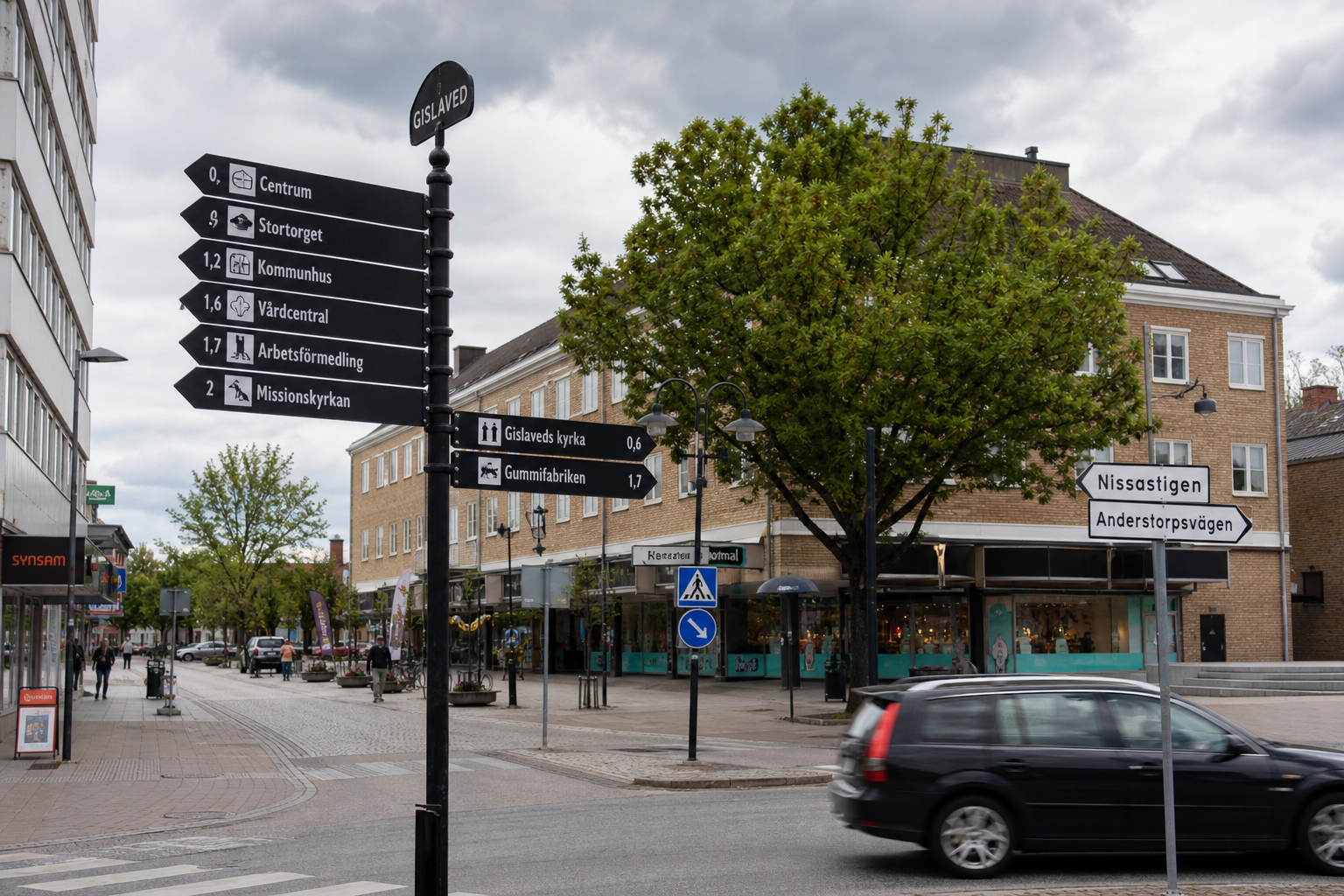
Questions about Cannabis legalization in Gislaved are really questions about Swedish national law. Gislaved Municipality does not have its own cannabis market or separate rules that permit recreational use. In Sweden, cannabis remains a controlled substance, and possession, use, production, sale and transfer can lead to criminal consequences.
This guide explains what residents and visitors should know about cannabis in Gislaved, including personal possession, driving, medical treatment, CBD products, travel and harm reduction. It is general information rather than legal advice. The details of a case can depend on the substance, quantity, evidence, intent and a person’s previous record.
Is cannabis legal in Gislaved?
No. Recreational cannabis is not legal in Gislaved or elsewhere in Sweden. The same national rules apply in towns across Jönköping County, including Gislaved, Anderstorp, Smålandsstenar and nearby communities. There is no licensed recreational dispensary system comparable to those found in some other countries.
Swedish drug legislation generally prohibits unlawful handling of narcotic substances. Depending on the circumstances, “handling” may include possessing, using, acquiring, selling, importing, exporting, manufacturing or otherwise dealing with cannabis. A person does not need to be operating a commercial business for an offence to be considered serious.
That means a search for weed in Gislaved should not be treated as a search for a lawful retail product. Buying from an informal seller creates both legal and health risks, including uncertain potency, contamination and exposure to additional criminal activity.
Cannabis laws in Gislaved: what conduct can create liability?
Possession and personal use
Possessing cannabis for personal use is unlawful. Swedish enforcement can also address use itself, and a positive test may become relevant in an investigation. The fact that cannabis is intended only for personal consumption does not make it legal.
Small quantities may be treated differently from larger quantities when authorities and courts assess the seriousness of an offence. However, “small amount” is not a safe legal threshold or a permission to possess cannabis. The outcome may also be affected by the form of the substance, the person’s conduct, previous offences and whether there is evidence of supply.
For a broader comparison of how Swedish rules are discussed in another municipality, see this guide to cannabis laws and penalties in Mora. The underlying national framework, rather than the municipality, is what matters in Gislaved.
Sharing, selling and supplying
Giving cannabis to another person can create legal problems even when no money changes hands. Selling, arranging a purchase, storing drugs for someone else or helping distribute them can be treated more seriously than simple personal possession. The legal consequences can increase when the conduct involves larger quantities, repeated activity, young people or an organized arrangement.
Informal social sharing is therefore not a legal workaround. A person who passes cannabis to a friend may still expose themselves to investigation for unlawful transfer or another drug offence.
Cultivation and home production
Growing cannabis plants is not permitted for recreational purposes. Cultivation can be investigated as production of a controlled substance, even if the plants are intended for the grower’s own use. Seeds, equipment, electricity use and communications may also become relevant evidence, although the legal assessment depends on the facts.
Potential penalties and how cases are assessed
Swedish drug offences can range from less serious cases to serious or aggravated offences. The penalty is not determined solely by the town where an incident occurs. Courts may consider the type and quantity of the substance, the purpose of the conduct, a person’s role, evidence of distribution and any aggravating circumstances.
Less serious cases may result in fines or other legal consequences, while more serious conduct can result in imprisonment. A criminal conviction may also affect employment screening, immigration matters, professional licences and travel. Foreign visitors should not assume that a minor cannabis matter will be ignored or handled only as a warning.
Police may investigate suspected drug offences using observations, searches, statements and testing where legally permitted. Anyone questioned in a criminal investigation should consider obtaining advice from a qualified Swedish lawyer or public defence counsel rather than relying on internet summaries.
Medical cannabis in Gislaved
Medical cannabis in Gislaved is possible only within Sweden’s regulated healthcare and medicines system. It is not a general right to use cannabis for pain, anxiety, sleep problems or another condition. A patient must discuss treatment with a licensed healthcare professional, and any prescription or product must comply with Swedish medicines rules.
Some cannabis-based medicines may be prescribed in particular clinical circumstances, but access is controlled and depends on medical assessment. Doctors consider the diagnosis, available treatments, expected benefits, risks and the patient’s circumstances. A private decision to use recreational cannabis is not converted into medical use simply because the person reports a health benefit.
Patients should use the official information provided by the Swedish Medical Products Agency and speak with their prescriber or pharmacy about authorisation, dosage, side effects and follow-up. Products bought through unregulated websites or informal sellers should not be assumed to contain the stated amount of THC or CBD.
For related information about treatment access under Swedish rules, read this practical guide to medical cannabis in Sala. The same caution applies in Gislaved: a medical discussion with a clinician is different from recreational possession.
CBD products and cannabis-derived goods
CBD is not automatically legal merely because it is marketed as non-intoxicating or sold as a wellness product. The legal status of a CBD item can depend on its ingredients, THC content, product category, method of manufacture and intended use. Food, cosmetics, supplements and medicines may be subject to different requirements.
Consumers should be cautious with oils, flowers, vapes, edibles and imported products. A label may be incomplete or inaccurate, and a product containing THC can create legal and employment risks. Some cannabis-derived products may also fall under medicines regulation or other controls.
Before buying or importing a CBD product, check current information from Swedish authorities and ask the seller for reliable documentation. A useful comparison is this explanation of CBD legality in Arvika, while remembering that product-specific questions may require advice from the relevant authority or a lawyer.
Driving, work and public places
Driving after using cannabis can create serious legal and safety consequences. Cannabis may impair attention, reaction time, coordination and judgement. Do not drive, cycle in traffic or operate machinery after using an intoxicating substance. Swedish drug-driving rules can be strict, and a person’s belief that they feel normal is not a reliable safety test.
Public use can lead to complaints, police attention and additional concerns about disorder or safety. Smoking near children, schools, healthcare facilities or crowded public areas can expose other people to smoke and increases the chance of an incident. Workplaces may also have drug and alcohol policies, particularly where safety-sensitive tasks are involved.
Travelling to or from Gislaved with cannabis
Do not carry cannabis across Sweden’s borders. Importing or exporting a controlled substance is a separate and potentially serious matter. This applies to flower, resin, edibles, concentrates, oils and products that contain THC. A prescription or legal purchase in another country does not automatically authorise possession or importation in Sweden.
Travellers using a prescribed cannabis-based medicine should check the requirements before departure with the relevant Swedish and foreign authorities. Keep medicines in original packaging and carry documentation, but do not assume that documentation alone resolves every border issue. Airlines and border authorities may apply additional procedures.
What to do if you are concerned about cannabis use
Legal risk is only one part of the issue. Cannabis can affect memory, concentration, mood and coordination, and some people experience anxiety, paranoia or dependence. Risk may be higher with frequent use, high-potency products, mixing substances or a history of mental-health problems.
- Do not drive or operate machinery after using cannabis.
- Do not mix cannabis with alcohol, sedatives or other intoxicating substances.
- Keep all drugs away from children and do not use around vulnerable people.
- Seek medical help for chest pain, severe confusion, loss of consciousness, breathing problems or extreme agitation.
- Speak with a healthcare professional if use is difficult to control or is affecting work, relationships, sleep or mental health.
For urgent medical danger in Sweden, call 112. For non-emergency healthcare guidance, contact a regional healthcare service or medical advice line. A healthcare professional can discuss confidential support without assuming that self-treatment is safe or legally permitted.
What legalization would require
Because cannabis law is national, Gislaved Municipality cannot independently legalize recreational cannabis through a local decision. A change would require action at the national level, including legislation, regulation, enforcement policy and public-health planning. Until such a change occurs, online claims about a “Gislaved cannabis market,” local tolerance or unofficial sales should not be treated as legal authority.
The most reliable way to follow policy developments is to consult Swedish government and public-health sources, rather than social media posts or seller advertisements. The Swedish Government’s policy information on alcohol, drugs and tobacco provides an official starting point for national policy context.
Practical takeaways for residents and visitors
- Recreational cannabis remains illegal in Gislaved and throughout Sweden.
- Possession, use, cultivation, supply and importation can lead to criminal investigation or penalties.
- Medical access is controlled and must be handled through licensed healthcare and medicines channels.
- CBD products require product-specific scrutiny; “CBD” on a label does not guarantee legality.
- Never drive or work in a safety-sensitive role while impaired.
- When facing an investigation, seek advice from a qualified Swedish lawyer.
Conclusion
Cannabis legalization in Gislaved has not occurred: Swedish national law still prohibits recreational cannabis and restricts related activities. Medical cannabis may be available in limited, regulated circumstances, while CBD and imported products require careful checking. Residents and visitors should avoid informal purchases, cultivation and cross-border transport, and should use official authorities and qualified professionals for current legal or medical guidance.