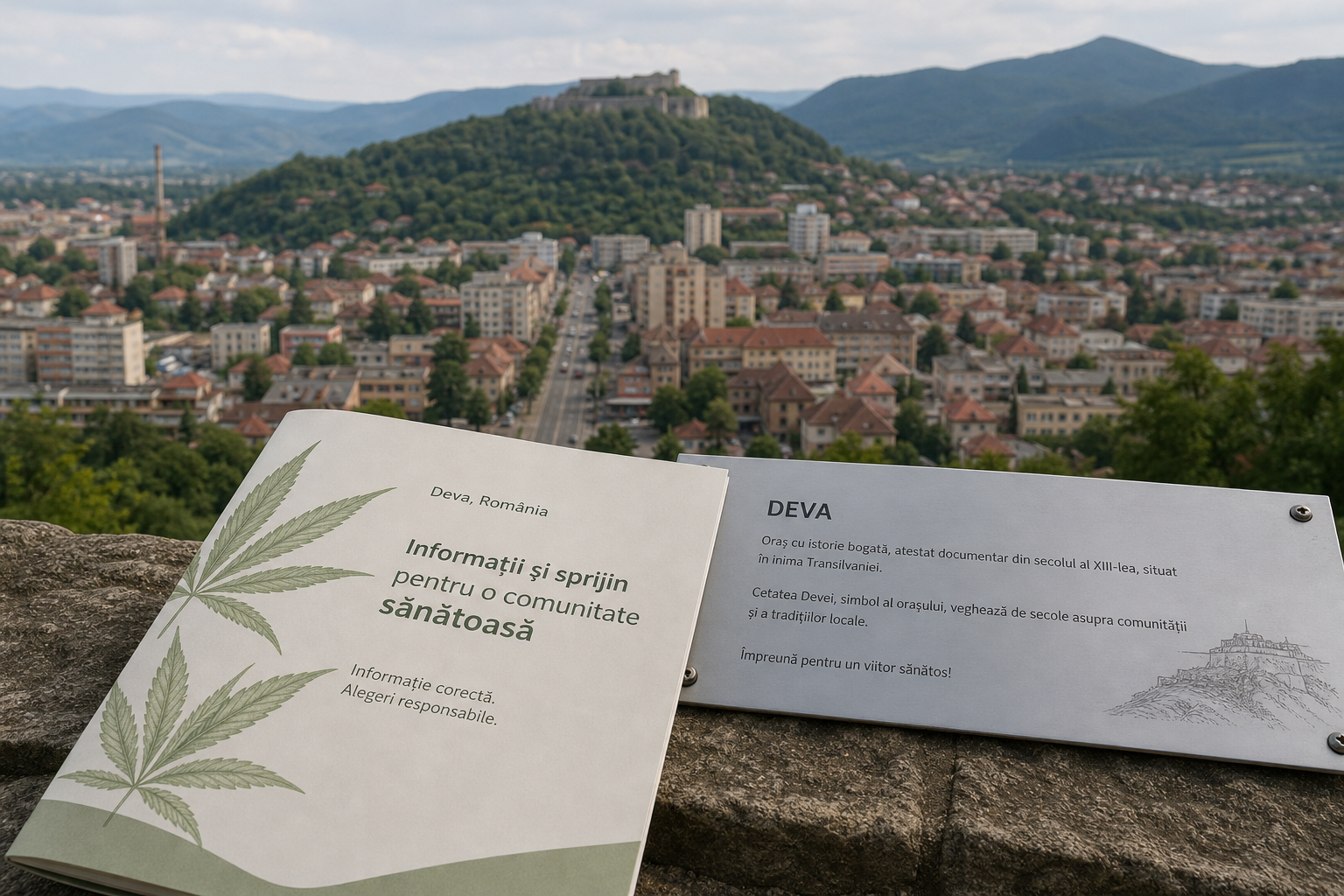
Understanding marijuana trends in Deva requires more than looking at online discussions or assumptions about what is available locally. Deva is a smaller regional city, and reliable public data about cannabis use, supply or attitudes at city level is limited. The most useful approach is to separate observable national developments from local speculation, while keeping Romanian law and health risks in view.
People searching for weed in Deva may be trying to understand the legal position, the difference between cannabis and hemp products, or where to find trustworthy health information. This article does not promote illegal drug use or provide instructions for obtaining or consuming controlled substances. Instead, it explains the main themes shaping discussion in Deva: legal awareness, interest in CBD and hemp, online misinformation, public-health concerns and the need for cautious decision-making.
Marijuana trends in Deva: what is actually changing?
The phrase “trend” can be misleading when there is no dependable local survey or official dataset. It is safer to describe the current picture as a set of broader developments that may influence residents of Deva, rather than claiming that the city has a distinct cannabis market or a confirmed rise in use.
First, online access has made cannabis-related information more visible. Residents can encounter discussions about recreational marijuana, medical treatment, CBD oils, hemp food products and legal reform within the same search results. These categories are not interchangeable. A product marketed as hemp-based is not automatically risk-free or legally equivalent to a prescribed medicine.
Second, national conversations about drug policy and public health increasingly reach local communities. News reporting, European policy discussions and social-media content can shape perceptions in Deva even when the underlying evidence is national or international rather than specific to Hunedoara County.
Third, consumer interest has expanded around non-intoxicating or low-THC products. That interest may involve cosmetics, textiles, seeds, food supplements or CBD-labelled goods. Product legality depends on composition, intended use, documentation and applicable Romanian and European rules. Packaging language alone should not be treated as proof of compliance.
Cannabis laws in Deva and the Romanian legal framework
There is no separate recreational cannabis regime for Deva. National Romanian law applies, and the legal consequences can depend on the substance, quantity, conduct and circumstances. Possession, acquisition, distribution and other activities involving controlled substances can create serious criminal-law exposure. Driving after using an impairing substance can also create significant legal and safety risks.
Visitors and residents should not assume that a product is lawful because it is sold online, described as “natural,” or available in another European country. Cross-border travel adds further complications, particularly when a product contains controlled cannabinoids or lacks clear compliance documentation.
For current legal information, readers should consult official Romanian institutions or a qualified lawyer rather than relying on social-media comments. The European Union Drugs Agency also provides evidence-based information about drug policy, monitoring and public-health responses across Europe. Its material offers useful context, but it is not a substitute for individual legal advice in Romania.
Why legal distinctions matter
“Marijuana,” “cannabis,” “hemp” and “CBD” are often used casually, although they describe different things in legal, agricultural or commercial contexts. A cannabis plant, a processed hemp fibre, a food product containing hemp seed and a cannabinoid preparation may be regulated differently.
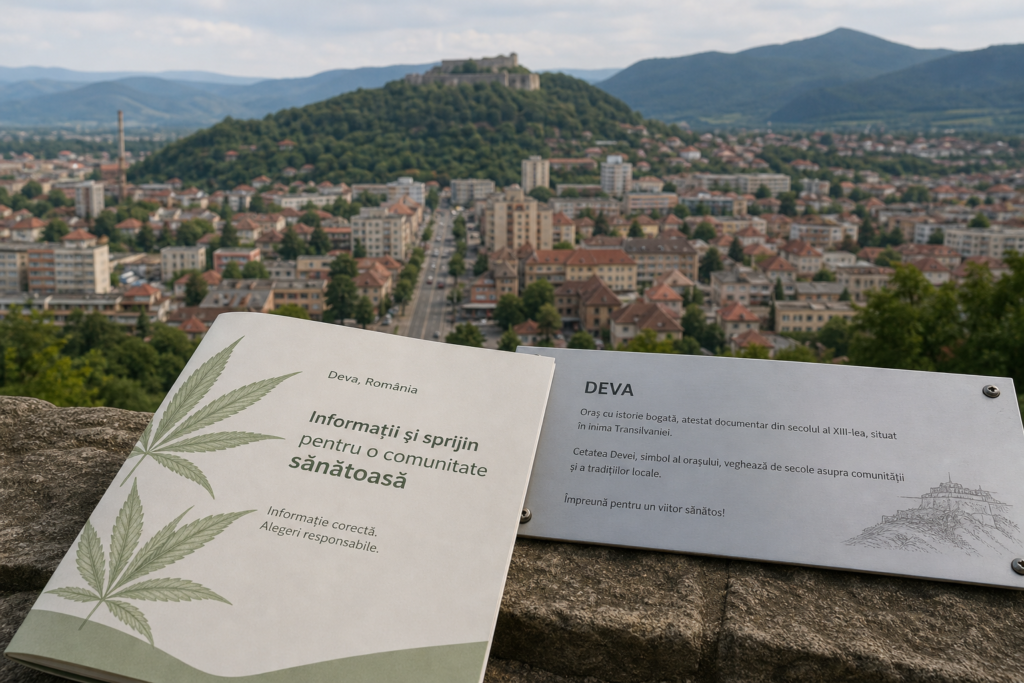
THC is the cannabinoid most associated with intoxication, but products can vary in composition and contamination risk. Labels may be incomplete, inaccurate or difficult to verify. A person who needs to avoid impairment, drug-test complications or legal uncertainty should treat unverified cannabinoid products with particular caution.
For a comparison with another Romanian city, readers can review this practical overview of marijuana legality in Arad. The legal principles are national, but the article illustrates why local searches should not be confused with local exceptions to Romanian law.
CBD and hemp products in Deva
Interest in CBD products in Deva is part of a wider European consumer trend. Shops and websites may offer oils, cosmetics, balms, drinks, seeds, clothing and food products associated with hemp. These products can have very different purposes and risk profiles.
Consumers should check the full ingredient list, responsible business information, batch or laboratory documentation where relevant, storage instructions and any warnings. They should also be cautious about products making strong claims to treat anxiety, pain, insomnia or other medical conditions. Commercial marketing is not the same as clinical evidence or medical approval.
- Do not assume that “CBD” means a product contains no THC or cannot affect a drug test.
- Do not use a cannabinoid product as a replacement for prescribed treatment without speaking to a clinician.
- Be particularly cautious with products sold in unsealed packaging or without traceable manufacturer information.
- Check whether a product is intended as food, cosmetics, a supplement or another category, because requirements differ.
Hemp seeds and hemp fibre are not equivalent to intoxicating cannabis products. Confusing these categories can lead to unnecessary fear, unsafe choices or mistaken assumptions about legality.
Medical cannabis in Deva: questions patients should ask
Searches for medical cannabis in Deva often reflect a genuine need for information about chronic pain, epilepsy, cancer symptoms or other difficult conditions. However, the phrase can refer to several different things: an authorised medicine, a clinical discussion about cannabinoids, an imported treatment, or an unregulated product marketed with medical language.
Patients should begin with a licensed doctor or pharmacist who can assess the diagnosis, existing medicines and possible interactions. A clinician can also explain whether an authorised treatment is appropriate, whether it is available through the Romanian healthcare system and what monitoring is required. Access, prescribing rules and product availability can change, so current professional guidance matters.
Cannabis-derived treatments may cause adverse effects or interact with other medicines. Possible concerns include drowsiness, impaired attention, dizziness, changes in mood and cardiovascular effects. Products containing THC may also impair driving and other activities requiring concentration. The World Health Organization’s cannabis health information provides a useful overview of recognised risks and effects.
People should be wary of online sellers that promise guaranteed cures or describe every cannabis product as “medical.” A product’s label, customer reviews or social-media popularity cannot establish medical effectiveness, purity or legal status.
Health, safety and responsible decision-making
Any discussion of cannabis in Deva should include health rather than focusing only on access or social attitudes. Risk is influenced by age, frequency of use, potency, method of administration, mental-health history, other substances and personal medical conditions.
Adolescents and young adults may be more vulnerable to harms associated with frequent use because brain development continues into early adulthood. People with a personal or family history of psychosis, severe anxiety or mood disorders should seek medical advice before using cannabinoid products. Pregnancy and breastfeeding are also situations in which avoiding non-prescribed cannabis exposure is the safer course.
Combining cannabis with alcohol, sedatives or other impairing substances can increase danger. Driving, cycling in traffic, operating machinery or making important decisions while impaired puts the user and other people at risk. Edible products can be especially difficult to judge because effects may be delayed, making accidental overconsumption more likely.
When to seek urgent help
Severe confusion, panic, chest pain, fainting, difficulty breathing, extreme agitation or loss of consciousness requires urgent medical attention. In an emergency in Romania, call 112. Be honest with healthcare professionals about suspected substance use; accurate information helps them provide appropriate care.
How local conversations are evolving
In Deva, cannabis discussions may appear in several settings: online forums, youth and university communities, nightlife conversations, health consultations and debates about agricultural hemp. These conversations can be constructive when they distinguish evidence from anecdote and avoid glamorising either use or illegal supply.
One positive trend is growing interest in prevention and practical health education. People increasingly want to know how products are made, how laws apply, whether labels can be trusted and when professional help is appropriate. Another is greater recognition that drug policy involves public health, social support and enforcement rather than a single simple answer.
Residents looking for a broader Romanian comparison may also find this guide to cannabis information in Sibiu useful. As with Deva, national rules remain the foundation, while local services and community conversations may differ.
What readers should verify before trusting cannabis information
- Source: Is the information published by a government institution, medical organisation, university or identifiable professional?
- Date: Are the legal or medical claims current, or could rules have changed?
- Product identity: Does the label clearly state ingredients, cannabinoid content, manufacturer and batch information?
- Medical claims: Is the statement supported by recognised clinical evidence, or is it simply advertising?
- Personal risk: Could the product affect medication, driving, pregnancy, mental health or employment testing?
These checks are more useful than trying to identify a supposedly “safe” source through informal recommendations. They also help readers distinguish the regulated discussion of hemp and authorised medicines from unverified recreational products.
What the future may bring
Future marijuana trends in Deva will likely continue to reflect national Romanian policy, European regulation, public-health messaging and changes in consumer commerce. Possible areas of interest include clearer product standards, better education about THC and CBD, more discussion of treatment evidence and stronger attention to youth prevention.
It would be premature to predict a specific local market outcome without reliable Deva-level research. The most responsible expectation is continued debate rather than a guaranteed shift toward legal recreational access. Until rules change through official channels, people should treat Romanian restrictions as applicable and avoid assuming that international developments automatically apply locally.
Conclusion
The most important marijuana trends in Deva are not simply about availability. They concern how residents interpret online claims, distinguish hemp from controlled cannabis, understand Romanian law and seek reliable health guidance. Local evidence remains limited, so broad claims about consumption or supply should be treated carefully.
For anyone researching weed in Deva, the safest approach is to verify information through authoritative sources, avoid unregulated products and consult qualified medical or legal professionals when the question involves treatment, medication, driving or criminal-law risk. Clear information and responsible decision-making are more valuable than speculation about a city-specific cannabis scene.