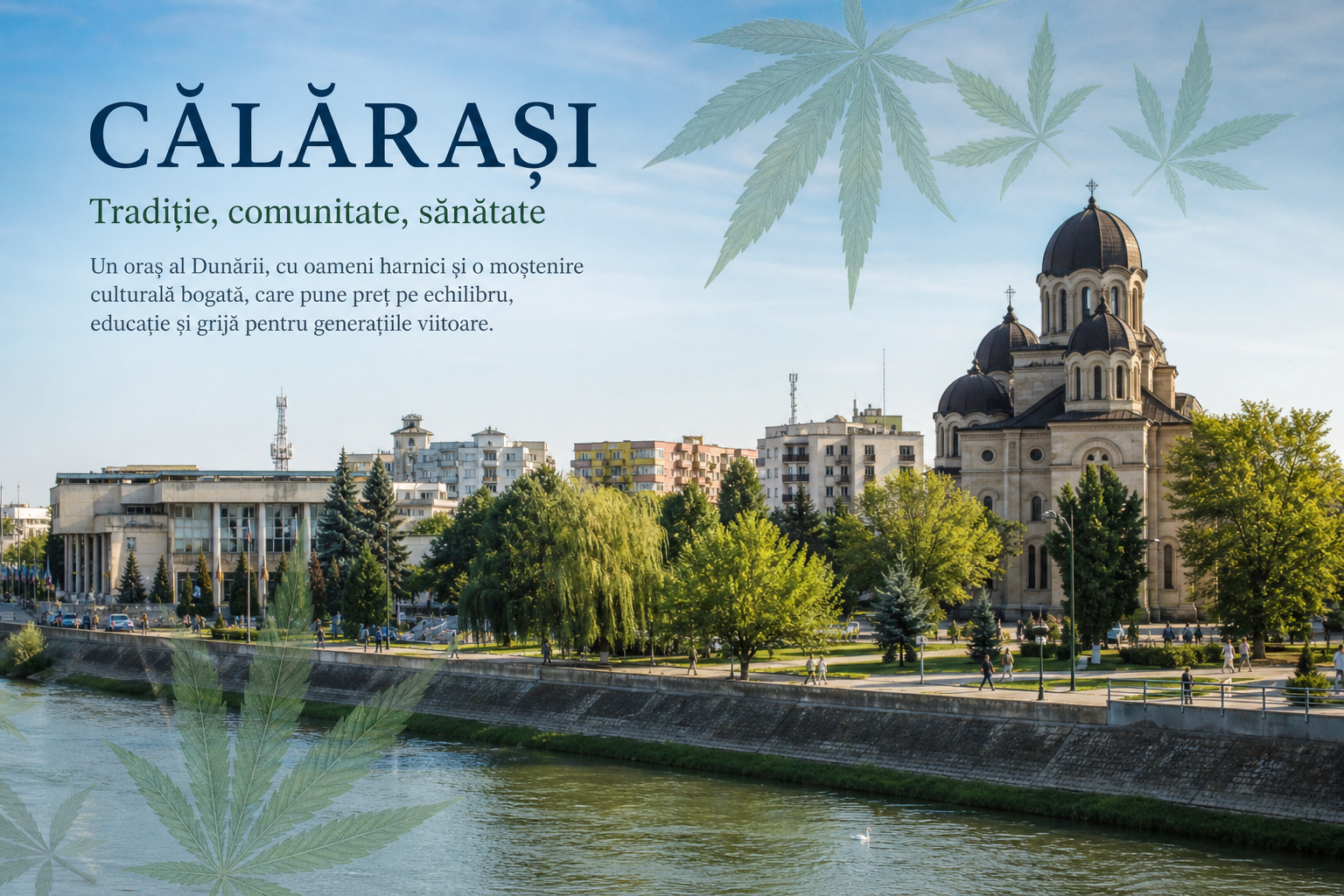
Marijuana culture in Călărași is best understood as a subject shaped by Romanian law, public health, changing international conversations and the character of a smaller Danube-region city. It is not simply a question of whether people use cannabis. Culture also includes language, music, online discussion, attitudes toward risk, memories of hemp cultivation and the difference between legal hemp products and controlled cannabis.
Reliable, city-specific research about cannabis attitudes in Călărași is limited. That makes careful interpretation important. Broad national trends should not be presented as proof of local behavior, and rumors about weed in Călărași should not be treated as evidence. A useful local discussion should instead explain the legal framework, distinguish products, recognize health risks and leave room for informed, non-stigmatizing conversation.
What marijuana culture means in Călărași
In everyday speech, “marijuana culture” can refer to several overlapping ideas. For some people, it describes music, internet communities, slang or a more tolerant attitude toward cannabis. For others, it raises concerns about youth exposure, impaired driving, dependence or the effect of drug markets on neighborhoods. In Călărași, as in other Romanian cities, these perspectives can exist at the same time.
The city’s location in southern Romania and its connections with Bucharest, nearby towns and the wider Danube area may influence how information travels. Young adults can encounter international cannabis imagery through social media, films and music even when Romanian legislation remains restrictive. This creates a gap between global cultural visibility and local legal reality.
That gap matters. Cultural familiarity does not make a substance legal or risk-free. Conversely, a legal prohibition does not eliminate the need for honest health education. A mature conversation about cannabis in Călărași should avoid both glamorization and exaggerated claims.
Romanian law and cannabis laws in Călărași
There is no separate municipal cannabis regime for Călărași. The same national rules apply across Romania. Cannabis containing controlled psychoactive substances is regulated under Romania’s national drug legislation, including Law No. 143/2000 on preventing and combating illicit drug trafficking and consumption. Depending on the facts, authorities may distinguish between possession, personal consumption, cultivation, supply, trafficking and other conduct.
The legal outcome can depend on the substance, quantity, purpose, evidence and circumstances. People should not assume that a small amount, private use or a product purchased online is automatically treated as harmless or lawful. Driving after using an intoxicating substance can also create serious legal and safety consequences, even where a person believes the effects have ended.
For current official information, readers can consult the National Agency for Medicines and Medical Devices of Romania and review guidance from the European Union Drugs Agency. These sources are more dependable than social-media posts, anonymous forums or commercial sellers making unsupported legal claims.
Hemp is not the same as marijuana
Industrial hemp and marijuana are often discussed together, but they are not interchangeable terms. Hemp may be cultivated or used under specific legal conditions, while cannabis products containing controlled levels of psychoactive compounds can fall under drug controls. Labels such as “hemp,” “CBD” or “natural” do not by themselves prove that a product is legal, accurately labeled or suitable for consumption.
Anyone buying a hemp-derived product should check the ingredients, producer information, intended use and available laboratory documentation. Food, cosmetics, supplements and other product categories can be governed by different rules. A product sold openly is not necessarily approved for every purpose, and imported goods may create additional uncertainty.
How local identity shapes the conversation
Călărași is a regional city with strong connections to family networks, work, education and movement between urban and rural areas. These connections can affect how people learn about drugs and how openly they discuss them. Information may come from friends, online communities, schools, healthcare workers or news reports, with very different levels of reliability.
Local culture should not be reduced to stereotypes. It is inaccurate to describe a whole city as either especially permissive or especially opposed to cannabis without sound local research. A better approach is to ask practical questions: Do residents know the difference between CBD and intoxicating cannabis? Do young people understand impairment and driving risks? Can families discuss substance use without immediate shame? Are people able to find confidential, evidence-based support?
These questions connect marijuana culture with wider issues of trust and public health. If information is delivered only through punishment-focused messaging, some people may avoid seeking help. If cannabis is presented only as harmless recreation, users may underestimate risks. Responsible communication must make room for both legal clarity and health realism.
Public health considerations for cannabis in Călărași
Cannabis affects people differently. Risk can vary with age, potency, frequency of use, personal vulnerability, other substances and the setting in which it is consumed. Possible concerns include impaired attention and reaction time, anxiety or panic, problems with memory and motivation, and dependence in some users. People with a personal or family history of psychosis or other serious mental-health conditions may need particular caution and professional advice.
Adolescence is an especially important context. The brain continues developing during the teenage years, and regular use during this period may be associated with educational, emotional and mental-health difficulties. This does not mean that every young person who experiments will experience serious harm, but it does mean that dismissive advice is inappropriate.
Mixing cannabis with alcohol or other drugs can increase impairment and make effects less predictable. Driving, cycling in traffic, operating machinery or caring for children while impaired can put other people at risk. The safest public-health message is straightforward: do not drive or perform hazardous tasks after using an intoxicating substance.
Signs that support may be needed
A person may benefit from a confidential conversation with a doctor, psychologist or addiction specialist if cannabis use becomes difficult to control or starts affecting daily life. Warning signs can include repeated failed attempts to cut down, using more often than intended, neglecting school or work, withdrawing from relationships, spending beyond one’s means or continuing despite clear problems.
Friends and relatives can help by staying calm, avoiding humiliation and encouraging professional support. An emergency response is appropriate when someone has severe confusion, chest pain, difficulty breathing, loss of consciousness, extreme agitation or thoughts of self-harm. In an immediate emergency in Romania, call 112.
Medical cannabis in Călărași: separating hope from evidence
Interest in medical cannabis in Călărași reflects a wider international debate about pain, epilepsy, nausea and other conditions. However, medical use should not be confused with recreational access or self-treatment. A cannabis-related medicine, where legally indicated, is different from an unregulated product bought through social media or from an unknown website.
Patients should speak with a qualified healthcare professional about diagnosis, treatment options, interactions and side effects. They should also ask whether a product is authorized, how it should be taken and what monitoring is required. Claims that a cannabis oil or CBD product can treat every serious illness deserve skepticism, especially when they rely on testimonials rather than clinical evidence.
Medical discussions are also affected by privacy and stigma. People may hesitate to tell a doctor about cannabis use, but withholding that information can make it harder to assess interactions, symptoms or treatment response. A non-judgmental clinical conversation is more useful than either automatic endorsement or automatic dismissal.
Hemp traditions, products and modern branding
Hemp has a longer history in Romania than contemporary marijuana debates suggest. Traditionally, hemp fiber could be associated with household textiles, rope and other practical uses. Modern hemp branding may instead emphasize clothing, seed foods, cosmetics or CBD products. These categories should not be collapsed into one idea of “marijuana.”
For consumers in Călărași, careful purchasing means reading the label and checking whether the seller provides a traceable business identity, clear contact details and credible product documentation. Avoid products with vague ingredients, extraordinary medical promises or instructions that encourage unsafe use. Also be cautious with edible products, because delayed effects can lead people to consume more before the initial dose has taken effect.
Education and responsible local dialogue
Good cannabis education should be factual, age-appropriate and practical. Schools, families, healthcare services and community organizations can contribute by explaining Romanian law, impairment, dependence, product differences and where to seek help. Education works better when it invites questions rather than treating curiosity as misconduct.
Parents and teachers do not need to know every slang term or online trend. They do need to create conditions in which a young person can report pressure, an unsafe situation or a worrying symptom. Conversations can focus on decision-making, mental health, consent, transportation and personal goals instead of relying only on fear.
Local readers interested in comparisons may also find useful context in this discussion of cannabis culture in Timișoara and this practical overview of cannabis awareness in Focșani. Different cities should not be treated as identical, but comparing legal and social themes can show which questions are national and which require local research.
What a responsible marijuana culture could look like
A responsible culture is not defined by celebrating use or condemning every person who has encountered cannabis. It is defined by accurate information, respect for the law, attention to health and concern for other people’s safety. In Călărași, that could mean clearer explanations of hemp and cannabis, better awareness of impairment, easier access to confidential support and less reliance on rumors.
- Check Romanian legal and health information before acting on online advice.
- Do not drive or operate machinery while impaired.
- Keep intoxicating products away from children and pets.
- Do not assume that CBD, hemp or imported products are automatically legal or risk-free.
- Seek professional advice when use affects health, relationships, work or education.
- Challenge stigma without minimizing dependence, mental-health risks or illegal supply.
Conclusion
Marijuana culture in Călărași is part of a broader Romanian conversation about law, health, identity and changing global attitudes. The city should not be assigned a cannabis reputation without evidence, and national rules should not be replaced by hearsay. The most useful local perspective is balanced: recognize the cultural visibility of cannabis, understand the restrictions that apply in Romania, distinguish hemp from intoxicating products and treat health concerns seriously.
Whether the topic is weed in Călărași, medical treatment, CBD, youth education or public policy, reliable information is the foundation for safer decisions. Open, factual and non-stigmatizing discussion can help residents navigate a complicated subject without normalizing illegal conduct or overlooking people who need support.