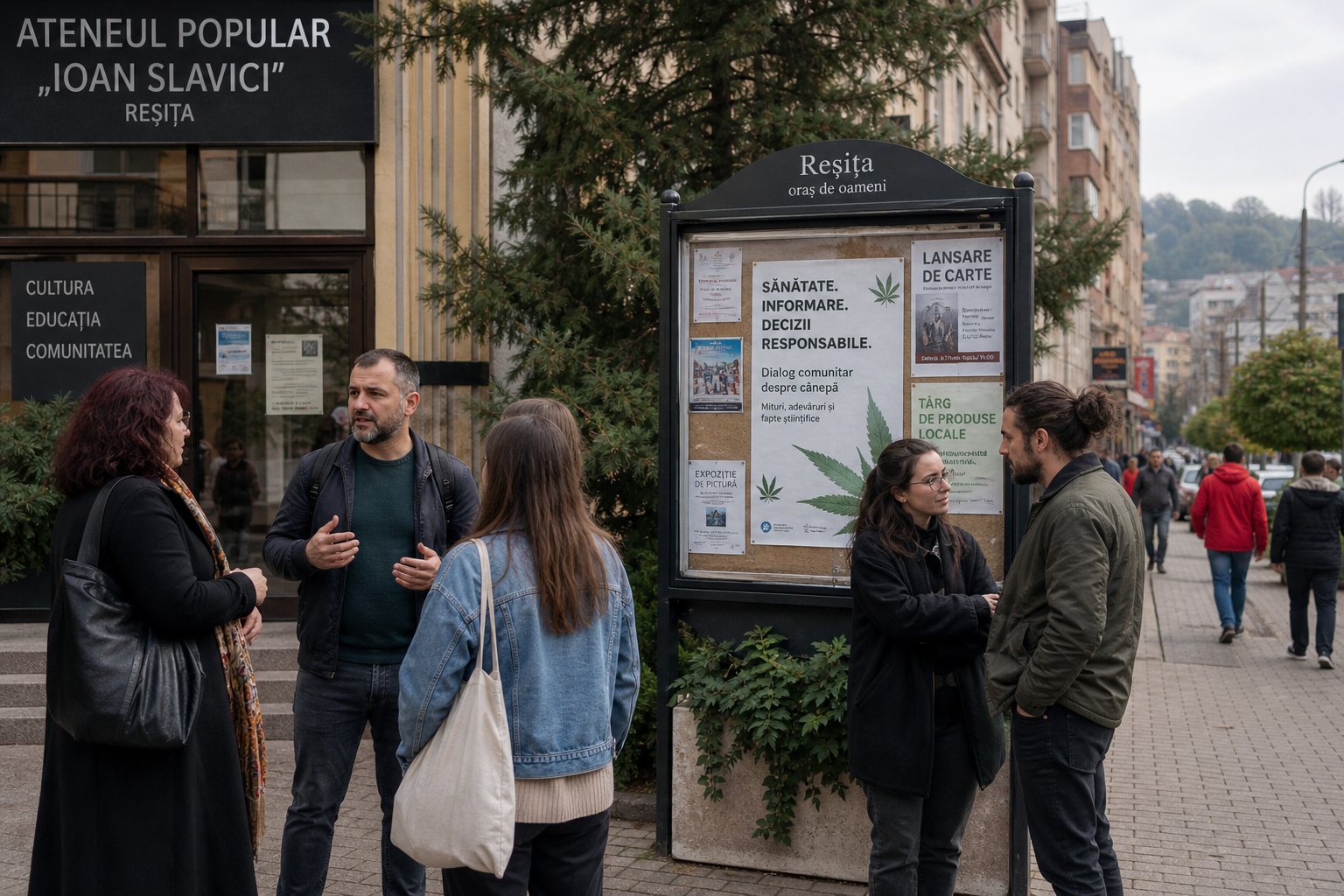
The Cannabis community in Reșița is best understood as a loose network of conversations, personal experiences, health questions, online discussions and interest in hemp-derived products—not necessarily as a formal organization or public cannabis scene. In a city shaped by industrial history, close social networks and its position in Caraș-Severin, attitudes can vary considerably between generations and neighborhoods.
This guide explains how to discuss cannabis in Reșița responsibly. It separates illegal drug use from lawful hemp and CBD products, outlines why Romanian law matters, and considers how residents can find reliable health information without relying on rumors, anonymous sellers or sensational claims. It is informational rather than legal or medical advice.
What the cannabis community in Reșița may include
“Community” does not automatically mean a registered club, dispensary or public advocacy group. In Reșița, the term may describe people who are curious about cannabis, individuals concerned about substance use, patients asking about treatment options, retailers interested in hemp products, and professionals who approach the subject through public health or law enforcement.
These groups do not always share the same goals. Some people focus on personal liberty and policy reform. Others are mainly interested in CBD cosmetics, hemp food or agricultural opportunities. Families may be looking for information about problematic use, while young adults may be trying to understand legal risks. Treating all of these conversations as one movement can create confusion.
Why local context matters
Reșița is not a separate legal jurisdiction for controlled substances. National Romanian law applies in the city, even though local experiences of enforcement, access to healthcare and public attitudes can differ. A useful local discussion therefore combines national legal information with practical realities such as transport, employment, schools, healthcare access and privacy.
Local conversations are also influenced by the wider Banat region. Comparing discussions in nearby cities can be useful, but practices or opinions reported elsewhere should never be treated as proof that a product or activity is legal in Reșița.
Cannabis laws in Reșița: the starting point for any discussion
There is no special municipal cannabis framework that makes possession, cultivation, supply or consumption legal in Reșița. The relevant rules come from Romanian national legislation, and the legal treatment can depend on the substance, quantity, conduct and circumstances. Anyone facing a specific legal issue should consult a qualified Romanian lawyer rather than relying on social media posts.
Romania distinguishes between controlled narcotic or psychoactive substances and lawful products made from industrial hemp under applicable requirements. That distinction is not always obvious from packaging. A product described as “natural,” “legal” or “hemp-based” may still require careful checking of its ingredients, intended use, documentation and compliance status.
For the current legal text, readers can consult the Romanian official legislation portal. It is more reliable than outdated articles, informal forums or claims made by sellers. Laws and interpretations can change, so older online advice should be treated cautiously.
Possession, sharing and selling are not the same
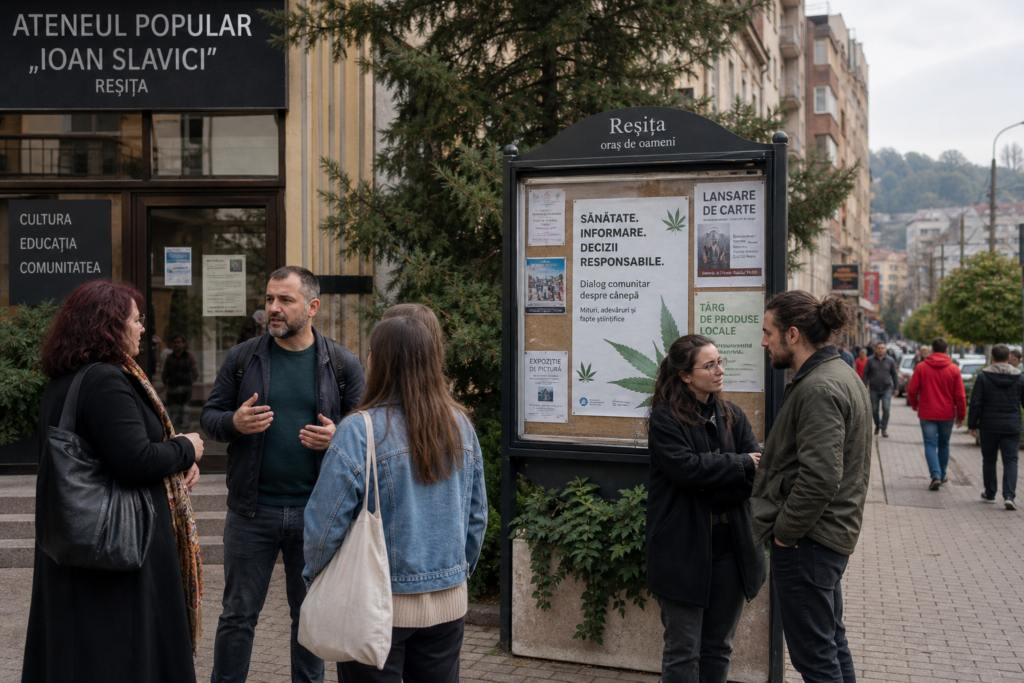
Public discussions often blur together several different actions. Possessing a controlled substance, growing plants, sharing a product with another person, importing it and selling it can raise different legal questions. A person should not assume that a small quantity, private setting or lack of payment removes legal risk.
Driving is another important issue. Cannabis or other psychoactive substances can affect attention, coordination and judgment. Driving after use can create serious safety and legal consequences, regardless of what friends or online communities claim about a product’s strength or detection time.
Weed in Reșița: separating online language from real-world risk
The phrase weed in Reșița may appear in searches or social media, but search results do not verify a seller, product or legal status. Informal markets can involve mislabeling, unknown potency, contamination, scams and pressure to buy more than intended. Buying through an unverified channel also removes important safeguards such as batch information, testing and a clear complaints process.
People should be particularly cautious of products promoted as unusually strong, “completely safe,” undetectable or guaranteed to treat a medical condition. Claims about synthetic cannabinoids, infused materials or novel psychoactive products deserve extra caution because names and packaging may not accurately describe the contents.
- Do not assume that a familiar strain name proves what is in a product.
- Do not mix cannabis with alcohol, sedatives or other drugs without medical advice.
- Do not drive, cycle in traffic or operate machinery after using an intoxicating product.
- Keep any potentially harmful substance away from children and pets.
- Seek urgent medical help if someone has severe confusion, chest pain, breathing problems, a seizure or becomes difficult to wake.
Health, prevention and harm reduction
A responsible cannabis community should make room for health information without exaggerating either the benefits or the dangers. Effects vary with dose, potency, route of administration, personal health, age, tolerance and combinations with other substances. Adolescents, pregnant people and those with a personal or family history of psychosis may face particular concerns and should seek professional advice.
Frequent use can become difficult to control for some people. Warning signs may include spending more time obtaining or using cannabis, neglecting work or study, continuing despite problems, unsuccessful attempts to cut down and using mainly to cope with anxiety, sleep or stress. These signs do not justify stigma; they indicate that confidential support may be useful.
Reliable health information should come from recognized medical or public-health institutions. The World Health Organization provides evidence-based health information, although individual treatment decisions should still be discussed with a clinician familiar with the patient’s history.
How to support someone without escalating conflict
Family members and friends can help by choosing a calm moment, asking open questions and focusing on observable effects rather than insults or labels. “I have noticed you are missing work and seem unwell” is more constructive than making assumptions about character. If there is immediate danger, severe intoxication or a mental-health crisis, contact emergency services and explain what may have been taken.
Community education is most effective when it includes practical information: how to recognize a crisis, where to seek medical attention, how legal concerns should be handled and how to avoid driving after substance use. Fear-based messages may discourage people from asking for help, while overly casual messages can minimize genuine risks.
Medical cannabis in Reșița: questions patients should ask
Searches for medical cannabis in Reșița often reflect a need for pain relief, sleep support or help with another difficult condition. That interest should not be confused with an automatic right to obtain or use cannabis products outside the medical and legal framework. Treatment depends on the diagnosis, available medicines, clinical evidence and the rules that apply to a specific product.
Patients should speak with a licensed doctor or pharmacist and describe all current medicines, supplements and health conditions. They should ask what the proposed product contains, whether it is authorized for the intended use, how it should be taken, what side effects are possible and whether it can affect driving or work. Buying a product online because it is marketed as “medical” is not a substitute for clinical evaluation.
It is also useful to keep medical questions separate from recreational-market claims. A testimonial is not proof that a product will work for another person, and a CBD label does not by itself establish quality, purity or suitability.
CBD and hemp products in the local market
Hemp seeds, hemp fibre, cosmetics and other hemp-related goods are not identical to intoxicating cannabis products. CBD products also require careful attention to labeling and compliance. Consumers should check the full ingredient list, manufacturer or importer details, batch information, storage instructions and any warnings. A retailer should be able to explain what the product is and what it is not.
Consumers should avoid products with vague labeling, impossible health claims or no traceable business information. They should also understand that “CBD” does not necessarily mean “zero THC,” and that product composition can matter for health, employment and legal concerns. When in doubt, a pharmacist or healthcare professional is a better source of advice than an anonymous comment.
For a broader comparison of how hemp and cannabis-related commerce is discussed elsewhere in Romania, readers may also find this guide to cannabis culture in Timișoara useful. Local market conditions are not identical, but the distinction between culture, commerce and law remains important.
Building a healthier local conversation
A constructive cannabis culture in Reșița does not require everyone to hold the same opinion. It requires accurate language, respect for privacy and a willingness to acknowledge uncertainty. Residents can improve the quality of discussion by checking dates on legal information, distinguishing personal stories from evidence and avoiding the public sharing of private details about suspected use.
- Use neutral, precise language instead of stigmatizing labels.
- Discuss legal changes through official sources and qualified professionals.
- Separate CBD, industrial hemp, medical treatment and intoxicating cannabis.
- Encourage early support for problematic use rather than waiting for a crisis.
- Keep schools, families and workplaces focused on safety and informed decisions.
- Do not promote unverified sellers or make unsupported health claims.
What local organizations can do
Schools, healthcare providers, youth workers and community organizations can offer age-appropriate information about substance effects, consent, driving and help-seeking. Short, factual resources in Romanian are likely to be more useful than dramatic campaigns that rely on fear. Professionals should also protect confidentiality and refer people to appropriate medical, psychological or legal services.
Businesses selling lawful hemp-related goods can contribute by maintaining transparent labeling, refusing exaggerated medical claims and training staff to answer basic product questions without presenting themselves as clinicians. These measures help distinguish responsible commerce from informal promotion.
Conclusion
The Cannabis community in Reșița is a broad and evolving conversation rather than a single identifiable group. Understanding it requires attention to Romanian law, public health, product quality, local attitudes and the different needs of consumers, families and professionals.
Whether someone searches for cannabis in Reșița out of curiosity, concern or medical interest, the safest approach is to verify information, avoid unregulated products, never drive after using intoxicating substances and seek qualified advice for personal health or legal questions. A well-informed local discussion can reduce stigma and prevent harm without normalizing risky or unlawful behavior.