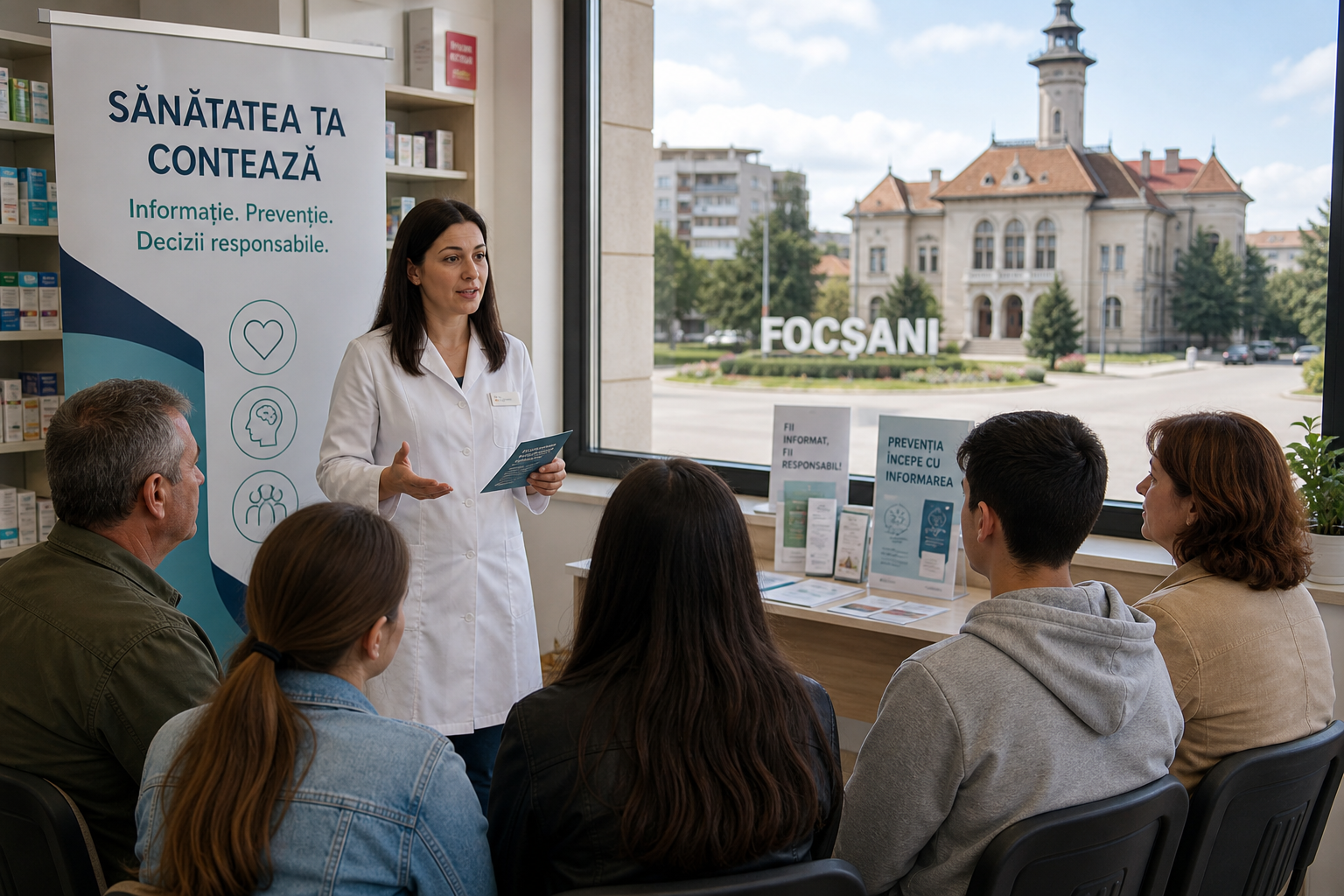
Cannabis awareness in Focșani means understanding the law, recognizing health risks, separating evidence from rumours and knowing where to find confidential support. Conversations about cannabis should be practical rather than alarmist. Residents, families, students and visitors need clear information about cannabis in Focșani, including the difference between illegal THC products, regulated medicines and hemp or CBD items that may still raise safety and compliance questions.
This guide is educational, not legal or medical advice. Romanian rules and product requirements can change, so anyone facing a specific legal or health issue should consult a qualified professional or an appropriate public authority.
Why cannabis awareness matters in Focșani
Focșani is a regional centre in Vrancea, with schools, workplaces, healthcare services, transport links and a varied social life. Cannabis-related questions may arise in many settings: a parent noticing changes in a teenager, a student being offered an unknown product, an employee concerned about testing, or a traveller wondering whether a product purchased elsewhere can be brought into Romania.
Local awareness is not about assuming that every person who uses cannabis has the same experience. Risk depends on factors such as age, frequency, potency, method of use, mental health, other substances and whether the person must drive or perform safety-sensitive work. A calm, informed conversation is more useful than stigma, especially when someone may need help.
For broader context, readers can also compare this topic with cannabis policy guidance for Bacău and other Romanian cities. The general national framework is more important than local rumours, although services and community responses can differ.
Cannabis laws in Focșani and Romania
There is no separate Focșani cannabis market or local rule that makes prohibited cannabis lawful. Romanian national law applies in the city and throughout the country. Cannabis and THC-containing products may fall under controlled-substance rules, and unauthorized possession, cultivation, production, distribution or sale can create serious legal consequences. The outcome can depend on the substance, quantity, conduct, evidence and circumstances.
Do not rely on social-media claims that cannabis is “legal now,” that a small amount is automatically permitted, or that a product is safe because it is sold online. A product’s label, packaging or marketing language does not by itself prove that it complies with Romanian law. Bringing cannabis across a border can create additional risks, even if it was obtained legally in another country.
Possession, supply and sharing
Sharing cannabis is not a harmless workaround. Giving a product to another person, selling it, arranging delivery or storing it for someone else may be treated differently from personal possession and can expose people to more serious allegations. Young people should not be asked to carry packages, store products or accept deliveries for friends.
Because legal details are fact-specific, avoid guessing about a case from a headline or a short online post. A Romanian lawyer can explain current rules and procedural rights. The Romanian Ministry of Health is also an appropriate official starting point for public-health information, although it is not a substitute for individualized legal advice.
Medical use is not the same as casual use
Medical cannabis in Focșani is not a general permission to buy or use recreational cannabis. A medicine must be prescribed, supplied and used within the applicable medical and pharmaceutical framework. Patients should discuss symptoms, existing medicines and possible interactions with a doctor or pharmacist rather than self-treating with an unverified product.
Anyone travelling with a cannabis-related medicine should check current Romanian rules and any requirements of the country of departure or destination before travelling. Keep documentation and original packaging where appropriate, but do not assume that paperwork from another country automatically authorizes possession in Romania.
Health effects and practical risk awareness
Cannabis can affect attention, memory, coordination, reaction time and judgement. Some people experience anxiety, panic, confusion or unpleasant changes in perception. Higher-potency products and concentrated forms can make effects more intense and less predictable. Edibles are especially difficult to judge because effects may be delayed, which can lead someone to consume more before the first dose has fully taken effect.
The risks are not identical for everyone. Frequent or heavy use may be associated with problems involving motivation, learning, mood or daily functioning. Some people develop dependence and find it difficult to reduce use even when it causes trouble at school, work, in relationships or with finances. Cannabis can also worsen symptoms for people who are vulnerable to certain mental-health conditions.
Public-health information from the World Health Organization’s cannabis topic page can help readers distinguish established health concerns from exaggerated claims. It is sensible to be cautious about products that have unknown strength, unclear ingredients or no reliable quality information.
Adolescents and young adults
Teenagers and young adults deserve age-appropriate, honest information. The developing brain is one reason early and frequent use deserves particular attention. Parents and educators can focus on concrete questions: What was taken? When? How much is known about the product? Is the person safe now? Are there symptoms? Has driving, school attendance or sleep been affected?
Immediate condemnation can discourage disclosure. A better approach is to set clear boundaries while leaving room for a conversation about pressure, stress, mental health and safer decisions. If a young person appears severely confused, has difficulty breathing, becomes unconscious, experiences a seizure or presents an immediate danger to themselves or others, call 112.
CBD, hemp and products sold in Focșani
CBD is often presented as different from intoxicating cannabis, but that does not make every CBD product risk-free or automatically legal. Products can vary in composition, quality, labelling and contamination risk. Some may contain trace amounts of THC or ingredients that are not clearly disclosed.
Before buying a hemp or CBD product, consider:
- Whether the seller provides a clear ingredient list and batch information.
- Whether the product has credible laboratory testing that matches the label.
- Whether the intended use is compatible with medicines or medical conditions.
- Whether the product is marketed with unsupported claims to diagnose, treat or cure disease.
- Whether carrying or importing it could create a problem under current Romanian rules.
Do not assume that “natural,” “legal,” or “THC-free” on a package is enough. Consumers with workplace drug testing, pregnancy-related concerns, liver conditions or regular prescriptions should ask a healthcare professional before using CBD. The safest choice may be not to use an unfamiliar product at all.
For a related discussion of product checks and responsible purchasing, see this guide to CBD products in Satu Mare. The principles are useful in Focșani, but local sellers and product availability should always be checked independently.
Driving, work and public safety
Driving after using cannabis is unsafe. Impairment can affect reaction time, attention and decision-making even when a person feels capable of driving. Coffee, a shower or a short rest cannot reliably prove that someone is fit to drive. The responsible option is to avoid driving after use and arrange a sober driver, taxi or other safe transport.
Workplaces may have their own safety policies, especially in transport, construction, manufacturing, healthcare and roles involving machinery or responsibility for others. Drug testing and employment consequences are separate from a person’s subjective feeling of impairment. Employees should read workplace policies and obtain professional advice when necessary rather than relying on informal assurances.
How to have a useful cannabis conversation
Good cannabis education avoids two extremes: presenting cannabis as harmless or treating every user as a criminal. A constructive conversation can include the following points:
- Ask what the person already believes and correct only the inaccurate parts.
- Discuss the product, strength, timing and possible combination with alcohol or medicines.
- Emphasize no driving, no operating machinery and no sharing unknown products.
- Watch for changes in sleep, mood, memory, school, work or relationships.
- Encourage professional support when use feels difficult to control.
Families should use clear expectations about possession, storage and driving while keeping communication open. Schools and community groups can focus on decision-making, mental health, peer pressure and access to help instead of relying only on scare messages. This makes cannabis education in Focșani more credible and more likely to be remembered.
Where to seek help in Focșani
A person who wants to reduce or stop cannabis use can begin with a family doctor, psychologist, psychiatrist or addiction-support service. A healthcare professional can assess sleep, anxiety, depression, medication use and possible dependence without assuming that cannabis is the only issue. If privacy is a concern, ask in advance how records and referrals are handled.
Seek urgent help when there is loss of consciousness, severe agitation, chest pain, breathing difficulty, a seizure, suspected poisoning or an immediate risk of self-harm. Call 112 in an emergency. Do not leave an unconscious or severely confused person alone, and do not give them alcohol or additional substances.
People accused of a drug offence should seek qualified legal advice promptly. Online discussions and advice from friends cannot replace a lawyer who can review the actual facts and current Romanian law.
Key takeaways for residents and visitors
- National Romanian law applies in Focșani; local availability does not determine legality.
- Do not assume that CBD, hemp or imported products are automatically compliant.
- Medical treatment requires an appropriate healthcare and pharmaceutical pathway.
- Cannabis can affect coordination, judgement, mood and mental wellbeing.
- Never drive or operate machinery after using cannabis.
- Early, non-judgmental support is often more effective than threats or stigma.
- Use official information and qualified professionals when the consequences are legal or medical.
Conclusion
Cannabis awareness in Focșani should give people practical information rather than encourage risky behaviour. Understanding Romanian law, checking product claims, recognizing impairment and knowing how to seek help can protect individuals, families and the wider community. Whether the question concerns weed in Focșani, CBD, medical treatment or a possible substance-use problem, the safest approach is to verify current information and ask a qualified professional when the situation is personal or urgent.