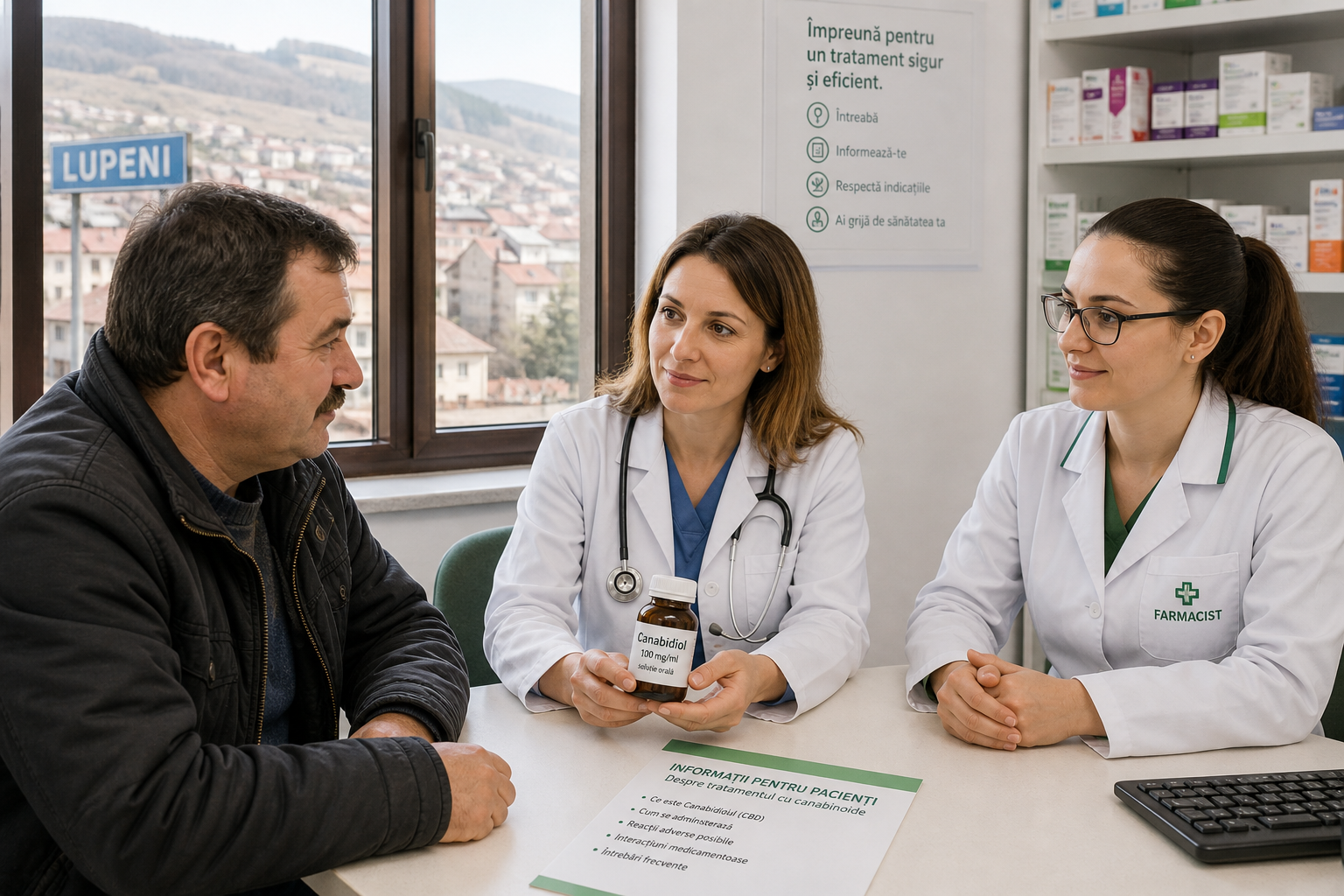
Questions about Medical marijuana in Lupeni, Romania usually involve three separate issues: what Romanian law permits, whether a doctor can recommend an appropriate medicine, and how a patient can obtain and use it safely. Lupeni is in Hunedoara County, but medical-drug rules are established nationally rather than by the city. Local pharmacies, clinics and hospitals must follow the same Romanian and European pharmaceutical requirements as providers elsewhere in the country.
This guide explains the practical starting points without treating cannabis as a general remedy or suggesting that recreational products are medical treatment. Rules, product availability and a person’s eligibility can change, so a Romanian doctor and pharmacist should confirm the current position before treatment begins. The phrase medical cannabis in Lupeni may describe a patient’s search, but it does not by itself mean that a local dispensary or a legally available cannabis product exists.
What medical marijuana means in Lupeni
In everyday conversation, “medical marijuana” can refer to dried cannabis, cannabis-derived medicines, cannabidiol products or any preparation containing cannabinoids. Legally and clinically, these categories are not interchangeable. A prescription medicine has a defined composition, strength, manufacturing standard, route of administration and patient information. An unregulated product sold informally does not provide the same assurance.
For someone searching for cannabis in Lupeni, the safest approach is to begin with a medical need rather than a product. The relevant questions are the diagnosis, previous treatments, current medicines, potential interactions and whether a cannabinoid-based option is medically justified. A doctor may decide that another therapy has better evidence or lower risk.
Local care and national rules
Lupeni residents can ask a family doctor, relevant specialist or licensed pharmacist about the next step. The local healthcare professional may not prescribe every type of controlled or special-status medicine, and a referral may be needed. Treatment availability can also differ between pharmacies because a product must be authorised, supplied through legal channels and available at the time of dispensing.
For an official source on medicines, authorisations and regulatory information, consult the National Agency for Medicines and Medical Devices of Romania. Patients should use current official information rather than relying on advertisements, social-media sellers or claims that a product is “legal everywhere.”
Cannabis laws in Lupeni: the practical legal position
The cannabis laws in Lupeni are primarily Romanian national laws. A medical purpose does not automatically legalise possession, cultivation, sharing or purchase of cannabis from an unofficial source. A product’s label, THC content, origin and intended use may all matter, and rules can apply differently to medicines, raw plant material, food supplements and cosmetics.
Romania’s framework for controlled substances and medicines is technical. It is therefore risky to assume that a product described online as “medical marijuana” can be carried, imported or used simply because the buyer has symptoms or a doctor’s note from another country. Before ordering from abroad, check import, customs and prescription requirements with the relevant Romanian authorities and a qualified healthcare professional.
- Do not buy cannabis from street sellers or unverified websites.
- Do not grow cannabis at home on the assumption that personal medical use creates an exception.
- Do not share prescribed medicine with another person.
- Keep the original packaging, prescription and pharmacy documentation for any legitimately supplied medicine.
- Ask specifically about driving, workplace testing and travel before starting treatment.
For broader European drug-policy context and current evidence summaries, the European Union Drugs Agency is a useful public source. It should complement, not replace, advice from Romanian authorities about a particular medicine or legal situation.
How to discuss treatment with a doctor
A consultation is more productive when the patient brings a clear treatment history. Explain the symptoms, diagnosis, duration of the problem and treatments already tried. Include non-prescription medicines, supplements, alcohol use and any history of anxiety, depression, psychosis, heart disease, liver disease or substance-use problems.
Questions worth asking
- What condition is the proposed medicine intended to treat?
- What evidence supports this treatment for my symptoms?
- What exact active ingredients and dose would be used?
- Is the product authorised and dispensed through a Romanian pharmacy?
- What side effects or interactions should I watch for?
- How long will we try it before reviewing whether it helps?
- Can I drive, work safely and travel with this medicine?
- What should I do if the product is unavailable?
A responsible treatment plan includes a starting dose, follow-up and a clear instruction not to increase the dose independently. Cannabinoid medicines may cause sleepiness, dizziness, impaired attention, dry mouth, nausea or changes in mood. THC-containing products can also produce intoxication, anxiety or impaired coordination, especially when a person is inexperienced or combines them with alcohol or sedatives.
Medical cannabis in Lupeni: access and product checks
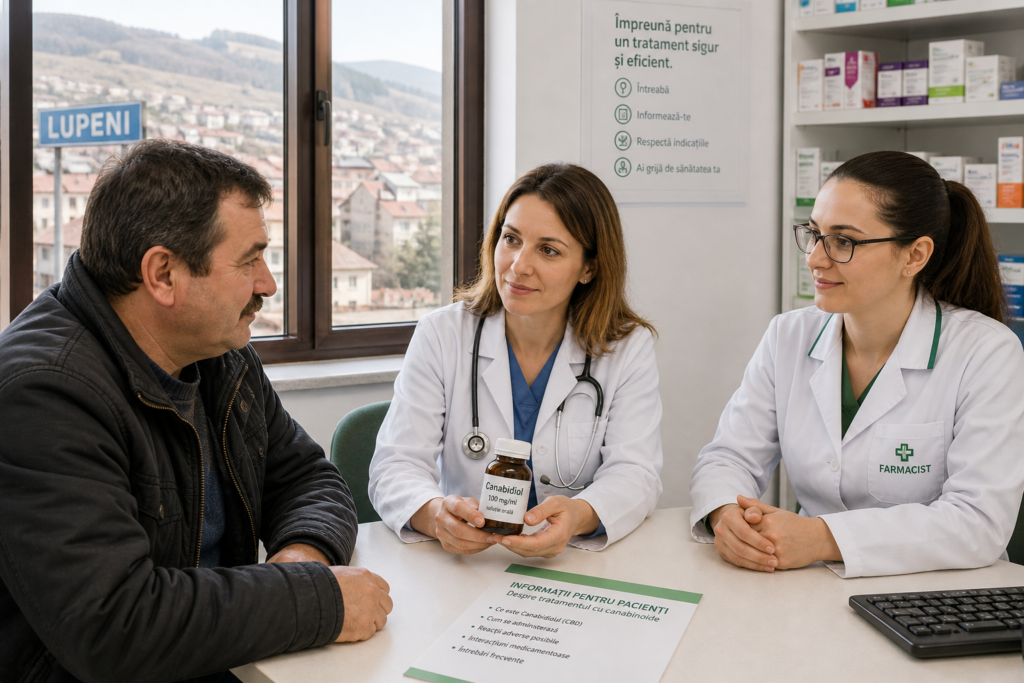
Access should proceed through a licensed healthcare pathway. A doctor assesses the patient, identifies whether a cannabinoid medicine is appropriate and explains the prescription process. A pharmacist can then clarify whether the prescribed product is in stock, how it must be stored and whether the pharmacy can order it legally.
Availability is not the same as legality. A shop, website or social-media account may advertise cannabis, CBD or “full-spectrum” products in Lupeni, but advertising does not prove that the item is an authorised medicine. Packaging should identify the manufacturer, ingredients, batch information, instructions and legal status. Avoid products with vague dosing, exaggerated claims or no verifiable supplier.
CBD deserves particular caution. CBD products may be marketed as wellness goods, but they are not automatically approved medicines and may contain more THC than expected or differ from their label. A consumer product should not be substituted for a prescribed treatment without discussing it with a clinician. Readers can also review the practical distinction between product categories in this guide to CBD legality in nearby Petrila, while remembering that legal details still need to be checked for the specific product.
Safety issues patients should not overlook
Cannabis-based treatment is not risk-free. The risk profile depends on the active ingredients, dose, route, other medicines and the patient’s health. Inhaled products can irritate the respiratory system and make dosing difficult. Edible or oral products may take longer to produce an effect, which can lead to accidental overuse when someone takes an additional dose too soon.
Interactions and vulnerable groups
Tell the prescribing doctor about all medicines, particularly sedatives, sleeping tablets, opioid pain medicines, antidepressants, anti-anxiety medicines, anti-seizure drugs and medicines processed by the liver. Combining intoxicating products with alcohol can increase impairment. Older adults and people who are prone to falls may need additional caution.
Medical advice is especially important during pregnancy or breastfeeding, in people with a personal or family history of psychosis, and in patients with significant heart or liver conditions. Children and adolescents should only be considered under specialist care where a clinically appropriate and legally supplied medicine is involved.
Seek urgent medical help for severe confusion, fainting, chest pain, trouble breathing, a seizure, extreme agitation or suspected poisoning. Keep all medicines away from children and pets, and store them according to the pharmacy’s instructions.
Driving, work and travel from Lupeni
A prescription does not necessarily make driving safe or legally uncomplicated. THC and other sedating substances may affect reaction time, concentration and coordination. Patients should ask their doctor and pharmacist about restrictions, avoid driving when impaired and follow Romanian traffic rules. The same caution applies to operating machinery, working at heights and safety-sensitive jobs.
Travel requires separate planning. Carrying cannabis across a national border can create problems even when the medicine was prescribed in Romania or is legal in the destination country. Before travelling, check the rules of every country on the route, contact the relevant embassy or customs authority and carry only medicine that is legally prescribed and documented. Do not place loose tablets, oils or plant material in luggage without original packaging and supporting documents.
How to evaluate online claims about weed in Lupeni
Searches for weed in Lupeni may return recreational offers, CBD advertisements, medical claims and legal information mixed together. Treat claims such as “cures cancer,” “no prescription needed” or “safe for everyone” as warning signs. A trustworthy health article distinguishes evidence from personal anecdotes and does not promise a result.
Before trusting a seller or article, check who published it, whether the information has a date, whether the product’s legal status is explained and whether it encourages medical supervision. Do not provide identity documents or payment details to an unknown seller offering controlled substances. If a product causes unexpected effects, stop and seek professional advice rather than trying to correct the problem with another substance.
For local safety context, readers may also find this practical overview of cannabis safety in Vulcan useful. The same core principles apply in Lupeni: use verified healthcare channels, avoid impaired driving and obtain individual advice for medical conditions.
A sensible next step for Lupeni residents
- Write down the condition, symptoms, previous treatments and current medicines.
- Book an appointment with a Romanian doctor who understands the relevant condition.
- Ask whether a cannabinoid-based medicine is appropriate and legally available.
- Use a licensed pharmacy and verify the product, dose and instructions.
- Arrange follow-up to assess benefit, side effects and whether treatment should continue.
- Keep prescriptions and packaging, especially if driving or travelling is involved.
This process may feel slower than buying an advertised product, but it protects the patient from counterfeit medicines, unexpected THC exposure, interactions and legal problems. It also helps a doctor determine whether the treatment is actually improving the condition.
Conclusion
Medical marijuana in Lupeni, Romania should be approached as a regulated healthcare question, not as a shortcut to unrestricted cannabis access. The safest route is a consultation with a qualified doctor, confirmation of the product’s legal and pharmaceutical status, and careful follow-up. Local availability may change, and a product marketed online may not be an authorised medicine. Verify current information with Romanian authorities and healthcare professionals before purchasing, using or travelling with any cannabis-related product.