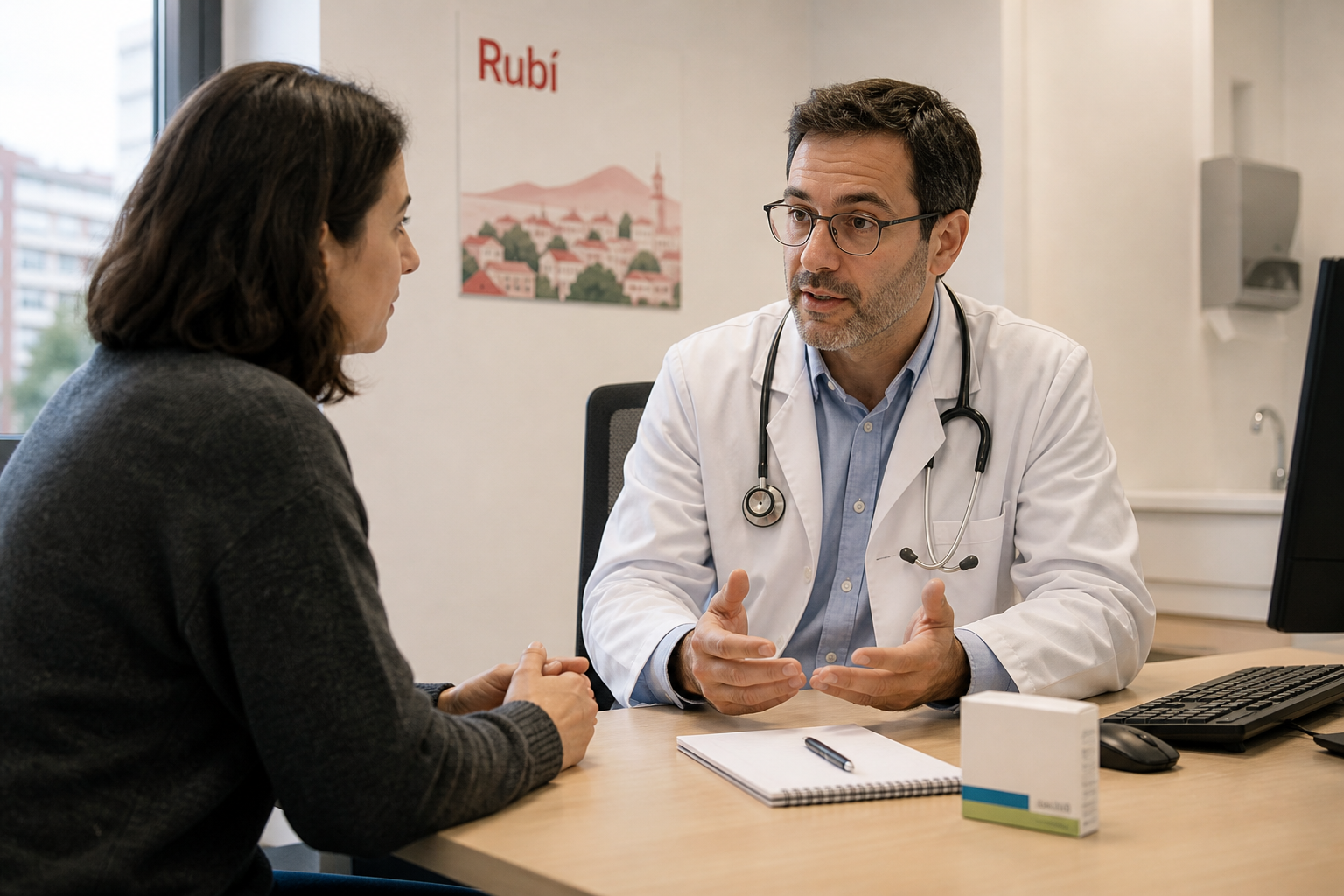
People searching for medical cannabis in Rubí often want clear answers about legality, prescriptions, treatment options and where to seek reliable medical advice. Spain’s framework is more limited and more regulated than the phrase medical cannabis may suggest. Access depends on the medicine, the indication, the prescribing route and the current national rules—not simply on living in Rubí or having a particular diagnosis.
This guide explains the main issues for residents of Rubí, in the province of Barcelona, without presenting cannabis as a guaranteed treatment. It is general information, not a diagnosis or a substitute for a consultation with a doctor or pharmacist. Regulations and clinical pathways can change, so patients should verify current information with official Spanish health authorities and their healthcare team.
How medical cannabis is regulated in Rubí
Medical cannabis is principally governed by Spanish national law. Rubí does not have a separate municipal system that authorises residents to buy cannabis for therapeutic use. Local pharmacies, private clinics and hospitals must operate within the national medicines framework, and any treatment must be clinically justified and supplied through an authorised route.
The legal position also differs between cannabis flower, cannabinoids, extracts and authorised medicines. A product sold as CBD, a cannabis-based medicine dispensed by a pharmacy and cannabis obtained from an unlicensed seller are not legally interchangeable. A claim that a product is “natural” or “therapeutic” does not establish that it is authorised for medical use.
For current information about authorised medicines, safety communications and regulatory notices, consult the Spanish Agency of Medicines and Medical Devices. The agency’s information is more reliable than advertising, social-media recommendations or informal claims made by a cannabis shop.
What a patient should not assume
- A diagnosis automatically creates a right to obtain cannabis.
- A cannabis club provides a lawful medical prescription or clinical supervision.
- CBD products are automatically suitable, effective or free from drug interactions.
- Possessing cannabis at home is the same as possessing an authorised prescription medicine.
- Driving after using a cannabis product is safe merely because the product was used for a medical reason.
What treatment options may exist
When clinicians consider cannabis-related treatment, they may distinguish between authorised cannabis-based medicines and other cannabinoid products. An authorised medicine has a defined composition, quality controls, instructions and evidence evaluated through the medicines system. Other products may have variable concentrations, uncertain purity or limited evidence for the condition being treated.
Spain has authorised specific cannabis-based medicines for particular clinical uses. Their suitability depends on the patient’s condition, previous treatments, contraindications and the doctor’s assessment. A doctor may decide that a conventional medicine, physiotherapy, psychological support or another intervention has a better balance of benefits and risks.
Patients should ask exactly which product is being considered, its active ingredients, how it will be used, how long it will be tried and how success or side effects will be monitored. These questions are especially important where a product contains tetrahydrocannabinol, or THC, because THC can affect alertness, memory, coordination and perception.
How to seek medical cannabis in Rubí
Start with a qualified healthcare professional
The safest first step is to speak with a family doctor, relevant specialist or pharmacist. Bring a list of symptoms, diagnoses, previous treatments, allergies, current medicines and any history of anxiety, psychosis, problematic substance use or cardiovascular disease. Explain what outcome you hope to achieve rather than asking only for a specific product.
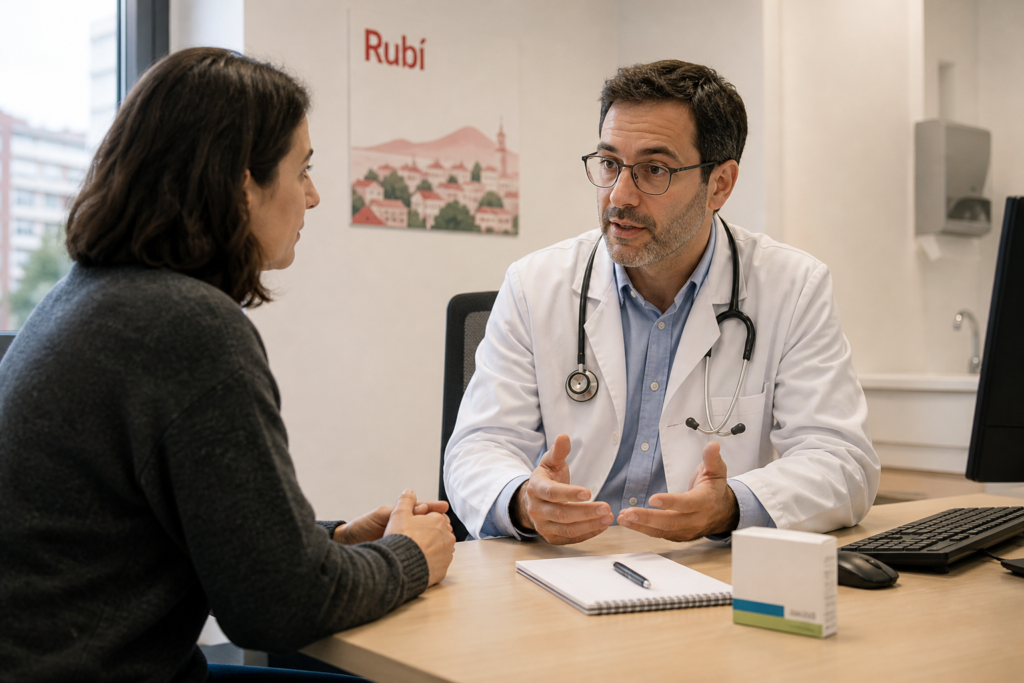
A clinician may review whether the condition has a plausible indication, whether standard treatments have been tried and whether the potential risks are acceptable. They may also consider age, pregnancy or breastfeeding, liver function, mental-health history and the possibility of interactions with sedatives, antidepressants, anticoagulants or other medicines.
Check the supply route
Ask whether the proposed treatment is an authorised medicine and how it will be dispensed. A legitimate pathway should identify the prescriber, the product, the dose, the pharmacy or hospital supply route and the follow-up plan. Be cautious if a provider promises a cure, guarantees access without a medical assessment or encourages the purchase of unlabelled oils, flower or cartridges.
Do not import cannabis products from another country without checking the rules first. Cross-border movement can create separate customs, medicines and controlled-substance issues. A prescription or recommendation from another country may not automatically authorise possession or transport in Spain.
Medical cannabis laws in Rubí: possession, use and travel
The phrase medical cannabis laws in Rubí can be misleading because the decisive rules are generally national rather than municipal. A medical purpose does not automatically remove restrictions on possession, public use, cultivation, supply or transport. Public consumption and possession can lead to administrative or legal consequences depending on the circumstances, while supply and trafficking are treated much more seriously.
Patients should keep authorised medicines in their original packaging and follow the dispensing instructions. They should not share medication, transfer it into an unlabelled container or assume that a product can be used in public because it was prescribed. If travelling, carry relevant documentation and check the destination’s requirements before departure.
For primary legal texts and official notices, use the Official State Gazette, or Boletín Oficial del Estado. If a rule is unclear, a pharmacist, lawyer or public health service can help interpret how it applies to a particular treatment and situation.
Readers comparing local information may also find it useful to review this broader guide to cannabis laws in Cornellà de Llobregat or the practical overview of marijuana legal status in Sant Cugat del Vallès. These nearby-location articles should not be treated as a substitute for current official advice.
Potential benefits and limitations
Research into cannabinoids is ongoing, and evidence varies considerably by condition and product. Some cannabis-based medicines may have a role in narrowly defined circumstances, but that does not mean cannabis is effective for every type of pain, insomnia, anxiety or inflammation. Results can differ between patients, and symptom relief may come with unwanted effects.
A responsible treatment plan sets a measurable goal. For example, the goal might be improved sleep, fewer muscle spasms or better function rather than simply taking cannabis indefinitely. The clinician should review whether the expected benefit is occurring and whether the treatment should be continued, adjusted or stopped.
Unregulated products present additional uncertainties. Labels may not accurately describe THC or CBD content, contaminants may be present, and edible products can take longer to produce effects. Increasing the dose because an effect is delayed can lead to excessive intoxication or poisoning.
Risks, side effects and interactions
Possible short-term effects include dizziness, drowsiness, impaired coordination, dry mouth, nausea, changes in blood pressure and difficulty concentrating. THC can also cause anxiety, panic, confusion or paranoia, particularly at higher doses or in people who are sensitive to its effects.
Regular use can lead to tolerance, dependence or difficulty stopping. Some people develop cannabis use disorder, and high-potency products may increase the risk. Anyone with a personal or family history of psychosis, bipolar disorder or severe substance-use problems should discuss the risks carefully with a healthcare professional before using THC-containing products.
Cannabis can interact with medicines and alcohol. Combining it with alcohol, sleeping tablets, opioids or other sedating substances may increase impairment. Do not drive, cycle in traffic or operate machinery if you feel impaired. A medical reason for use does not guarantee fitness to drive or protect a person from road-safety consequences.
When to seek urgent help
Seek urgent medical help after severe confusion, chest pain, fainting, breathing problems, seizures, extreme agitation, suspected poisoning or thoughts of self-harm. Keep products away from children and pets. Edibles and concentrated oils can be particularly dangerous when their contents are misunderstood or consumed accidentally.
Questions to ask at an appointment
- What diagnosis or symptom is this treatment intended to address?
- Why is this option preferable to the alternatives?
- Which active ingredients and formulation are involved?
- What dose and schedule should I follow, and when should it be reviewed?
- Could it interact with my current medicines or alcohol?
- What side effects require a call to the clinic or emergency care?
- Can I drive, work safely and travel while using it?
- How should unused medicine be stored and disposed of?
Finding reliable information in Rubí
Residents looking into cannabis in Rubí should prioritise their primary-care team, a specialist, a registered pharmacy and official medicines information. Search results can mix medical advice with commercial promotion, and testimonials cannot establish that a product is appropriate for another person.
It is useful to record the product name, strength, dose, timing, benefits and side effects in a simple diary. This gives the clinician practical information for follow-up and can reveal whether symptoms are improving or whether adverse effects are outweighing any benefit.
People searching for weed in Rubí may encounter products marketed for pain, sleep or anxiety. Marketing language is not the same as clinical evidence or legal authorisation. Avoid buying products from unknown websites, informal sellers or sources that do not provide clear labelling and professional accountability.
Conclusion
Access to medical cannabis in Rubí is not a matter of finding a local shop or relying on an online recommendation. The safer approach is to obtain an individual medical assessment, confirm the product and supply route, understand the current Spanish rules and arrange follow-up. Patients should be especially cautious with THC, unregulated products, drug interactions, driving and travel.
Because the regulatory framework and clinical availability may develop over time, check current information with the Spanish medicines authority, the Official State Gazette and qualified healthcare professionals. A well-informed decision weighs possible benefits against legal, medical and practical risks.