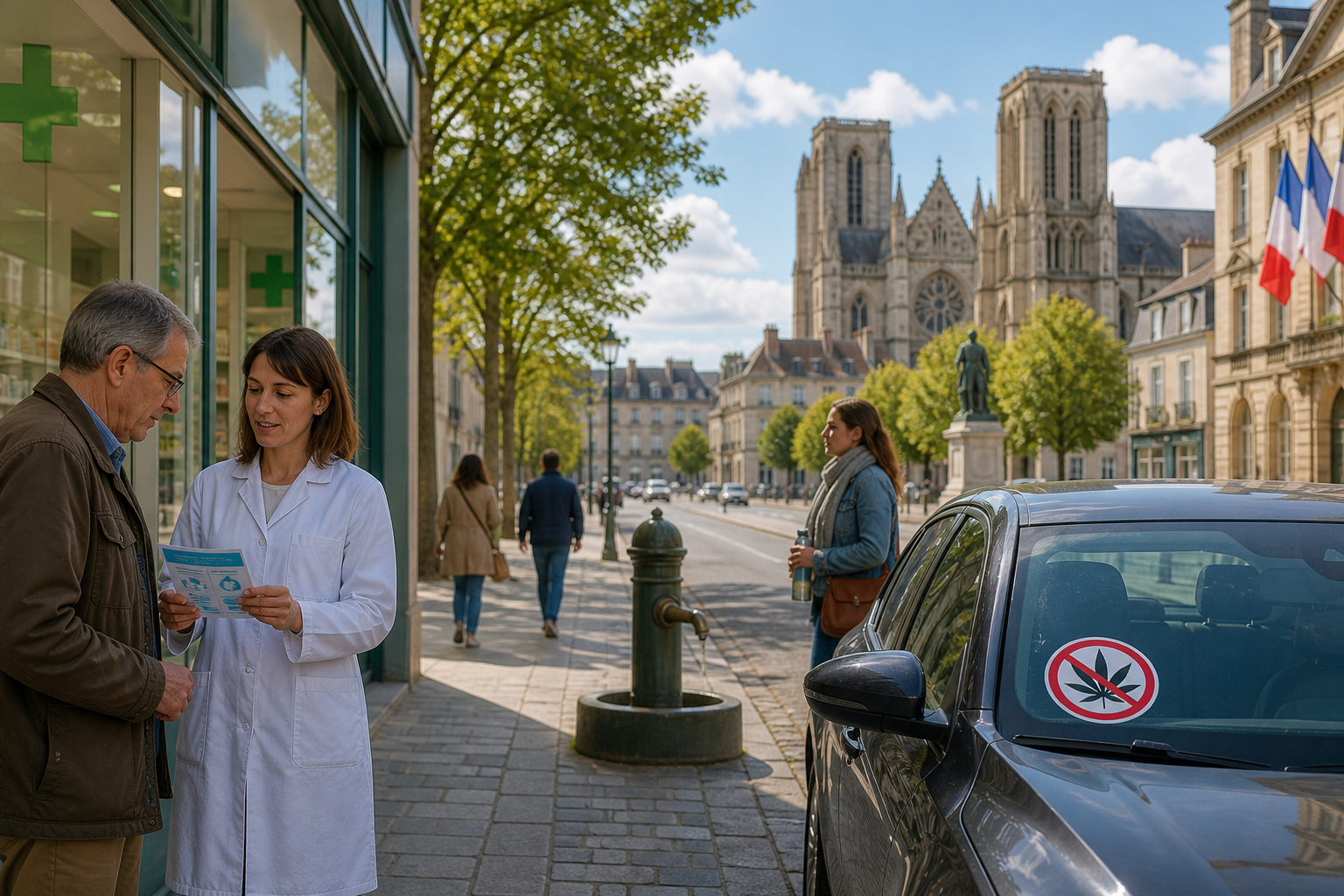
Understanding Marijuana safety in Saint-Quentin means looking at more than personal health. French law prohibits recreational cannabis use, possession, supply and cultivation, while intoxication can also create serious risks around driving, work, public spaces and vulnerable people. Saint-Quentin does not have a separate municipal cannabis regime: the same national rules apply in the city as elsewhere in France.
This guide explains the main legal boundaries, health concerns and practical steps that can reduce harm. It is not legal or medical advice, and rules and enforcement practices can change. For current public-service information, consult the official French public-service website.
What marijuana safety means in Saint-Quentin
For residents and visitors, safety starts with three questions: is the activity lawful, could the product or situation cause harm, and what should someone do if a problem develops? These questions apply whether a person encounters cannabis at a private gathering, in a vehicle, near a nightlife area or in another public setting.
Searches for weed in Saint-Quentin may produce informal sellers or unverified online offers. An attractive label, familiar strain name or claimed THC percentage does not prove that a product is authentic or safe. Unregulated cannabis can be stronger than expected, contaminated, incorrectly labelled or mixed with other substances. Buying, selling or sharing it can also create legal exposure.
Saint-Quentin’s public places, transport areas, parks and roads should not be treated as zones where cannabis is tolerated simply because local enforcement may vary from one situation to another. National law remains the relevant standard.
Cannabis laws in Saint-Quentin
French law treats cannabis as an illicit narcotic. Recreational use is prohibited, including use in private settings. Possessing, transporting, obtaining, offering or selling cannabis can lead to more serious consequences than simple use, depending on the facts. Cultivation is also prohibited outside narrowly defined legal or authorised contexts.
Fines and criminal consequences
Adults found using or possessing a small amount may be offered a fixed criminal fine. The commonly cited amount is €200, with a reduced amount for prompt payment and an increased amount if payment is late. A fixed fine does not make cannabis legal, and it is not a guarantee that every case will be handled that way. The quantity, circumstances, previous history and suspected supply activity can affect the procedure.
French criminal law also provides for court-imposed penalties for unlawful drug use, including imprisonment and a fine in serious or contested cases. Possession for supply, trafficking, importing, exporting and cultivation can carry much heavier consequences. Visitors should not assume that a small purchase is risk-free, particularly when crossing borders or carrying cannabis in luggage.
For a broader comparison of national rules and practical precautions, see this guide to cannabis risks in Lorient, France. The legal principles described there are national rather than specific to Lorient or Saint-Quentin.
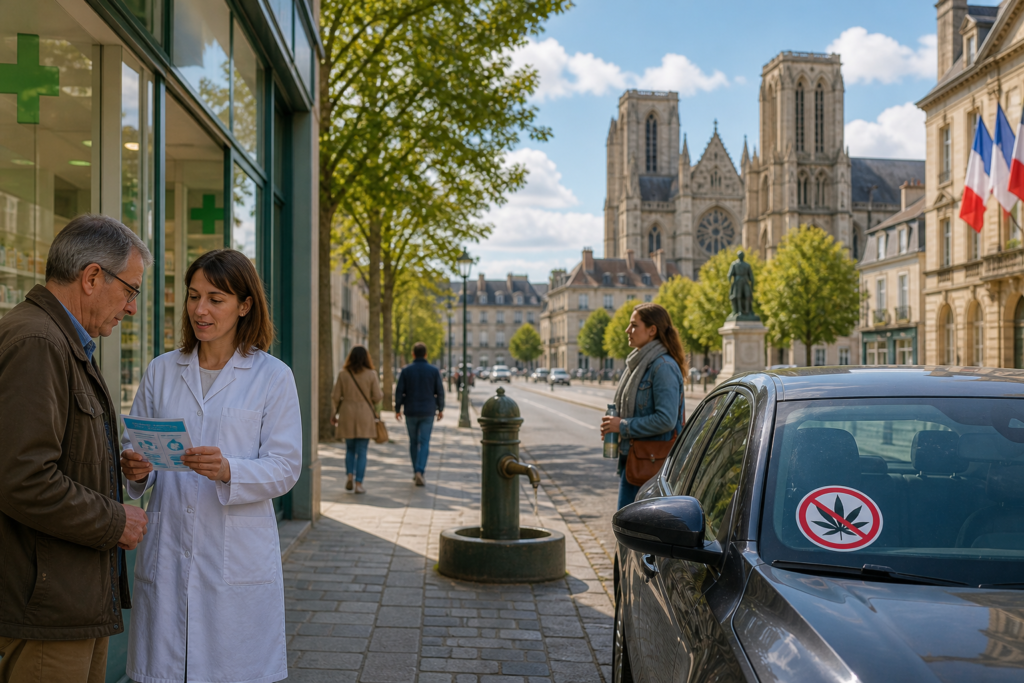
CBD is not the same as recreational cannabis
CBD products are regulated differently from illicit cannabis, but “CBD” does not mean that every product is automatically lawful or harmless. Products must comply with applicable French and European requirements, including limits on THC and rules concerning presentation and sale. Some products may contain enough THC to create legal or driving problems, especially when quality control is poor.
Keep receipts and packaging where possible, avoid products with unclear ingredients, and do not assume that a shop’s claim settles the legal position. Never carry cannabis or CBD products across an international border without checking the rules of every country involved.
Health and impairment risks
The risks of cannabis in Saint-Quentin are the same as those associated with cannabis elsewhere. Effects can include drowsiness, impaired attention, slowed reaction time, altered perception, anxiety, panic, dizziness and poor coordination. The experience can be unpredictable when potency, tolerance, health, medication or the product’s contents are uncertain.
Short-term concerns
- Do not drive, cycle in traffic, use machinery or take part in physically risky activities after using cannabis.
- Do not mix cannabis with alcohol, sedatives, opioids or other drugs. Combined impairment may be stronger and less predictable.
- Remain with a trusted, sober person if someone feels frightened, confused or physically unwell.
- Avoid taking more because effects seem delayed, especially with edible products.
- Keep all cannabis products away from children and pets.
Edibles deserve particular caution. Their effects may take much longer to appear than inhaled cannabis, which can encourage repeat dosing. Once effects begin, they may last for several hours and can be difficult to manage without support.
Longer-term and higher-risk situations
Frequent use can affect memory, learning, motivation or daily functioning for some people. Dependence can develop, particularly with regular or high-potency use. Some people experience withdrawal symptoms such as irritability, sleep problems, reduced appetite or restlessness when they stop.
People with a personal or family history of psychosis, severe anxiety, bipolar disorder or other mental-health conditions should discuss cannabis risks with a qualified healthcare professional. Cannabis may worsen symptoms or interact with treatment. Adolescents, pregnant people and anyone with heart or respiratory problems should be especially cautious and seek medical advice rather than relying on informal recommendations.
Driving and travelling around Saint-Quentin
Driving after cannabis use is illegal in France. The rule is not limited to situations where a driver feels noticeably high: roadside and later testing can detect cannabis, and the legal consequences can follow a positive result. Alcohol and cannabis together create an even greater safety concern.
Do not drive to or from a gathering where cannabis may be used. Arrange a sober driver, use a taxi or ride service, take public transport where available, or delay travel until you are certain you can travel safely. A person who has consumed cannabis should not lend a vehicle to another impaired person or encourage them to drive.
Travelling with cannabis presents a separate risk. Do not take it on trains, buses, aircraft or across borders. A product obtained lawfully in another country may still be prohibited in France. Keep medication in its original packaging and carry appropriate documentation when travelling with prescribed medicines; this does not create permission to transport recreational cannabis.
How to respond to a bad reaction
Most uncomfortable reactions improve with calm reassurance and time, but some symptoms require urgent help. Move the person to a quiet, safe place, stay with them and remove access to vehicles, balconies, roads and other hazards. Do not force food, drinks or another substance as a supposed remedy.
Call for emergency help when needed
Call 15 for medical emergency assistance or 112 for the European emergency number if the person has trouble breathing, chest pain, a seizure, severe agitation, loss of consciousness, extreme confusion, suspected poisoning or an immediate risk of self-harm or harm to others. Give responders accurate information about what was taken, approximately how much, when it was taken and whether alcohol or other drugs were involved.
Do not leave an unconscious person alone and do not induce vomiting. If the situation is not immediately life-threatening but you need advice about a suspected poisoning, a healthcare professional or poison information service can help identify the appropriate next step. Public-health information and support are also available through Drogues Info Service.
Practical safety advice for residents and visitors
Some people looking for marijuana risks in Saint-Quentin are concerned about a friend, while others are trying to avoid legal trouble during a visit. The safest approach is not to use illicit cannabis, but practical planning can still reduce immediate danger.
- Do not buy from unknown sellers or accept unlabelled products.
- Do not use alone, particularly if the product is unfamiliar or its strength is unknown.
- Keep phones charged and ensure a trusted person knows where you are.
- Choose a calm environment away from roads, water, heights and crowded public areas.
- Do not combine cannabis with alcohol or prescription medicines unless a clinician has confirmed that the combination is safe.
- Never give cannabis to a child, teenager or person who has not freely consented.
- Seek professional help if use is becoming difficult to control or affecting work, study, relationships or health.
Medical cannabis and healthcare support
Medical cannabis is not a general recreational exception in France. Access, where permitted, is controlled through the healthcare system and depends on the applicable national framework, medical circumstances and authorised products. A person should not substitute an informal cannabis product for prescribed treatment or stop medication without speaking to a clinician.
If cannabis use is causing anxiety, sleep problems, dependence or conflict, a general practitioner, pharmacist or addiction-support service can provide confidential guidance. Asking for help early is more useful than waiting for a crisis. A clinician can also review interactions with antidepressants, sedatives, pain medicines and other treatments.
What visitors should remember
Visitors sometimes assume that a city with restaurants, nightlife and cultural attractions will have a tolerant cannabis market. That assumption is unsafe. Cannabis laws in Saint-Quentin are governed by France’s national legislation, not by tourism demand or informal local custom.
Do not purchase cannabis from street sellers, carry it into accommodation, transport it through stations or airports, or take it home as a souvenir. If you are stopped or fined, remain calm, follow official instructions and seek qualified legal assistance if you do not understand the procedure. Avoid arguing about the law in public or attempting to hide, discard or transfer substances in a way that creates additional risks.
Conclusion
Marijuana safety in Saint-Quentin depends on recognising both the health risks and the legal position. Recreational cannabis remains prohibited in France, driving after use is unlawful, and unregulated products can be unexpectedly potent or contaminated. The safest choice is to avoid illicit cannabis, never mix substances, keep impaired people away from vehicles and seek emergency help for serious symptoms.
For anyone affected by cannabis use, confidential medical and support services are more reliable than sellers, social-media claims or anecdotal advice. Staying informed, planning safe transport and responding quickly to emergencies can protect both residents and visitors in Saint-Quentin.