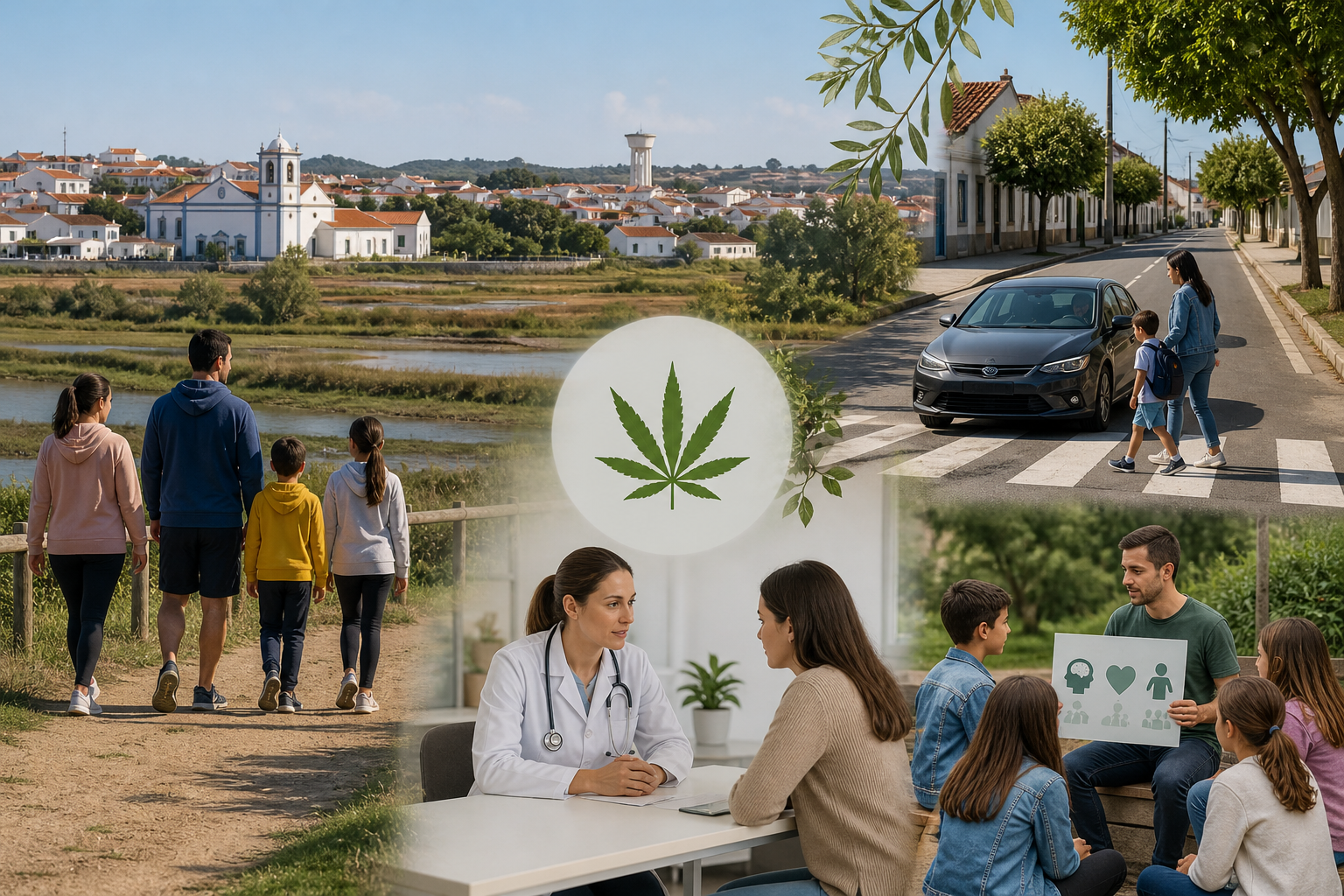
Understanding Marijuana risks in Samora Correia, Portugal means looking beyond whether cannabis is decriminalized or available. The main concerns involve impaired judgment, dependence, mental health, respiratory exposure, unsafe driving and the risks of products with unknown strength. These issues can affect residents, workers and visitors in Samora Correia in much the same way as people elsewhere in Portugal.
Portugal’s approach distinguishes personal drug use from commercial trafficking, but decriminalization does not make marijuana harmless or create a general legal right to buy, sell or consume it anywhere. Local circumstances also matter. A person using cannabis before driving, operating equipment, caring for a child or combining it with alcohol may face immediate safety risks even when no criminal prosecution follows.
This guide explains the most important health and practical concerns, how to recognize a problem, when to seek help and where the legal boundaries generally lie. It is educational information, not a diagnosis or a substitute for advice from a qualified healthcare professional.
Why marijuana risks matter in Samora Correia
Samora Correia is a busy community in the municipality of Benavente, where daily life may involve commuting, road travel, industrial or agricultural work, family responsibilities and outdoor activities. Cannabis impairment can become especially dangerous when it overlaps with driving, machinery, heights, water or other situations requiring quick decisions.
The risks are not determined by the town alone. They depend on the product, THC concentration, dose, frequency of use, age, personal health, route of administration and whether cannabis is combined with alcohol or other drugs. Someone can also underestimate impairment because the effects feel familiar, while reaction time, attention and coordination remain affected.
Information about cannabis laws near Vila Franca de Xira may provide useful regional context, but local articles should not be treated as a replacement for current official guidance or professional legal advice.
Key marijuana risks in Samora Correia, Portugal
Impairment, accidents and driving
THC can affect attention, short-term memory, reaction time, coordination and the ability to judge speed or distance. These effects may increase the likelihood of collisions, falls and workplace incidents. Driving after using cannabis is particularly risky because a person may feel capable while still responding more slowly to hazards.
Combining cannabis with alcohol can produce greater impairment than using either substance alone. The safest option is not to drive, cycle on public roads, use machinery or perform safety-sensitive work after consuming cannabis. Waiting until the next day may not always resolve uncertainty, especially after a large dose, an edible, a high-potency product or repeated use.
Short-term mental and physical effects
Common short-term effects can include drowsiness, dizziness, altered time perception, reduced concentration, increased heart rate, dry mouth and impaired coordination. Some people experience anxiety, panic, suspiciousness or confusion instead. Edibles may be particularly difficult to judge because effects can take longer to appear and may last substantially longer than expected.
A strong or unexpected reaction does not necessarily mean that a product is contaminated, but it should be taken seriously. Move to a calm place, avoid further consumption, do not drive and stay with a trusted sober person if possible. Seek urgent medical help for chest pain, severe breathing problems, loss of consciousness, a seizure, extreme confusion or behavior that creates an immediate danger.
Dependence and cannabis use disorder
Regular cannabis use can become difficult to control. Warning signs include using more than intended, spending substantial time obtaining or recovering from use, continuing despite problems at work or home, and repeatedly trying but failing to cut down. Some people develop tolerance and need more to achieve the same effect.
Stopping after frequent use can bring irritability, sleep difficulties, reduced appetite, restlessness, low mood, anxiety or strong cravings. Withdrawal is usually not life-threatening, but it can make change difficult. A healthcare professional can help assess the pattern and discuss a realistic plan without judgment.
Mental health concerns
Cannabis can worsen anxiety or trigger distressing thoughts in some users. Frequent use, high-THC products and an early age of first use are associated with greater concern, particularly for people with a personal or family history of psychosis, bipolar disorder or other serious mental health conditions. Cannabis may also complicate recovery when someone is already experiencing depression, paranoia or problems with motivation.
Anyone who develops hallucinations, severe paranoia, suicidal thoughts or an inability to care for themselves needs prompt professional assessment. If there is immediate danger, contact emergency services in Portugal rather than trying to manage the situation alone.
Risks for teenagers and young adults
The adolescent brain continues developing into early adulthood. Cannabis exposure during this period may interfere with learning, attention, memory and educational or social functioning, particularly when use is frequent. This does not mean that every young person who uses cannabis will experience the same outcome, but age and pattern of use are important risk factors.
Adults concerned about a teenager should focus on safety and communication rather than relying only on punishment. Ask what was used, how much, when and whether alcohol or medicines were involved. Look for changes in sleep, mood, school attendance, friendships and concentration. A family doctor, school health professional or addiction service can help determine whether the issue is experimentation, risky use or a developing disorder.
Smoking, vaping and edible products
Smoking cannabis exposes the lungs and airways to irritants and combustion products. It can lead to coughing, throat irritation and respiratory symptoms, while sharing joints, pipes or mouthpieces can also spread infections. Vaping may avoid combustion but is not automatically safe; device quality, oils, additives and product labeling can be uncertain.
Edibles create a different risk profile. Delayed effects can encourage repeated dosing before the first dose has fully taken effect. This may result in prolonged anxiety, vomiting, extreme sedation or confusion. Keep cannabis products away from children and pets, and never leave food containing cannabis where another person could mistake it for an ordinary snack.
Unregulated products may have inaccurate labels or contain unexpected substances. Avoid consuming a product when its ingredients, concentration or source are unclear. Synthetic cannabinoids are not the same as ordinary cannabis and may cause more unpredictable or severe reactions.
Cannabis, medicines and existing health conditions
Cannabis may interact with medicines that cause sedation or affect the nervous system. Combining it with sleeping tablets, tranquilizers, opioid pain medicines or alcohol can increase drowsiness and impair breathing or judgment. People taking regular prescription medicines should ask a doctor or pharmacist about possible interactions rather than assuming that cannabis is harmless because it is plant-based.
Extra caution is appropriate for people with heart disease, a history of fainting, significant anxiety, psychosis, bipolar disorder, pregnancy or breastfeeding. People with breathing problems should also avoid inhaled cannabis. Medical advice should be individual because the safest choice depends on the condition, treatment and product involved.
Medical cannabis in Samora Correia
Medical cannabis in Samora Correia should be approached as a regulated medical issue, not as informal self-medication. A doctor must determine whether cannabis-based treatment is appropriate, review other options and consider potential interactions and side effects. Products intended for medical use may differ in composition, dosage and quality from recreational products.
Do not replace prescribed treatment with cannabis without speaking to the prescriber. Keep a record of the product, dose, timing and symptoms, and report unwanted effects. For official information about medicines and health products in Portugal, consult INFARMED, Portugal’s medicines authority.
Cannabis laws in Samora Correia: what decriminalization does not mean
Cannabis laws in Samora Correia are primarily determined by Portuguese national law rather than a separate town-level cannabis regime. Portugal’s decriminalization model generally treats personal consumption and possession for personal use through an administrative and health-oriented framework, but it does not amount to full legalization.
Sale, supply, trafficking and unauthorized cultivation can remain serious offenses. Public consumption may create additional problems, including nuisance, exposure of children and conflict with property or venue rules. Driving under the influence can lead to enforcement and safety consequences even when possession is handled through a non-criminal process.
Rules and administrative procedures can change, and the circumstances of each case matter. For current information on Portugal’s drug policy and support framework, consult the official SICAD information portal. Visitors should also avoid carrying cannabis across borders because importing or exporting controlled substances can create much more serious legal risks than possession for personal use inside the country.
For additional visitor context, the guide to cannabis regulations for tourists in Entroncamento discusses why travelers should separate Portugal’s decriminalization policy from assumptions about legal retail sales or cross-border transport.
How to reduce harm if someone chooses to use cannabis
- Do not drive, cycle on public roads, swim, climb or operate machinery while impaired.
- Avoid mixing cannabis with alcohol, sedatives or other drugs.
- Use less rather than taking repeated doses, especially with edibles or unfamiliar products.
- Choose a safe, private environment with a trusted sober person nearby.
- Keep products locked away from children, teenagers and pets.
- Do not share smoking devices or use cannabis around people who do not consent to exposure.
- Avoid cannabis if it has previously caused panic, paranoia, fainting or other severe reactions.
- Seek professional advice if use is frequent, escalating or interfering with responsibilities.
When to seek help
Contact emergency services immediately when someone has difficulty breathing, chest pain, a seizure, collapses, cannot be awakened, becomes dangerously agitated or expresses suicidal intent. Do not leave an unconscious or severely confused person alone, and tell healthcare workers what was consumed if that information is available.
For non-urgent concerns, begin with a family doctor or another healthcare professional. Be honest about the type of product, approximate amount, frequency and other substances involved. This information helps clinicians assess risk and recommend appropriate support. A person does not need to wait for a crisis before asking for help.
Conclusion
The most important Marijuana risks in Samora Correia, Portugal involve impairment, accidents, dependence, mental health effects, respiratory exposure and uncertain product strength. These risks can be reduced by avoiding driving and mixing substances, keeping cannabis away from children, using caution with edibles and seeking medical advice when use becomes difficult to control.
Portugal’s decriminalization framework should not be confused with unrestricted legalization. Health concerns and legal consequences can still arise, particularly around supply, public conduct, driving and travel across borders. When in doubt, prioritize safety and use current guidance from Portuguese health and medicines authorities.