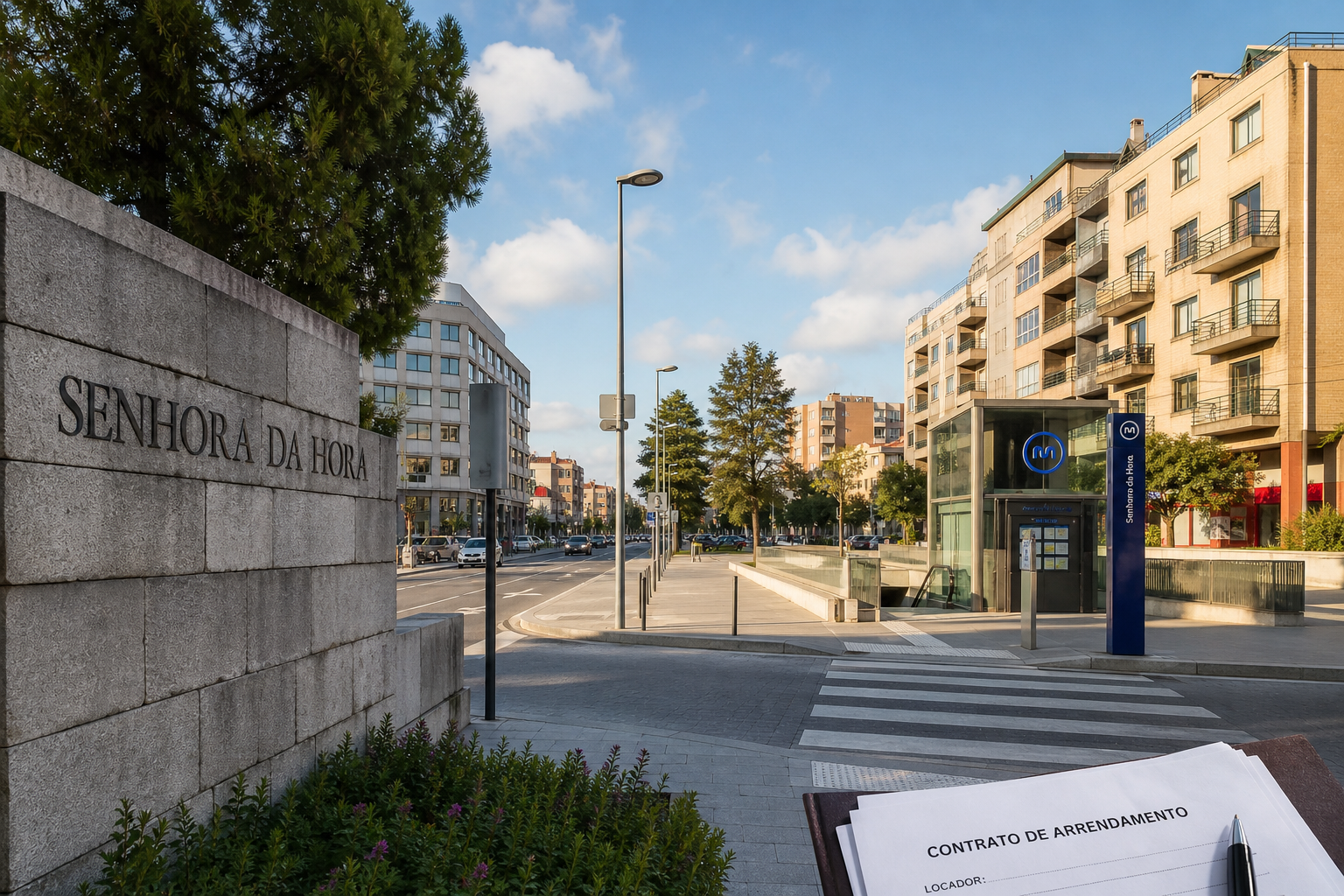
Understanding Marijuana penalties in Senhora da Hora requires separating Portugal’s decriminalisation system from full legalisation. Senhora da Hora is a civil parish in the municipality of Matosinhos, in the Porto metropolitan area, but cannabis offences are governed mainly by Portuguese national law rather than by a separate local penalty code. The practical outcome depends on what happened: personal possession, consumption, cultivation, driving, sharing, sale or possession of a large quantity can lead to very different procedures.
This guide explains the general framework for weed in Senhora da Hora and nearby Matosinhos. It is general information, not individual legal advice. Anyone questioned, detained or charged should speak with a Portuguese lawyer before making important decisions.
How cannabis law applies in Senhora da Hora
Portugal decriminalised the use and possession of drugs for personal use through Law 30/2000. Decriminalisation does not mean that cannabis is legal to buy, sell or use without restrictions. Instead, certain personal-use cases are handled as administrative matters rather than ordinary criminal prosecutions.
The national framework applies in Senhora da Hora in the same way it applies elsewhere in Portugal. Police may still identify a person, seize suspected cannabis, record the circumstances and refer the matter to the competent administrative process. The fact that an incident occurs in a residential area, near a shopping centre, on public transport or elsewhere in Matosinhos does not create a local exemption.
The official text of Portugal’s Law 30/2000 on the decriminalisation of personal drug use is the best starting point for checking the legal structure. Because laws and administrative practices can change, the current text and professional advice should take priority over summaries online.
Marijuana penalties in Senhora da Hora for personal possession
When authorities treat cannabis as intended exclusively for personal use, the case is generally referred to a Commission for the Dissuasion of Drug Addiction rather than being handled as a standard criminal trial. The commission is an administrative body, not a criminal court. It assesses the circumstances and may distinguish between a dependent user and a non-dependent user.
Possible consequences can include a warning, a monetary penalty or other administrative measures. The commission may also impose measures designed to discourage use, such as periodic reporting or restrictions connected with particular activities. For a person experiencing dependence, the process may emphasise assessment, counselling or treatment rather than punishment. The outcome is not automatic: the amount, the person’s circumstances, prior history, behaviour and evidence of personal use can all matter.
A person should not assume that a small quantity guarantees that nothing will happen. Cannabis can be seized, identity details can be recorded and the person may receive instructions about attending a hearing or providing information. Ignoring an official notification can create additional practical problems.
Quantity thresholds and the ten-day reference
Portuguese law has historically used a reference quantity corresponding to average personal consumption over ten days. This is an evidential benchmark, not a legal permission to possess a fixed amount. It does not create a retail allowance, and it should not be interpreted as a guaranteed safe limit.
After later legislative changes, possession above the reference quantity is not automatically proof of trafficking if the person can establish that the cannabis was exclusively for personal consumption. At the same time, a larger amount can raise suspicion and may lead authorities to investigate whether the substance was intended for supply. The surrounding evidence is important, including packaging, messages, cash, scales, multiple varieties, customer contacts and statements.
For that reason, online claims that a specific number of grams is always “legal” in Senhora da Hora are misleading. The legal classification depends on the facts and on how the authorities interpret the evidence.
Use in public places and possession in private
Portugal’s decriminalisation model does not create a general right to smoke cannabis in public. Consumption in a street, park, transport area, shopping district, workplace or shared residential space can attract police attention and may create separate concerns involving nuisance, public order or the rights of other people.
Private use can still involve legal risk. A landlord, hotel, employer or other property controller may prohibit smoking or impose contractual consequences. Smoke can also affect neighbours, children and people with respiratory sensitivity. Being inside a private property does not legalise supply, cultivation or the possession of cannabis for someone else.
Visitors researching cannabis in Senhora da Hora should be particularly cautious. Portugal’s decriminalisation rules do not mean that tourists can legally purchase cannabis from an unlicensed seller, carry it across a border or assume that accommodation providers permit use.
Sale, supply and sharing: more serious offences
Supplying cannabis is fundamentally different from possessing it for personal use. Selling, distributing, transporting for supply, importing or exporting cannabis can constitute drug trafficking or another serious drug offence under Portuguese criminal law. The potential consequences are much more severe than an administrative response to personal use and may include criminal investigation, arrest, prosecution, imprisonment and confiscation.
“Sharing” is not automatically harmless. Giving cannabis to a friend, accepting money for it, arranging delivery or dividing a supply for other people can be interpreted as supplying a controlled substance. The absence of a profit does not necessarily eliminate legal risk.
Indicators that may cause authorities to investigate a supply offence include individually wrapped portions, a large quantity, communications with prospective buyers, transaction records, scales and cash. A person questioned in such circumstances should avoid guessing, signing documents they do not understand or treating the matter as a minor possession incident without legal advice.
Cultivation and cannabis plants
Growing cannabis at home is not made lawful simply because the intended harvest is for personal consumption. Personal cultivation can be treated differently from possession and may expose a person to criminal proceedings. The number and maturity of plants, cultivation equipment, harvested material and evidence of intended use can all affect the assessment.
Indoor cultivation may also create other issues, such as electrical hazards, water damage, odour complaints or disputes with landlords and neighbours. Those practical problems do not replace the drug-law analysis, but they can make an incident more complicated.
Driving after cannabis use
Driving after using cannabis creates a separate and serious risk. Portugal’s road-safety rules address driving under the influence of drugs, and a person can face consequences even when the cannabis itself would otherwise be dealt with through a personal-use administrative process. Testing, impairment evidence and the circumstances of the stop may be relevant.
The safest approach is simple: do not drive, cycle in traffic or operate machinery after consuming cannabis if there is any possibility of impairment. Arrange a sober driver or use public transport. This is especially important around Senhora da Hora’s busy roads, metro connections and links to Matosinhos and Porto.
Medical cannabis in Senhora da Hora
Medical cannabis is not the same as recreational possession. Portugal permits certain cannabis-based medicines under a regulated medical framework, but access depends on an authorised product, a lawful prescription and dispensing through the appropriate channels. A person should not assume that a recreational cannabis product can be presented as medicine after the fact.
The Portuguese medicines regulator, INFARMED, provides official information about medicines, authorisation and the regulatory system. Patients should use a qualified healthcare professional and obtain products through lawful Portuguese channels rather than relying on informal sellers or products brought from another country.
Travelling with medical cannabis also requires care. A prescription from another country may not automatically authorise possession, importation or transport in Portugal. Patients should check the applicable travel and medicine requirements before crossing a border.
What to do if police stop you in Senhora da Hora
- Stay calm and cooperate. Do not resist a search or attempt to dispose of suspected cannabis.
- Ask what procedure is being used. It may be a personal-use administrative matter, but the facts can lead to a criminal investigation.
- Provide accurate identification details. Do not provide false information or sign a statement you do not understand.
- Request interpretation if necessary. Visitors who do not understand Portuguese should ask for language assistance.
- Seek legal advice. A lawyer can explain whether the matter involves a commission hearing, a criminal investigation or another process.
- Keep every document. Record the date, location, case reference and any deadline for attending or responding.
People looking for broader local context may also find our guide to cannabis consumption in Matosinhos useful. It should be read alongside current Portuguese law rather than treated as a substitute for professional advice.
How to interpret cannabis laws in Senhora da Hora
The most important distinction is between decriminalised personal use and legal commercial access. Cannabis laws in Senhora da Hora may be discussed informally as if cannabis were legal, but the legal reality is narrower. Personal-use cases can be processed administratively, while supply, cultivation, importation, exportation and driving under the influence can trigger much more serious consequences.
Another important distinction is between an allegation and a final outcome. Police may seize a substance or open a report, but the competent authority determines how the facts are classified. Laboratory analysis, witness evidence and the person’s explanation may affect the process.
Do not rely on social-media claims about “legal amounts,” dispensaries or guaranteed non-prosecution. Portugal does not operate a general recreational cannabis retail market equivalent to a licensed adult-use dispensary system. Unlicensed sellers remain a legal risk, even when they describe products as high quality or intended for personal use.
Key points for residents and visitors
- Senhora da Hora follows Portuguese national drug law; there is no separate local cannabis penalty schedule.
- Personal possession and use may be decriminalised, but they are not unrestricted or fully legal.
- A Commission for the Dissuasion of Drug Addiction may handle a personal-use case.
- Warnings, fines and other administrative measures are possible, depending on the circumstances.
- Possession above the personal-use reference quantity can raise suspicion, although it is not automatically proof of trafficking.
- Sale, supply, importation, exportation and cultivation can lead to criminal consequences.
- Driving after cannabis use creates a separate road-safety risk.
- Medical cannabis requires lawful medical and regulatory channels.
Conclusion
Marijuana penalties in Senhora da Hora reflect Portugal’s national decriminalisation model: personal-use cases may be handled administratively, but cannabis is not generally legal to sell, grow, import or use without consequences. The quantity, evidence of intent, location, driving and any involvement of other people can change the legal analysis substantially.
For a current case, the safest course is to keep official documents, meet every deadline and obtain advice from a Portuguese lawyer. For general information, consult official government and medicines-regulator sources rather than relying on informal claims about weed in Senhora da Hora or cannabis in Senhora da Hora.