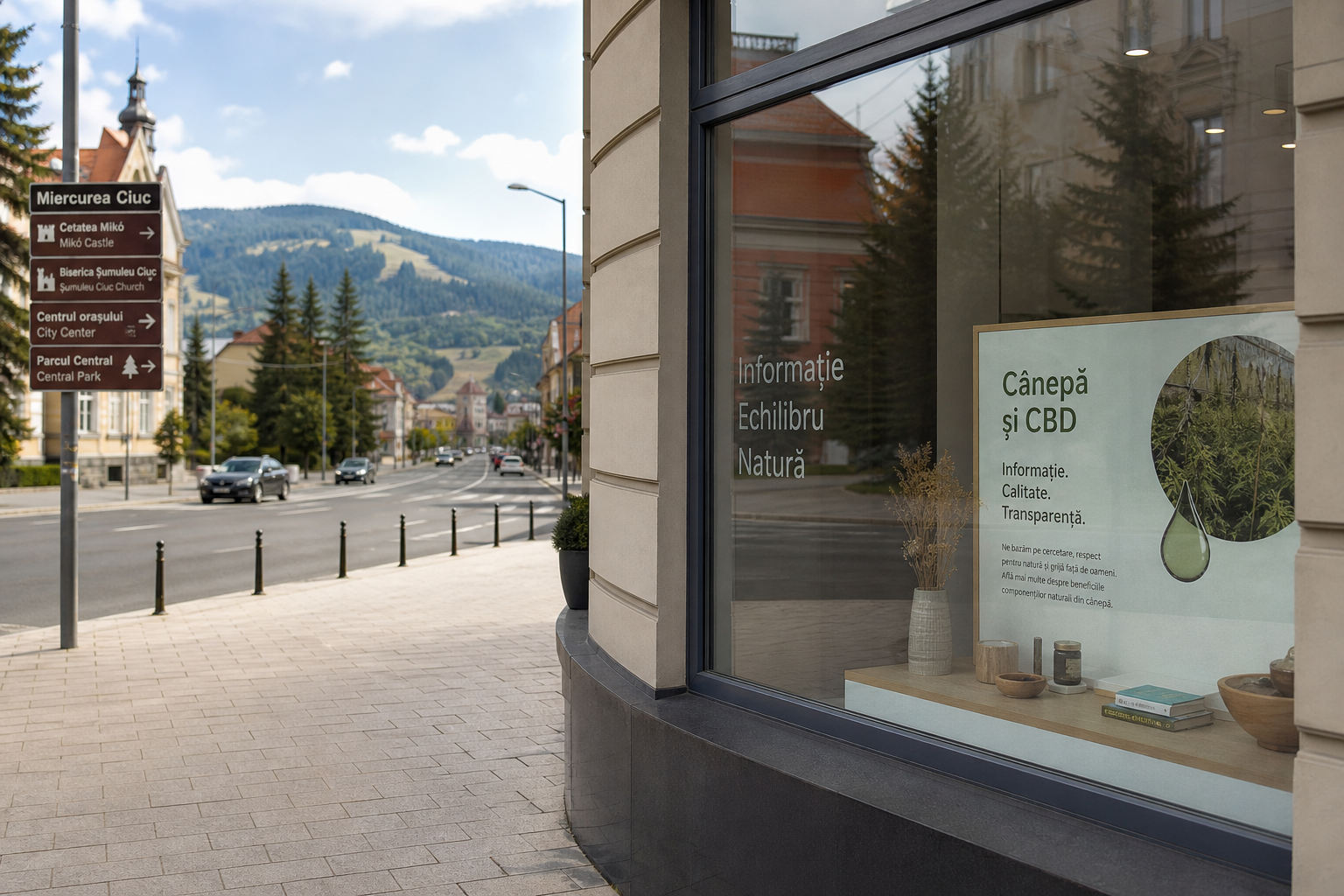
The Marijuana market in Miercurea Ciuc is best understood as a mix of strict Romanian drug laws, limited medical access, legal hemp and CBD products, and an informal market that is difficult to measure reliably. Miercurea Ciuc, known locally as Csíkszereda, is a regional centre in Harghita County with a close-knit community, seasonal visitors and cross-border connections. Those factors can shape demand, but they do not create a separate legal framework for cannabis.
For residents and visitors, the key distinction is between controlled cannabis containing prohibited levels of THC and compliant hemp-derived goods. A product being labelled “natural,” “CBD” or “hemp” does not automatically make it lawful. Buyers should verify the product, its documentation and the rules that apply to possession, transport and use.
What the marijuana market in Miercurea Ciuc actually includes
There is no dependable public dataset that measures retail cannabis sales or informal cannabis activity specifically in Miercurea Ciuc. Online claims about the size of a local market should therefore be treated cautiously. A responsible assessment focuses on the parts of the market that can be discussed without inventing figures.
- Illegal recreational supply: Cannabis containing prohibited THC levels remains part of the controlled-drug framework. Buying, possessing, selling or distributing it can create serious legal exposure.
- Legal hemp and CBD: Some shops and online retailers offer hemp foods, cosmetics, fibres or CBD-labelled products. Their legality depends on composition, intended use, labelling and applicable product regulations.
- Medical interest: Patients may search for cannabis-based treatment, but medical interest does not mean that a broad dispensary system exists in Romania.
- Industrial hemp: Hemp cultivation and processing can be legitimate when operators follow agricultural, licensing and THC-related requirements. This sector is distinct from recreational marijuana sales.
This structure explains why searches for weed in Miercurea Ciuc may produce very different results. Some pages refer to illegal drugs, while others use “weed” casually for hemp products. Consumers should not assume that the same rules apply to both.
Cannabis laws in Miercurea Ciuc
Miercurea Ciuc follows Romanian national law rather than a city-level cannabis policy. Cannabis is treated as a controlled substance, and enforcement can apply to possession, cultivation, production, supply and trafficking. The legal consequences depend on the conduct, the substance involved, the quantity and the surrounding evidence.
Romania does not operate a legal recreational cannabis retail market comparable to regulated adult-use systems in some other countries. There are no licensed local marijuana dispensaries where adults can lawfully purchase high-THC cannabis for personal use. A private sale, a social exchange or a purchase arranged online is not made legal by taking place away from the city centre or in a private residence.
Because legal interpretation can depend on current legislation and case facts, readers should consult the official Romanian legislation portal for the applicable texts and seek qualified legal advice when facing a specific situation. Information found in social media groups or foreign cannabis guides may not reflect Romanian rules.
Possession and personal use
Possession of cannabis can lead to criminal proceedings, even when a person describes the amount as small or intended only for personal use. The absence of a commercial transaction does not automatically remove legal risk. Cultivation for personal use can also be unlawful, and storing cannabis in a vehicle, accommodation or shared property may create additional practical complications.
Visitors should be especially careful. A person who legally purchased cannabis in another country cannot assume that bringing it into Romania, carrying it across a border or taking it to Miercurea Ciuc is permitted. Travel, customs and controlled-substance rules can overlap.
For related information, see this guide to marijuana restrictions in nearby Sfântu Gheorghe. The local setting may differ, but the national legal framework remains the important starting point.
Medical cannabis in Miercurea Ciuc: access and limitations
Interest in medical cannabis in Miercurea Ciuc usually comes from people managing chronic pain, neurological symptoms, sleep problems or other difficult conditions. Those concerns deserve medical attention, but self-treatment with unregulated cannabis can create risks involving dosage, interactions, dependency and delayed diagnosis.
Romania’s medical cannabis landscape is limited and should not be confused with the broad prescription systems found elsewhere. Patients should discuss symptoms and treatment options with a qualified doctor or pharmacist. A doctor can help distinguish between an approved medicine, a regulated pharmaceutical ingredient and an unverified product marketed with medical claims.
The National Agency for Medicines and Medical Devices of Romania provides institutional information through its official medicines and medical devices website. Patients should verify whether a particular medicine is authorised, how it may be obtained and whether additional prescription or import requirements apply.
Why medical claims require caution
CBD oils, flowers, gummies and other products may be promoted as treatments for anxiety, pain or insomnia. Marketing language is not proof of clinical effectiveness or legal status. Product strength can vary, and contamination or inaccurate labelling may be difficult for a consumer to detect.
Anyone taking prescription medicines should ask a healthcare professional about possible interactions. People who are pregnant, under 18, managing a psychiatric condition or operating vehicles should be particularly cautious about products that may contain THC or other psychoactive ingredients.
CBD, hemp and retail opportunities in the city
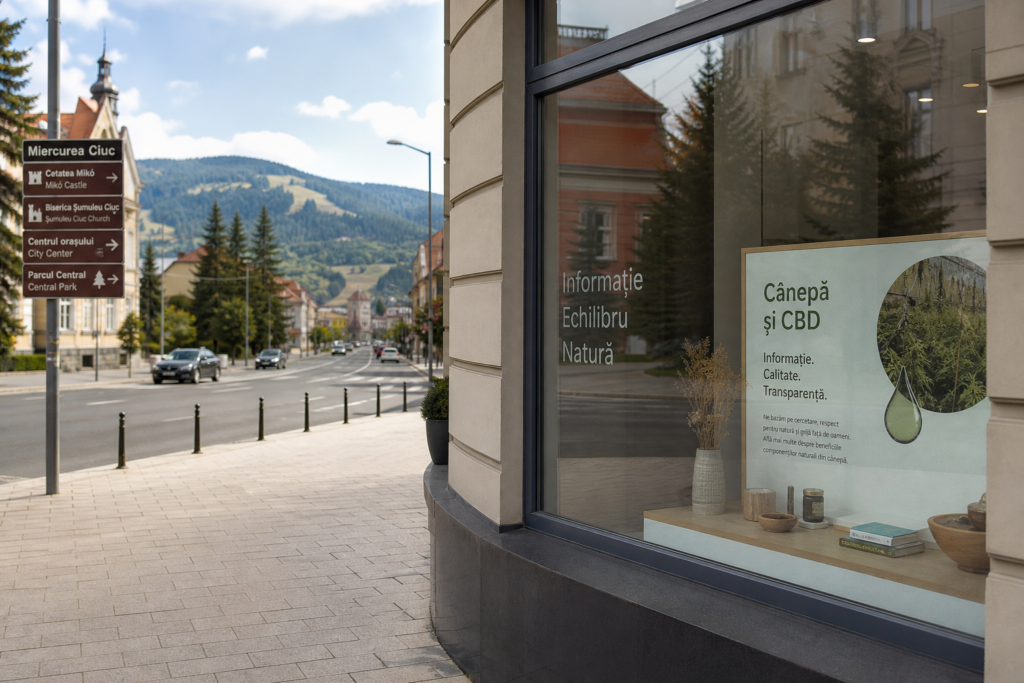
The most visible legal-adjacent part of the cannabis economy is likely to involve hemp-derived goods rather than high-THC marijuana. In Miercurea Ciuc, potential retail channels may include health-oriented shops, food retailers, specialist online stores, agricultural suppliers and businesses serving visitors. The presence of a product on a shelf, however, is not conclusive proof that every version of that product is compliant.
A responsible retailer should be able to identify the manufacturer or importer, provide clear ingredient information and explain the product’s intended use. A certificate of analysis can be useful, but customers should consider who issued it, whether it refers to the exact batch and whether it tests for cannabinoids and contaminants relevant to the product.
- Check the complete ingredient list and the stated THC content.
- Look for batch identification, manufacturer details and Romanian or EU-compliant labelling where required.
- Be cautious of products promising to cure serious diseases or replace prescribed treatment.
- Do not drive or work in a safety-sensitive role after using a product that may contain THC.
- Keep oils, edibles and flowers away from children and pets.
People comparing local products with offerings elsewhere may also find useful context in this overview of CBD shops and safer buying considerations in Piatra Neamț. The same basic principle applies: product labels and legal compliance matter more than branding.
How local conditions shape cannabis demand
Miercurea Ciuc has a distinct regional identity, a Hungarian-speaking population and a location in the Eastern Carpathians. These characteristics may influence how information spreads, which languages consumers use when searching and how local businesses communicate. They do not, however, create a special exemption from national drug law.
Tourism and outdoor recreation can also affect interest in wellness products, hemp foods and CBD-labelled goods. Visitors may encounter products in accommodation areas, markets or online advertisements. A tourist-oriented presentation should not be mistaken for a guarantee that a product is suitable for use, legal to transport or free from THC.
Language is another practical consideration. Consumers may encounter Romanian, Hungarian and English descriptions of the same product. Translating a label or advertisement does not resolve uncertainty about ingredients, authorisation or possession rules. When in doubt, customers should ask a pharmacist, healthcare professional or qualified legal adviser rather than relying on informal translation.
Risks in the informal market
Informal cannabis sales are difficult to evaluate because products are not subject to dependable quality control. A buyer may not know the actual THC concentration, whether synthetic cannabinoids are present, or whether a product has been contaminated during cultivation, processing or storage. Edibles create additional risk because effects can be delayed and the amount consumed may be unclear.
There are also personal safety concerns. Arranging a transaction with an unknown seller can expose someone to theft, coercion, harassment or police action. Sending money through an unverified online account creates a separate fraud risk. These concerns are relevant whether the transaction is arranged in Miercurea Ciuc, elsewhere in Romania or through an international platform.
Do not combine unknown cannabis products with alcohol, sedatives or other drugs. Seek urgent medical help for severe confusion, chest pain, breathing problems, loss of consciousness, seizures or extreme agitation. If someone may have taken an unknown substance, preserve the packaging if available and tell medical staff what is known without delay.
What responsible market development could look like
A sustainable legal hemp and wellness sector would depend on transparent supply chains, accurate labelling and compliance with Romanian and European requirements. Local businesses could contribute by avoiding exaggerated health claims, training staff, keeping invoices and batch records, and referring medical questions to healthcare professionals.
Public authorities and community organisations can support better decisions through practical education. Useful information should explain the difference between hemp and marijuana, outline the risks of impaired driving, clarify where medical advice is available and warn against transporting controlled substances across borders.
Researchers and journalists should also avoid presenting anecdotal reports as market data. A credible picture of cannabis in Miercurea Ciuc would require transparent methods, clearly defined terms and a distinction between legal hemp commerce, medical products and illegal activity.
Practical questions for residents and visitors
Can adults buy recreational marijuana legally in Miercurea Ciuc?
No legal recreational retail market is established in the city. High-THC cannabis remains subject to Romanian controlled-substance rules, and possession or supply can have serious consequences.
Are all CBD products legal?
No. Legality depends on the product’s ingredients, THC content, purpose, labelling and other applicable rules. “CBD” on a package is not a universal legal guarantee.
Can a prescription from another country solve the problem?
Not automatically. Foreign prescriptions, imported medicines and controlled substances may be subject to Romanian recognition, customs and possession requirements. Verify the rules before travelling.
Where should someone get medical advice?
Start with a qualified doctor or pharmacist. They can assess the condition, review existing medicines and explain lawful treatment options rather than relying on an unverified seller.
Conclusion
The marijuana market in Miercurea Ciuc is not a conventional legal recreational market. It is better described as a combination of strict national drug controls, limited medical access, legal hemp-related commerce and an unmeasured informal sector. That distinction helps residents, businesses and visitors avoid assumptions based on foreign cannabis laws.
The safest approach is to verify the current Romanian rules, examine product information carefully, avoid unregulated high-THC products and seek professional advice for medical concerns. In Miercurea Ciuc, accurate information and cautious decision-making are more useful than informal market claims or promises of easy access.