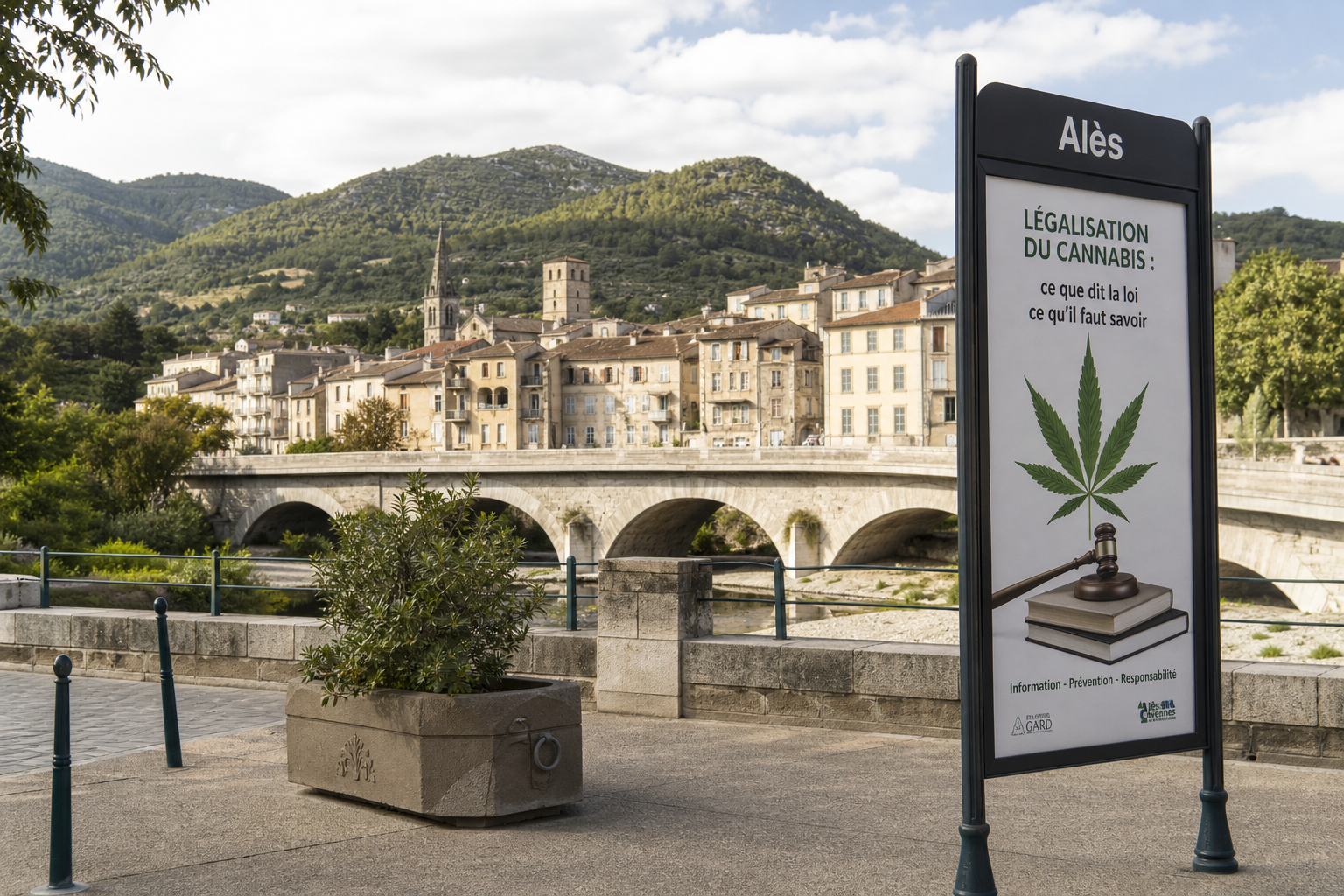
Understanding the Marijuana laws 2026 Alès, France means looking first at national French law. Alès does not have a separate municipal system that legalizes recreational cannabis, and local police, courts and public authorities apply the same national rules that govern the rest of France. For residents and visitors, the key distinction is between illegal recreational cannabis, regulated medical access and compliant CBD products.
This guide explains the practical position expected in 2026, including possession, use, public consumption, driving, CBD, travel and medical treatment. Cannabis rules can change through legislation or administrative guidance, so anyone facing a specific legal problem should obtain advice from a qualified French lawyer or check current official information.
Alès cannabis laws in 2026: the national framework
Recreational cannabis remains prohibited in France. Buying, selling, supplying, possessing, transporting, growing or using cannabis outside an authorized medical or research context can result in criminal or administrative consequences. The fact that cannabis may be tolerated in some other European countries does not change the position in Alès.
There is no licensed recreational dispensary system in Alès comparable to regulated markets in some parts of North America. A private seller, social club or informal delivery service cannot make an otherwise prohibited transaction lawful. Online advertisements and claims that a product is “legal” should therefore be treated cautiously.
For a broader comparison of how French rules are applied in another city, see this guide to Marijuana laws 2026 in Saint-Brieuc. The legal principles are national, although enforcement circumstances can differ.
Possession and personal use in Alès
Possessing or using cannabis for personal purposes remains unlawful. French authorities may respond to a straightforward use or possession case with a fixed criminal fine, commonly known as an amende forfaitaire délictuelle. The standard amount is generally €200, reduced to €150 when paid within the applicable period and increased to €450 if payment is late.
A fixed fine is not a declaration that cannabis is legal. It is an enforcement procedure for eligible cases. Police or prosecutors may instead use other procedures, particularly where the facts are disputed, the quantity or circumstances raise additional concerns, the person is under 18, or there are suspected offences beyond simple use or possession.
French criminal law also provides more serious maximum penalties for unlawful drug use. Official information states that drug use can be punishable by up to one year in prison and a fine of up to €3,750. The outcome of an individual case depends on the facts, evidence, prior history and prosecutorial decision.
What can make a possession case more serious?
- Evidence suggesting supply, resale or distribution rather than personal possession.
- Possession of larger quantities or cannabis divided into saleable portions.
- Involvement of a minor or activity near protected places such as schools.
- Additional offences, including violence, weapons, theft or obstruction.
- Cross-border transport or importation of cannabis.
Do not assume that a small quantity guarantees a particular result. The fixed-fine process is not a promise of immunity, and a person who receives official paperwork should follow the stated deadlines or obtain legal advice.
Public use, private use and local enforcement
Using cannabis in a park, on a street, near a railway station, at a festival or in another public place creates obvious enforcement risk. Public consumption may draw police attention and can occur alongside public-order issues, nuisance complaints or other offences. Alès being a smaller city does not create an exemption from the national prohibition.
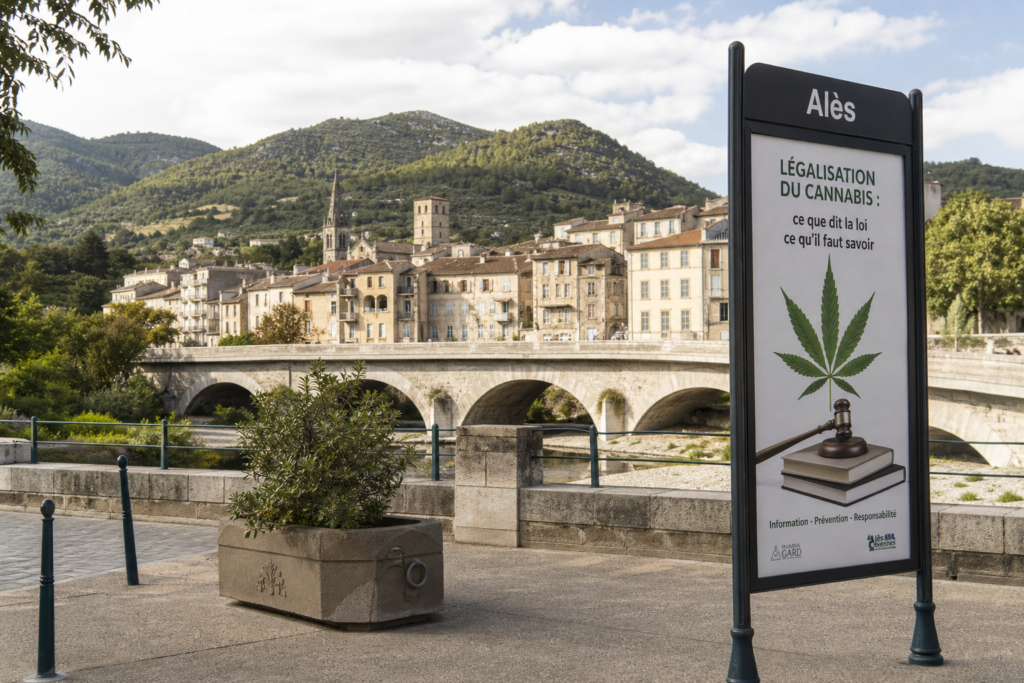
Using cannabis inside a private home does not make the substance lawful. It may reduce visibility and some public-order risks, but possession, acquisition and use remain governed by French law. Tenants should also consider lease terms, smoke-related nuisance and the safety of other occupants.
Visitors should not interpret the absence of a police check as permission. Enforcement is not necessarily uniform from one day to another, and an informal local practice cannot override legislation.
CBD in Alès: what is legal and what is risky?
CBD products may be sold in France when they meet the applicable legal conditions, including rules relating to the source of the hemp, product composition, THC content, labeling and marketing. Products derived from authorized hemp varieties are not automatically safe from legal problems simply because they are marketed as CBD.
Consumers should check the product’s certificate of analysis, ingredients, batch information and seller details. Avoid products that make medical claims, promise intoxication or provide no reliable information about THC. Flowers, resins, oils, edibles and vapes can differ significantly in composition and regulatory treatment.
A crucial practical issue is that some CBD products can contain trace THC. A roadside saliva test is designed to detect THC exposure, not to determine whether the source was an illegal cannabis product or a compliant CBD product. Someone who uses CBD and then drives may therefore face a serious testing and legal problem.
For additional context on product checks and safer purchasing decisions, read this practical guide to the CBD rules and buying considerations in France.
Driving and cannabis: a separate legal risk
France applies a strict approach to drug-impaired driving. Driving after cannabis use can lead to criminal proceedings when THC is detected, even if the driver does not feel impaired and believes enough time has passed. The legal test is not the same as proving visible intoxication.
Possible consequences can include loss or suspension of the driving licence, a fine, a court case and, in serious circumstances, imprisonment. If alcohol is also involved, the situation can become more serious. A driver involved in a collision may face additional civil or criminal consequences.
Practical precautions
- Do not drive after using cannabis or a THC-containing product.
- Do not rely on coffee, sleep, food or a feeling of sobriety to eliminate legal risk.
- Do not assume that legal CBD is compatible with driving if it may contain trace THC.
- Use a sober, lawful transport option such as a taxi, public transport or a designated driver.
The French government’s information on drug use and penalties is a useful starting point, but it cannot replace individualized legal advice after an arrest, test or collision.
Medical cannabis in Alès
Medical cannabis is not the same as buying recreational cannabis from a shop or informal supplier. Access, where available under the current French framework, depends on authorized medical indications, prescribing rules, dispensing arrangements and the status of the relevant national program.
Patients should speak with their doctor or pharmacist rather than purchasing cannabis online or attempting to bring products from another country. A foreign prescription does not automatically authorize possession or use in France. The product, prescription, quantity and travel documents may all matter.
Because France has been developing its medical-cannabis framework, patients should confirm the position in force in 2026 through official health authorities. The French government’s drugs information portal provides current public information about drugs, prevention and policy developments.
Growing, sharing and selling cannabis
Growing cannabis plants at home for recreational use is not a safe legal loophole. Cultivation, even when described as personal, can lead to criminal consequences. Seeds, equipment and plants may be treated as evidence depending on the circumstances.
Sharing cannabis with friends is also risky. Giving a product away can still be treated as supply or distribution, particularly if money, repeated transactions or organized activity is involved. Selling, importing or transporting cannabis for another person carries substantially greater legal exposure than a simple personal-use allegation.
Do not rely on a private club, messaging group or informal local network in Alès as proof that an activity is authorized. A group’s own rules cannot replace a French licence or statutory authorization.
Traveling to or from Alès with cannabis
Carrying cannabis across a French border can create importation or exportation issues in addition to possession. This applies to journeys by car, train, aircraft or coach. Cannabis purchased lawfully in another country may still be unlawful to bring into France.
Medical documentation may be relevant for prescribed medicines, but it does not automatically cover cannabis flower, oils, edibles or other products. Travelers should check French customs and health requirements before departure and carry only products that are clearly authorized for the journey.
Within France, transporting cannabis between cities can also create suspicion of supply, especially when quantities, packaging, cash or communications suggest distribution. The safest legal approach is not to carry prohibited cannabis at all.
What residents and visitors should remember
- Recreational cannabis remains illegal in Alès and throughout France in 2026 unless the law changes.
- A fixed fine may apply in some personal-use cases, but it does not legalize possession or consumption.
- CBD legality depends on the product and its compliance, not merely its label.
- Driving after cannabis or THC exposure carries a separate and serious risk.
- Medical access is controlled and should be discussed with a French healthcare professional.
- Do not bring cannabis across borders or rely on informal sellers and social clubs.
- If contacted by police or prosecutors, read official documents carefully and seek qualified legal advice.
Conclusion
The practical answer to cannabis in Alès in 2026 is straightforward: recreational cannabis remains prohibited under French national law, and Alès has no separate local legalization scheme. Possession and use may result in a fixed fine or more serious proceedings, while supply, cultivation, driving and cross-border transport can create greater penalties.
CBD products require careful checking, and medical cannabis must be accessed through the current authorized healthcare framework. Since regulations and administrative guidance can develop, use official French sources for updates and treat online claims about weed in Alès with caution.