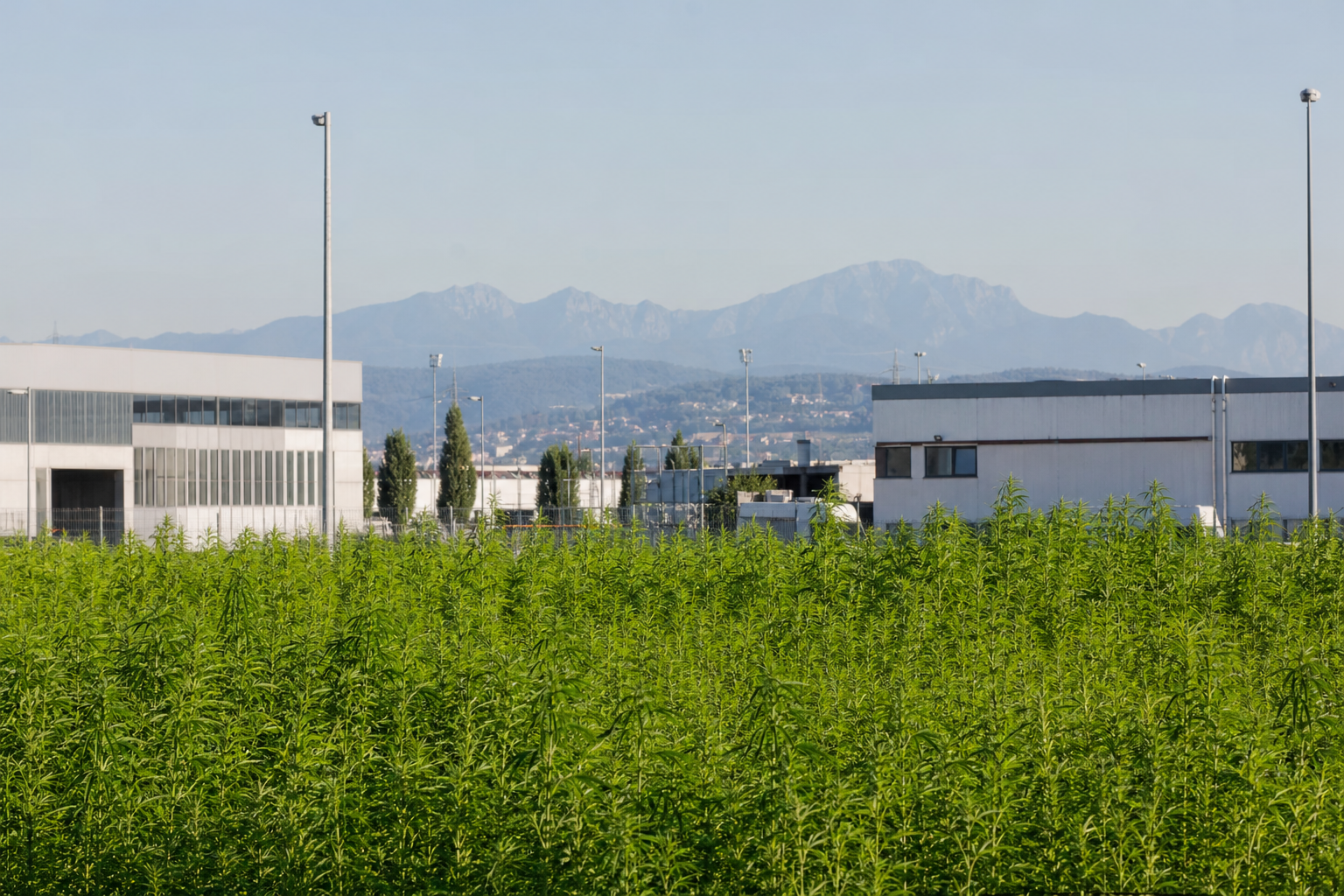
The Marijuana industry in Dalmine, Italy is best understood as a regulated network of medical supply, industrial hemp, CBD-related commerce, research, logistics and professional services rather than as a conventional recreational market. Dalmine, in the province of Bergamo, has a strong industrial identity and sits within a connected Lombardy business environment. That setting can support interest in compliant cannabis-related products, but it does not change Italy’s national rules on cultivation, possession, sale or medical access.
For residents, entrepreneurs and visitors searching for weed in Dalmine, the first distinction is between illegal recreational marijuana, prescribed medical cannabis, industrial hemp and lawful low-THC products. These categories can look similar but are governed by different rules. This guide explains the local business context, the legal framework and the practical questions that matter most when evaluating cannabis in Dalmine.
What the marijuana industry means in Dalmine
Dalmine is not known for a legally open recreational cannabis retail market. Instead, cannabis-related economic activity is more likely to appear through sectors that already fit Italy’s regulated economy. These may include pharmaceutical distribution, laboratory testing, agricultural inputs, packaging, compliance consulting, wellness retail and industrial hemp supply chains.
The local opportunity is therefore connected to capabilities rather than to a single type of shop. A company with expertise in traceability, quality control, logistics or regulated manufacturing may participate in the wider cannabis economy without selling intoxicating marijuana to the public. Businesses should assess their exact activity before investing, because cultivation, processing, transport, advertising and retail can trigger different obligations.
Industrial and commercial strengths
Dalmine’s industrial profile may be relevant to businesses that need reliable suppliers, technical workers, storage, transport connections and quality systems. These advantages are not proof of a cannabis cluster, and there is no reason to assume that every company involved in hemp or CBD is part of a marijuana industry. They simply provide a practical context for regulated ancillary services.
- Manufacturing: equipment, containers, packaging and process technology may serve legal hemp or pharmaceutical applications.
- Logistics: secure storage and documented transport are important for products subject to quality and traceability requirements.
- Testing: independent analysis can help verify cannabinoid content, contaminants and product consistency.
- Professional services: legal, accounting, regulatory and insurance expertise can help companies manage a complex compliance environment.
Cannabis laws in Dalmine and across Italy
Cannabis laws in Dalmine are primarily national laws. The municipality cannot create a local recreational market that overrides Italian criminal, health, agricultural or pharmaceutical rules. Local authorities may deal with planning, public safety, commercial licensing and enforcement, but the fundamental legality of cannabis products comes from the national framework.
Recreational cannabis with intoxicating levels of THC is not sold through a legal adult-use dispensary system in Italy. Unauthorized cultivation, possession, sale or distribution can lead to serious legal consequences, with the outcome depending on the conduct, quantity, purpose and circumstances. Public use can also create separate issues involving nuisance, safety or administrative sanctions.
Because legal language and administrative practice can change, businesses and individuals should consult current official material, including the Italian legislation database on Normattiva. A qualified Italian lawyer or licensed professional is the appropriate source for advice about a specific transaction, product or business model.
Why product categories matter
Terms such as marijuana, cannabis, hemp and CBD are often used interchangeably in casual conversation, but they are not interchangeable in law. A product’s classification may depend on its THC content, intended use, formulation, manufacturing process, labeling and route of sale. A product marketed as wellness-related is not automatically lawful, and a hemp-derived product is not automatically free from regulatory duties.
Consumers should be cautious with websites or shops that imply that “light cannabis” makes every use legal. The label, laboratory documentation and intended use all matter. When a product appears to promise intoxication while avoiding clear information about its contents, that is a significant warning sign.
Medical cannabis in Dalmine
Medical cannabis in Dalmine is accessed through Italy’s healthcare system rather than through recreational dispensaries. Where clinically appropriate, a physician may consider cannabis-based treatment under the applicable national rules. Treatment decisions should be based on medical need, available evidence, the patient’s history and the doctor’s judgment.
Patients should ask their physician or pharmacist about approved preparation, dosage, administration, possible interactions and availability. Products purchased informally online or from unverified sellers should not be treated as substitutes for prescribed medicines. Cannabis can affect alertness, coordination and the effects of other medicines, so patients should disclose all relevant treatments and health conditions.
The Italian Ministry of Health provides official health information and is a better starting point than social media posts or commercial claims. Availability can vary by pharmacy and supply conditions, so a patient may need to discuss alternatives or ordering procedures with a healthcare professional.
Medical access is not recreational access
A prescription or medical authorization does not create a general right to share, resell or transport cannabis for other people. Patients should keep medicines in their original packaging and carry relevant documentation when travelling. Rules may become especially important when crossing regional or national borders.
People considering medical cannabis should also avoid stopping prescribed treatment suddenly or changing dosage based on advice from an unqualified seller. A pharmacist or doctor can explain how to use the preparation safely and how to monitor unwanted effects.
Hemp, CBD and related businesses
Hemp can support legitimate agricultural and industrial activity, including fiber, seed, food, textiles, cosmetics and other applications subject to product-specific rules. CBD products require particular care because their legality can depend on the formulation, ingredients, claims, intended use and current regulatory interpretation. Retailers should not assume that a product legal in another European country can be marketed in Italy without further review.
For shoppers comparing CBD products in Dalmine, useful checks include:
- Whether the seller provides a full ingredient list and batch information.
- Whether independent laboratory testing is available and identifies THC content.
- Whether the product makes medical claims that would require authorization.
- Whether the packaging explains age restrictions, warnings and intended use.
- Whether the seller provides a traceable business identity and customer support.
CBD is not an intoxicating substitute for THC, but “non-intoxicating” does not mean risk-free. Some products may be contaminated, inaccurately labeled or unsuitable alongside certain medicines. Pregnant people, drivers, children and people taking prescription medication should seek professional advice before use.
Business opportunities and compliance priorities
A responsible cannabis-related company in Dalmine should begin with a narrow description of what it intends to do. “Cannabis business” is too broad for licensing, tax, insurance or regulatory planning. The company should identify whether it will cultivate industrial hemp, manufacture a cosmetic, distribute a medical product, sell food, provide laboratory services or offer equipment to other businesses.
Questions for prospective operators
- What exact product or service will be offered?
- Which authority regulates that activity?
- Does the activity require authorization, registration, certification or professional supervision?
- How will the business test, label, store and trace its products?
- What marketing claims are permitted?
- How will the company handle recalls, complaints and adverse-event reports?
- Does the proposed premises comply with planning, fire, workplace and hygiene requirements?
Businesses should also budget for legal review, insurance, laboratory testing, product documentation and staff training. A low-cost launch based on ambiguous products or aggressive health claims can create more risk than opportunity.
Readers comparing the local picture with nearby markets may also find useful context in this guide to the cannabis industry in Treviglio. For product-focused comparisons, the practical overview of CBD shops and purchasing considerations in Lumezzane illustrates why retail claims and product verification deserve attention.
Consumers, visitors and public safety
Visitors should not assume that a cannabis-themed shop, hemp display or CBD product indicates legal access to recreational marijuana. Ask what is being sold, read the label and avoid products with unclear cannabinoid content. Do not drive, cycle in traffic or operate machinery after using an intoxicating substance. Mixing cannabis with alcohol or sedating medicines can increase impairment.
Public consumption can attract complaints and may expose a person to enforcement even where possession circumstances are disputed. Keeping products away from children and animals is essential. Edible products can be particularly risky because effects may take time to appear, encouraging accidental overconsumption.
How to evaluate local information
Online searches for cannabis in Dalmine may return outdated listings, informal sellers or businesses operating under a different legal category. Before relying on an online claim, check the date, the company identity, the product type and whether the source refers to Italian law rather than another country. A local business directory is not proof that a product is authorized.
For legal questions, use current government material and professional advice. For health questions, consult a physician or pharmacist. For product quality, look for transparent batch testing rather than relying on photographs, influencer endorsements or promises of guaranteed medical results.
The outlook for Dalmine
The future of the marijuana industry in Dalmine will likely depend on national policy, enforcement, healthcare practice, European regulatory developments and the ability of businesses to document quality. The most durable opportunities are likely to be those that solve practical problems: compliant manufacturing, accurate testing, secure distribution, professional education and transparent consumer information.
Any expansion should be measured against public health and legal certainty. A larger number of products or companies would not automatically mean a safer or more mature market. In a regulated sector, credibility comes from traceability, honest labeling, responsible marketing and respect for medical boundaries.
Conclusion
The marijuana industry in Dalmine, Italy is a developing and highly regulated field rather than a conventional recreational retail sector. Its local relevance lies in the intersection of Lombardy’s industrial capabilities with medical cannabis, industrial hemp, CBD-related commerce and compliance services.
Residents should distinguish illegal recreational marijuana from lawful, product-specific categories. Patients should use medical channels and professional guidance. Entrepreneurs should define their activity precisely, verify current Italian requirements and invest in testing, documentation and responsible claims. With those safeguards, Dalmine can be understood realistically: not as a place where national cannabis rules disappear, but as a potential home for carefully managed businesses connected to a wider regulated industry.