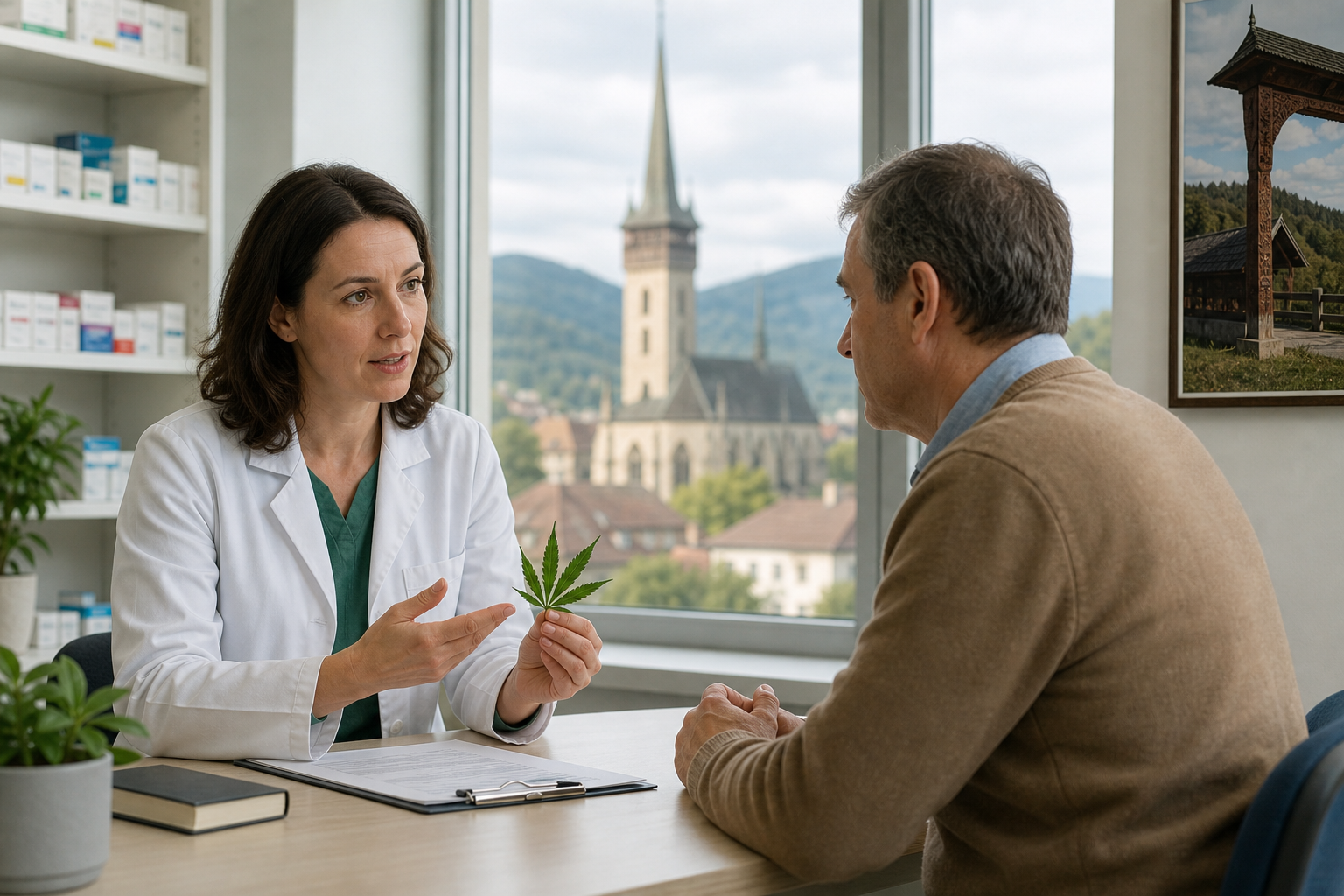
Reliable Marijuana health information in Sighetu Marmației should cover more than whether cannabis is available. People in this Maramureș city may have questions about short-term effects, mental health, medicines, driving, dependence, medical access and Romanian law. The safest approach is evidence-based, non-judgmental and clear about uncertainty: cannabis affects people differently, products vary widely, and legal consequences can be serious.
This guide is for general education, not a diagnosis or a substitute for medical advice. If someone has severe confusion, chest pain, difficulty breathing, a seizure, loss of consciousness or thoughts of self-harm after using cannabis, seek urgent help through Romania’s emergency services by calling 112.
What cannabis contains and why it matters
Cannabis products can contain cannabinoids such as THC and CBD. THC is the main intoxicating compound and can alter attention, memory, coordination, time perception and mood. CBD is not generally intoxicating in the same way, but a CBD-labelled product may still be inaccurately labelled, contaminated or contain small amounts of THC depending on its source and manufacturing.
Products sold or shared informally can differ substantially in strength. A flower, resin, edible, vape liquid or concentrated extract may deliver different amounts and may carry different risks. A person cannot reliably judge potency by appearance, smell or the name used by a seller. This is one reason why online claims and informal advice about weed in Sighetu Marmației should be treated cautiously.
For a balanced international overview of cannabis effects, dependence and health concerns, consult the World Health Organization’s cannabis health information. It is more dependable than promotional content or anonymous social-media posts.
Marijuana health information in Sighetu Marmației: common effects and risks
Short-term effects
After using THC, some people experience relaxation, euphoria, increased appetite or a changed sensory experience. Others develop anxiety, panic, suspiciousness, dizziness, nausea, rapid heartbeat or impaired judgment. Effects may be stronger when cannabis is combined with alcohol, sedatives, stimulants or other drugs.
Impaired coordination and slower reactions make driving, cycling, operating machinery and working at height unsafe. Feeling calm does not mean a person is unimpaired. A responsible choice is to avoid driving after cannabis use and to arrange a sober way home.
Longer-term concerns
Frequent or heavy use can affect concentration, learning, motivation and daily functioning. Some people develop cannabis use disorder, meaning they find it difficult to reduce or stop despite problems at school, work, in relationships or with health. Risk tends to be more concerning when use begins during adolescence, when products are high in THC, or when use becomes daily or near-daily.
Cannabis may worsen anxiety, depression or psychotic symptoms in some people. Anyone with a personal or family history of psychosis, bipolar disorder or serious substance-use problems should discuss risks with a qualified clinician before using cannabis. Cannabis is not a proven replacement for mental-health treatment.
Who should be especially cautious?
Some situations call for avoiding cannabis or obtaining medical advice first:
- Pregnancy, plans to become pregnant or breastfeeding.
- Adolescence and young adulthood, when the brain is still developing.
- A history of psychosis, mania, severe anxiety or problematic substance use.
- Heart or circulation conditions, unexplained fainting or serious respiratory symptoms.
- Use of medicines that cause drowsiness or affect mood, blood pressure, heart rhythm or blood clotting.
- Any responsibility for driving, childcare, machinery or safety-sensitive work.
Do not stop prescribed treatment simply because cannabis seems helpful. A pharmacist or doctor can check for interactions and suggest safer, evidence-based options.
Edibles, vaping and other product-specific risks
Inhaled cannabis can produce effects quickly, but smoke irritates the airways and combustion creates harmful by-products. Vaping may avoid smoke but is not risk-free, particularly when liquids or cartridges come from an unregulated source. Unknown additives and contaminants can cause serious lung injury or other illness.
Edibles are easy to misjudge because effects can take much longer to appear than with inhalation. Taking more before the first dose has fully taken effect can lead to intense anxiety, vomiting, confusion or prolonged impairment. Edibles also create a poisoning risk for children and pets. Store all cannabis products in a clearly secured place, separate from ordinary food and medicines.
Mixing cannabis with alcohol commonly increases impairment. Combining it with sedatives, opioids or other psychoactive substances can increase risks further. There is no reliable home method for predicting exactly how a combination will affect an individual.
Cannabis laws in Sighetu Marmației and Romania
Local location does not create a separate legal system for cannabis. The same Romanian national framework applies in Sighetu Marmației as elsewhere in the country. Possession, cultivation, production, sale and distribution of controlled cannabis products can expose a person to criminal investigation and penalties. The legal outcome may depend on the substance, quantity, conduct, evidence and other circumstances.
Do not assume that a small amount, a private setting, a foreign prescription or a product labelled “CBD” automatically makes possession or transport lawful. Rules can also differ between domestic use, travel across borders and bringing products into Romania. Anyone facing a police inquiry or legal accusation should seek advice from a qualified Romanian lawyer rather than relying on internet comments.
For broader context, you can review this guide to cannabis possession regulations in Onești and the related discussion of cannabis travel restrictions in Romania. These resources are educational; they do not replace current legal advice.
Drug laws and enforcement practices can change. The European Union Drugs Agency provides research and policy information through its official cannabis and drug information portal, but legal questions should still be checked against current Romanian sources or a local legal professional.
Medical cannabis in Sighetu Marmației: what patients should know
Searching for medical cannabis in Sighetu Marmației can produce confusing results because “medical cannabis” may refer to different products and legal arrangements. A cannabis-derived medicine approved for a specific indication is not necessarily equivalent to dried flower, an imported product or an online supplement. A doctor must determine whether a cannabinoid medicine is appropriate, lawful and compatible with other treatment.
Patients should not purchase prescription medicines from informal sellers, social-media accounts or websites that promise to bypass Romanian rules. Products may have inaccurate strength, contaminants or no meaningful quality control. Keep packaging and prescribing information for any lawful medicine, and ask a pharmacist how it should be stored and used.
Questions to take to a clinician
- What condition is being treated, and what evidence supports a cannabinoid medicine?
- What benefits are realistic, and how will progress be measured?
- Could it interact with current medicines or alcohol?
- What side effects require stopping treatment or seeking help?
- Could the medicine affect driving, employment or travel?
- What is the lawful route for obtaining and carrying it?
A clinician may recommend a treatment that does not involve cannabis if the expected benefit is uncertain or the risks are too high. This is a normal part of informed care, not a dismissal of the patient’s symptoms.
Safer decisions if someone chooses to use cannabis
No method makes non-medical cannabis use risk-free, but several steps can reduce foreseeable harm. Avoid high-risk settings, do not use alone if there is a history of severe reactions, and never drive while impaired. Avoid mixing cannabis with alcohol or other drugs, and do not share vaping devices or smoking equipment.
- Choose not to use if pregnant, underage, mentally unwell or responsible for another person’s immediate safety.
- Do not rely on a product label as proof of strength or purity.
- Wait for effects before considering any additional amount, especially with an edible.
- Keep products locked away from children, visitors and animals.
- Stop and seek medical advice if use causes repeated panic, memory problems, vomiting, hallucinations or loss of control.
- Be honest with a healthcare professional about cannabis use; confidentiality and accurate information support safer treatment.
Recognising problematic use and finding support
Warning signs include using more than intended, unsuccessful attempts to cut down, spending substantial time obtaining or recovering from cannabis, neglecting responsibilities, continuing despite relationship or health problems, and experiencing irritability, sleep disruption or cravings when stopping.
Support can begin with a family doctor, psychiatrist, psychologist or addiction specialist. A healthcare professional can assess sleep, anxiety, depression, pain, other substance use and medicines rather than treating cannabis use in isolation. Family members can offer practical support without shaming the person, such as helping arrange an appointment and reducing access to cannabis at home.
If there is immediate danger, severe intoxication, suspected poisoning or a mental-health crisis, call 112. Give responders accurate information about what may have been used and when. Honest information helps emergency teams make safer decisions.
How to evaluate cannabis information online
When researching cannabis in Sighetu Marmației, check whether a page distinguishes evidence from opinion, names the country whose law it describes, gives a publication or update date, and explains limitations. Be wary of guaranteed cures, claims that a product is completely safe, pressure to buy immediately, and advice that discourages medical care.
Health information should be consistent with recognised public-health and medical sources. A personal story may describe one person’s experience, but it cannot establish that cannabis will work for everyone. Local discussions can be useful for identifying questions, not for confirming a diagnosis, dose or legal entitlement.
Conclusion
Good marijuana health information in Sighetu Marmației combines practical safety advice with careful attention to Romanian law. THC can impair judgment and coordination, cannabis can worsen mental-health or dependence risks for some people, and unregulated products may be unpredictable. Medical questions belong with a qualified clinician, legal questions with a Romanian lawyer or current official source, and emergencies with 112. Taking a calm, evidence-based approach helps residents make safer decisions without relying on rumours or commercial promises.