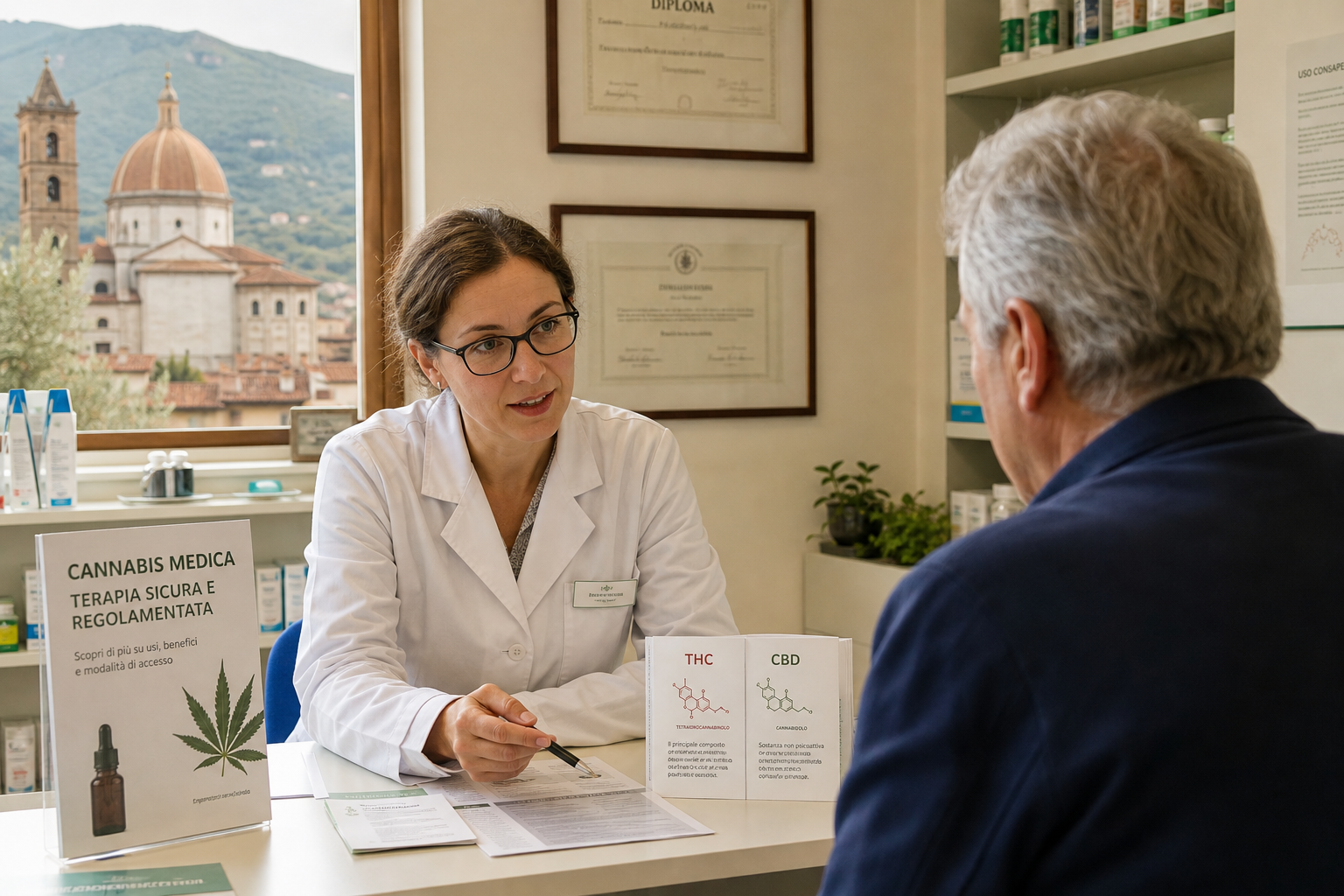
Understanding cannabis requires more than knowing whether a product is legal or available. This guide to marijuana health information in Pistoia, Italy explains how cannabis can affect the body and mind, what is known about medical use, how to reduce avoidable risks, and where to look for reliable help. It is written for residents, visitors and families in Pistoia who want clear health information rather than sales advice or unverified claims.
Local terminology can be confusing. People may search for weed in Pistoia or cannabis in Pistoia, while Italian health services generally discuss cannabis by its active substances, such as THC and CBD, and by the medical product being prescribed. A product’s name, strength, formulation and route of administration all matter when assessing possible effects.
What cannabis is and why health context matters
Cannabis contains many naturally occurring compounds called cannabinoids. THC is the principal intoxicating cannabinoid and can affect perception, coordination, memory, attention and reaction time. CBD is not intoxicating in the same way as THC, but that does not mean every CBD product is risk-free or suitable for everyone. Products can also differ in purity, concentration and labeling accuracy.
Health effects depend on several factors: the amount used, frequency of use, age, previous experience, method of consumption, other medicines or substances, and individual mental and physical health. The same product may affect two people differently. Edibles and other oral products can be especially difficult to judge because effects may appear later and last longer than expected.
For balanced background information, consult the World Health Organization’s cannabis health information. It is more reliable than social-media posts, anonymous forums or marketing claims that present cannabis as universally harmless or universally dangerous.
Marijuana health information in Pistoia, Italy: possible risks
Short-term cannabis effects may include drowsiness, impaired coordination, altered time perception, anxiety, confusion, rapid heartbeat and reduced attention. These effects can make driving, cycling, operating machinery or caring for another person unsafe. Combining cannabis with alcohol, sedatives or other intoxicating substances can increase impairment and unpredictability.
Frequent or high-THC use may lead to tolerance, meaning that a person needs more to experience the same effect. Some people develop cannabis use disorder, involving difficulty reducing use, cravings, continued use despite problems, or disruption to work, study, relationships and daily routines. A person who is worried about their use should seek professional advice rather than attempting to manage the situation through shame or sudden unsupported changes.
Mental health and vulnerability
Cannabis can worsen anxiety or trigger distressing thoughts in some users. Strong THC exposure may produce paranoia, hallucinations or severe confusion, particularly in people with a personal or family history of psychosis or other serious mental-health conditions. Adolescents and young adults may be more vulnerable to harms associated with regular use because brain development continues through early adulthood.
Pregnancy and breastfeeding require particular caution. Anyone who is pregnant, planning a pregnancy or breastfeeding should discuss cannabis exposure with a doctor or midwife. Cannabis should not be treated as a substitute for prescribed care, psychological support or evidence-based treatment for nausea, pain, insomnia or anxiety.
Respiratory and cardiovascular considerations
Smoking cannabis exposes the airways to irritating combustion products. Cough, throat irritation and worsening respiratory symptoms are possible. Vaporising is not automatically harmless: devices, liquids and concentrates can contain contaminants or deliver very high doses. People with cardiovascular conditions, a history of fainting or significant medication use should ask a clinician about individual risks before using cannabis.
Medical cannabis in Pistoia: what patients should know
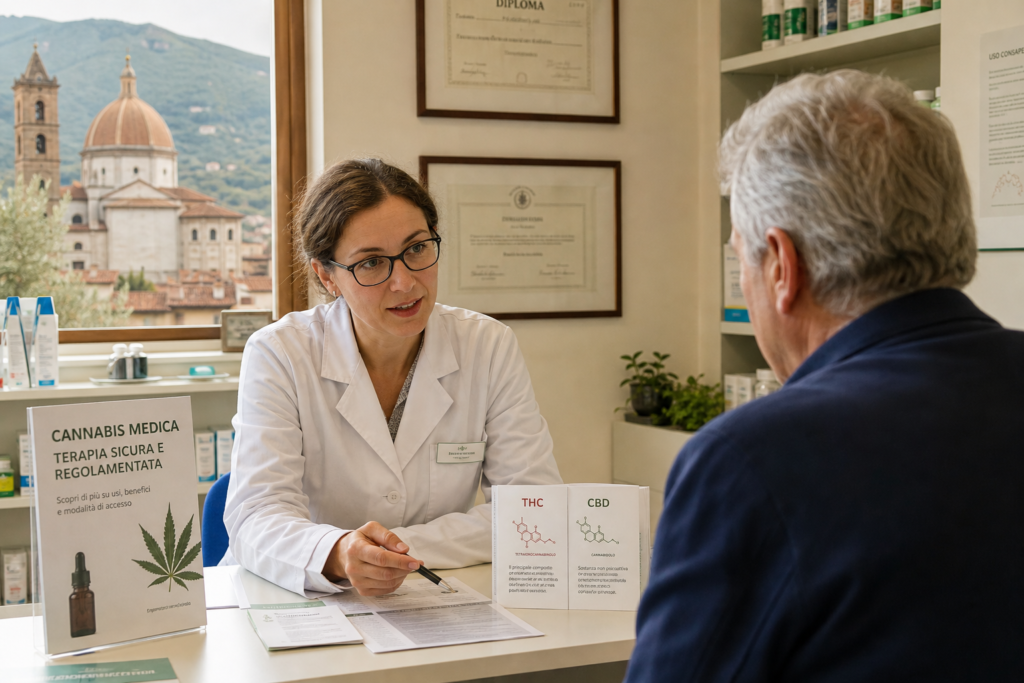
Medical cannabis in Pistoia is not the same as buying a recreational product. Access depends on a clinical assessment, an appropriate indication, the prescribed preparation and the rules governing dispensing. A doctor must decide whether cannabis-based treatment is reasonable after considering the patient’s diagnosis, previous therapies, expected benefits and possible risks.
Patients should begin with their general practitioner or the relevant specialist. Depending on the condition and pathway, care may involve the local public health system, a hospital specialist and a pharmacy able to dispense the prescribed preparation. Availability, paperwork and reimbursement arrangements can vary, so patients should confirm current details with the prescribing clinician, the pharmacy and the relevant Tuscan health service rather than relying on an online seller.
For additional context on prescriptions and patient questions, see this guide to medical cannabis access and patient guidance in Cesena. The legal and healthcare framework is national, but practical procedures can differ by region and by clinical case.
Questions to ask a healthcare professional
- What symptom or condition is the treatment intended to address?
- What benefits are realistic, and how will they be measured?
- Which preparation and dose are appropriate?
- What side effects or interactions should be monitored?
- Should driving, alcohol or particular activities be avoided?
- When should treatment be reviewed, changed or stopped?
Keep a record of the product, prescribed dose, timing, effects and unwanted symptoms. Do not increase the dose because relief is slow, and do not share prescribed cannabis with another person. A prescription for one patient does not make the same preparation appropriate for someone else.
Cannabis laws in Pistoia and health-related decisions
People searching for cannabis laws in Pistoia should distinguish medical treatment, personal possession, public use, driving and supply. Italian rules are national, but enforcement and administrative procedures can depend on the circumstances. Recreational cannabis is not a general over-the-counter medicine, and purchasing from an unverified source creates both legal and health risks.
Medical use requires the relevant prescription and compliant dispensing route. Carrying medicines while travelling may also require documentation, original packaging and attention to destination rules. Do not assume that a prescription or product permitted in Italy can be taken across a border without checking the other country’s requirements.
For a separate overview of nearby legal considerations, read this practical guide to cannabis laws and penalties in Pisa. Legal information can change, so official sources and qualified professionals should be used for decisions involving possession, travel or driving.
The Italian Ministry of Health website is an appropriate starting point for current national health and regulatory information. It does not replace advice from a doctor, pharmacist or lawyer.
Safer choices for adults who use cannabis
No method removes all risk, but practical steps can reduce the chance of harm:
- Avoid driving, cycling in traffic or using machinery after consuming cannabis, and allow sufficient time for impairment to end.
- Do not mix cannabis with alcohol, opioids, sedatives or other drugs.
- Avoid high-THC concentrates and unknown products whose strength or ingredients cannot be verified.
- If using an oral product, remember that effects may be delayed; taking more too soon increases the risk of an unpleasant or overwhelming experience.
- Keep products locked away from children, teenagers and pets, preferably in their original packaging.
- Do not smoke around children or other people who may be exposed to second-hand smoke.
- Stop and seek advice if use causes panic, persistent low mood, memory problems, work difficulties or conflict at home.
Using cannabis alone can increase danger if a severe reaction occurs. People who choose to use should stay in a familiar setting with a trusted, sober person nearby, particularly if they are inexperienced. This is risk reduction, not a recommendation to use.
When to seek urgent help in Pistoia
Call 112 in an emergency. Urgent medical assessment is appropriate for chest pain, trouble breathing, seizure, loss of consciousness, severe agitation, extreme confusion, suspected poisoning, or thoughts of self-harm. Tell healthcare workers what was taken, approximately how much, when it was used and whether alcohol, medicines or other substances were involved. Accurate information helps clinicians provide safer treatment.
For a non-urgent concern, contact a doctor, pharmacist, mental-health professional or local addiction service. Italian public addiction services, commonly known as SerD, can provide confidential assessment and support for problematic substance use. Asking for help early is sensible, especially when cannabis is affecting sleep, motivation, finances, relationships or responsibilities.
How to evaluate cannabis health claims
Be cautious with claims that cannabis cures cancer, replaces every prescription medicine, or has no side effects. A study involving a purified cannabinoid is not automatically evidence for a whole-plant product sold outside the medical system. Look for information that identifies the product, dose, patient group, outcome and limitations. Government health agencies, universities, hospitals and peer-reviewed medical sources are generally more dependable than influencer content or anonymous testimonials.
Health information should also acknowledge uncertainty. Research is developing, and evidence may differ by condition and formulation. A clinician can help separate a plausible treatment option from an unsafe experiment, particularly when a person has chronic illness, takes several medicines or has a history of mental-health difficulties.
Conclusion: making informed decisions in Pistoia
Good marijuana health information in Pistoia, Italy should connect health effects with medical supervision, legal responsibilities and practical safety. Cannabis is not one uniform product: THC content, delivery method, dose, frequency and personal circumstances shape the risk. Anyone considering medical cannabis should use a qualified prescriber and an authorised dispensing pathway, while anyone concerned about recreational use should seek confidential support.
For residents and visitors, the safest approach is to verify current information, avoid impaired driving and unknown products, protect children and seek prompt help when symptoms are severe. Local healthcare professionals can provide advice tailored to the person, while official national sources can clarify the broader Italian framework.