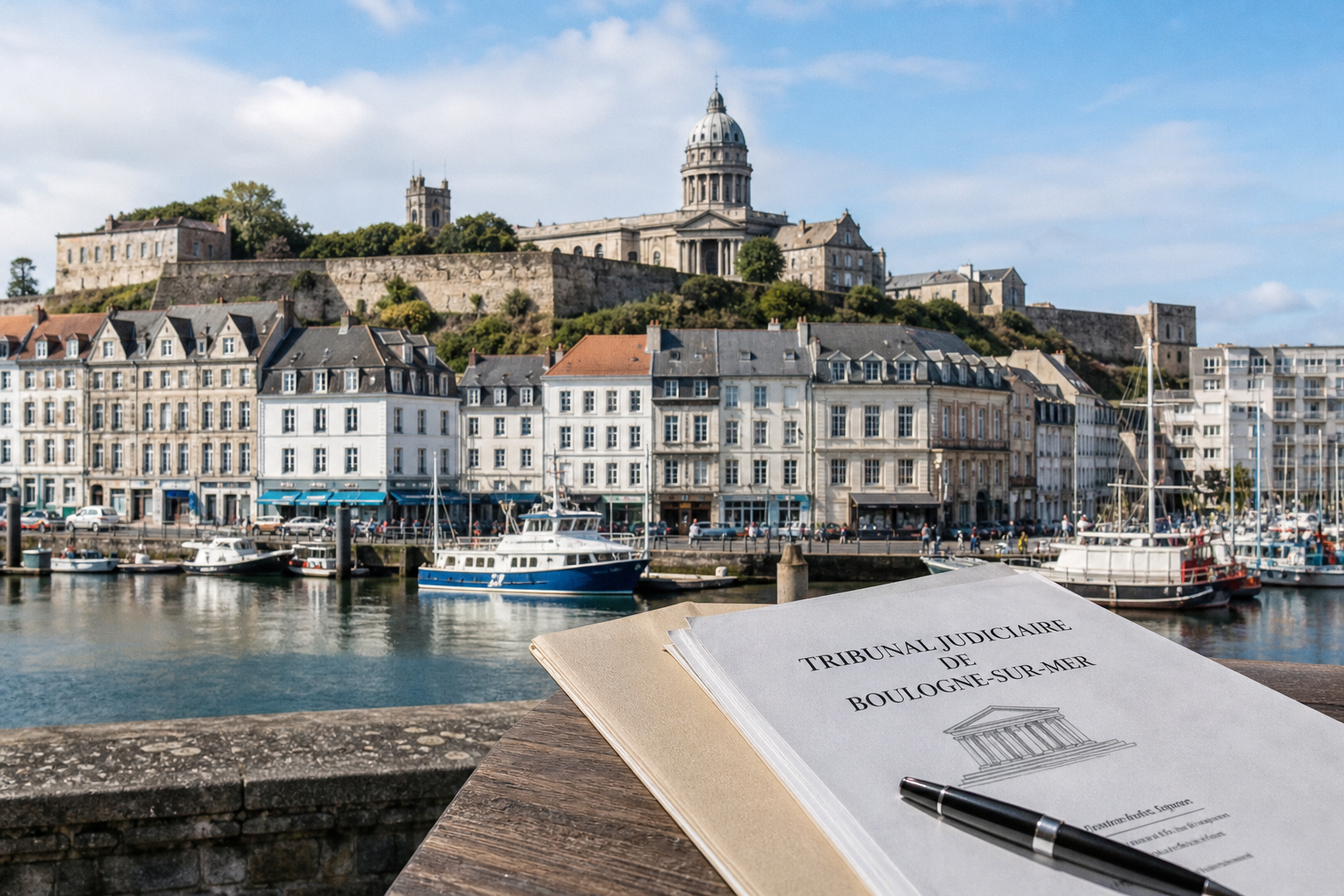
Marijuana decriminalization in Boulogne-sur-Mer is often misunderstood. France has not made recreational cannabis legal, and Boulogne-sur-Mer does not have a separate city-level cannabis system. Instead, national French law applies across the town, including the port, beaches, streets, hotels, private homes and surrounding areas of Pas-de-Calais.
France introduced a fixed fine procedure for many cases of drug use, including cannabis use. This can make enforcement look like decriminalization, but the underlying conduct remains unlawful. The practical result is a combination of administrative-style payment procedures, possible criminal prosecution and additional offences for possession, sale, cultivation, importing or driving under the influence.
This guide explains how cannabis in Boulogne-sur-Mer is treated, what the fixed fine means, why visitors should be especially careful near the port and how CBD differs from THC cannabis.
What marijuana decriminalization means in Boulogne-sur-Mer
There is no municipal legalization scheme in Boulogne-sur-Mer. The city cannot authorize recreational cannabis shops, public consumption areas or personal possession outside the national framework. Police and prosecutors apply French law rather than a local policy that permits cannabis.
In everyday discussion, people may use “decriminalization” to describe the fixed penalty for drug use. Legally, that description is incomplete. Cannabis use remains an offence under French law. In eligible cases, the authorities may issue a fixed criminal fine instead of immediately taking the matter through a conventional prosecution. Paying the fine closes the relevant criminal proceedings, but it does not turn cannabis into a lawful product.
The French public-service explanation of the drug-use fixed fine provides official information about the procedure and payment deadlines. Rules and enforcement can change, so anyone facing an actual notice should follow the instructions on that document rather than relying only on a general article.
Cannabis laws in Boulogne-sur-Mer: the fixed fine
For an adult found using or possessing a small quantity of cannabis, authorities may impose a fixed fine of €200. The amount can be reduced to €150 when paid within the applicable reduced-payment period, generally 15 days. If payment is late, the increased amount is generally €450, subject to the terms and deadlines stated on the notice.
The procedure does not guarantee that every incident will be handled by a fixed fine. Police may refer a case to prosecutors, particularly when the circumstances involve a larger quantity, suspected supply, repeat offending, a vulnerable person, violence, obstruction, or other offences. The legal consequences can also be more serious where cannabis is being transported across a border or connected with commercial activity.
What the fine does and does not cover
- It may address personal drug use or possession in circumstances eligible for the fixed-fine process.
- It does not legalize the cannabis that was seized.
- It does not authorize future possession, consumption or sharing.
- It does not replace penalties for trafficking, supply, cultivation or importation.
- It does not protect someone from separate driving, public-order or identity-related offences.
A person who receives a notice should check the identity details, offence description, payment deadline and available challenge procedure. Ignoring the notice can lead to the increased amount or further legal action. Anyone who believes the notice is incorrect should obtain legal advice promptly instead of assuming that non-payment will make it disappear.
Possession, sharing and buying weed in Boulogne-sur-Mer
There is no simple legal possession limit that makes recreational cannabis lawful in Boulogne-sur-Mer. The quantity found may influence how authorities view the situation, but a small amount is not automatically permitted. Officers may consider packaging, cash, messages, scales and other facts when assessing whether the case involves personal use or suspected supply.
Sharing cannabis with another person can create greater legal risk than possessing it for personal use. Selling, supplying or distributing cannabis is not covered by the ordinary personal-use explanation, even if no money changes hands. Cultivating plants at home is also not a general recreational right. A person should not assume that a private apartment, balcony or garden removes the legal issue.
Visitors should also avoid purchasing cannabis from strangers, informal sellers or online sources claiming to deliver in Boulogne-sur-Mer. Apart from the criminal risks, products may contain unexpected substances, have unknown potency or be misrepresented as CBD. A tourist who wants a broader comparison can review this guide to the legal status of cannabis in Bayonne, while remembering that the same national law applies in both cities.
Public consumption and local practical considerations
Smoking or consuming cannabis in public places is not made lawful by the fixed-fine system. This includes streets, parks, beaches, promenades, transport areas and other places accessible to the public. Public consumption can attract police attention and may create additional issues when it disturbs others, involves litter, or occurs near children or public facilities.
Boulogne-sur-Mer is a coastal city with a busy port and regular movement between France and the United Kingdom. The port environment does not create a cannabis exception. Travelers should not carry cannabis onto a ferry, through port controls or across an international border. French rules apply before departure, and the destination country’s rules may apply after arrival. A product legally purchased elsewhere is not automatically lawful to import into France or transport onward.
Hotels, holiday rentals and private residences are not guaranteed safe spaces for cannabis use. A property owner may prohibit smoking, and smoke or strong odours can lead to complaints. Visitors should follow accommodation rules and avoid assuming that private premises remove all legal or contractual consequences.
Driving after cannabis use in France
Driving after using cannabis is a separate and particularly serious issue. French road law generally focuses on the presence of a prohibited substance detected through testing, rather than on whether the driver feels impaired or believes enough time has passed. A positive test can therefore create legal exposure even when a person does not feel intoxicated.
Do not drive, cycle in traffic or operate machinery after using cannabis. This is especially important for visitors unfamiliar with French procedures or for anyone returning from a coastal excursion. A driver may face licence consequences, a criminal case and insurance complications. Combining cannabis with alcohol increases safety risks and can worsen the legal situation.
Passengers should also avoid transporting cannabis in a vehicle. A claim that the product belongs to another occupant may not prevent questioning or seizure. If police stop a vehicle, remain calm, provide required documents and avoid making assumptions about what the officers can or cannot inspect.
CBD and THC: an important distinction
CBD products are not the same as recreational THC cannabis. French rules can allow certain hemp-derived products when they meet applicable requirements, including limits on THC and rules concerning the product and its marketing. However, “CBD” on a label is not proof that a product complies with French law.
Consumers should be cautious with flowers, resins, vapes, oils and edibles sold online or brought from another country. A product can contain enough THC to create legal or roadside-testing problems, even when the seller describes it as legal CBD. Some products may also have inaccurate labels or contamination risks.
The French government information portal on drugs and addictive behaviours offers public-health and policy information relevant to cannabis, prevention and risks. For a legal product question, consumers should also check current French rules and retain reliable proof of purchase and product composition.
Medical cannabis and health support
Medical cannabis should not be confused with recreational marijuana. France has developed regulated access pathways and experiments for certain patients, but this does not create a general right to buy cannabis for self-treatment. A person with pain, sleep problems, anxiety or another condition should speak with a qualified healthcare professional rather than purchasing an unregulated product.
Prescription medicines containing cannabis-derived substances may have specific instructions for use, transport and travel. Patients crossing borders should check the requirements of every country on their route and carry appropriate medical documentation. A foreign prescription does not automatically authorize recreational cannabis possession in France.
Anyone experiencing anxiety, confusion, chest pain, severe vomiting, loss of consciousness or other concerning symptoms after consuming a cannabis product should seek urgent medical help. Do not drive to obtain care if impaired.
What visitors to Boulogne-sur-Mer should remember
- Assume that recreational cannabis remains illegal throughout Boulogne-sur-Mer.
- Do not treat a €200 fixed fine as permission to possess or use cannabis.
- Never carry cannabis across the port or an international border.
- Avoid public consumption and respect hotel or rental-property rules.
- Do not drive after cannabis use, including after consuming an apparently legal CBD product.
- Read any official notice carefully and meet its payment or challenge deadline.
- Seek advice from a French lawyer if the case involves supply, cultivation, importation, a vehicle or a court summons.
Conclusion: is cannabis decriminalized in Boulogne-sur-Mer?
Marijuana decriminalization in Boulogne-sur-Mer is best understood as a limited enforcement procedure, not legalization. Adults may receive a fixed fine for eligible personal-use cases, but cannabis use and possession remain unlawful, and more serious conduct can lead to prosecution.
The safest approach is to avoid buying, carrying or using recreational cannabis in the city, particularly around the port, public places and vehicles. CBD and medical products require separate analysis, and travelers should check current official guidance before crossing borders. When a police notice or court document is involved, professional legal advice is more reliable than assumptions based on the word “decriminalized.”