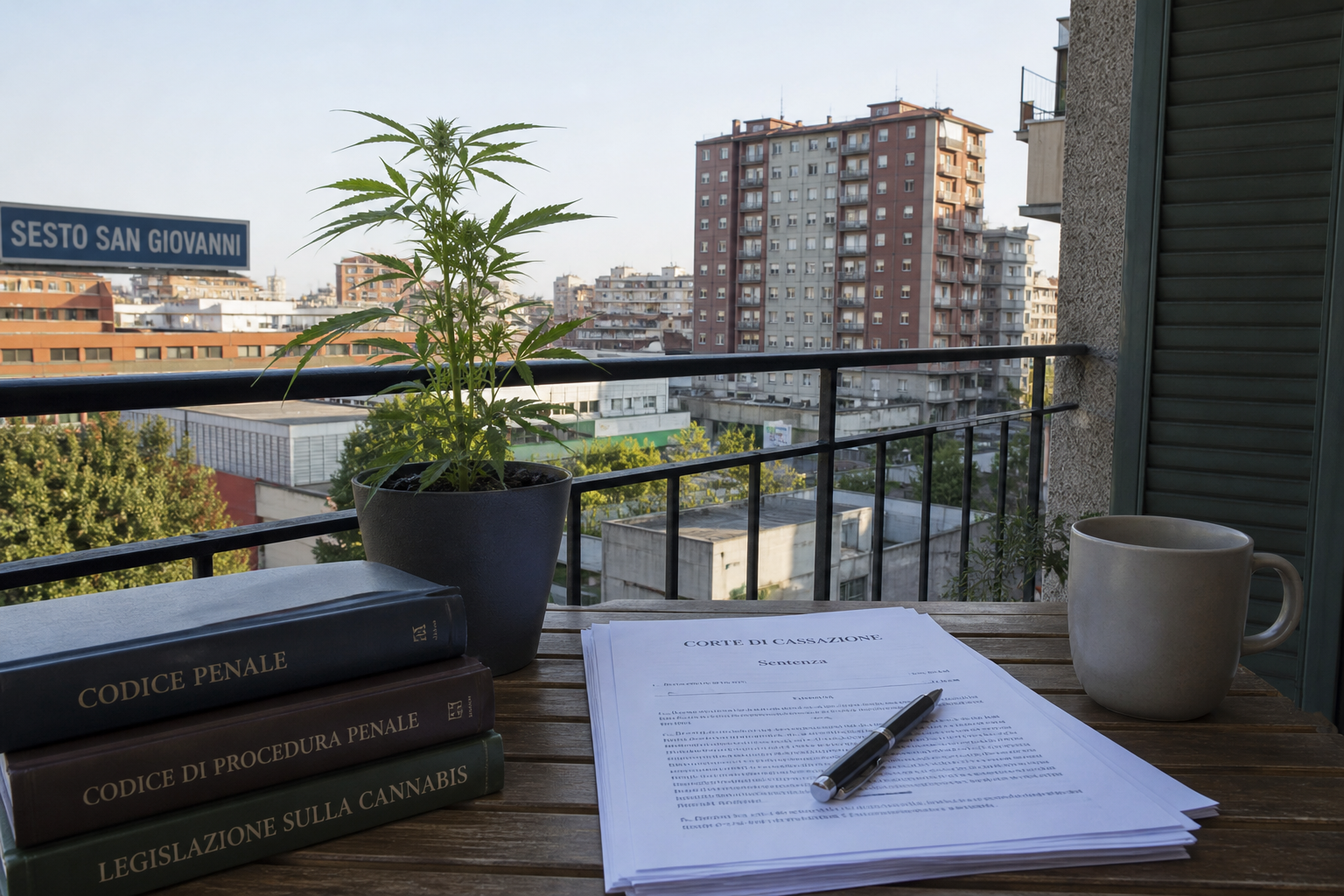
Understanding Marijuana cultivation laws in Sesto San Giovanni requires looking at Italian national law rather than expecting a separate city cannabis code. Sesto San Giovanni is in the Metropolitan City of Milan, Lombardy, and the rules governing cannabis plants, possession, medical use and industrial hemp mainly come from national legislation. Local police and municipal authorities still matter in practice, particularly where conduct affects neighbours, public spaces, safety or building rules.
This guide explains the legal framework in plain language. It is not legal advice, and Italian case law can depend heavily on the number and maturity of plants, cultivation method, intended use, potency, evidence of personal use and surrounding circumstances. Anyone facing a search, seizure or criminal allegation should speak with an Italian criminal lawyer promptly.
Does Italian law allow cannabis cultivation in Sesto San Giovanni?
There is no general recreational cultivation licence for private residents who want to grow marijuana at home. Under Italy’s consolidated narcotics legislation, unauthorised cultivation of plants capable of producing narcotic substances can constitute a criminal offence. The fact that a plant is grown inside a private apartment, balcony or garden does not automatically make cultivation lawful.
Italian courts have, however, recognised a narrow category of cases involving very limited domestic cultivation for the grower’s personal use. The Constitutional Court’s decision No. 242 of 2019 addressed the issue of small-scale cultivation carried out at home and interpreted the criminal provision in a restrictive way. That decision did not create a broad right to grow cannabis. It is not a simple plant-count exemption, and it should not be treated as permission for a commercial, organised or easily distributable crop.
Courts may examine factors such as the scale and technical complexity of the operation, the number and condition of plants, the likely yield, the presence of equipment, evidence of distribution and whether the cultivation is genuinely intended for the grower alone. Because these assessments are fact-specific, a person should not assume that a few plants are automatically legal.
How the rules apply in Sesto San Giovanni
For residents searching for cannabis laws in Sesto San Giovanni, the most important point is that the city does not replace national criminal law. Police in Sesto San Giovanni, the Carabinieri and judicial authorities apply the Italian framework. A local ordinance may regulate public order, smoking in particular areas, nuisance, waste or use of public land, but a municipal rule cannot generally authorise private cultivation that national law prohibits.
The urban setting also creates practical issues. A balcony, shared courtyard or communal garden may expose plants to public view or create disputes with neighbours. Odours, lighting, electrical modifications, water damage, mould and unauthorised access can create separate civil, tenancy or safety problems even where no narcotics charge is ultimately brought. Lease agreements, condominium rules and building regulations should therefore be considered independently from criminal law.
People comparing local information may also find our overview of cannabis law and health issues in nearby Como useful. The governing national principles are similar, although local circumstances and enforcement decisions can differ.
Personal cultivation and the narrow domestic-use exception
What the 2019 Constitutional Court decision did
The 2019 ruling is often described online as legalising home growing, but that description is incomplete. It concerned a very limited domestic cultivation situation and recognised that certain conduct may lack the characteristics of a criminally punishable narcotics offence. The decision did not establish a guaranteed number of plants, a general household entitlement or a formal registration system for recreational growers.
In practical terms, a claim of personal cultivation is more difficult where there are many plants, a sophisticated indoor installation, large quantities of fertiliser or growing media, packaging materials, customer messages, scales, sales records or other evidence suggesting supply to another person. The absence of those indicators does not guarantee legality, but their presence can significantly increase legal risk.
Why plant count alone is not enough
Online discussions often reduce the issue to “one plant” or another fixed limit. Italian law should not be approached that way. The relevant questions can include whether the plant is capable of producing a narcotic substance, how much usable material could be obtained, whether the cultivation is stable or recurring and whether the overall operation is organised for distribution.
Accordingly, a resident asking about home cannabis cultivation in Sesto San Giovanni should avoid relying on social-media summaries. A lawyer can assess the precise facts, including whether a particular seed, plant or cultivation method falls within the limited case-law reasoning. Advice is especially important before installing equipment or expanding a crop.
Possible consequences of unlawful cultivation
Unauthorised cultivation can lead to a criminal investigation, seizure of plants and equipment, questioning, a search and potential prosecution. The seriousness of the allegation may depend on the facts and on whether authorities argue that the cultivation was intended for personal use or for distribution. Organised, commercial or high-yield cultivation is treated far more seriously than a disputed minimal domestic case.
Separate consequences can arise from the resulting cannabis. Personal possession for personal use is generally handled as an administrative matter under Article 75 of Italy’s Presidential Decree No. 309/1990, rather than being treated in the same way as supply. Possible administrative measures may affect documents or licences, depending on the circumstances. Possession connected to sale, transfer or distribution can instead trigger criminal liability.
The wording of the law and later judicial interpretation matter. The official Italian consolidated narcotics legislation is the appropriate starting point for checking the statutory framework, but a legal professional is needed to apply it to an individual case.
Medical cannabis is different from recreational cultivation
Medical cannabis in Italy is available through the healthcare system under a medical prescription and pharmacy-dispensing rules. A patient’s need for cannabis treatment does not normally create a right to grow a personal supply at home. Patients should discuss treatment with an appropriately qualified doctor and obtain products through lawful medical channels.
Medical products may be subject to prescription, preparation, dispensing and documentation requirements. Travellers or residents should retain the original packaging and prescription documentation when carrying prescribed cannabis, particularly when travelling across borders. Importing or exporting cannabis without the required authorisations can create serious problems, even when the substance was lawfully prescribed in another country.
The Italian Ministry of Health provides official information about medicines, controlled substances and healthcare policy. Medical rules can change, and a pharmacy or doctor should confirm the current procedure rather than relying on an old online article.
For related patient-focused background, see this guide to medical cannabis access and prescriptions in Italy. The same national framework is relevant in Lombardy, although local healthcare arrangements and prescribing pathways may vary.
Industrial hemp is not the same as marijuana
Italy has a separate framework for certain industrial hemp activities, including cultivation of approved varieties for permitted purposes. Law No. 242/2016 concerns the promotion of hemp cultivation and supply chains, but it is not a general recreational cannabis law. Farmers and businesses must follow the applicable rules on certified seed, permitted uses, documentation and THC-related requirements.
Growing a hemp variety does not automatically protect an individual who is actually cultivating cannabis for intoxicating use. Nor does buying seeds marketed online as “hemp” settle the legal status of the resulting plants. Businesses should obtain specialist agricultural and regulatory advice before planting, processing or selling hemp products.
What residents and visitors should avoid
- Do not assume that a private home, balcony or terrace is exempt from national cultivation law.
- Do not rely on a fixed plant-count rule found on a forum or social-media post.
- Do not sell, share, advertise or transfer home-grown cannabis.
- Do not transport plants, harvested material or cannabis across an international border without checking the applicable rules.
- Do not operate unsafe electrical, lighting or ventilation equipment in a rented or shared property.
- Do not destroy, conceal or alter possible evidence after learning of an investigation; request legal advice instead.
Practical steps if police become involved
If authorities search a property or seize plants, remain calm and avoid making speculative statements. Ask for a lawyer and do not sign documents that you do not understand. Keep any prescription, purchase record or agricultural documentation available, but do not attempt to interfere with the search or move items.
A lawyer will usually need precise information: the number and type of plants, their development stage, the cultivation location, equipment, alleged quantity, communications, prior history and whether anyone else had access. Photographs, messages and receipts can become important, so preserving relevant records and giving them directly to counsel is safer than discussing the matter publicly.
Weed in Sesto San Giovanni: the practical takeaway
For anyone searching for weed in Sesto San Giovanni or information about cannabis in Sesto San Giovanni, the safest conclusion is that Italy has not introduced a broad recreational home-growing market. A narrow line of case law may protect some minimal domestic cultivation for personal use, but it is fact-dependent and does not provide a reliable licence for residents to grow.
Medical cannabis, industrial hemp and personal possession each follow different rules. Confusing these categories is one of the most common causes of poor legal decisions. Before cultivating, importing, selling or carrying cannabis, check the current national rules and obtain advice suited to the exact facts.
Conclusion
Marijuana cultivation in Sesto San Giovanni is governed primarily by Italian national law, with local issues involving housing, safety, public order and neighbours adding further risk. The 2019 Constitutional Court decision may be relevant to a very limited personal-use cultivation case, but it does not make recreational growing generally lawful. Commercial or distributive activity remains especially serious, while medical cannabis and industrial hemp require their own regulated pathways.
Because outcomes depend on evidence and circumstances, residents should treat online plant-count claims with caution. For a current assessment, consult an Italian lawyer, use official government sources and confirm medical or agricultural requirements with the relevant professional authority.