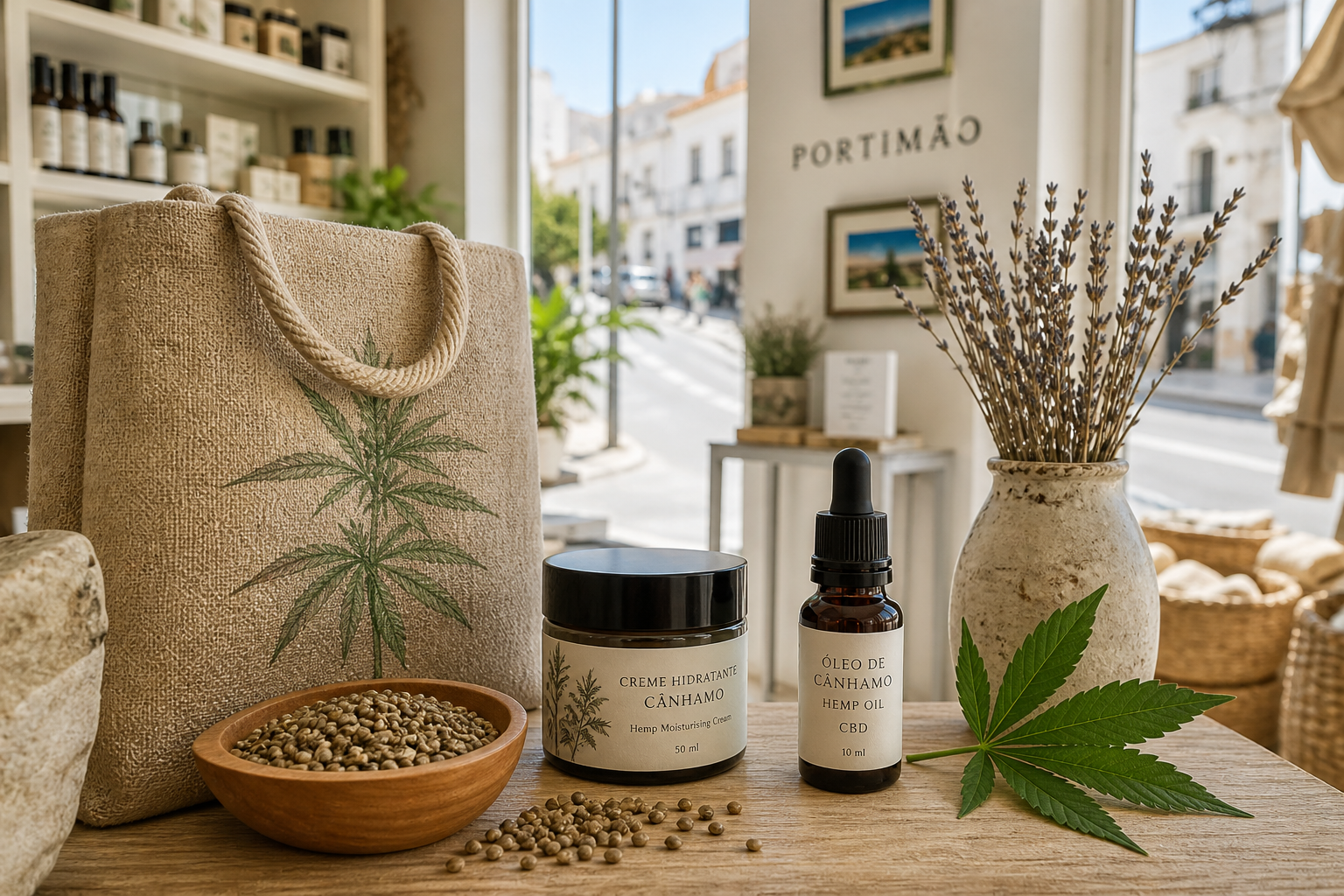
Interest in hemp products in Portimão reflects the wider growth of hemp-derived goods across Portugal. In the Algarve, shoppers may encounter CBD cosmetics, hemp seed foods, clothing, wellness items and other products presented as natural alternatives. However, “hemp” is a broad term, and products with very different ingredients, purposes and legal requirements can appear side by side.
This guide explains what to look for when buying hemp products in Portimão, how hemp differs from recreational cannabis, and why labels and intended use matter. It is general information rather than legal or medical advice. Rules can change, so consumers should verify current requirements with Portuguese authorities before buying, importing or selling a product.
What counts as a hemp product?
Hemp usually refers to varieties of the cannabis plant cultivated for fibre, seeds, oil or other industrial uses. Hemp seed foods and textiles are not the same as products made from cannabis flower or extracts. A product’s legal and practical status depends on its ingredients, THC content, presentation and intended use—not simply on the word “hemp” appearing on its packaging.
Common categories in Portimão
- Hemp seed foods: Shelled seeds, protein powders and cold-pressed seed oil are sold as food products. Hemp seed itself does not provide the same intoxicating effect associated with THC-rich cannabis.
- Hemp textiles and materials: Clothing, bags, rope, paper and other fibre goods are generally industrial products rather than cannabis products.
- CBD cosmetics: Creams, balms, soaps and similar items may be marketed for topical use. Their ingredients, claims and compliance requirements still matter.
- CBD oils and extracts: These require extra caution. A bottle labelled “hemp oil” may contain hemp seed oil, while a CBD extract is a different product with different regulatory questions.
- Plant material and flowers: Products described as hemp flower or CBD flower may attract particular scrutiny because they resemble cannabis and can raise issues involving THC, testing, labelling and intended use.
For a useful comparison, our guide to hemp in Amadora discusses the broader distinction between industrial hemp, consumer goods and regulated cannabis products in Portugal.
Hemp products in Portimão and Portuguese law
Portugal does not have one simple rule covering every hemp-derived product. Different authorities and legal frameworks may apply to food, cosmetics, medicines, supplements, agricultural products and controlled substances. A product being available online or displayed in a shop is not, by itself, proof that it is lawful, safe or suitable for its advertised purpose.
Portugal decriminalised the use and possession of limited quantities of drugs for personal use, but this should not be confused with a legal retail market for recreational cannabis. Decriminalisation is a public-health and administrative approach; it does not create permission to buy cannabis from unlicensed sellers or to treat ordinary cannabis flower as a standard hemp product.
Medical cannabis is a separate category. Approved medical cannabis products may be supplied through pharmacies with a prescription and under the applicable Portuguese system. They should not be substituted with an unverified CBD oil, hemp flower or product bought from an informal source. The official INFARMED website is the appropriate starting point for current information about medicines and health-product regulation.
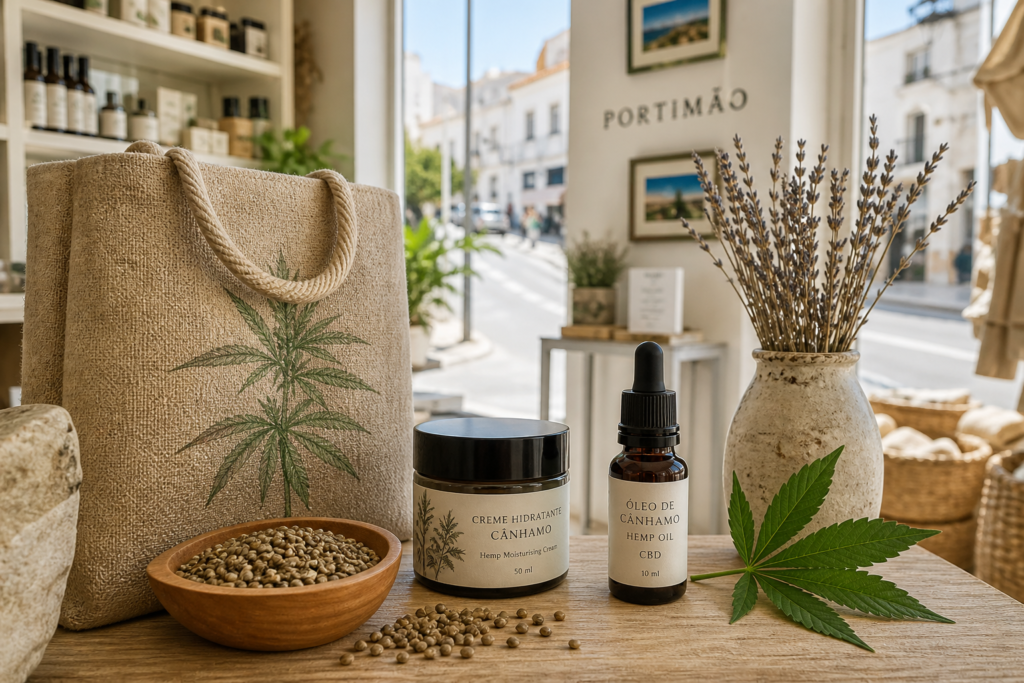
Why product category matters
Food, cosmetics and medicines are not interchangeable. A food product cannot simply make claims that it treats pain, anxiety, insomnia or another medical condition. Similarly, a cosmetic should not be presented as a medicine. Strong health claims are a warning sign, particularly when they are unsupported by clear manufacturer information or appear alongside promises of guaranteed effects.
CBD added to foods and supplements may also raise novel-food and authorisation questions in the European Union. The European Commission’s Novel Food status catalogue provides background for checking how certain ingredients are treated, although it is not a substitute for professional regulatory advice or a product-specific assessment.
Where to look for hemp goods in Portimão
Shoppers may find hemp-related goods in health-focused retailers, specialist CBD businesses, natural-product shops, pharmacies for appropriate regulated products, markets and online stores that deliver to the Algarve. Availability can change seasonally, and a retailer may stock only textiles and hemp seed foods rather than CBD products.
In central Portimão, near larger retail areas or around the wider Algarve tourism corridor, product presentation can vary considerably. Visitors should not assume that a tourist-oriented shop has specialist knowledge of Portuguese rules. A responsible retailer should be willing to explain what a product contains, how it is intended to be used and which company is responsible for placing it on the market.
Questions to ask before buying
- What is the exact product category: food, cosmetic, textile, extract or medicine?
- Does the label identify the manufacturer or importer and provide a contact address?
- Is there a complete ingredient list in a language the buyer can understand?
- Does the package state the net quantity, batch number, expiry or best-before information where relevant?
- Is there a recent certificate of analysis from an identifiable independent laboratory?
- Does the analysis identify CBD, THC and other relevant cannabinoids, or does it use vague terms such as “full spectrum” without results?
- Are the advertising claims modest and consistent with the stated product category?
A seller who refuses to provide basic product information, makes dramatic medical promises or encourages use in a way that conflicts with the label deserves caution.
How to read a hemp or CBD label
Start with the ingredient list rather than the front-of-pack marketing. “Hemp seed oil” generally indicates oil pressed from seeds, while “CBD,” “cannabidiol,” hemp extract or cannabis extract may indicate a different formulation. The label should make clear whether the product is intended for skin application, food use, aroma use or another purpose.
Check the amount of product in the container and how the manufacturer expresses cannabinoid content. Some labels give a total amount for the bottle; others show a concentration per serving. These figures are not directly comparable unless the serving size and total volume are clear.
Look for batch-specific testing rather than a generic laboratory statement copied across a product range. A credible report should correspond to the product and batch, identify the testing laboratory and show results in a readable format. Testing does not automatically prove that a product is legally authorised, but missing or unverifiable testing makes informed shopping much harder.
Red flags
- Packaging that promises to cure or treat several unrelated diseases.
- No responsible business name, address, batch information or ingredients.
- Unusually strong claims about THC-free status without a test result.
- Instructions that encourage driving, combining the product with medicines or exceeding the label directions.
- Loose flowers, oils or gummies sold without a clear product category or traceable source.
- Pressure to pay cash for an item that the seller says is “legal everywhere” without explaining why.
CBD products in Portimão: safety and responsible use
CBD is not intoxicating in the same way as THC, but “non-intoxicating” does not mean risk-free. Products can be mislabelled, contaminated or different from the advertised concentration. People who take prescription medicines, are pregnant or breastfeeding, have liver conditions or are considering CBD for a child should seek advice from a qualified healthcare professional first.
Do not use a hemp or CBD product as a replacement for prescribed treatment without medical guidance. Even when a product is sold as a cosmetic or food, its ingredients may be relevant to allergies, interactions or other health concerns. Keep oils, gummies and other ingestible products away from children and pets.
Visitors should also remember that rules may differ between Portugal and their home country. Taking CBD oil, hemp flower or other cannabis-related goods across a border can create customs or controlled-substance issues, even when the item was purchased openly in Portimão. A receipt and a shop’s assurance are not a guarantee of permission in another country.
Hemp, cannabis and “weed in Portimão” are not interchangeable
Searches for weed in Portimão or cannabis in Portimão can lead to information about recreational cannabis, medical products, CBD and industrial hemp all at once. These terms should be separated carefully. Hemp seed products and fibre goods are not the same as THC-rich flower, and a CBD-labelled item is not automatically a medical product.
People seeking information about cannabis laws in Portimão should distinguish decriminalisation, medical access, possession rules and commercial sale. Our related guide to cannabis in Lisbon provides broader national context, while the article on CBD products in Vila Nova de Gaia offers another Portugal-focused perspective on product labels and responsible shopping.
A practical checklist for shoppers
- Decide what you actually need: a textile, hemp seed food, cosmetic or regulated medicine.
- Buy from a traceable retailer with a physical business identity and clear customer information.
- Read the complete label and avoid products with vague ingredients or unsupported health claims.
- Ask for batch-specific testing when buying a cannabinoid product.
- Follow the stated directions and do not drive if a product could impair you or if you are unsure about its contents.
- Keep the receipt and original packaging, especially if you are travelling.
- Check current Portuguese and destination-country rules before carrying any cannabis-related item across a border.
Conclusion
Buying hemp products in Portimão is easier when shoppers focus on the product category, ingredients, traceability and intended use rather than attractive claims. Hemp textiles and seed foods are distinct from CBD extracts, cannabis flower and prescription medical cannabis. Each category can involve different safety and legal considerations.
Choose products with clear labels, identifiable sellers and credible testing where relevant. Avoid medical promises, informal sellers and assumptions based solely on the word “hemp.” When health conditions, medicines, travel or cross-border movement are involved, confirm the current position with an appropriate Portuguese authority or healthcare professional.